Everybody needs beauty as well as bread, places to play in and pray in,
where Nature may heal and cheer and give strength to body and soul alike.
John Muir (1838-1914)
Personally I have no bone to pick with graveyards, I take the air there willingly,
perhaps more willingly than elsewhere, when take the air I must.
From First Love by Samuel Beckett (1973)
Click on the LINKS to find out more…..
MARK HOLROYD’S MEMOIR
Extracts from the 1901 memoir of the son of a Wainsgate minister who emigrated to America in 1835.
WAINSGATE WILDLIFE SURVEY
The 2006 survey of the Fauna, Flora, Fungi & Lichens found in the graveyard at Wainsgate.
FAUNA
MAMMALS
BIRDS
INSECTS
HONEY BEES
FLORA
TREES & BUSHES
FLOWERS, GRASSES & SHRUBS
MOSSES & LIVERWORTS
FERNS & HORSETAILS
FUNGI
LICHENS
* * *
‘Nature is not only all that is visible to the eye ….. it also includes the inner pictures of the soul’.
‘From my rotting body, flowers shall grow and I am in them, and that is eternity.’
Edvard Munch (1863-1944)

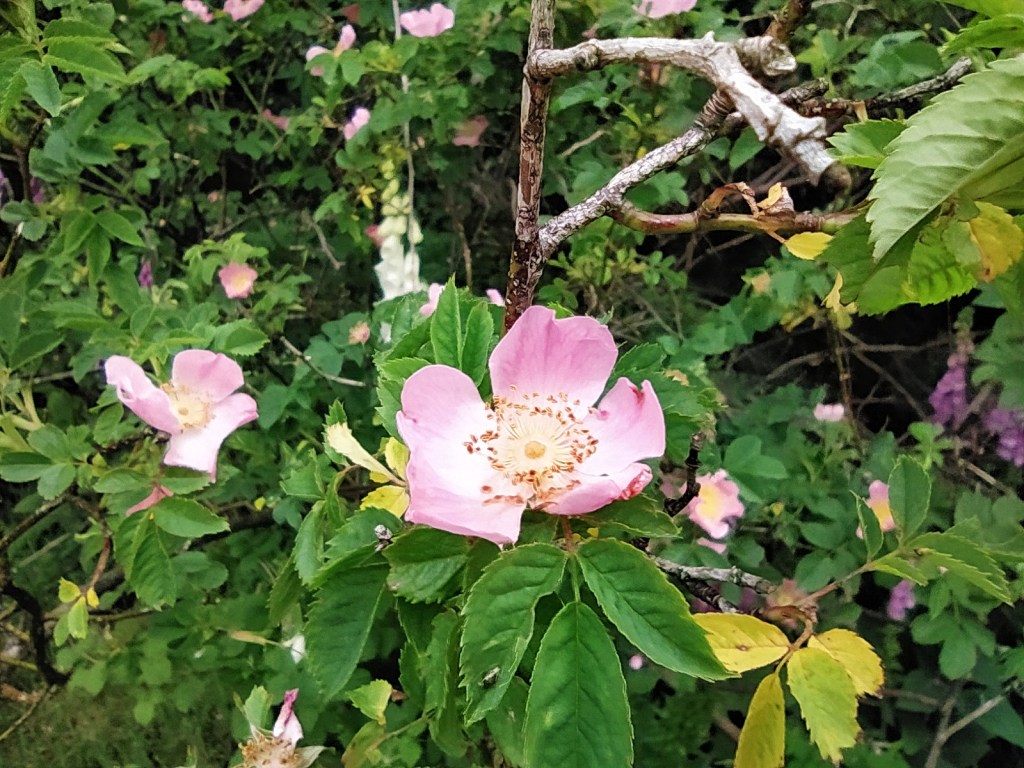
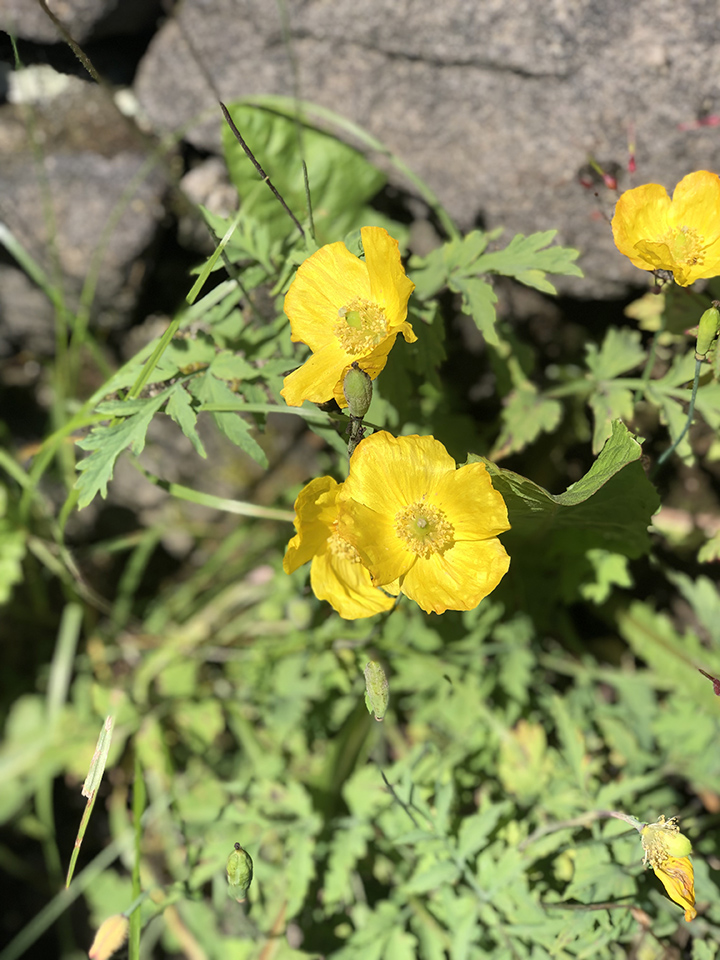
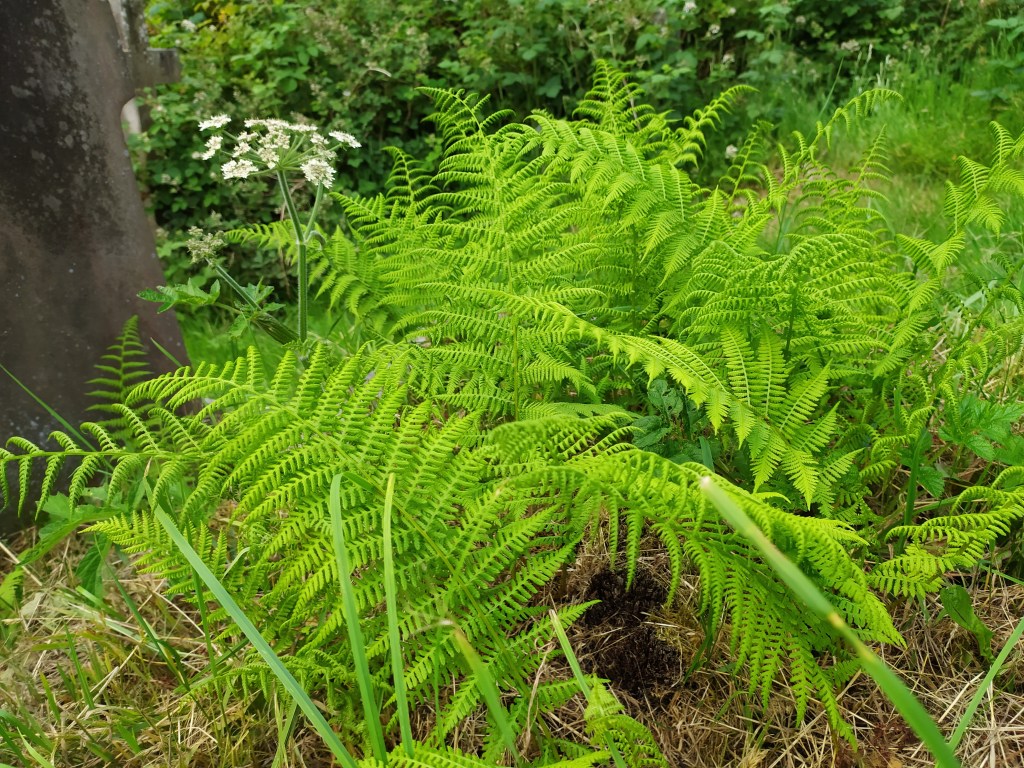
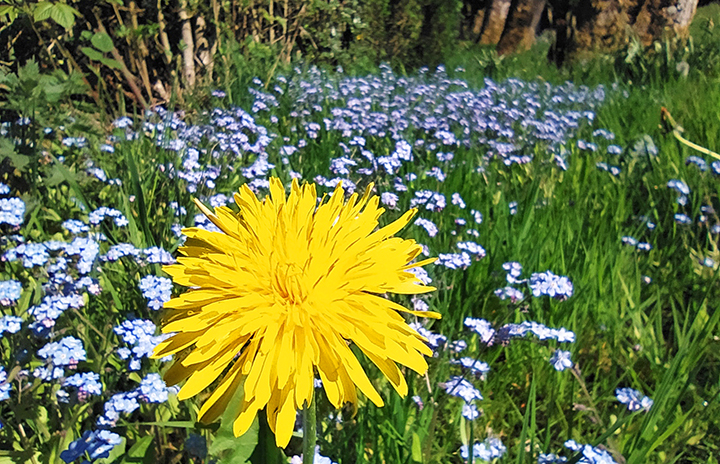
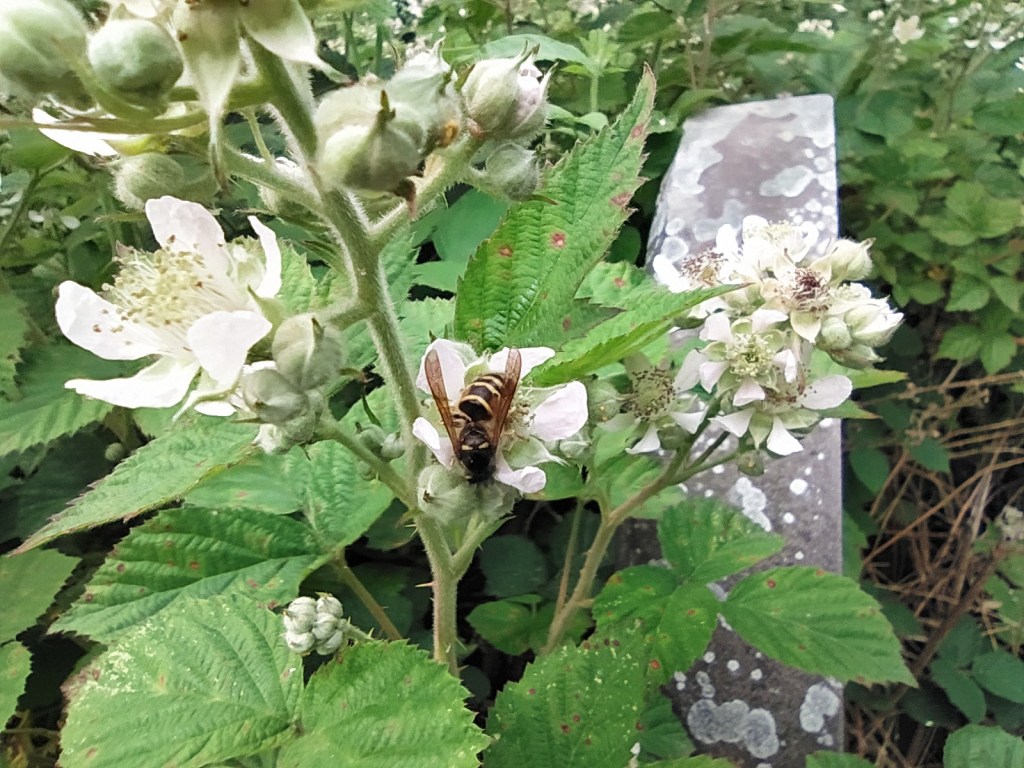
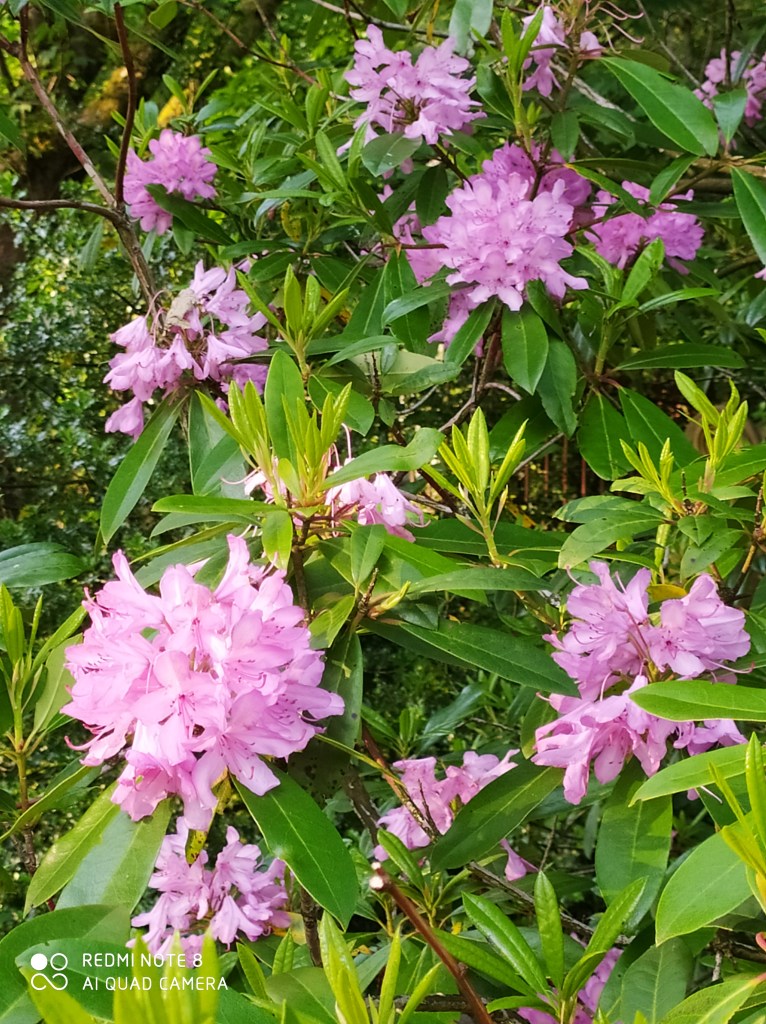
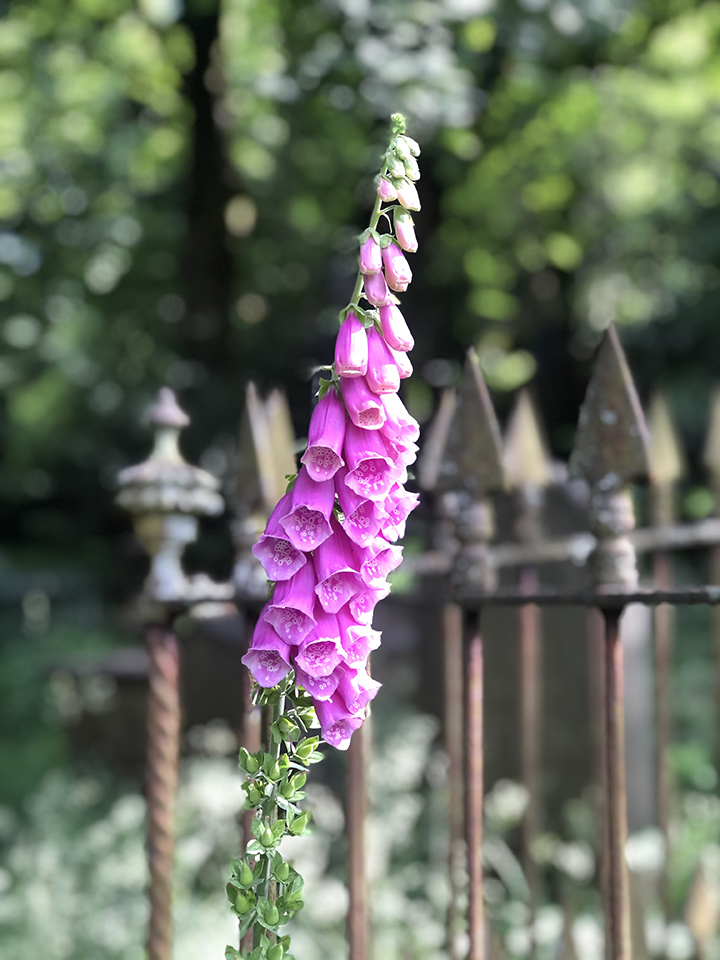
Photographs by Charlie Morrissey
* * *
MARK HOLROYD’S MEMOIR
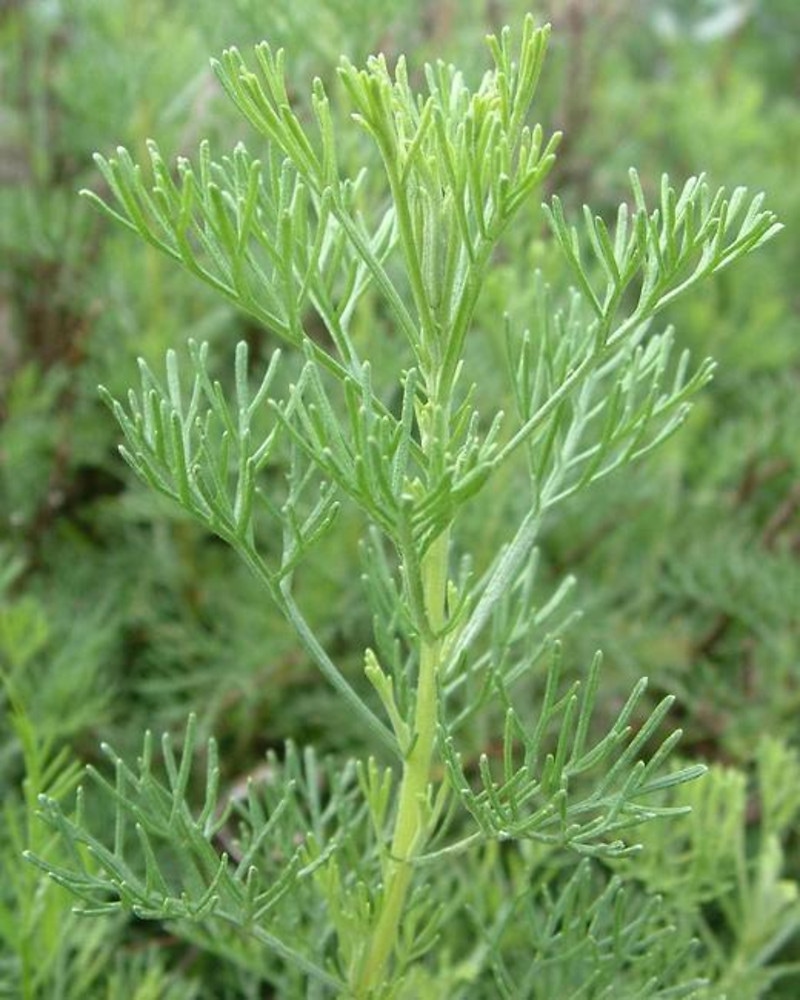
‘I was born in a gray sandstone house adjoining the Wainsgate Chapel. It was the parsonage. The chapel adjoined the cemetery. It had two yards; an upper and lower one surrounded with a stone wall. The upper yard was surrounded with young soft maples and Scotch firs, and in one corner of it was a garden, and in it I remember was a camomile bed and my remembrance calls up the display, the pink, the violet, the rose bush, the sweet briar, the lads-love or southern wood, the fragrant lavender, etc. that went to make up our nosies or nosegays.
My earliest recollection of events runs back to a time when my mother one warm early summer day took me into this garden. I had been sick with a slow fever and had so far recovered as to be taken into the fresh air into this garden of Wainsgate cemetery And I well remember the thrill of satisfaction that came over me there in my mother’s lap’.
The writer remembers the birds found around Wainsgate – thrush, linnet, robin and goldfinch:
‘Many a time have I listened to the skylark, rising out of a tuft of grass singing an soaring himself out of sight in an ecstasy of enjoyment’.
He describes the landscape around Wainsgate as having:
‘….scars and cliffs, noisy turbulent brooks, steep wooded hills, bleak heath clad hills and peaty morasses and narrow vales‘.
Lad’s love (Artemisia abrotanum), also known as southernwood, southern wormwood, old man, maid’s ruin, lover’s plant and garderobe has a strong camphor-like odour and was historically used as an air freshener or strewing herb. As some of its names suggest, it was once thought to have aphrodisiac qualities. The leaves and flowers can also be used in herbal teas.
A nosegay (a small bouquet of scented flowers) would no doubt have been an essential accessory around a Victorian graveyard, and perhaps the garden at Wainsgate was cultivated to provide a supply of suitable plants for those attending funerals. Where exactly was the garden, and do any of these plants still grow in the graveyard? From the description, the garden would probably located in the area now known as Fawcett’s Yard.
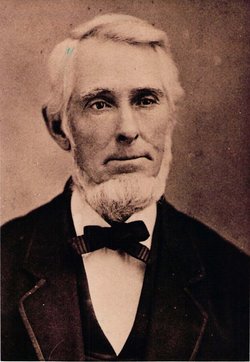
The extracts above are from the memoir of Mark Holroyd II (1816-1902), the son of Mark Holroyd, minister at Wainsgate from 1810 to 1835. He was born at Wainsgate and emigrated to America with his family in 1835.
He started to write his memoir in 1901 at the age of 85, and completed it a year later, five months before his death in 1902 in Gloversville, New York.
Mark revisited Yorkshire in 1888, 52 years after he had emigrated, and presumably visited Wainsgate:
‘…revisiting the scenes of youthful days over moorland, hills and dells and picturesque woodlands. I was always a lover of nature, city life having no great charms for me’.
WAINSGATE WILDLIFE SURVEY
The burial ground, particularly the overgrown areas of the old graveyard and the area of heathland on the eastern edge, is an important wildlife habitat, and contains many species of fauna, flora, fungi and lichens, including two species of lichen of local conservation importance and Cowberry, which is uncommon in Calderdale. A wildlife survey was commissioned by Wadsworth Environment Group in 2006 and carried out by Charles Flynn, asisted by Colin Duke; the report can be downloaded here as a pdf:
The survey was carried out a while ago, but a lot of it is probably still relevant: some species may no longer be present, and some may not have been present when the survey was carried out, or were not recorded. We are hoping to commission a new wildlife survey before too long.
FAUNA
MAMMALS
The only obvious omission in the 2006 report is Roe deer (Capreolus capreolus), which are resident locally and are frequent visitors to the burial ground. They have been known to eat floral wreaths left on graves, and seem to be particularly fond of lilies.
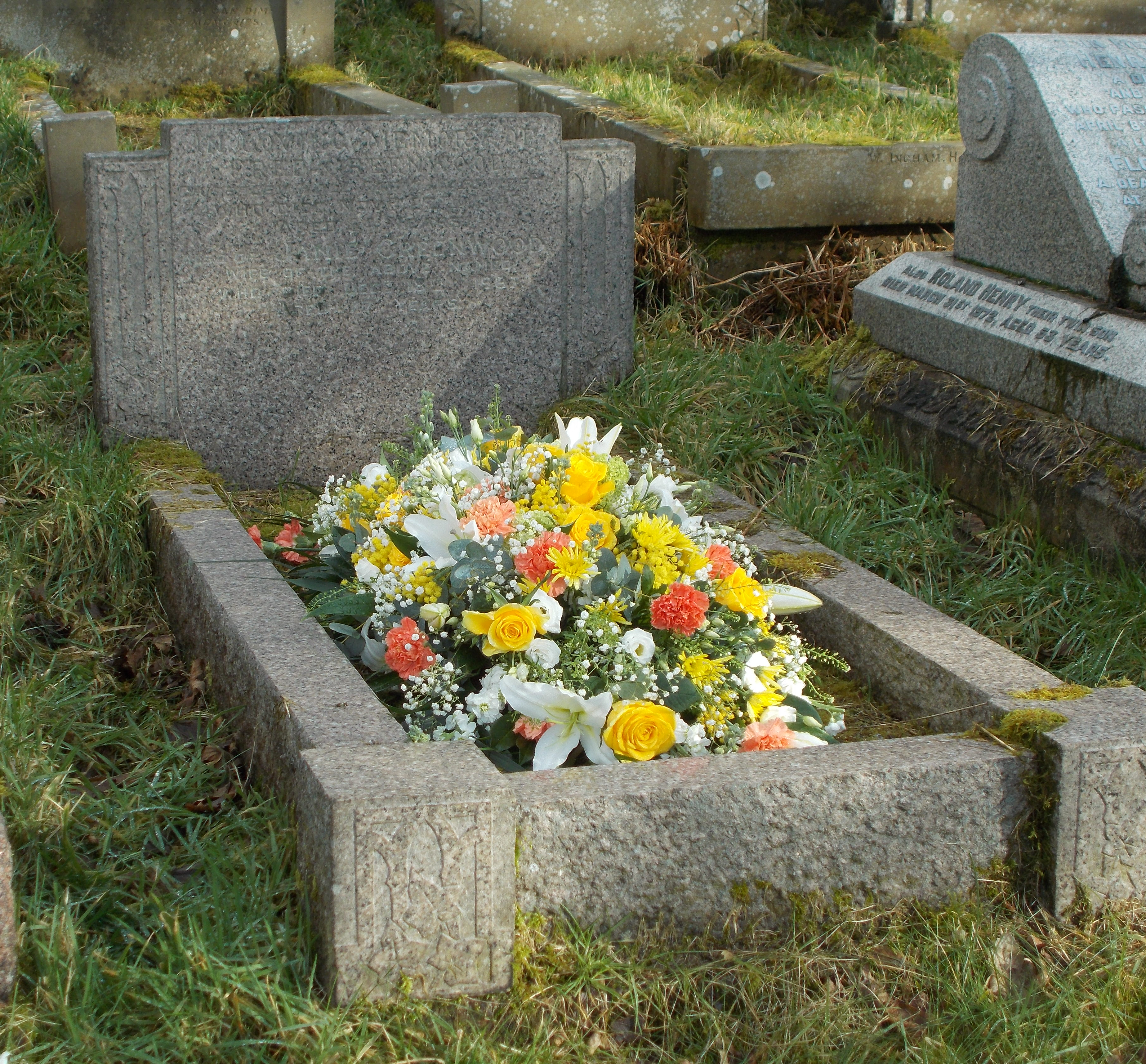
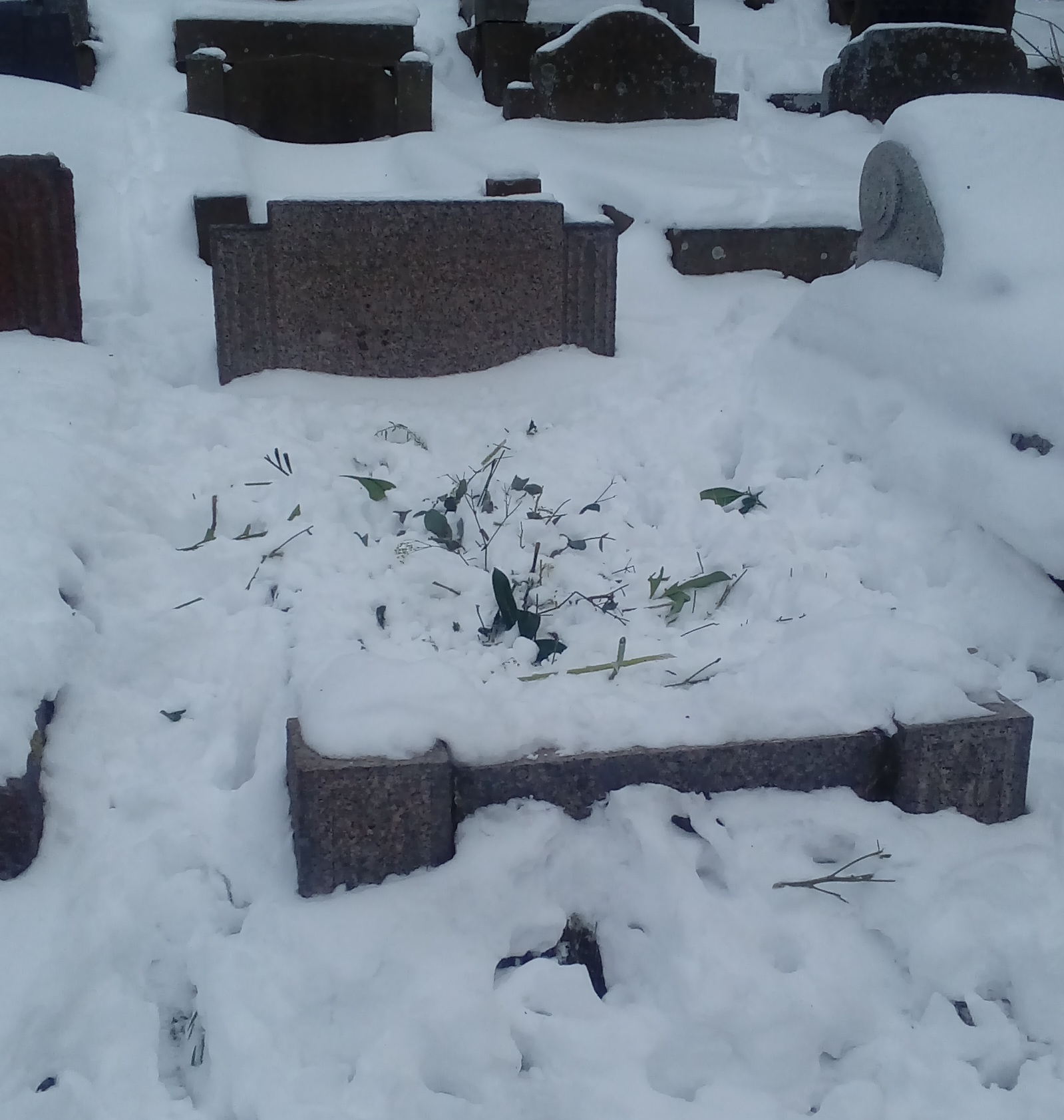
Plot J859 – 17th February and 2nd March 2018 – Floral wreath eaten by Roe deer.
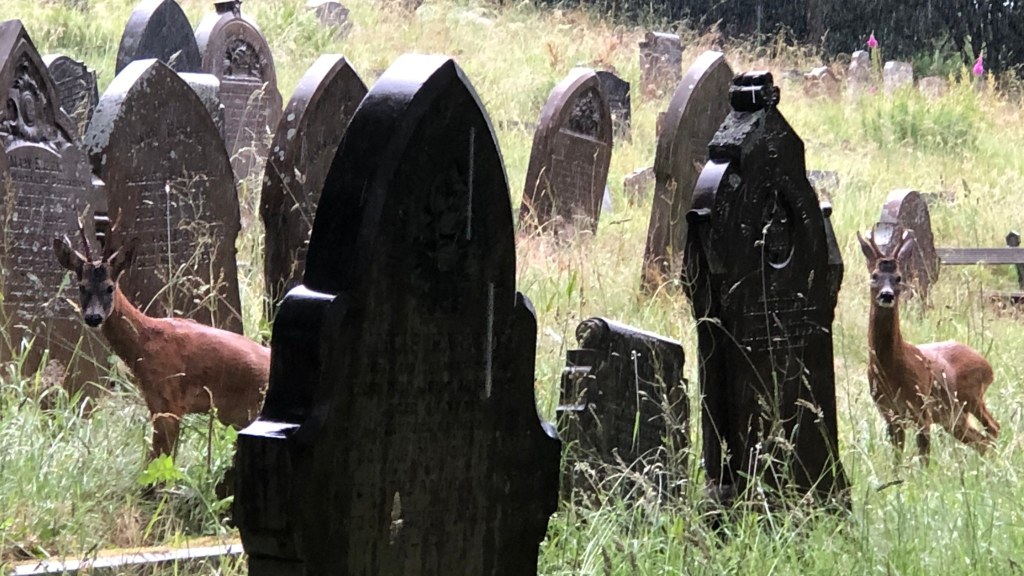
Roe deer in Wainsgate graveyard – 3rd July 2023. Photo by Charlie Morrissey
The only mammals recorded in the 2006 survey were Grey squirrel (Sciurus carolinensis) and Wood mouse (Apodemus sylvaticus).
More coming soon…..
BIRDS
Several species of birds can be regularly seen or heard in and around the graveyard: Blackbird, Robin, Greenfinch, Goldfinch, Chaffinch, Wren, Blue Tit, Great Tit, Dunnock (or Hedge Sparrow), House Sparrow, Song Thrush, Blackcap, Willow Warbler, Jackdaw, Jay and Magpie.
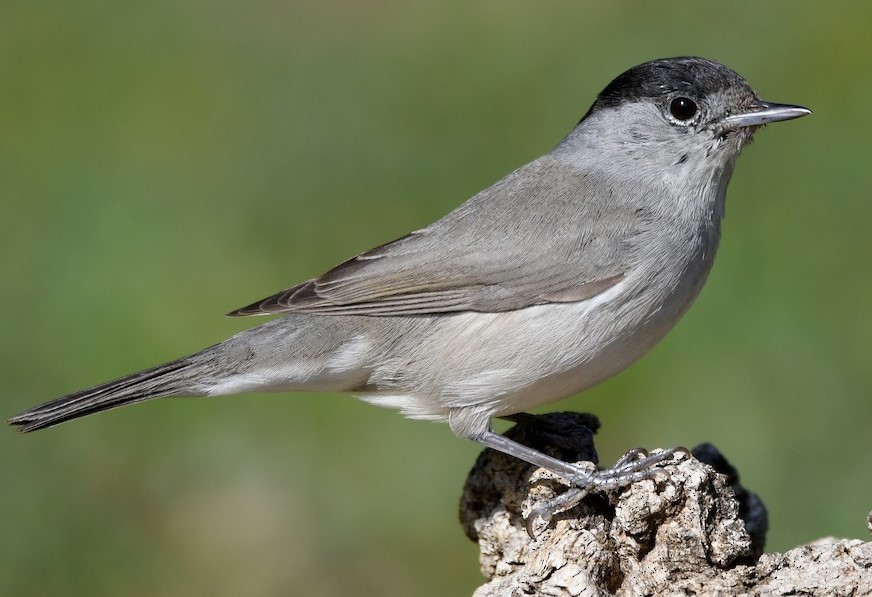
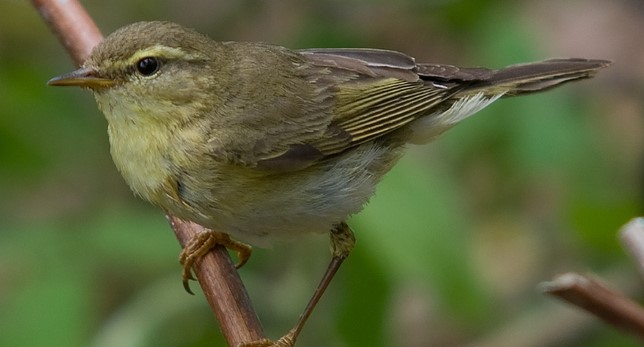
Blackcap (Sylvia atricapilla) Willow Warbler (Phylloscopus trochilus)
Buzzard, Sparrowhawk and Swallow can be seen or heard flying over the graveyard. Curlew and Pheasant in neighbouring fields and moorland can sometimes be heard in the graveyard. Barn Owls can sometimes be seen hunting in nearby fields.
Thanks to Cornell University’s Merlin app, which is particularly useful when it comes to trying to identify those birds that are heard but not seen, such as the Blackcap and Willow Warbler.

The Wadsworth Environment Group installed a nesting box for owls in one of the mature Sycamore trees near Fawcett’s tomb, and this was used by Tawny Owls who raised at least two broods. The nest box has had to be replaced, and the new box (which is designed specifically for use by Tawny Owls) seems to have so far been used by Jackdaws, although Tawny Owls are believed to roost in trees in the graveyard.
Photo of young Tawny Owl by David Holmes
More coming soon…..
INSECTS
Coming soon…..
HONEY BEES
Nine bean-rows will I have there, a hive for the honey bee, and live alone in the bee-loud glade.
From The Lake Isle of Innisfree by William Butler Yeats (1888)
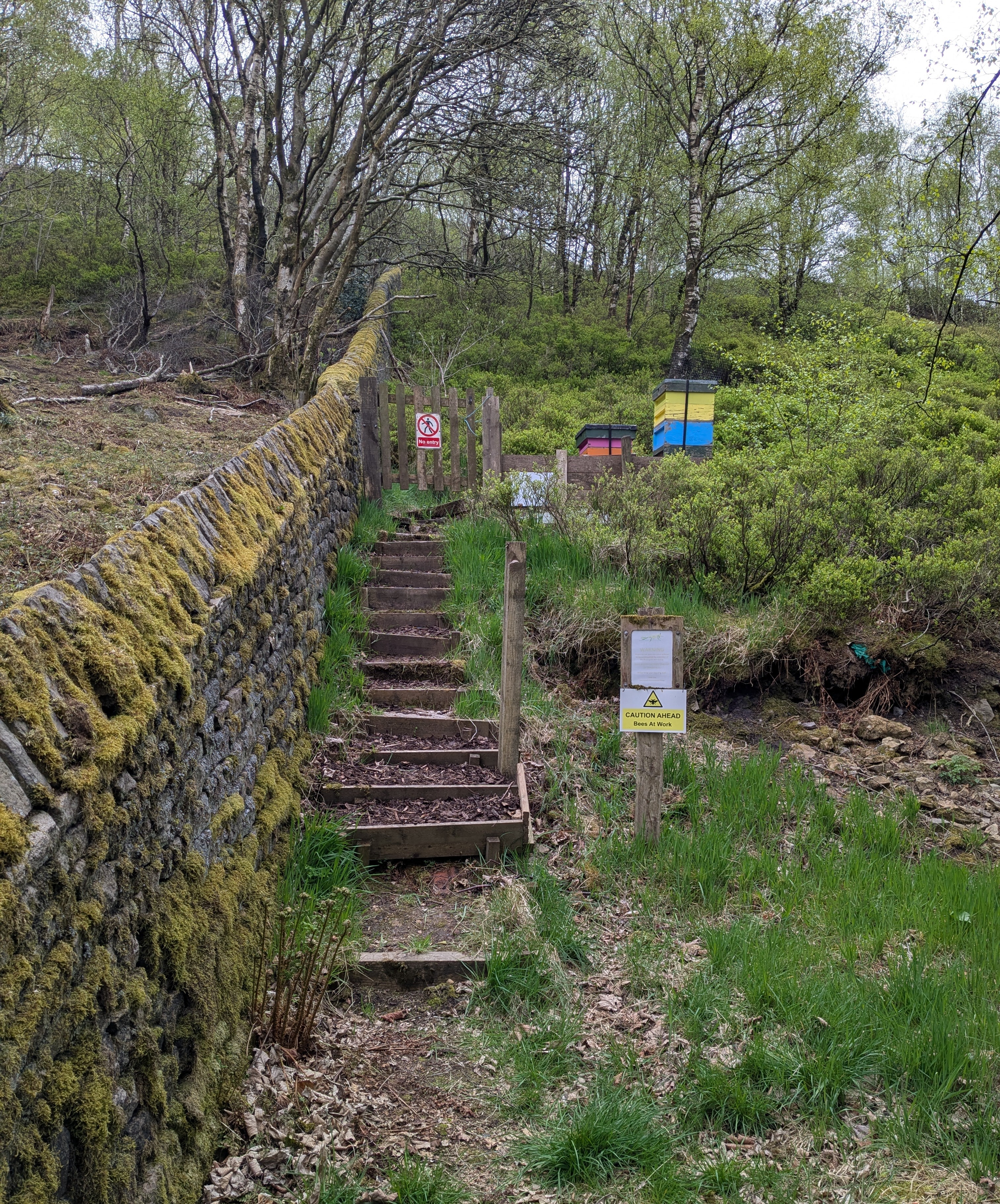
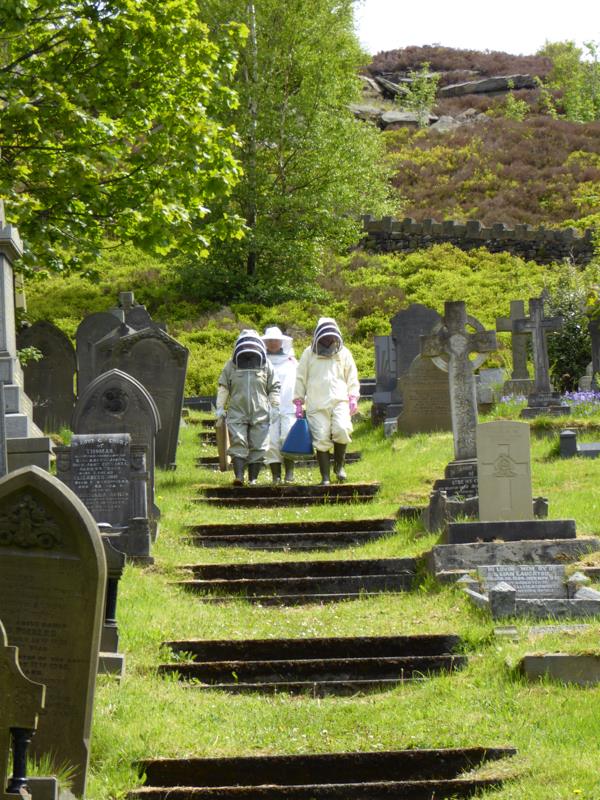
Bee hives at Wainsgate were first established over ten years ago by Wadsworth Environment Group in the uncultivated area in the north eastern corner of the graveyard.
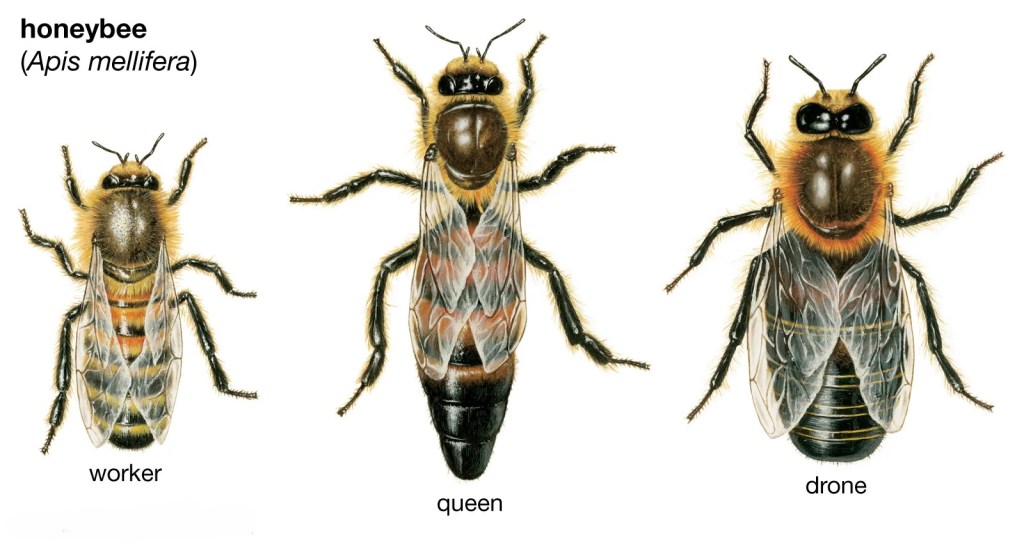
More coming soon…..
FLORA
TREES & BUSHES
An Arboricultural Safety Survey of the trees at Wainsgate was commissioned by the Historic Chapels Trust, and was carried out by JCA Ltd. (arboricultural consultants) in 2015. A copy of their report can be downloaded as a pdf:
More coming soon…..
FLOWERS, GRASSES & SHRUBS
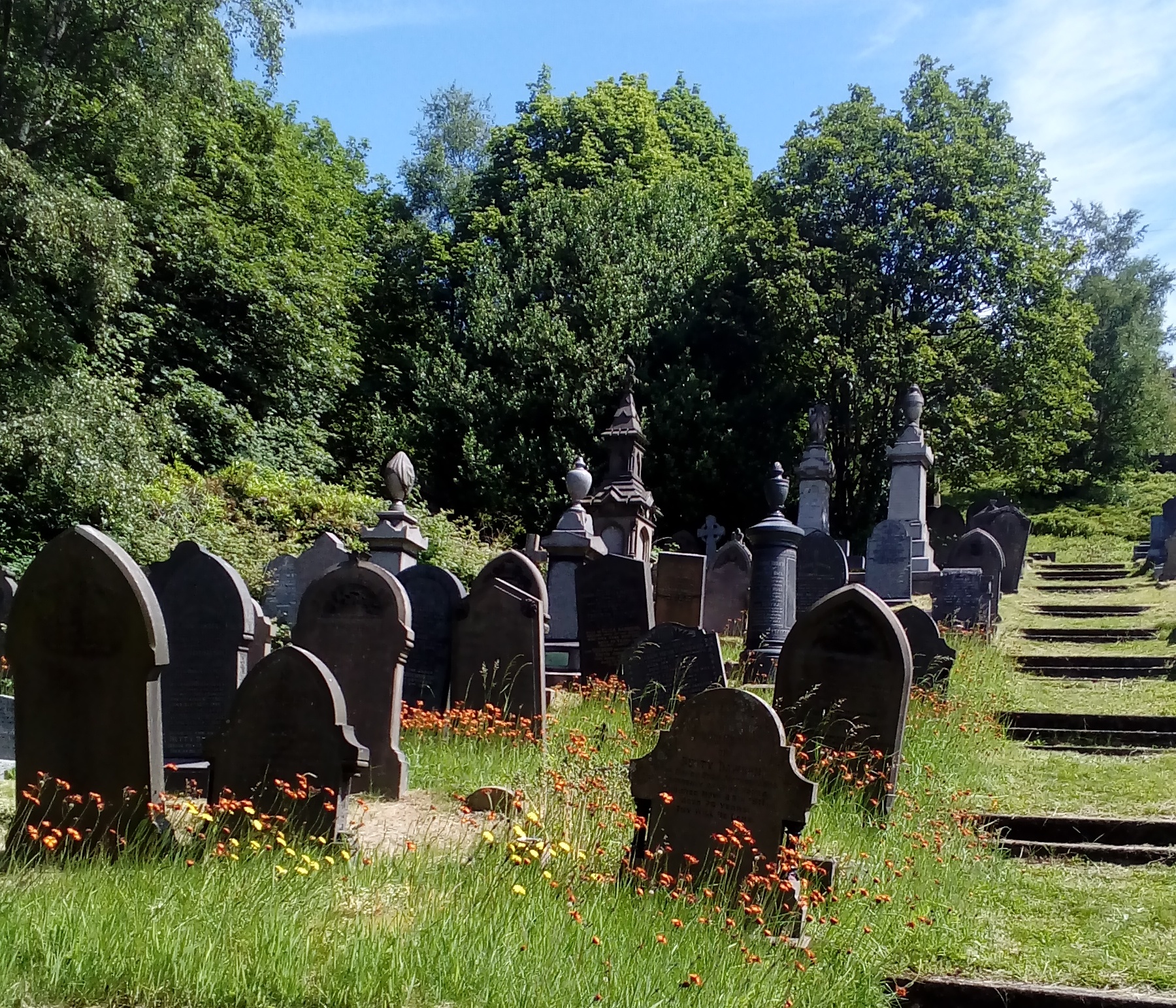
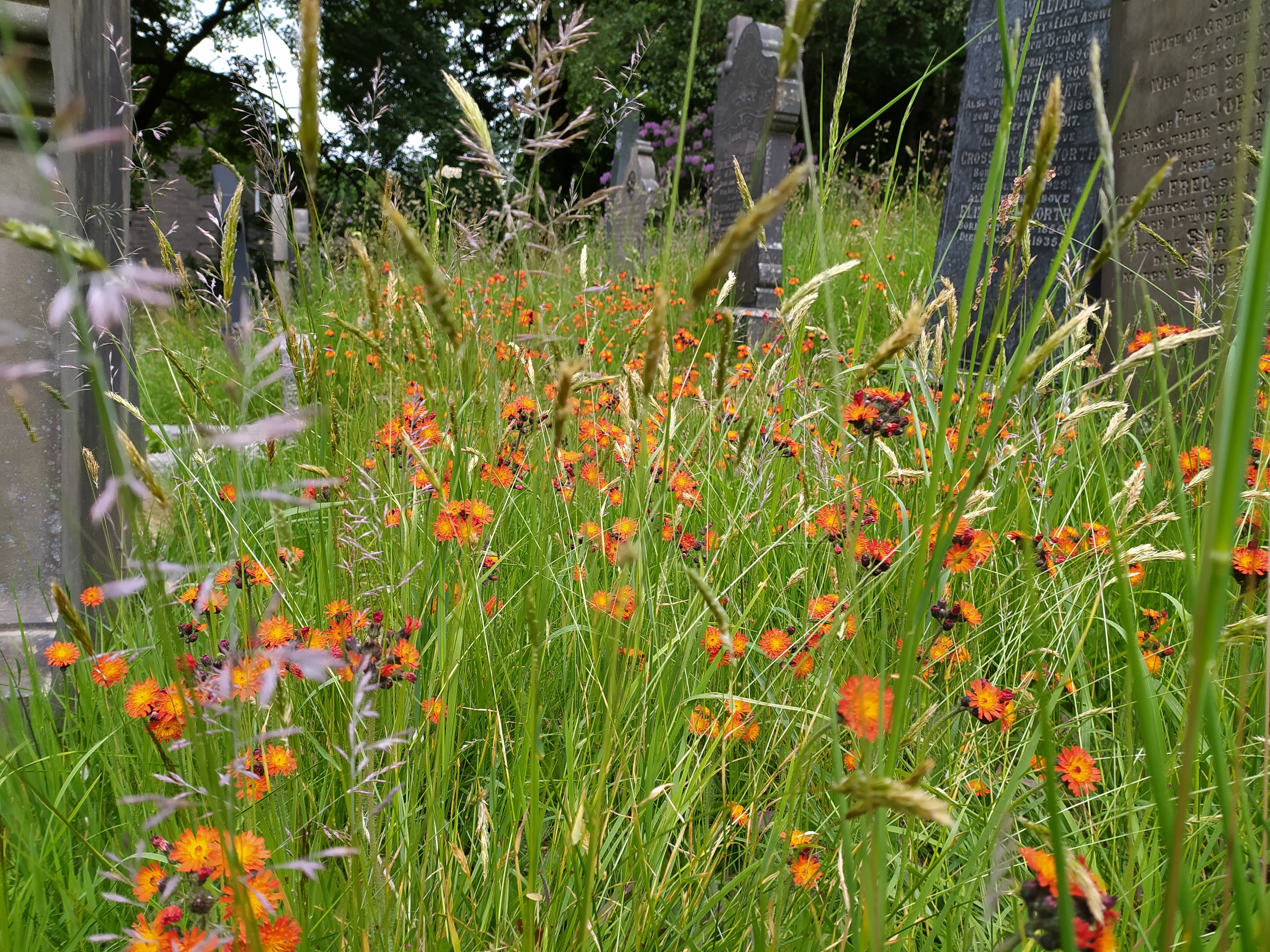
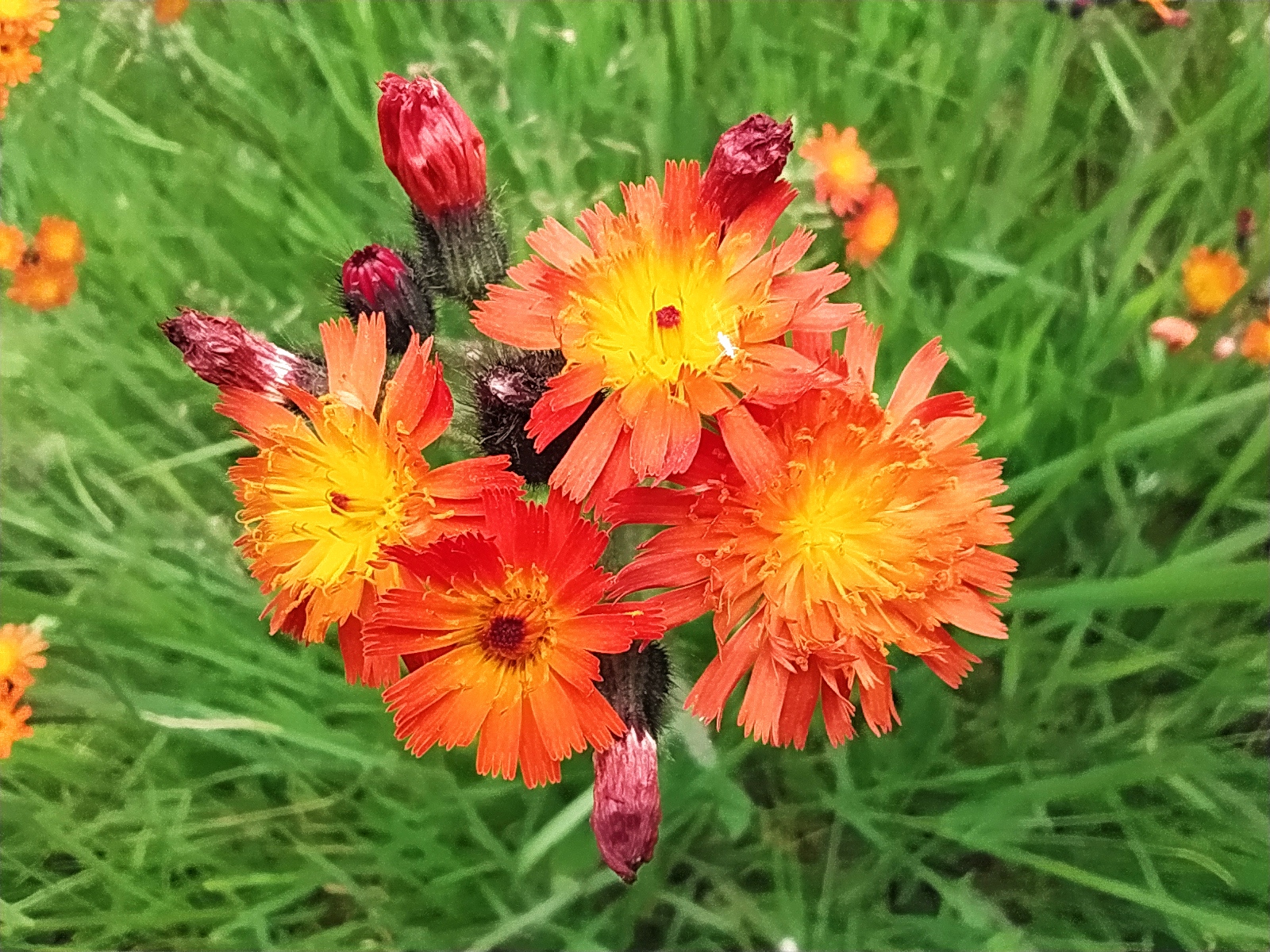
One of the most beautiful flowers growing wild in the graveyard is Fox-and-cubs (Pilosella aurantiaca, formerly Hieracium aurantiacum), a frequently naturalised garden escapee, originally from continental Europe, which is very commonly found in graveyards. At Wainsgate they are mostly round the lower end of the old graveyard near the bottom of the stepped path, but are gradually spreading across a wider area.
The name Fox-and-cubs is obviously derived from the orange flowers surrounded by smaller orange flower buds, and it is also known as Orange Hawkweed. Two more obscure names for this plant are ‘Devil’s Paintbrush’ and ‘Grim the Collier’. The most feasible explanation for the former is that it is brightly coloured and in some parts of the world is an invasive weed, unpopular with farmers. Nobody seems to have come up with a credible derivation of the name ‘Grim the Collier’ – even Richard Mabey’s Flora Britannica has no explanation.
The plant is recorded in this country in Gerard’s Herbal of 1633, and is referred to as ‘Grimme the Collier’. The word ‘collier’ can mean a charcoal maker, and charcoal making was a major industry around Croydon, south of London (the nearby village of Colliers Wood was first recorded in 1632, and its name derives from the charcoal burning carried out in the area). A play of uncertain authorship, first published in 1662, was called Grim the Collier of Croyden, and an earlier play, written around 1565 by Richard Edwardes called Damon and Pythias has a character called Grim the Collier, described as a ‘right Croyden sanguine’. This seems to imply that Grim the Collier was someone with a ruddy complexion and auburn hair, which possibly explains why this pretty orange flower ended up being called Grim the Collier.
(Thanks to the earthstar blog for helping me to try and unravel this mystery)
More coming soon…..
MOSSES & LIVERWORTS
Coming soon…..
FERNS & HORSETAILS
Coming soon…..
FUNGI
Coming soon…..
LICHENS
Lichens are strange and wonderful composite organisms that consist of algae or cyanobacteria living among the filaments of multiple fungi species in a mutualistic relationship. They come in many colors, sizes, and forms and are sometimes plant-like, but are not plants. There are about 20,000 known species.
Lichens occur from sea level to high alpine elevations, in many environmental conditions, and can grow on almost any surface, including bark, leaves, mosses, or other lichens and hanging from branches (epiphytes) in rainforests and in temperate woodland. They grow on rock, walls, gravestones, roofs, exposed soil surfaces, rubber, bones, and in the soil as part of biological soil crusts. Various lichens have adapted to survive in some of the most extreme environments on Earth: arctic tundra, hot dry deserts, rocky coasts, and toxic slag heaps. It is estimated that 6–8% of Earth’s land surface is covered by lichens.
The English word lichen derives from the Greek λειχήν leichēn (“tree moss, lichen, lichen-like eruption on skin”) via Latin lichen. The Greek noun, which literally means “licker”, derives from the verb λείχειν leichein, “to lick”.
In American English, “lichen” is pronounced the same as the verb “liken”. In British English, both this pronunciation and one rhyming with “kitchen” are used.
To find out more about these fascinating organisms, visit the British Lichen Society website.
* * *
Nine species of lichen were recorded in the graveyard in the 2006 Wildlife Survey, with two noted as being of local conservation importance – Evernia prunastri and Usnea subfloridana – both Fruticose (bushy or shrubby) lichens.
Evernia prunastri, or oak moss, was found mostly on the sycamore trees along the southern boundary of the graveyard and in some of the trees in the old graveyard.
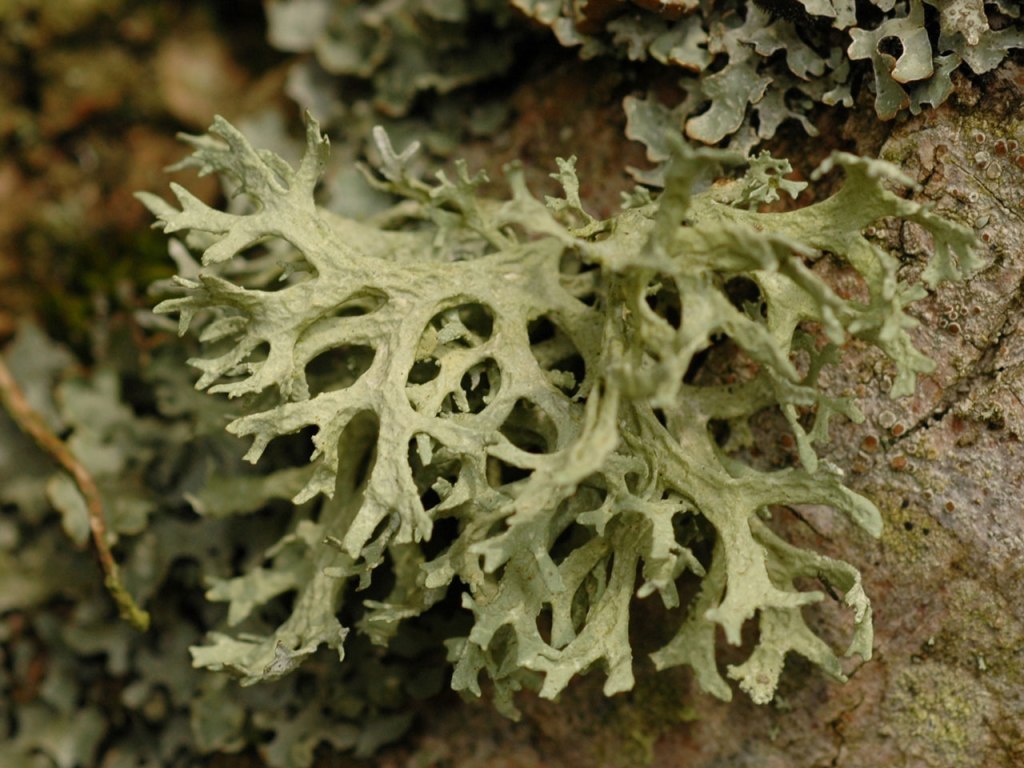
Oak moss lichen is found throughout the northern hemisphere, and is primarily found growing on the branches and twigs of oak trees, although it is also found on other trees, such as the sycamores at Wainsgate.
It is an important ingredient in the manufacture of many perfumes, and is harvested commercially in Europe, although issues with skin allergies have led to many scents being reformulated with other chemicals substituted for oak moss.
Photo by Mike Sutcliffe / The British Lichen Society
The lichen has a distinct and complex odour which can be described as woody, sharp and slightly sweet. Oak moss absolutes and extracts have been used as key components of Fougère and Chypre class perfumes.
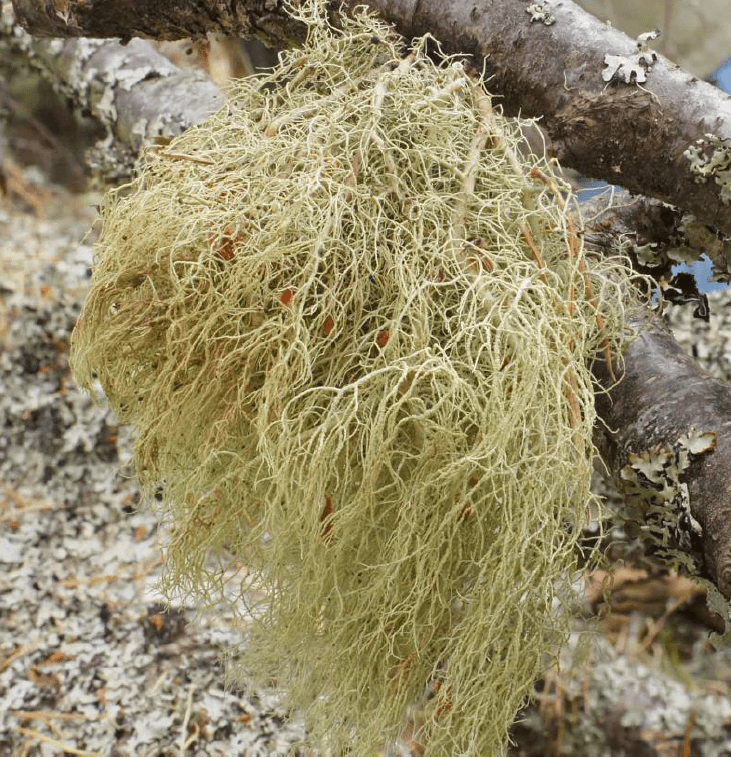
Usnea subfloridana is a ‘beard’ lichen, and was found in the same locations at Wainsgate as the oak moss lichen.
Beard lichens contain usnic acid, which is effective against bacteria such as Streptococcus and Staphylococcus, making Usnea a valuable addition to herbal formulas for sore throats and skin infections.
Usnea species have been used to create yellow, orange, green, blue, and purple dyes for textiles. The wide variety of possible colours is due to variations in chemical composition depending on the species, locality, and race of a particular specimen.
When dry, Usnea lichens are flammable and can be used as a fire starter.
Photo by Paul Cannon / The British Lichen Society
The Wildlife Survey also identified six species of Foliose (leafy) lichens and one Crustose lichen (a type of lichen that forms a crust like structure that is completely attached to the substrate).
More coming soon…..
* * *
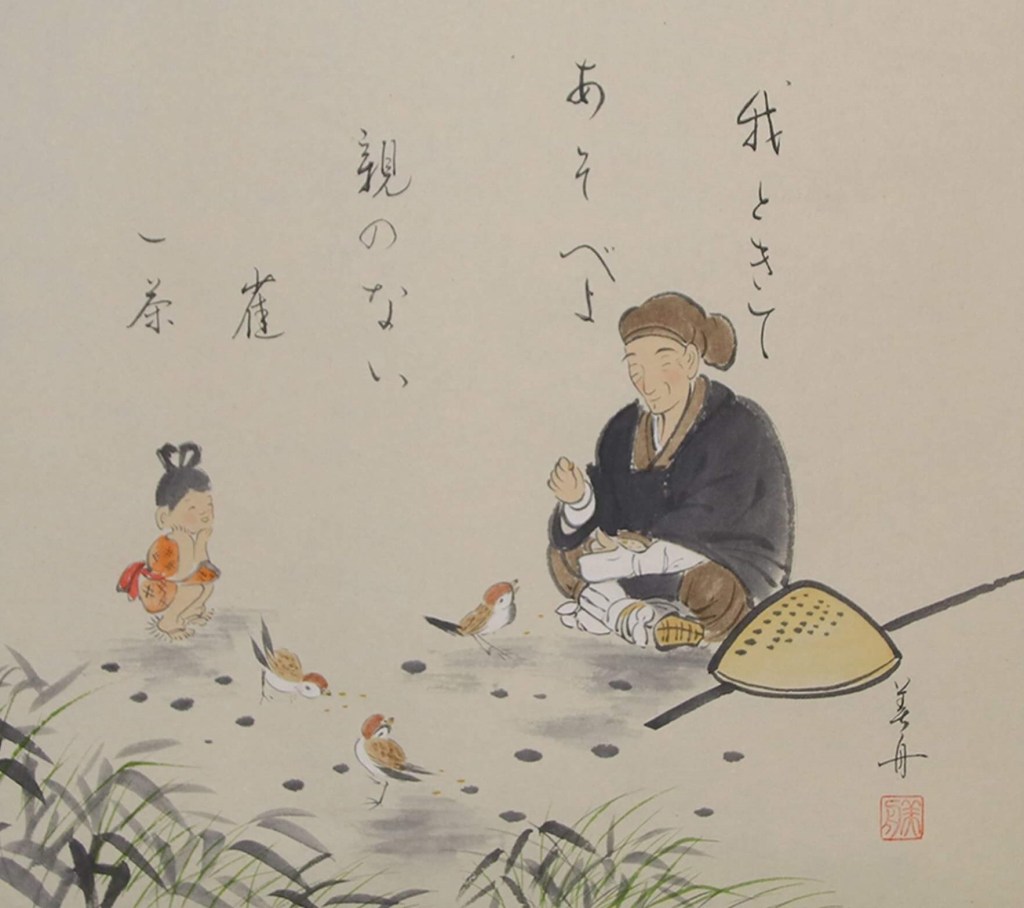
.世の中は地獄の上の花見哉
in this world of ours
we walk above hell
gazing at flowers
Kobayashi Issa (1763-1828)
Haiga Kobayashi Issa and Sparrows by Yuki Bishū
 WAINSGATE GRAVEYARD PROJECT