The past was like a bad dream; the future was all happy holiday as I moved Southwards week by week, easily, lazily, lingering as long as I dared, but always heeding the call!
From The Wind in the Willows by Kenneth Grahame (1908)
“Keep, ancient lands, your storied pomp!” cries she
With silent lips. “Give me your tired, your poor,
Your huddled masses yearning to breathe free,
The wretched refuse of your teeming shore.
Send these, the homeless, tempest-tost to me,
I lift my lamp beside the golden door!”
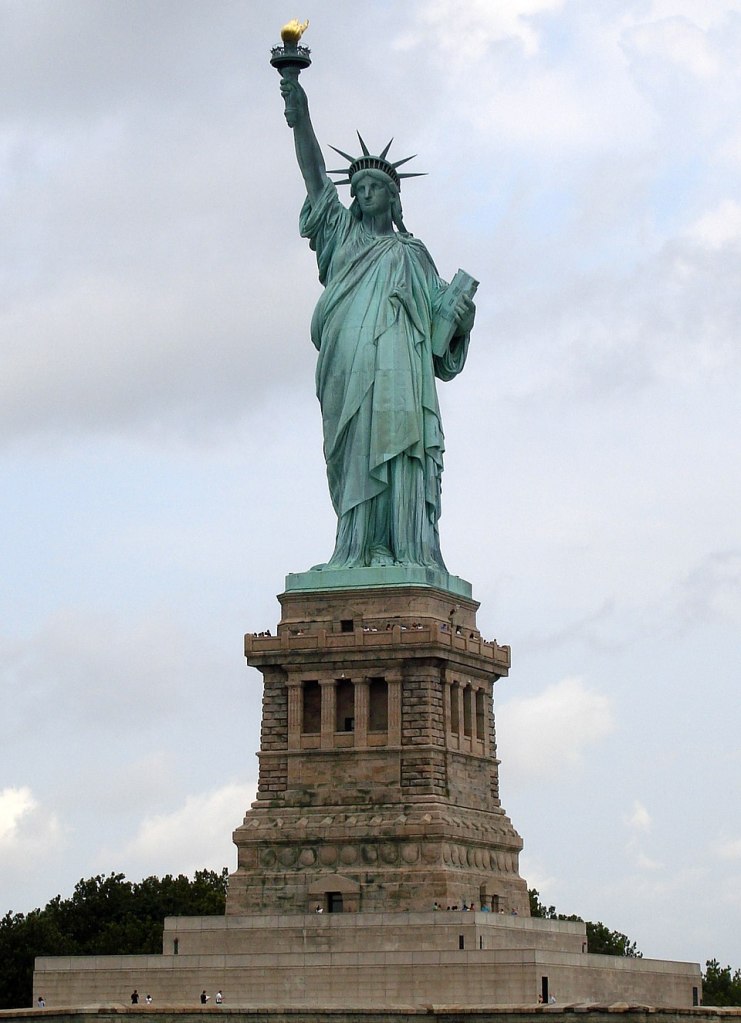
From The New Colossus by Emma Lazarus (1883) – the complete sonnet, of which this is the second verse, is displayed on a bronze tablet in the base of the Statue of Liberty in New York Harbour.
Most of the people interred or commemorated at Wainsgate were born, lived their whole life and died within a few miles of Old Town. Some were born locally, moved away, died far from their birthplace – in America, Canada and Ireland – but are commemorated or had their ashes interred at Wainsgate.
Some of those interred at Wainsgate were born elsewhere, moved to this area and ended their days here. They came from all over Britain – Northumberland, Cornwall, Scotland, London (before it was fashionable to move from London to Hebden Bridge), Manchester and Liverpool. Some came from even further afield – Norway, Poland, America and Ghana.
* * *
EMIGRANTS
As well as those who moved away from the area to find work or adventure, there are also the men from Wainsgate who were sent abroad to fight in two World Wars and never returned – they are buried in France, Belgium, Iraq and Egypt or were lost at sea. Their stories are told here. Two local men left to join the army and never returned, although they were not killed in conflict: Hezekiah Shaw, who died in London in 1862 and Albert Potentier, who died in Canada in 1943.
Mark Holroyd, minister at Wainsgate from 1810 to 1835, emigrated with his family to Chenango County, New York, where he became pastor at two Baptist churches. He later moved to Wyanet, Illinois, where he died and is buried. He left three daughters in the graveyard at Wainsgate.
Click on the NAMES to find out more…..
John BANCROFT
Born in Pecket Well, died at Curragh Camp in Ireland, buried at Kildare Cathedral.
Peter Emil BOWKER
Born in Luddenden Foot, died in Los Angeles aged 29, his ashes are interred at Wainsgate.
Tony CHERRY
Born in Halifax, died in Penticton, British Columbia, Canada. His ashes were interred at Wainsgate.
James MITCHELL
Born at High Greenwood, Heptonstall, died and buried at Peshtigo, Wisconsin, USA.
John PICKLES
Born in Midgley, died in America.
Albert SOUTHWELL
Born in Hebden Bridge, killed in the Hillcrest Mine disaster in Canada aged 31.
OFFCUMDENS
A term used in parts of Yorkshire, and particularly around Hebden Bridge, to describe someone who has moved to the area from elsewhere – other countries, other parts of Britain, even other parts of Yorkshire. These days it often tends to be used as an insult (usually good natured, but not always), but it is probable that in earlier days incomers were welcome in the area, and in some cases people were encouraged to move here to work in the mills and factories. Many put down roots here, married into local families and ended their days in the graveyard at Wainsgate.
Three Baptist ministers associated with Wainsgate came from Scotland: Peter Scott (c1793-1866) was born in the Western Isles, was minister at Brearley Baptist Church for twelve years and was buried at Wainsgate. James Jack (1868-1931), born near Elgin, was minister at Wainsgate from 1901 to 1906, and was buried there with his wife and daughter (who he named Jeannie Munro Wainsgate Jack). David Finlay Neil, minister at Wainsgate from 1955 to 1958, was previously minister at John Street Baptist Church in Glasgow.
There were also seasonal migrant workers, including Irish farm workers who came to the Calder Valley every summer to help with the hay harvest, and refugees and evacuees who came to this area during the two world wars.
Click on the NAMES to find out more…..
The BIRKETT Family
A farming family from the Lake District: briefly moved to Hampshire, returned to Cumberland and then moved to Wadsworth – six members of the family are buried at Wainsgate.
William James BUNNEY, Mary BUNNEY & Ann BUNNEY
Born in Cornwall, died in Hebden Bridge, buried at Wainsgate.
Teodor (Ted) DURANCZYK
Born in Chebzie, Poland. Married Gladys Riddiough in 1952 – the couple ran T & G Duranczyk jewellers in Hebden Bridge.
John & Jessie HACKNEY
Both from Scotland, farmed at Bingley and Blackshaw before settling at Little Nook Farm, Wadsworth.
Mary Elizabeth HARRIS (born BUNNEY) & Polly BEVAN (born HARRIS)
Born in Menheniot, Cornwall, died in Hebden Bridge, buried at Wainsgate.
The JACKSON Family
Another farming family, from North Yorkshire, who moved to Hebden Bridge. Six members of the family are buried at Wainsgate.
Oskars JAUNALKSNIS
Who was he, and where did he come from – possibly from Latvia? Married a local woman, Agnes Clara Dale, lived in Old Town, buried at Wainsgate.
The JONES Family
From Ryton, County Durham – seven members of the family are buried at Wainsgate.
Job & Margaret KITCH
Coal miner from County Durham, lived in Coronation Terrace, buried with his wife at Wainsgate.
Albert Edward PICO
Born in Liverpool to a Danish father, emigrated to Canada, died in Hebden Bridge, buried at Wainsgate.
Alexander (Alex) Kwasi SARKODEE – ADOO
Born in Ghana, died in Hebden Bridge, buried at Wainsgate.
Modesta Bergliot SUNDERLAND (born BRYNJELSEN)
Born in Bergen, Norway, worked as a servant for the Mitchell family, buried at Wainsgate.
Julia Hannah VIAN (born GOYNE) & Richard Francis VIAN
Born in St. Agnes, Cornwall, buried at Wainsgate.
SEASONAL MIGRANT WORKERS
There was a long tradition of Irish farmworkers who came to the area every year to help with the hay harvest.
* * *
EMIGRANTS
John BANCROFT (1829-1855)
Eldest son of William and Mary Bancroft (born Ashworth) of Wilcroft, Pecket Well, born 16th September 1829. In 1851 he was living with his parents and eight siblings and working on the family farm – his father is described in the 1851 census as ‘Relieving Officer & Farmer of 33 acres’.
The family headstone at Wainsgate (CY265) says that he ‘died in camp at Curragh, near Kildare, Ireland, Oct 30th 1855 aged 26 years, and is interred at the Cathedral’. It is assumed he died at Curragh Camp, the army base near Kildare and is buried at the Cathedral Church of St. Brigid, Kildare.
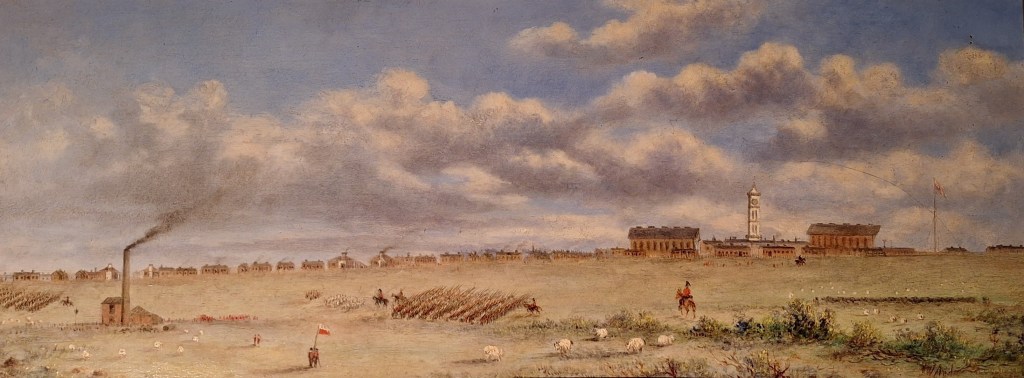
Curragh Camp (Campa an Churraigh) is a long established military base at The Curragh (An Currach), a flat open plain of almost 2,000 hectares (5,000 acres) of common land in County Kildare. The area is also well known for Irish horse breeding and training. The first permanent military structures at Curragh Camp were built from 1855 by British soldiers of the Corps of Royal Engineers and Irish and English contractors to provide a training area for British troops fighting in the Crimean War.
At the time of John Bancroft’s death, accomodation for around 3,500 soldiers had been completed, and eventually the camp housed 10,000, mostly in wooden buildings. The camp also had its own post office, a fire station, two churches, a water pumping station, a court house and a clock tower. Curragh Camp is still the main training centre for the Irish Defence Forces and is home to 2,000 military personnel.
The legendary men of the Fianna are believed to have trained on the Curragh plain in medieval times, and Curragh Camp is mentioned in the Irish song The Sean-Bhean bhocht (translated by Padraic Colum in 1922) following its use as a muster point during the 1798 Rebellion:
Where will they have their camp?
……. on the Curragh of Kildare
the boys will be there,
with their pikes in good repair.
It seems probable that John Bancroft was working at Curragh Camp at the time of his death, possibly with the Royal Engineers although military records have not been found to confirm this, or he may have been one of the hundreds of men employed by civilian contractors.
On 29th October 1856, almost exactly a year after John’s death, his younger brother William, a solicitor’s clerk and his parents’ second son, died aged 25, and is buried in the family plot with his parents and sister Sarah, who died in 1852 aged 12. William and Mary Bancroft lived to the ages of 79 and 83 respectively.
Peter Emil BOWKER (1936-1966)
Peter Bowker was born at Luddenden Foot on 24th September 1936, the son of George Bowker (born in Burnley) and Alice Bowker (born Alice Carling in Eastwood, Todmorden).
George and Alice, both cotton weavers, had already lived in America for several years – they emigrated to Peterborough, New Hampshire in 1922, when Alice was aged 18 and George 22 together with Alice’s cousin Cubert Eric Youell, his wife Anna May and their infant son Victor. They were all joining Alice’s sister, Maud Phyllis Carling, who had emigrated to Peterborough in 1921. George and Alice, both cotton weavers by trade, found employment in one of Peterborough’s cotton mills, settled there and married in 1923. They returned to Luddenden Foot in March 1936, Peter was born there in September, and they returned to Peterborough with their infant son in October 1937 on board SS ‘Scythia’, landing in Boston on 1st November.
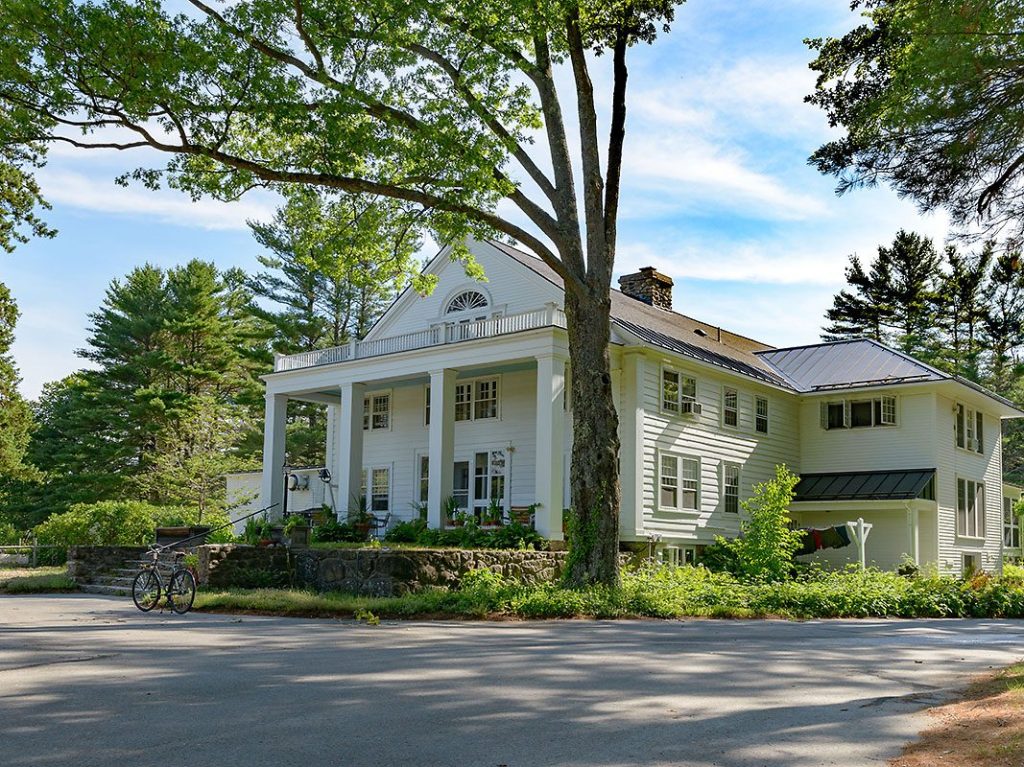
Maud Carling worked as a chambermaid at the MacDowell Colony, an artists, colony in Peterborough founded in 1907 by Edward and Marian MacDowell, and she lodged with the colony’s steward Emil (or Emilio) Tonieri (born in Italy) and his wife Mary (born in the ‘Irish Free State’). The MacDowell Colony was intended to be a quiet retreat where creative artists could stay and work: among those who stayed there were Aaron Copland, Thornton Wilder, James Baldwin, Willa Cather, Leonard Bernstein and DuBose and Dorothy Heyward (writers of Porgy & Bess). Peter’s middle name was presumably inspired by Emilio Tonieri, and when Maud died in 1978, aged 83, she was buried with Emilio and Mary in Pine Hill Cemetery, Peterborough.
The Bowker family moved to California where in 1940 George was proprietor of a gas station in Oakland, and in 1952 George and Alice bought the Auto Court garage in Placerville near Sacramento. George Bowker died on 10th November 1961 aged 62, shortly after he and Alice were granted American citizenship.

This photograph is taken from the 1952 Yearbook of Castlemont High School in Oakland, and is captioned Peter Bowker, Spring President of the Camera Club.
Peter Emil Bowker would have been aged around sixteen in 1952, and probably living in Oakland, although his parents moved to Sacramento some time in 1952.
This is almost certainly him, especially as his later work as a film processor links to his early interest in photography.
Peter applied for naturalization in 1958 and was granted citizenship in 1959: his application shows him to be 22 years old, single, living in Los Angeles and working as a film processor. The witnesses to his Petition for Naturalization were Edwin Salter, a commercial artist and Edward Finney, a sound studio manager living in Hollywood, so it is possible that Peter was working in the film industry. In 1960 he was living at 1742 Laurel Canyon Boulevard (close to the junction with Hollywood Boulevard), but no more is known about the last years of his life.


He died on 12th April 1966 aged 29. His ashes were interred at Wainsgate on 7th May 1966, presumably in the grave (plot E930) of his grandparents William and Mary Bowker, although his name has not been added to the headstone and no plot number is indicated in the burial register.
Tony CHERRY (1937-2013)
Coming soon…..
James MITCHELL (c1826-1887)
James was the son of William Mitchell and his wife Mary (born Mary Cousin, daughter of William Cousin). His baptism record gives his birthplace as High Greenwood, Heptonstall, and his father’s ‘Quality, Trade or Profession’ as ‘Gentleman’. William Mitchell died in 1928 at the age of 33. James had three sisters and two older brothers – John, who died in 1831 at the age of 12, and Henry Mitchell (founder of Old Town Mill), who died in 1859 aged 34.

We don’t know when or why he emigrated to America, but in 1848 he was believed to be in Delaware, in the service of Mr Reybold (possibly Clayton B. Reybold, a farmer in Delaware). In 1866 his sister Sarah tried to get in touch with him – it appears that she knew he was in America but didn’t know where he was or what had become of him.
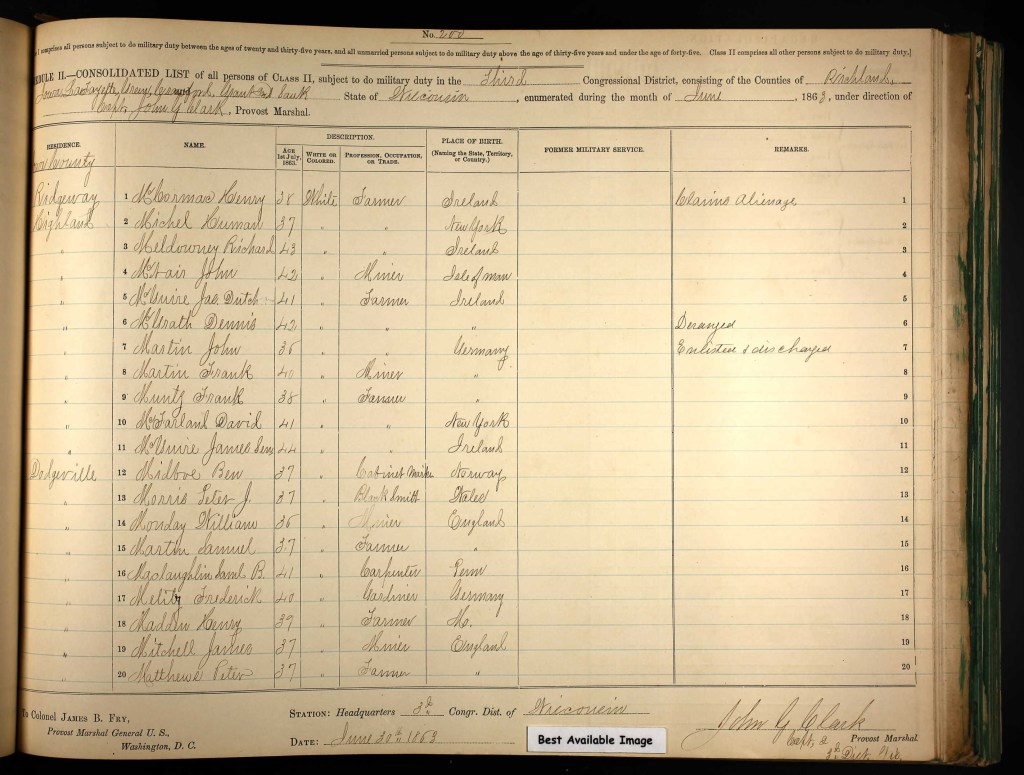
The document above is the Civil War Draft Registration Record for the 3rd Congressional District of Wisconsin, dated 30th June 1863. It lists ‘all persons of Class II, subject to do military duty’, and one person listed is James Mitchell, age 37, occupation ‘miner’, place of birth ‘England’. His place of residence is listed as Dodgeville, Iowa County, a mining town with a large number of immigrants from Britain and elsewhere. The fact that this person is classified as Class II rather than Class I implies that he was married, although there is no evidence that James Mitchell ever married or had children. It may be the same James Mitchell, but quite possibly not, but an interesting document nevertheless.
James Mitchell is commemorated on a chest tomb (CY369-371) at Wainsgate, where his grandparents (William and Mary Cousin), his mother (remarried, and now Mary Newell) and his sister Sarah Mitchell are buried –
‘Also JAMES MITCHELL, grandson of the above WILLIAM & MARY COUSIN, who died at Peshtigo, USA, Dec 4th 1887, aged 61 years and was interred there.’
* * *


We don’t know when James Mitchell moved to Peshtigo, a logging town in Marinette County, Wisconsin (or perhaps he was just visiting when he died) but he may have witnessed, and survived, the Peshtigo Fire of 1871, when the town and around a dozen surrounding villages were destroyed. After a long dry summer, a number of devastating wildfires broke out in Wisconsin and Michigan on 8th October 1871. The Peshtigo fire remains the deadliest wildfire in recorded human history. The number of deaths has never been accurately determined, but is believed to be between 1,200 and 2,400, including around 800 in the town of Peshtigo itself: between 1.2 million and 1.5 million acres of land were burned and around 2 million trees destroyed.

The Peshtigo Fire occured on the same day as the Great Chicago Fire, and as a result has largely been forgotten by history: it occured in a remote region rather than one of America’s largest cities, but the death toll was at least five times greater.
The fire was caused by a combination of hot dry weather, strong winds, and small controlled fires from the ‘slash-and-burn’ land management system that was used in the area: the high winds fanned these fires out of control, and a firestorm ensued.
Since 1883 there has been speculation that the numerous fires in Wisconsin and Michigan on 8th October 1871 were caused by the impact of fragments of Biela’s Comet, but this theory is disputed by most experts.
John PICKLES (1828-1886)
Son of Joseph and Hannah Pickles of Lane Ends, Midgley. Died and buried in America, commemorated on the family headstone at Wainsgate (FY 186). The inscription reads:
Also John, son of the above, born January 21st 1828, died in America October 13th 1886.
We don’t know when or why he emigrated to America, nor do we know where he lived or where and how he died.
Albert SOUTHWELL (1883-1914)
The eldest son of John and Selina Southwell of Hebden Bridge, Albert Southwell was killed, aged 31, in the Hillcrest Mine Disaster in Alberta, Canada. Shortly after 9.00am on 19th June 1914, a methane explosion ripped through the Hillcrest coal mine, triggering further blasts caused by coal dust. Those who survived the initial explosion were exposed to lethal levels of ‘afterdamp’ or carbon dioxide gas. Despite heroic attempts by rescue teams, 189 of the 235 men who had started the morning shift were killed.
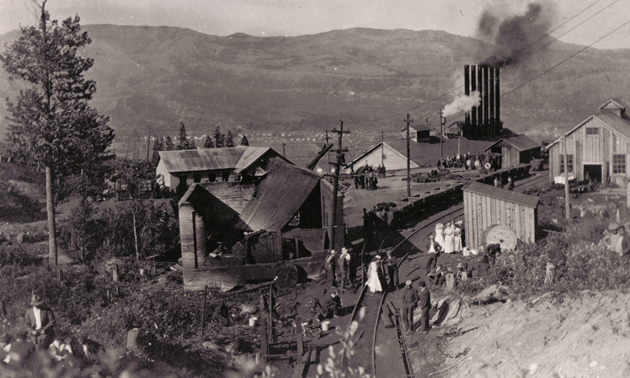
Of the 189 men killed, only 17 were born in Canada: the majority were, like Albert, immigrants, most of whom had arrived in Canada between 1910 and 1914 from Britain, France, Belgium, Italy, Ukraine, Hungary and Poland. It is not known exactly when Albert emigrated to Canada, but he is not listed with the rest of his family in the 1911 Census, and was known to be living in Hillcrest in December 1912.

Albert was working as a timber packer – carrying props and other supplies to the miners at the coalface, a job that involved dragging or carrying timber props hundreds of feet along steeply sloping tunnels.
Many of the victims were buried in two mass graves at Hillcrest, and an inscription on the black granite monument at the cemetery reads:
‘As they had worked, so they were laid. Shoulder to shoulder in common graves’.
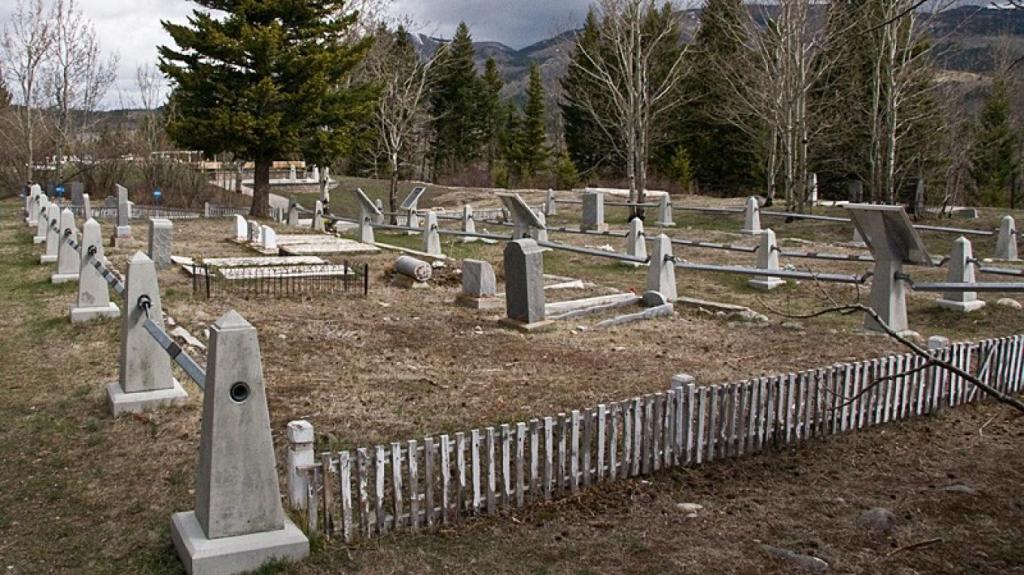


The Southwell family grave at Wainsgate and the Hillcrest memorial.
Hillcrest was Canada’s worst mining disaster, although the story is not well known even in Canada: the First World War broke out only a few weeks later, and the tragedy was soon forgotten.
The Canadian singer-songwriter James Keelaghan wrote one of his best known songs, ‘Hillcrest Mine’ in 1989:
‘Down in the mines of the Crowsnest Pass, it’s the men that die in labour
Sweating coal from the womb of the pit, it’s the smell of life they savour
And in that mine, young man, you’ll find a wealth of broken dreams –
As long and as dark and as black and as wide as the coal in the Hillcrest seam’.
Albert’s father John died in 1916, aged 59, not knowing that two more of his sons would soon be victims of the First World War: Willie Southwell was killed in Flanders in 1917, aged 21, and Fred Southwell was killed in France in 1918, aged 27. Their mother Selina died in 1926, aged 63. Albert is commemorated on the family headstone (plot F759) at Wainsgate with his parents and brothers.
* * *
OFFCUMDENS
Mary Elizabeth HARRIS (born BUNNEY) (c1844-1922)
Polly BEVAN (born HARRIS) (c1872-1935)

Mary Elizabeth Harris and her daughter Polly were both born in Menheniot, a village near Liskeard in Cornwall, which was the centre of a lead mining boom which lasted from the 1840s until the 1870s. We don’t know for sure why or when they moved to Hebden Bridge. In 1871 Mary, aged 27, was living in Menheniot with her 32 year old husband Thomas (a cordwainer, or shoemaker, born in St. Winnow, Cornwall) and three young children.
In 1881 Mary, now a widow, was living at 4 Gibraltar, Hebden Bridge with the same children and two younger children, Polly aged 9 and William aged 7. All five children were born in Menheniot. We don’t know whether Thomas died before or after the move to Hebden Bridge – no matching death records in either Todmorden or Liskeard registration districts have been found. Mary was employed as a finisher tailoress and the three eldest children (aged 12, 14 and 15) were doffers or spinners in a cotton mill.
In 1891 the family lived at 14 Gibraltar, and Polly was a fustian tailoress, and in 1901 and 1911 Mary and Polly were living together at 10 Holme Place, Hebden Bridge. Polly married James Bevan (probably a cotton weaver, born in Bury and living in Hebden Bridge) in 1922, when she was aged about 50 and he was about 46.
Mary Elizabeth Harris died in 1922 aged 78, Polly died in 1935 aged 63, and James Bevan died in 1952 aged 77. At the time of their deaths, all three were living at 7 Buttress, Hebden Bridge They are all buried in plot E901 (bought by Polly in 1915) which is marked with a small marker stone inscribed P.H.
William James BUNNEY (c1812-1888)
Mary BUNNEY (c1821-1897)
Ann BUNNEY (c1856-1905)
Mary Elizabeth Harris was almost certainly born Mary Elizabeth Bunney, and in 1881 her neighbours living at 3 Back Gibraltar were William James Bunney (probably her father), his wife Mary Bunney, three adult daughters and an adult son. All six are recorded in the 1881 census as being born at Menheniot, although other records suggest that William James Bunney was born in St. Germans, near Plymouth.
We don’t know when the Bunney family moved to Hebden Bridge although it is likely that it was around the time when Mary Elizabeth Harris and her family moved here. The 1881 census recorded William as being aged 67 and unemployed, and the 1851 and 1861 censuses record him living in Menheniot and working as an agricultural labourer.
William James Bunney died in 1888 aged 76, and was living at Gibraltar at the time of his death. Mary, who was living at 104 Market Street, died in 1897 aged 76, and their daughter Ann Bunney, who was living at 8 Commercial Street, died in 1905 aged 49. All three are buried in plot B58a, which is marked by a small marker stone inscribed J.W.B No 58.

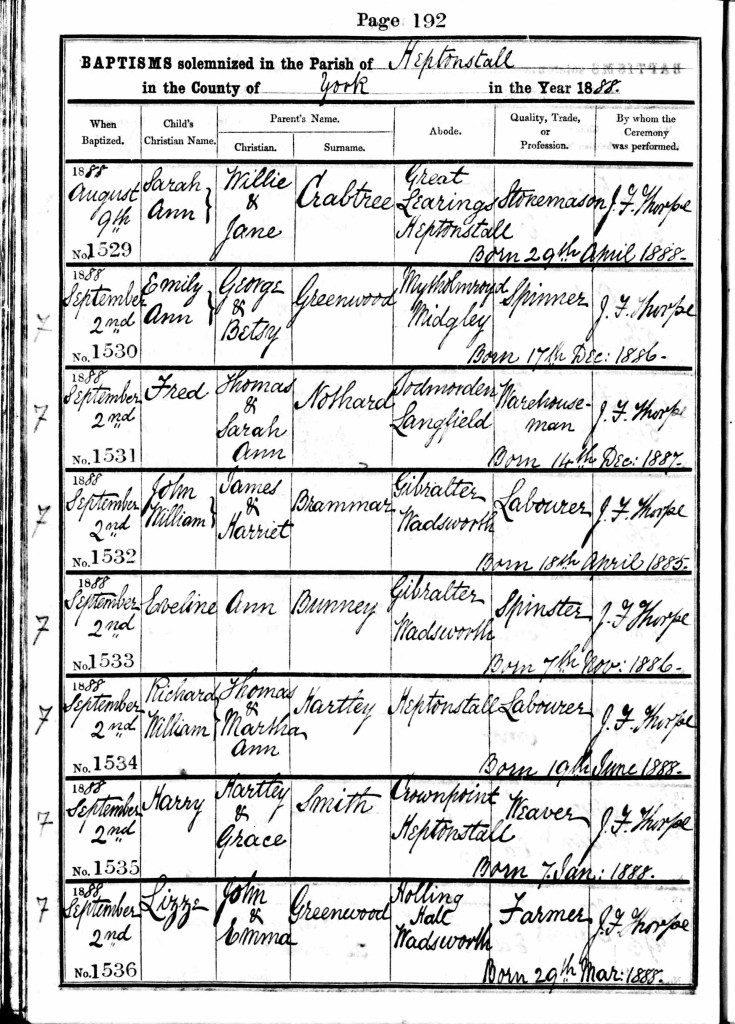
There are three other people thought to be buried in this plot, all daughters of Ann Bunney, who never married. Elizabeth Greenwood Bunney (recorded in the burial register as ‘child of Ann Bunney’) of Gibraltar died in 1878 aged 2. Her birth was registered as Elizabeth Bunney, but her death was registered as Elizabeth Greenwood Bunney – indicating that her father was probably a Greenwood. Mary Elizabeth Bunney of Gibraltar died in 1882 aged 3 months, and Evelyn (or Eveline) Bunney of 104 Market Street died in 1904 aged 17 (her birth was registered as Eveline, her death as Evelyn).
Julia Hannah VIAN (born GOYNE) (1864-1949)
Richard Francis VIAN (1891-1965)
Richard Francis Vian and his mother Julia Hannah (sometimes recorded as Hannah) were both born at St. Agnes, Cornwall. Records indicate that in 1881 Hannah Goyne, aged 16, may have been a neighbour of her future husband, 19 year old Richard Vian, in Gooninis, St.Agnes – both came from tin mining families.
In the 1891 census Julia H Vian was living at Goonown with her son, aged 2 months, and a boarder, Sydney Vian, a tin miner who was possibly her brother-in-law. Her husband Richard, who she married in 1890, is not recorded.
In 1901 Julia, now a 35 year old widow, was living in Halifax, at 188 Hanson Lane, as a ‘nurse (domestic)’ with the five children of Thomas Washington Benson (a prosperous worsted spinner), a female servant and a female visitor (possibly an aunt or cousin of the children). There is no record of the children’s parents in the 1901 census, so perhaps they were abroad? There is also no record of Richard Vian’s death – possibly he died abroad, perhaps serving in the army? (Julia’s entry in the 1911 census seems to imply that she was married for six years, and that Richard Francis was her only child).
Richard Francis Vian appears in the 1901 census as Richard Vian, aged 10, born in Truro, Cornwall (St. Agnes was in the Truro registration district), ‘resident scholar’ in The Orphanage, Savile Park, Halifax.

The orphanage, properly known as the ‘Crossley and Porter Orphan Home and Schools’ was established in 1864 by three brothers from the Crossley carpet making family, and was further endowed in 1887 by Thomas Porter, a Manchester yarn merchant. The aim of the institution was to ‘lodge, board, clothe, educate and apprentice children who had either lost both parents or just their father’. As well as reading writing, arithmetic and bible study, all the children were taught geography, drawing, natural science and singing: the more able boys could also study Latin, modern languages, algebra and geometry. The institution later became The Crossley and Porter Schools, and in 1985 merged with Heath School to become The Crossley Heath School, which still occupies the original buildings.
Thanks to The Children’s Homes website by Peter Higginbotham childrenshomes.org.uk
In 1911 and 1939, Richard and his mother were living at 17 Windsor Road, Hebden Bridge, and he is recorded as being a turner in a machine tool making shop, and in 1944 he married Elizabeth Ann (Cissie) Haigh, daughter of Henry and Priscilla Haigh. Julia Hannah Vian died in 1949, aged 84, and Richard Francis Vian died in 1965 aged 74. Cissie Vian died in 1982, aged 89. Richard and Cissie are buried in plot C651 with Cissie’s parents: Julia’s name is not on the gravestone but her burial is recorded in the burial register, so it is assumed that she is interred in the same plot.
Richard’s entry in the burial register records his address as Lee Mill Road, Hebden Bridge, but his death was registered in Upper Aggbrigg registration district: a possible explanation is that he was a patient at Storthes Hall Hospital, Kirkburton, at the time of his death.
Albert Edward PICO (c1886-1932)
Albert Edward Pico was born in Liverpool in 1885 or 1886 (he was baptised at St. Lukes parish church, Liverpool on 10th February 1886), the son of Danish born Frederick Pico, a ‘licensed victualler’ (in 1911 landlord of the Seel Arms, Huyton Quarry) and his wife Mary, born Mary Brown in Stroud, Gloucestershire.
Records show that he travelled to New York on RMS Etruria, arriving in April 1902 (when he would have been about 16), and that he left the United States in April 1904. He must have returned to England (perhaps to visit his family after the death of his mother in 1903), because he left Liverpool, aged 19, on 25th February 1905 aboard RMS Caronia, arriving in New York on 6th March. He seems to have been travelling with two other men: William Heyes, aged 41 and 27 year old Robert Swift. All three gave their last residence as Huyton and their final destination as Niagara Falls, Ontario. The occupations of the three men recorded on the ‘List or Manifest of Alien Passengers for the U.S. Immigration Officer at the Port of Arrival’ are unclear: Albert appears to have been a barman and Robert Swift a miner. William Heyes’ occupation could be ‘duct layer’, and he seems to have already visited Niagara Falls – perhaps he had been working on the Rankine Generating Station, a hydro-electric plant in Niagara Falls, Ontario which opened in 1905.
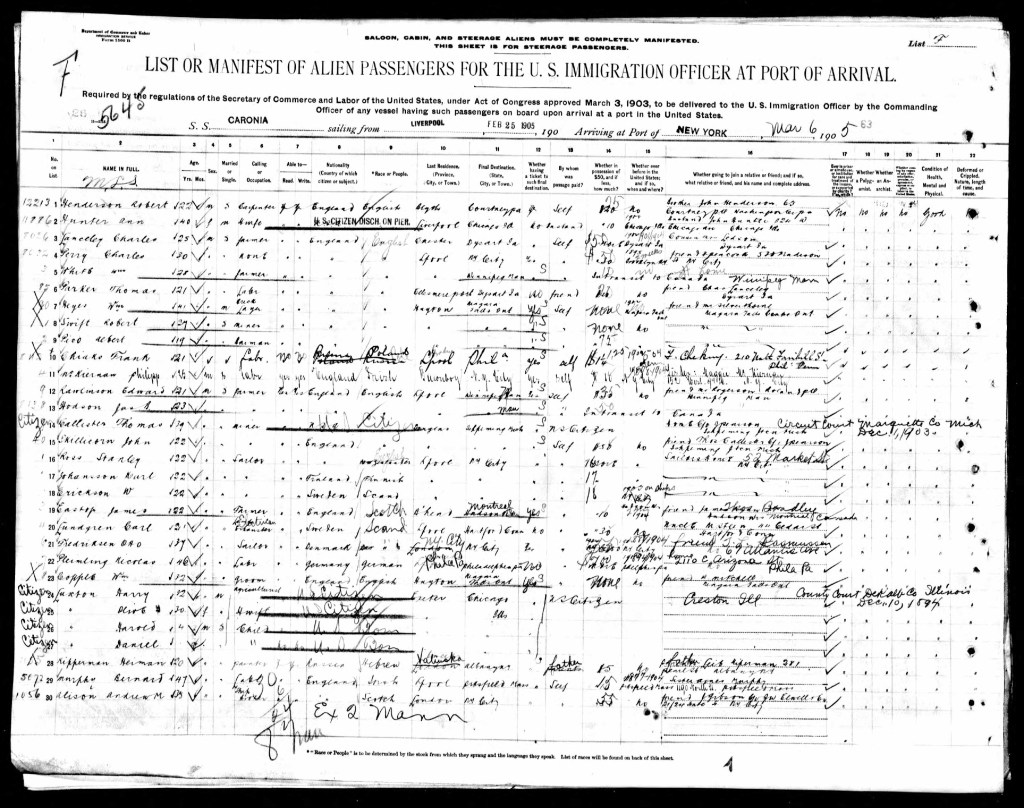
All three replied in the negative to the questions ‘Whether a Polygamist’ and ‘Whether an Anarchist’, which were among the questions asked on the form by the US Immigration Officer. Other questions included ‘Ever in prison or almshouse, or institution for care and treatment of the insane, or supported by charity?’ and ‘Deformed or Crippled. Nature, length of time, and cause’. Immigrants were also asked whether they could read and write.
As well as asking for the immigrant’s nationality, they also had to state their ‘Race or People’. An explanatory note on the form said that this was determined by ‘…..the stock from which they sprang and the language they speak. List of races will be found on the back of this sheet’.
This list contained 47 ‘Races’, mostly European, including Bohemian, Herzogovinian, Italian (North), Italian (South), Magyar, Moravian, Russian and Ruthenian (Russniak). The continent of Africa is represented by just one category – African (black): the only other non-European ‘races’ included in the list were Armenian, Chinese, Cuban, East Indian, Filipino, Greek, Hebrew, Japanese, Korean, Mexican, Pacific Islander, Spanish-American, Syrian, Turkish and West Indian.
Albert crossed from Canada to the United States in March 1905, from Niagara Falls, Ontario to Niagara Falls, New York (both countries have identically named cities on opposite banks of the Niagara river). He was 19 years old and gave his occupation as bartender. The immigration card also records him as being 5ft 6ins tall and weighing 235lb.
He travelled to England again in December 1913 (probably due to the death of his father), sailing from New York to Liverpool aboard RMS Alaunia, returning to Portland, Maine in April 1914 aboard SS Canada. The ship’s manifest records him as aged 27, a bartender, returning to Toronto. His nationality is recorded as British, but his ‘Race or People’ as ‘Scandinavian (Danish)’.
We know that around 1914 Albert was living and working as an assistant steward at the Toronto Free Hospital for Consumptive Poor (later known as the Weston Sanatorium). Around 1920 his address was Camp 15, Canadian National Railways, Capreol, Ontario – probably a railway construction or maintenance camp, where perhaps he was working as a cook or steward.
Albert served with the Royal Army Veterinary Corps in Woolwich between 1916 and 1919. The full story of his wartime service is told here.
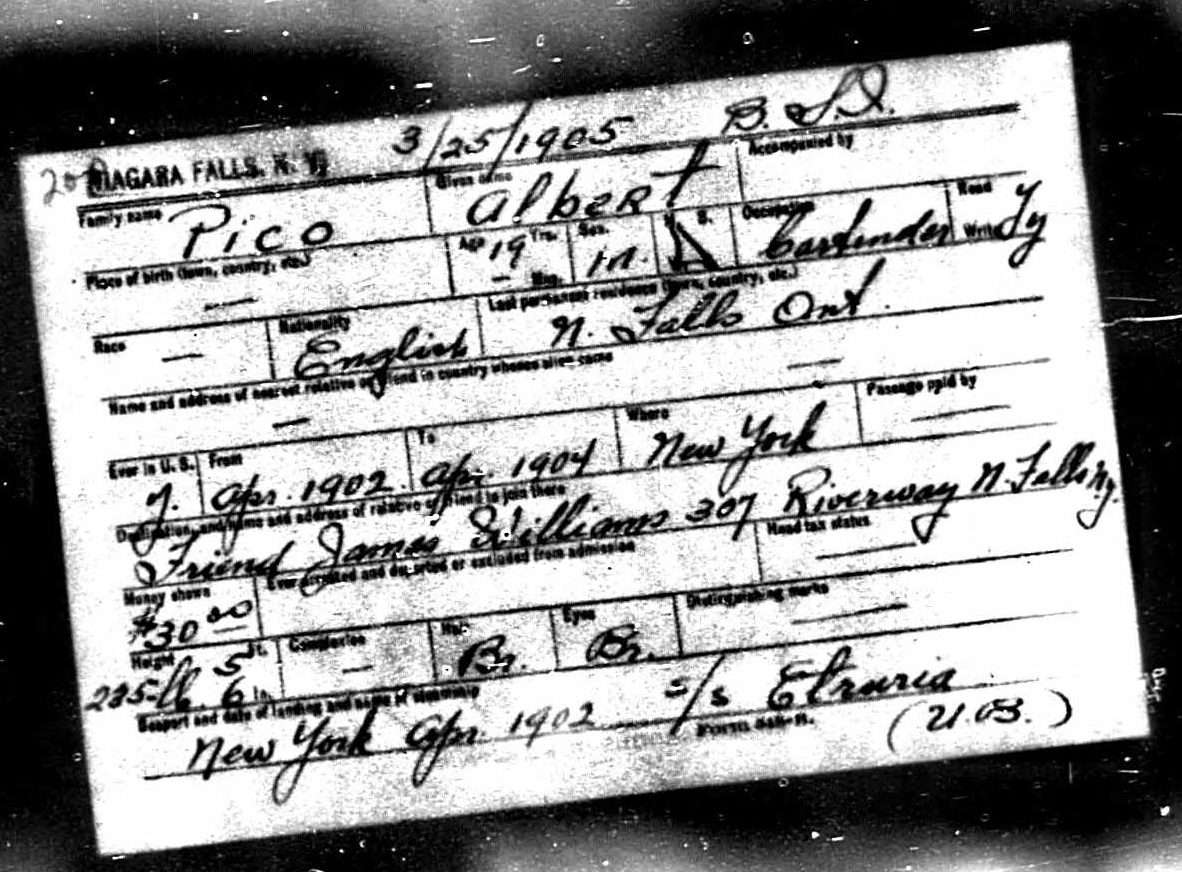
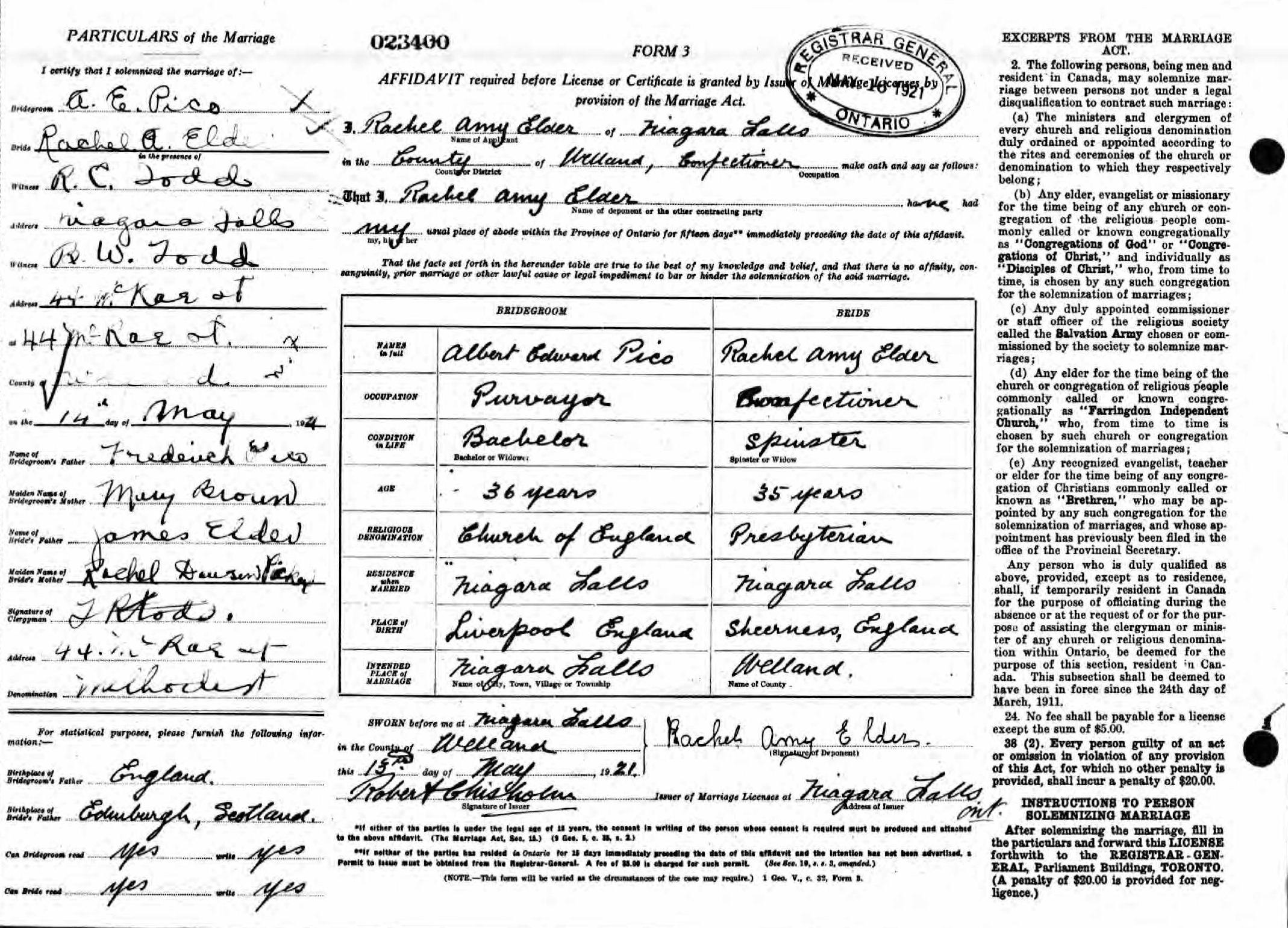
Albert Edward Pico married Rachel Amy Elder on 14th May 1921 at Niagara Falls, Welland County, Ontario. Rachel was a confectioner, born in Sheerness, England, and gave the birthplace of her father, James Elder, as Edinburgh, Scotland. Albert’s occupation seems to be recorded as ‘Purvayor’, and he gave the birthplace of his father as England. Albert and his wife (calling herself Amy) appear in the 1921 Canada census (dated 1st June 1921), living in Alexandra House, a hotel or lodging house in Niagara Falls: both are recorded as Canadian nationals, and Albert’s occupation is recorded as cook. Albert is also known to have lived at Clifton Hotel in Niagara Falls around 1921.


In 1922 Albert was living at the YMCA in Toronto, and working in the cafeteria there. We don’t know whether Rachel was living there, what happened to her after 1921, or whether they had any children. Albert died in Hebden Bridge on 21st December 1932, aged 46 or 47. His address at the time of his death is recorded as 3 Royd Square, Hebden Bridge, and he is buried in plot E906 at Wainsgate, which was bought on 28th December by B.A.Jackson, also of 3 Royd Square.
The 1933 Electoral Register shows Albert living at 3 Royd Square, Hebden Bridge with Ben Albert Jackson and his wife Jessie Eveline Jackson – the register for 1933 will have been prepared before Albert’s death in 1932. This is the only entry in the West Yorkshire Electoral Registers for Albert Pico, so it is likely that he came to Hebden Bridge just before his death. It is almost certain that Jessie Eveline Jackson was Albert’s younger sister, born in Liverpool in 1894.
Alexander (Alex) Kwasi SARKODEE – ADOO (1936-1991)
Alex was born in Ghana, West Africa, in 1936 and worked as a secondary school teacher before coming to Britain in the 1960s. He studied accountancy at Leicester University, where he met Rodney Watson from Hebden Bridge. In 1972 Alex married Emily Solomon in Leicester, and shortly afterwards the couple moved to Hebden Bridge, seemingly as a result of Alex’s friendship with Rodney. Alex worked as an accountant for Oldfield Watson builders (an old established family building firm founded by Rodney’s great grandfather Oldfield Watson) in Hebden Bridge – he also had a second job collecting football pools coupons. Emily and Alex had two children – Kwasi born in 1974 and Afua, born in 1978.
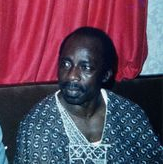

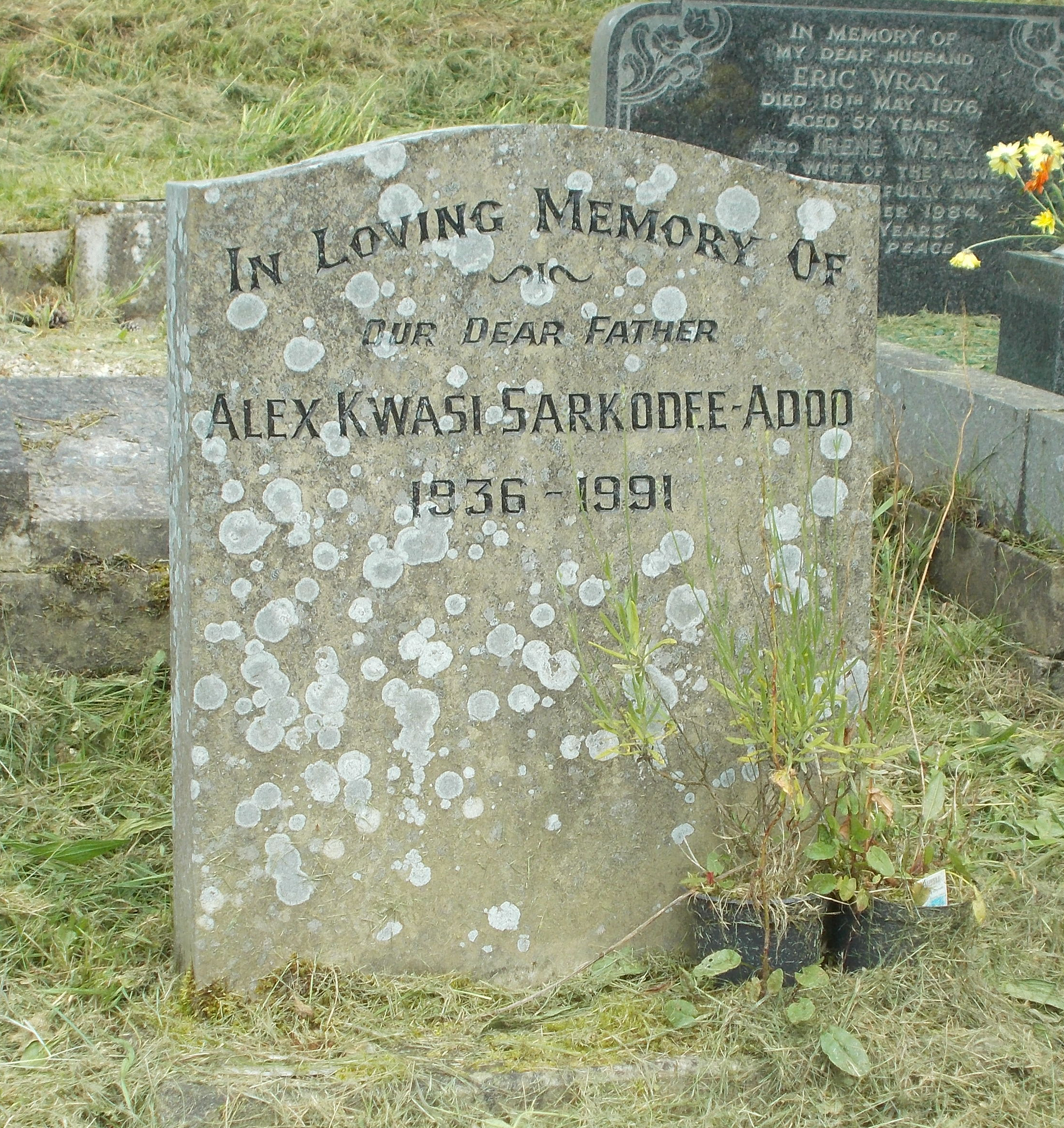
Alex lived for almost twenty years in Hebden Bridge, which apparently reminded him of his home town of Koforidua – its greenery, hills and its close knit community. He was living at Bank Terrace, Mytholm, when he died in 1991, aged 54, and although he attended Hebden Bridge Methodist Church, he was buried at Wainsgate (plot I917). His funeral, attended by friends and family from London and Ghana was by all accounts an event that won’t be easily forgotten – people said they had never seen anything like it in Hebden Bridge, and probably never would see anything like it again.
Thanks to Afua Sarkodee-Adoo for her memories and photo of her father.
Modesta Bergliot SUNDERLAND (born BRYNJELSEN) (1888-1956)
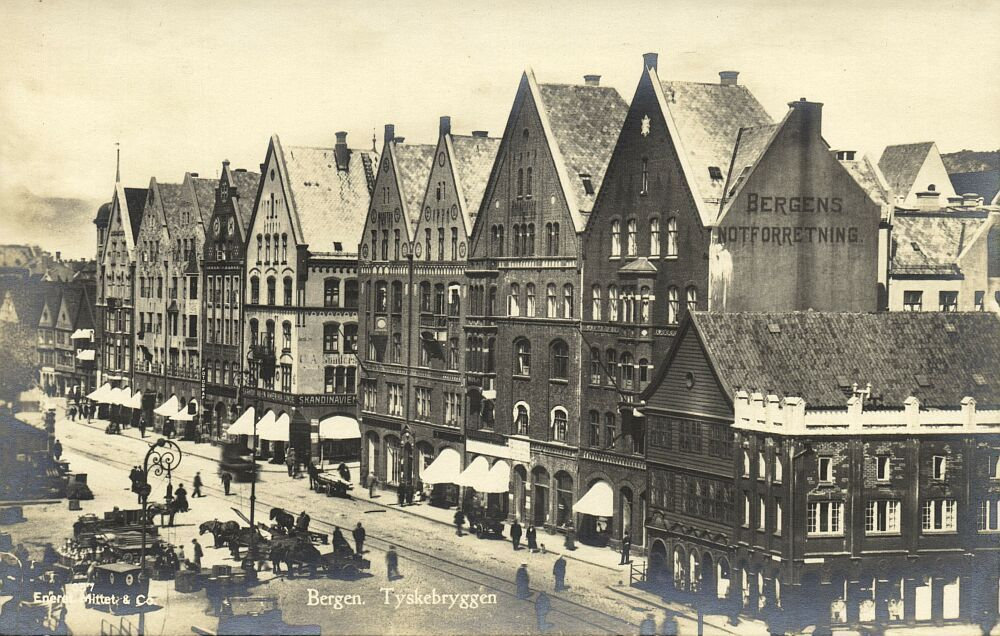
Born Modesta Bergliot Brynjelsen (sometimes spelt Brynildsen: Norwegian records give her name as Bergliot Brynildsen, British records usually as Modesta Bergliot Brynjelsen) on 23rd October 1888 in Bergen, Norway. In 1910 she was living with her widowed mother Olufine and three siblings in Bergen, but in 1911, aged 22, she was working as a domestic servant for William Henry Mitchell, John Cousin Mitchell and Clara Mitchell at Boston Hill.
The property is described in the census as having 30 habitable rooms, but the only occupants were the three unmarried Mitchell siblings, Modesta and another domestic servant, 24 year old Mercy Holmes (a farmer’s daughter from Little Eccleston, Lancashire, who married Andrew Thomas Kershaw in 1915 and died in 1932 aged 45).

In 1923 Modesta married a local man, Wallace Lindsey Sunderland, a tailor by trade and later a chicken farmer and smallholder. Wallace had served with the Duke of Wellington’s Regiment during WW1 and was hospitalised in Nottingham from September to December 1918 with influenza, presumably a victim of the ‘Spanish Flu’ pandemic. His younger brother Clarence Ingham Sunderland was killed in action in Belgium in 1916, aged 20.
Modesta and Wallace were living at 18 Marsh, Oxenhope when she died on 5th December 1956 aged 68. Wallace died on 22nd January 1959 aged 69. They had no children. They were both cremated at Skipton, and although neither of them are recorded in the burial register, it is likely that their ashes were interred in the Sunderland family grave (plot F772/773), marked by a grey granite cross, where they are commemorated.

Job KITCH (1874-1946)
Margaret KITCH (born SHAW) (1874-1971)
Job Kitch was born in County Durham, either at Tanfield or at nearby Beamish: his father Charles, born in Taunton, Somerset, was a coal miner, as was at least one of Job’s brothers. His mother Elizabeth was born in North Wales. He married Margaret Shaw, also from County Durham, at St.Anne’s Church, Bishop Auckland in 1894.
In 1911 Margaret was living in Stanley, County Durham, with their eight daughters – the eldest, aged 15 was a dressmaker, the others were at school or below school age. Also living with them was 34 year old Henry Shaw (presumably Margaret’s brother), an unmarried coal miner. Job Kitch was living at Heighington, near Darlington, with William Merryweather and his family – Job and William were both coal miners (hewers) and William’s 16 year old nephew was a screen boy.
We don’t know why or exactly when Job and Margaret moved to Wadsworth, but they are recorded in the electoral register for 1918 living at Chiserley Field Side, and later at Waterloo Bank, Old Laithe and Coronation Terrace. Their ninth and final child (and only boy), George Charles Kitch was born in May 1913, and his birth was registered in Keighley.
In 1939 Job and Margaret were living at 6, Coronation Terrace with George (still single – he appears to have married a local woman, Margaret Sutcliffe, in 1941) and an unmarried daughter Norah. Job was employed as a cotton warehouseman, George as a fustian warehouseman and Norah appears to have been an examiner in a ready-made clothing factory. Margaret’s occupation was recorded as unpaid domestic duties.
Job died, aged 72, at Coronation Terrace on Christmas Day 1946, leaving effects to the value of £379 4s. Margaret was still living at Coronation Terrace when she died in 1971, aged 96. They are both buried in plot J779, the grave marked by simple uninscribed kerbs and a vase.
The JONES Family
Thomas JONES (1870-1935)
Elizabeth JONES (born NELSON) (1873-1942)
Christiana Agnes JONES (1896-1944)
Janet JONES (1897-1952)
Amy JONES (1906-1952)
Thomas Nelson JONES (1904-1971)
Ruth Ella REDDIHOUGH (born JONES) (1900-1984)
The Jones family moved to West Yorkshire from Ryton, County Durham (a mining area, six miles west of Newcastle) sometime between 1911 and 1921.
In 1911, Thomas Jones, his wife Elizabeth (born Nelson) and their eight children, aged between 2 and 14, were living in Ryton, where Thomas was employed as a ‘stoneman’ in a coal mine (a stoneman excavated rock and other material, presumably to expose the seams of coal for the hewers). Thomas was born in Hunslet, Leeds in 1870, Elizabeth was born in Ridsdale, Northumberland and all of their children were born in Ryton, where the couple had married in 1896. At the time of their marriage Thomas was working as a ‘plate-layer’, laying and repairing railway tracks, possibly at the local coal mine (Townley Main, or Emma colliery).
Thomas died in 1935, aged 64, and Elizabeth died in 1942 aged 68. Both were living at 3 Waterloo Bank, Old Town, and Thomas left effects to the value of £189 10s. 9d.
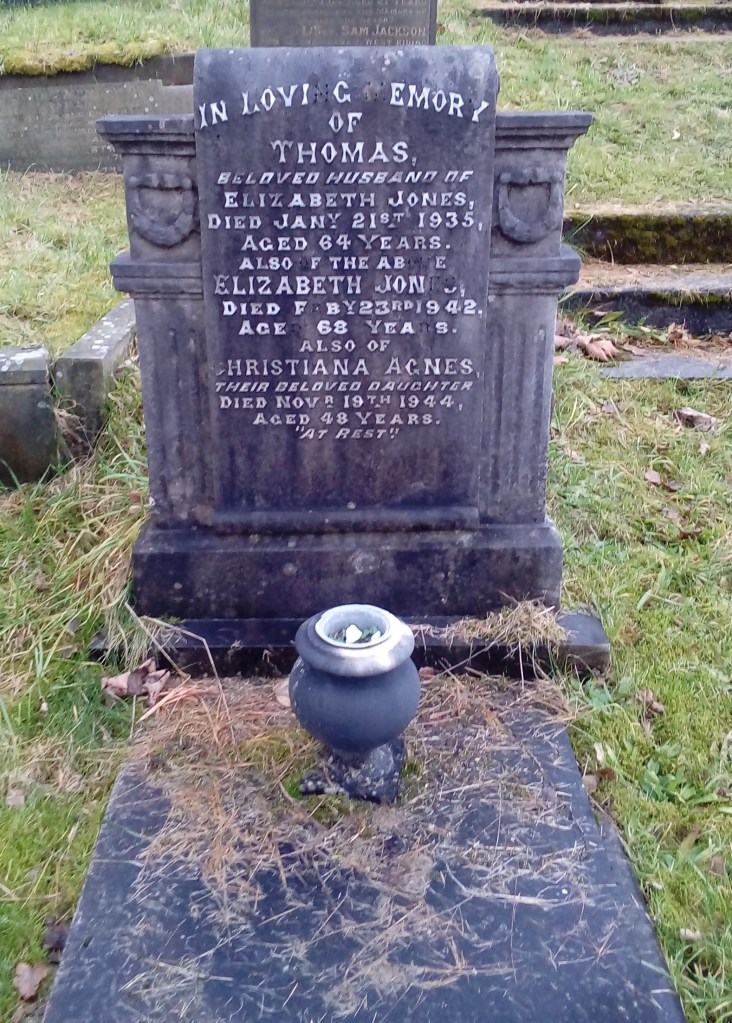
Thomas and Elizabeth are buried in plot B1178 at Wainsgate, together with their eldest daughter, Christiana Agnes Jones.
We know that Christiana (named after her paternal grandmother) was born in Ryton, and was living there with her parents in 1911. In 1939 she was living at Stocka House Farm, Bingley, employed as a domestic servant by the Procter family.
Christiana, who did not marry or have any children, was living at 3 Waterloo Bank when she died, aged 48, in 1944. She left effects to the value of £250 9s. 3d.
Two more of Thomas and Elizabeth’s daughters lived at 3 Waterloo Bank and are buried at Wainsgate – Janet Jones and Amy Jones.
Janet died on 6th April 1952, aged 54, at St. Johns Hospital Halifax, leaving effects valued at £216 13s. 3d. Her younger sister Amy died three months later, on 12th July 1952, aged 46, at Halifax General Hospital. She left effects to the value of £445 12s. 4d.
Janet and Amy are buried in plot E994 with their brother, Thomas Nelson Jones, who died in 1971.

In 1921 the electoral register shows Thomas and Elizabeth Jones living at 3 Waterloo Bank, presumably with some or all of their eight children. The 1928 electoral register shows Thomas, Elizabeth and their son Thomas Nelson Jones living at the same address, and the 1939 England & Wales Register has Elizabeth (now widowed), Amy, Janet and another son, John Nicholas Jones living there. Also recorded in the Register as living at 3 Waterloo Bank were Elizabeth and Doreen Fitton, aged 10 and 8, who are believed to be the daughters of another of Thomas and Elizabeth’s daughters, Mary Elizabeth Jones, who married Charles Fitton and lived in Bradford. Thomas Nelson Jones is not listed in the 1939 Register, possibly because he had signed up for military service, although he is recorded in the 1940 electoral register.
Waterloo Bank is a terrace of six houses, built in 1894 by the Mitchell family. The Jones family rented No.3 from the Mitchells until 1948, when Thomas Nelson Jones purchased the freehold from Abraham Gibson and Constance Calverley, the inheritors of the Mitchell estate. He paid £550 for the property, with a mortgage from the Hebden Bridge Industrial Co-operative Society.
Following the deaths of his sisters Janet and Amy in 1952, Thomas sold 3 Waterloo Bank in January 1953 to Percy George Atack and Mary Sharpe for £480, and they sold it in March 1953 to Ernest Pragnell for £450. At the time he sold the property, Thomas’s address was recorded as 44 Warley Wood Avenue, Luddendenfoot.

Thomas Nelson (known as Tommy) Jones was a member of the Wainsgate choir, appearing in at least two of the group photographs. He was also a member (tenor) of the choir that made the 1951 HMV recording at Wainsgate.
The only documents that record his occupation are the papers relating to the purchase and sale of his house, which say that he was a Northrop weaver.
At the time of his death in 1971 at the age of 66, he was living in a council flat at College bank, Rochdale. He never married and had no known children.
The probate records record that he died between the 5th and 16th of January 1971 – the uncertainty implies that he possibly either went missing or died alone and was not found for a few days. The amount of his estate is also interesting – for someone who came from a working class background, worked as a power-loom weaver and lived in a council flat, £26,903 was a considerable amount of money to have accumulated.

Another of Thomas and Elizabeth’s daughters, Ruth Ella Jones, moved to this area, and in 1931, aged 31, she married Joseph Henry Reddihough, a farmer aged 44. In 1939 they were living at Roebucks Farm near Luddenden Foot.
They had three children: Muriel Reddihough (1943-1995), Granville Reddihough (1931-2015) and a daughter Mary (recorded on the family memorial as ‘an infant’) who was born in 1942 and lived for only six hours.
Joseph died in 1958 aged 70 and Ruth died in 1984 aged 83. They are all buried in the Reddihough family grave at Wainsgate (C640/641), marked by an imposing black granite memorial.

Oskars JAUNALKSNIS (1921-2002)
Oskars Jaunalksnis of 49, Moorfield, Old Town, died on 28th February 2002, aged 80, and was buried on 14th March in Wainsgate graveyard. It is assumed that he was buried in plot E967, which has no headstone or other marker and was bought by Lily Jane Dale (born Dalton) of Old Town Hall Cottages in 1944 on the death of her husband George Dale. Lily Jane was presumably also buried in this plot when she died in 1948, as was their daughter Agnes Clara, who had married Oskars Jaunalksnis in 1964. Agnes would have been around 53 years old at the time of their marriage, so it is highly unlikely that they would have had any children.
Apart from the official records of his marriage and death, we have not been able to find any records for Oskars’ birth, so he was probably born outside Britain – his name suggests that he is likely to have come from Latvia. If he was born in Latvia or elsewhere, when did he come to this country, and why – and what brought him to Wadsworth?
The BIRKETT Family
Joseph BIRKETT (1879-1951)
Mary Hannah BIRKETT (born JACKSON) (1883-1923)
Marion Graham BIRKETT (1905-1966)
Margaret Jackson DEARDEN (born BIRKETT) (1908-1987)
Joseph Wilson BIRKETT (1909-1944)
John BIRKETT (1911-1980)
Amy Irene CLARKSON (born BIRKETT) (1913-2002)

Joseph Birkett was born in 1879 at Wasdale Head, Cumberland, the son of John Birkett, a farmer from Borrowdale and his wife Jane. In 1901, aged 21, he was working on his father’s farm at How Hall, Ennerdale, and in 1904 married Mary Hannah Jackson who was born in Kirkland, Cumberland.
How Hall Farm
In 1911 Joseph and Mary Hannah were living at Mill House, Ennerdale, and 31 year old Joseph was recorded in the census as ‘Farmer’s son working on farm’. His father was still farming at nearby How Hall Farm, so presumably Joseph was working on the family farm. Joseph and Mary Hannah had been married for six years, and had four young children – Marion Graham Birkett, Margaret Jackson Birkett, Joseph Wilson Birkett and John Birkett. A fifth child is recorded as having died.


Three of their children are recorded as being born in Ennerdale, Cumberland, but Margaret is recorded as being born in West Tisted, Hampshire. She was born on 19th June 1908 and baptised in the parish church on 19th July: her father’s occupation is recorded as ‘shepherd’. Presumably the family moved to Hampshire some time after 1905 (when their daughter Marion was born in Ennerdale) and returned to Cumberland before their son Joseph was also born in Ennerdale.
Before leaving Cumberland, Joseph and Hannah had another daughter – Amy Irene Birkett, born in 1913: her birth was registered in Whitehaven registration district, and she was probably born in Ennerdale.
Mary Hannah Birkett died at Eskdale on 11th March 1923, aged 39. She is buried at St. Michael’s churchyard, Lamplugh, with her parents Tom and Agnes Jackson and her sisters Sarah and Margaret, and is also commemorated on the family headstone at Wainsgate.
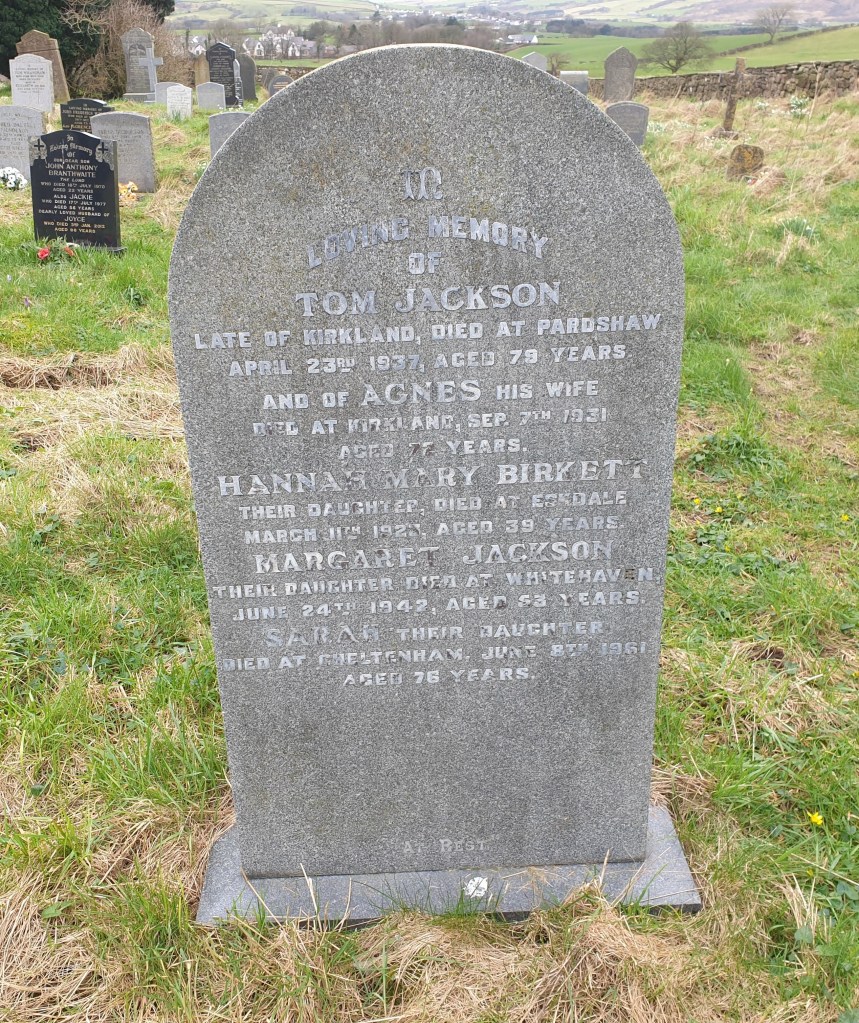

We don’t know exactly when (or why) the Birkett family left Cumberland for Wadsworth: it was presumably after Hannah died in 1923, and the earliest appearance of any of them in the local electoral registers is 1930, when Joseph is recorded living at ‘Bogedge‘ – presumably Bog Eggs (or as it now seems to be called, Allswell Farm). Members of the family are later recorded at Carrs, Rowlands, Raw Royd and Calder Place.
The 1939 Register records Joseph Birkett, his son Joseph and daughter Marion living at Rowlands Farm, Wadsworth – Joseph’s occupation is listed as ‘Mixed farming, retired unfit’, his son is described as a ‘Coal bag maker (blind)’ and Marion a ‘Finisher, ready made clothing’. Joseph Wilson Birkett died in January 1944, aged 34 – he was living at 6, Raw Royd, Wadsworth, but his death was registered in Halifax, and he was buried at Wainsgate (plot E961).

Joseph Birkett died on 25th March 1951, aged 71 at 15, Calder Place, Hebden Bridge, leaving effects to the value of £154 17s 4d to his unmarried daughter Marion. He was buried at Wainsgate with his son. Marion Graham Birkett died in Hebden Bridge on 28th July 1966, aged 61. She was living at 71, Bridge Lanes but died at 67, Bridge Lanes: her ashes are assumed to be interred in the family plot. She left effects worth £1,388 to John Birkett, ‘fettler’.
In 1945 John Birkett married Olive Crabtree. Olive (born Hamer) was the widow of John Crabtree, who she had married in 1940 and who was killed, aged 27 at El Alamein in 1942, while serving with the 41st (Oldham) Royal Tank Regiment. The couple had a daughter Kathleen Jean Birkett (known as Jean) who died in 1972 aged 22. John Birkett, who was living at 4, Waterloo Bank, Old Town died in 1980 aged 69. Olive was living in Heywood when she died in 1989, aged 81. None of them are recorded in the burial register, but it is assumed that all three are interred in plot E961.
The other two daughters of Joseph and Mary Hannah both married local men: Margaret Jackson Birkett married Harry Dearden in 1936. Harry died on 10th December 1987, aged 87 and Margaret died three weeks later, on 30th December, aged 79. Margaret was buried at Wainsgate on 4th January 1988, and Harry’s ashes were interred with her.
Amy Irene Birkett married Frederick Arthur Clarkson, a shopkeeper from Todmorden in 1935 Frederick died in 1983, aged 72 and Amy died in 2002, aged 88. Neither of them are recorded in the burial register, but it is assumed that they are interred in plot E961 with the other members of the Birkett family.
The JACKSON Family
William JACKSON (c1848-1933)
Jane Ann JACKSON (born CHAPPELOW) (1851-1919)
John William JACKSON (1872-1954)
Alice Mary SOWDEN (born JACKSON) (c1875-1943)
Elizabeth JACKSON (1876-1897)
Henry JACKSON (1884-1963)
William Jackson was born in North Yorkshire, the son of Thomas Jackson, a farmer, and his wife Jane. His place of birth is recorded on various census forms as Ripon, Ripley, South Stainley and Cayton: it seems from baptism records that he was born at Cayton Grange, a farm near South Stainley, which is between Ripley and Ripon.
In 1871 he married Jane Ann Chappelow, a dressmaker and farmer’s daughter born in Bedale, at Ripon cathedral. The marriage certificate records bride and groom as both being 22 years old, although it seems that Jane was actually only twenty.
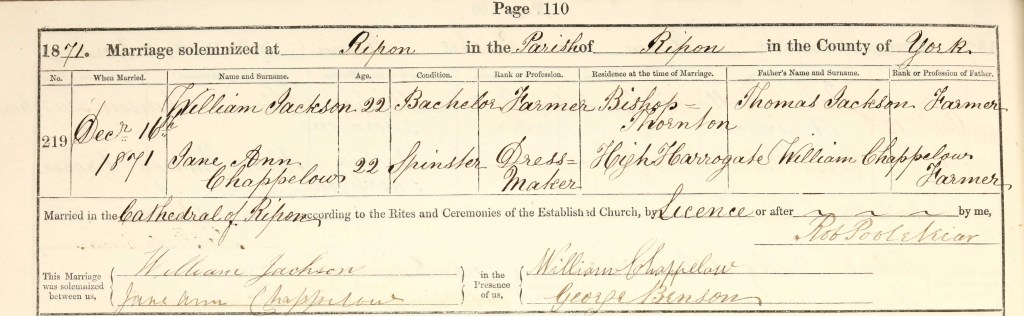
In 1881 William and Jane, who now had five young children, were farming 40 acres at Clint, near Ripley, but in 1891 they were living and farming at Old House, just to the east of Cragg Vale. They now had seven children: John William, Alice Mary, Elizabeth, Annie, Louisa, Henry and Charles Edward. The youngest of their children, Charles Edward, was aged four and born in Ripley, so they must have moved to West Yorkshire sometime between 1887 and 1891.

The 1901 census shows William now at High Hirst Farm (now the site of the Dodd Naze estate): his eldest son John William Jackson was also living at High Hirst with his wife Betty (born Greenwood) and their young son Arthur, and was working on the farm with his father.
In 1911 William and Jane were still at High Hirst Farm, with their son Henry working on the farm with his father. Jane died in 1919, aged 67, and in 1921 William, now retired, was still living at High Hirst. He died at High Hirst Cottage in 1933, aged 85. William, Jane and a daughter Elizabeth, who died at High Hirst in 1876 aged 20, are all buried in plot B261a/262a at Wainsgate.
William’s eldest son, John William, who was born in Darlington, followed his father into farming – he had a dairy farm at Far Rawtonstall, between Hebden Bridge and Blackshaw Head. He and Betty later moved to Bradford – the 1939 Register records them living in Carlisle Street, Manningham and John William’s occupation is recorded as ‘carrier’.
Betty died in 1942, aged 70, and John William bought a burial plot (J752) at Wainsgate. He died in 1954, aged 81, and was buried at Wainsgate with Betty.

Although they were living in Bradford at the time of their deaths, the inscription on the headstone refers to ‘….Betty, wife of John William Jackson of Hebden Bridge….’.
Another of William and Jane’s three sons, Henry, also settled in Hebden Bridge and became a dairy farmer. He was born in Ripley, North Yorkshire, and in 1911 he married Elizabeth Smith, who was born in Manchester.

Henry farmed at Little Burlees, Hebden Bridge, and remained there until his death in 1963, aged 79. Henry and Elizabeth are both buried in plot J778. According to the headstone Elizabeth died on 16th February 1960, aged 68, but this doesn’t tally with the date of birth recorded in other documents.
Her burial is not recorded in the burial register and no records of her death have been found. Her inscription on the headstone was also done after that of her husband (also Elizabeth….), even though she predeceased him.
The third person buried in this plot (and the first to be buried) is their eldest son Stanley Edward Jackson, who died in 1946 aged 34. The headstone describes him as Stanley Edward Jackson BA, and the 1939 Register describes his occupation as ‘Certificated Assistant Master in Elementary School’.
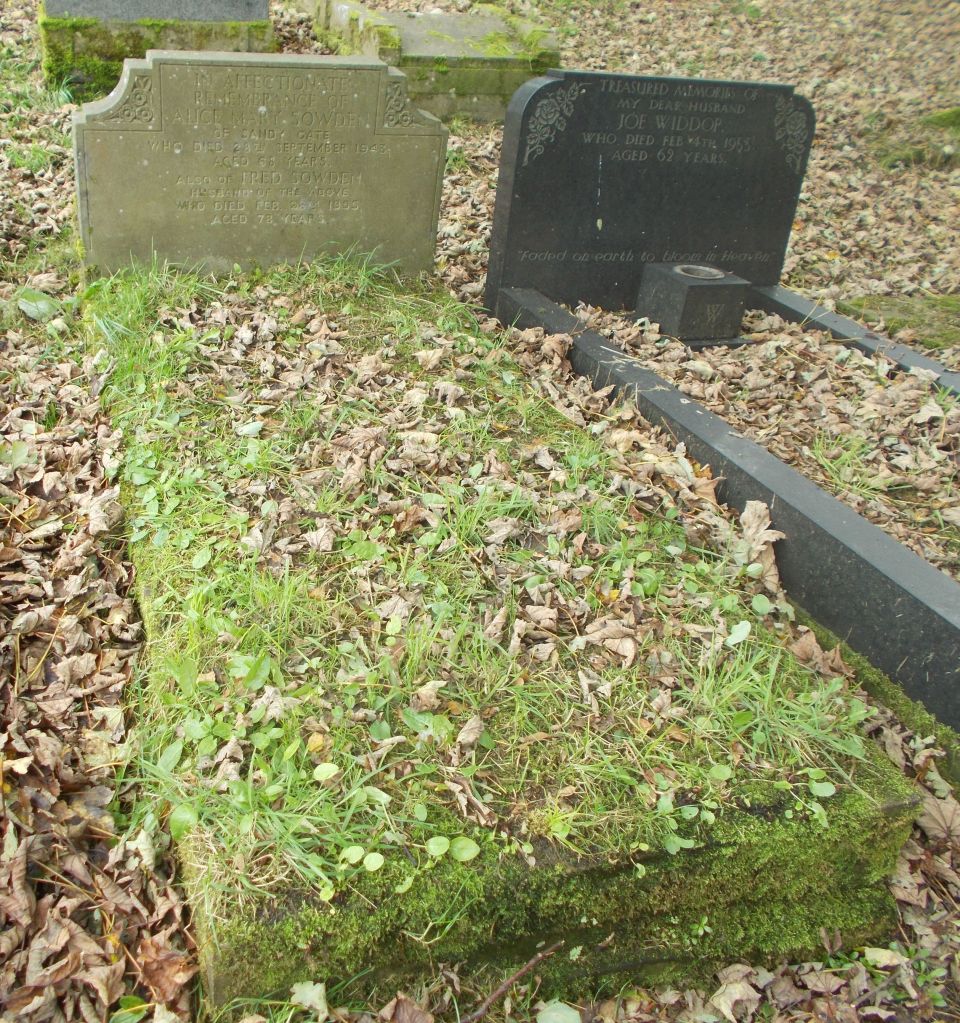
William and Jane’s eldest daughter, Alice Mary, is also buried at Wainsgate in plot J753, next to the plot where her brother John William is buried. She was born in Bedale, North Yorkshire, and in 1903 married Fred Sowden, a gas meter inspector and son of local blacksmith Thomas Sowden.
The couple, who had no children, lived for most of their married life at Sandy Gate, Hebden Bridge. Alice died in 1943, aged 68 and Fred died in 1955 aged 78.
Teodor (Ted) DURANCZYK (1923-1981)
Coming soon…..
John HACKNEY (c1855-1923) & Jessie HACKNEY (c1865-1931)
Coming soon…..
* * *
SEASONAL MIGRANT WORKERS
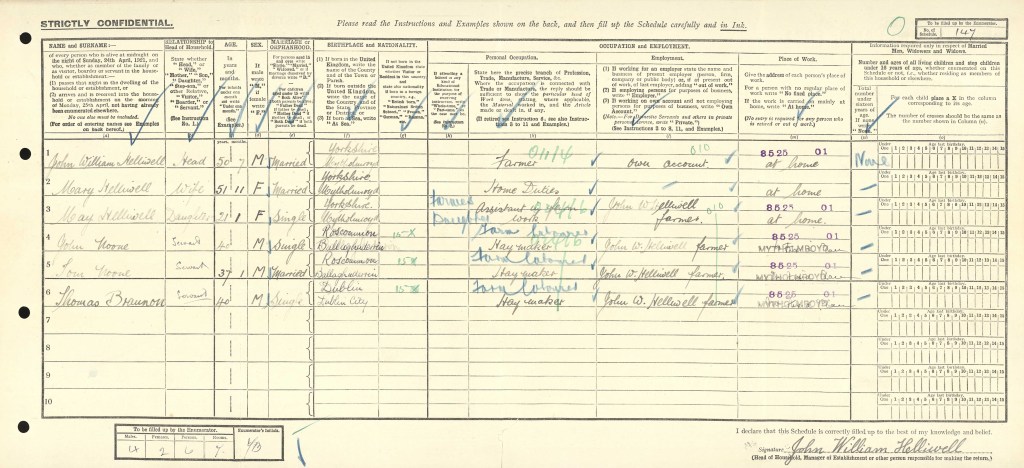
The 1921 census records John William Helliwell, his wife Mary (born Greenwood) and their 21 year old daughter May Helliwell living at Great Hollin Hey Farm, Mytholmroyd. John’s occupation is recorded as ‘Farmer’, Mary’s as ‘Home Duties’ and May’s as ‘Assistant in farm work’. There are also three Irishmen included on the census form (taken on the 19th June 1921): John Noone (40) and Tom Noone (37), both from Ballaghaderreen (incorrectly spelt as Ballaghaderrin on the form) in County Roscommon, and Thomas Braunon (40) from Dublin. The occupations of all three are recorded as ‘Hay maker’ and place of work as ‘No fixed place’. Tom Noone was married, the other two single.
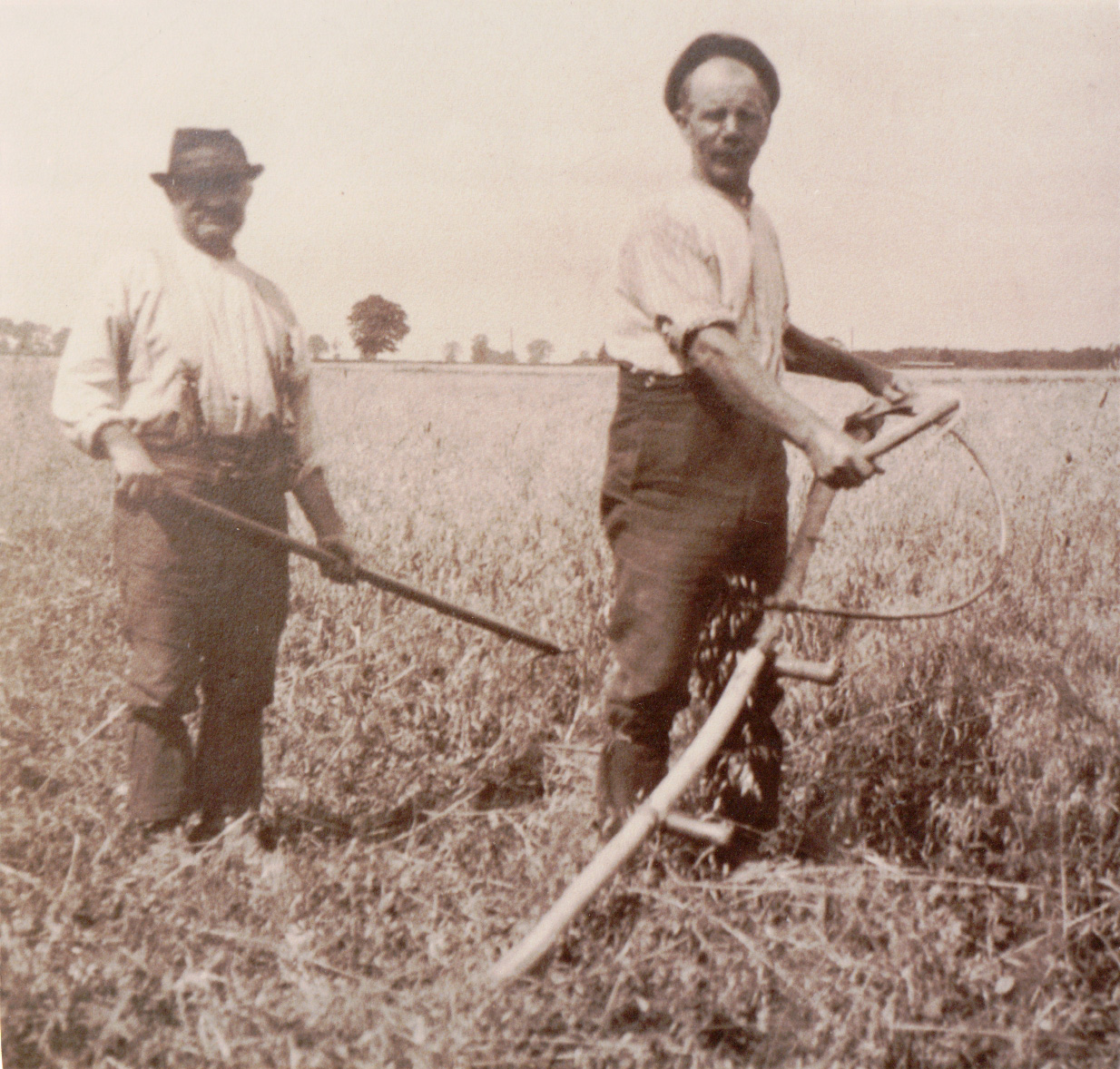
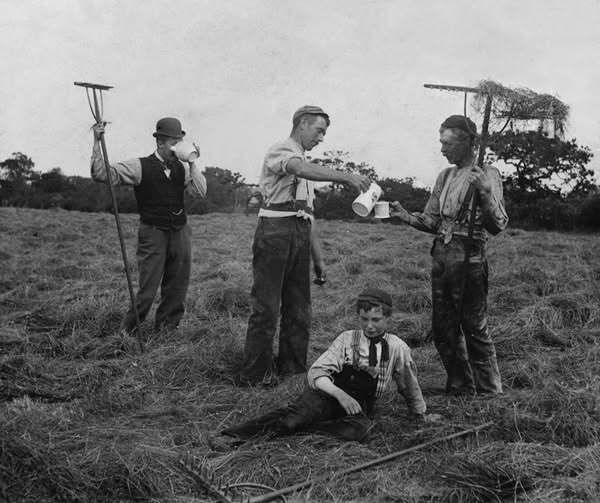
The employment of Irish workers to help with the hay harvest (which usually started in mid-June) was once common in Lancashire and Yorkshire. They were mostly small farmers themselves from Connaught, especially County Mayo, and after the hay harvest they would move to Craven and Wharfedale (where the hay harvest started later), East Yorkshire, Lincolnshire and Cambridgeshire for the corn harvest, back through the Midlands and Lancashire for the potato harvest, before returning home.
This seasonal work was probably vitally important, if not essential, to provide a half-decent income for what were most probably desperately poor tenant smallholders facing high rents and the threat of eviction. The men were usually able to leave their own farms in the care of their wives and younger children while they worked in England for the summer.
Hollin Hey had been bought by Edward Helliwell (John William’s father, who had previously farmed at Broadbottom) in 1894. May Helliwell married Willie Lumb in 1928, and they took over Hollin Hey Farm after her father’s death.
May and Willie, together with May’s parents Mary and John William Helliwell were all cremated, and their ashes are assumed to be interred in plot B149a at Wainsgate. Mary’s parents Thomas and Delilah Greenwood and Thomas’s second wife Hannah are also buried in plot B149a.
* * *
The 1921 census records for the Hebden Bridge area (Registration District 493, Sub-District 1) list the following men who are almost certainly seasonal workers helping with the hay harvest:
Peter Murphy, Michael Tatham and John Leonard, all from County Mayo, are recorded sleeping in a barn adjacent to Broadbottom Farm, Mytholmroyd, employed by the farmer, Fred Eccles. Their occupations are recorded as ‘Harvester / Irish agricultural labourer’.
Tim Heraty (from Sligo) and James Conway (from Mayo) were working for Charles and Ben Robertshaw, farmers at Elphaborough Hall, Mytholmroyd. Their occupations are recorded as ‘General labourer (farm)’.
Thomas Hunt, born in Claremorris, County Mayo, was employed as a ‘General farm labourer’ by Sam Lumb at Rough Head Farm, Erringden.
Michael Carney, Tom Carney, Thomas Connelly (or Connolly) and Ned Connolly, all from County Mayo, were employed by Henry Pickles at Far Shaw Croft Farm, Wadsworth. Their occupations are recorded as ‘Agricultural labourer / Irish harvester’.
Michael Calleen, aged sixty from Mayo, was employed as a ‘Harvester‘ at Sprutts Farm, Wadsworth, by farmer William Pickles.
Patrick Kilroy from Mayo was working as a farm labourer for Willie Hamer at Old Town Farm.
Andrew Durkin, Peter Moran and Andy Lundy (all from County Sligo) were employed as ‘Harvest men’ by Richard Pickles of Ackroyd Farm, Wadsworth.
The 1921 census records also show that there were a number of people, male and female, who had been born in Ireland but now seemed to be settled in the Hebden Bridge / Wadsworh area. Of these, several came from County Mayo but appeared to be settled and working as labourers, stonemasons or carters – Patrick and James Dempsey, Michael Traynor, Patrick Murphy, Patrick Joe Hegarty, Martin Byrne and Phillip Hunt. One of them, Michael Dochar, was a dairy farmer in Heptonstall in 1921, but had lived in this area at least since 1883, when he married a local woman, Betsy Ann Hollinrake. Perhaps these men from Mayo had come as seasonal workers and decided to settle here?
The 1921 census is probably the only official source of information about Irish hay makers, since it was recorded on the 19th June. Although the 1841 census was taken on 6th June, all since then were taken in March or April, before the start of the haymaking season, and the 1939 England & Wales Register was recorded in September. The 1931 census records were lost in a fire, and there was no census in 1941. The 1951 census information will not be publically available until 2052, but by 1951 mechanisation would almost certainly have put an end to the tradition.
For more information about the history of farming in the Calder Valley, The Little Hill Farm by W.B. Crump (see Bibliography) is invaluable, as is this post by Paul Knights, beautifully illustrated with his superb photographs.
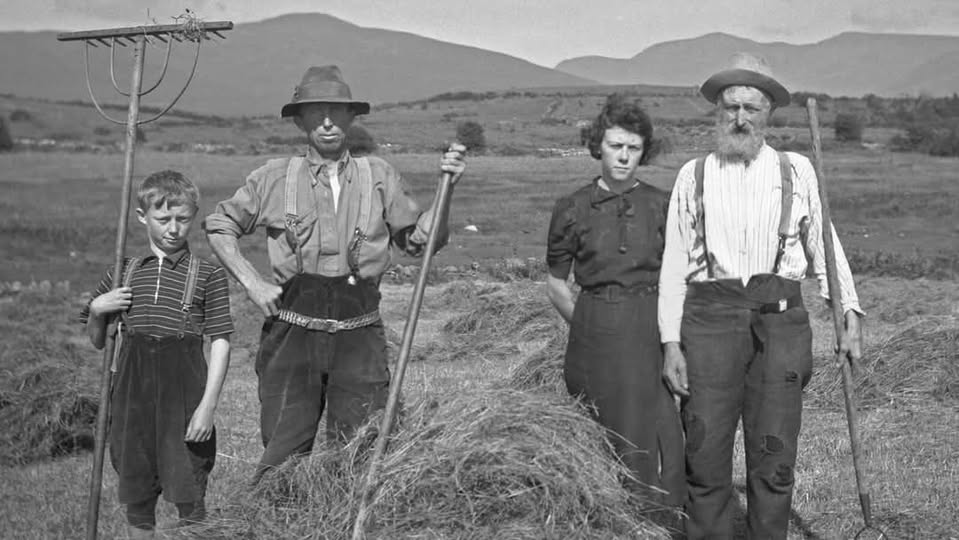
Hay harvest in County Mayo, c1938.
 WAINSGATE GRAVEYARD PROJECT