The stories of some of the people interred or commemorated at Wainsgate:
‘There is something stronger than death – it is the presence of the absent in the memory of the living and the transmission to those yet unborn , of the name, the glory, the power, and the joy of those who have left us, who live forever in the minds and the hearts of those who remember’.
Jean d’Ormesson (1925-2017)
‘The tradition of all the dead generations weighs like a mountain on the mind of the living’
From The Eighteenth Brumaire of Louis Bonaparte by Karl Marx (1852)
Click on the NAMES to find out more…..
Crossley ASHWORTH
Weaver, farmer, draper, quarryman, landowner. Amateur astronomer. Married three times. Born, lived for 93 years and died within sight of Wainsgate chapel.
Elaine CONNELL
Teacher, writer, authority on Sylvia Plath, co-founder of the Hebden Bridge Web.
Lewis CRABTREE
Stonemason and builder of many of Hebden Bridge’s finest buildings, including Stoodley Pike.
Professor Bob DEACON
Academic and activist for global social justice.
Ben Albert JACKSON
Robert SUTHERS
Tailor, local historian, involved with Hope Baptist chapel and Sunday school for over fifty years.
Hird LORD
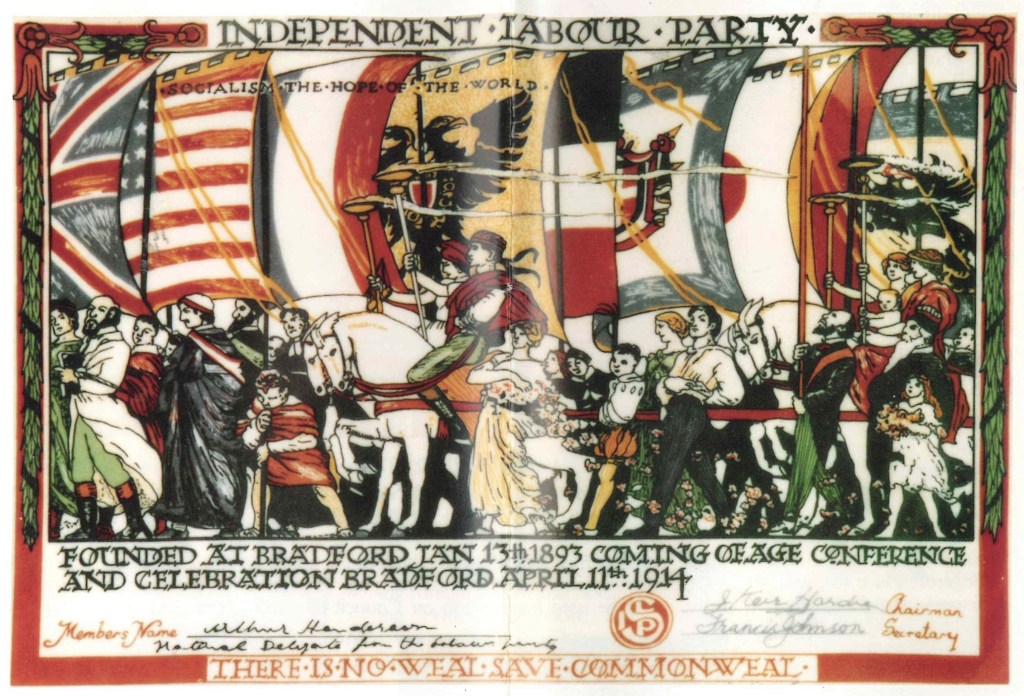
Havercake baker, social reformer, founder member of the Independent Labour Party. Father of Miriam Lord OBE.
Miriam LORD OBE
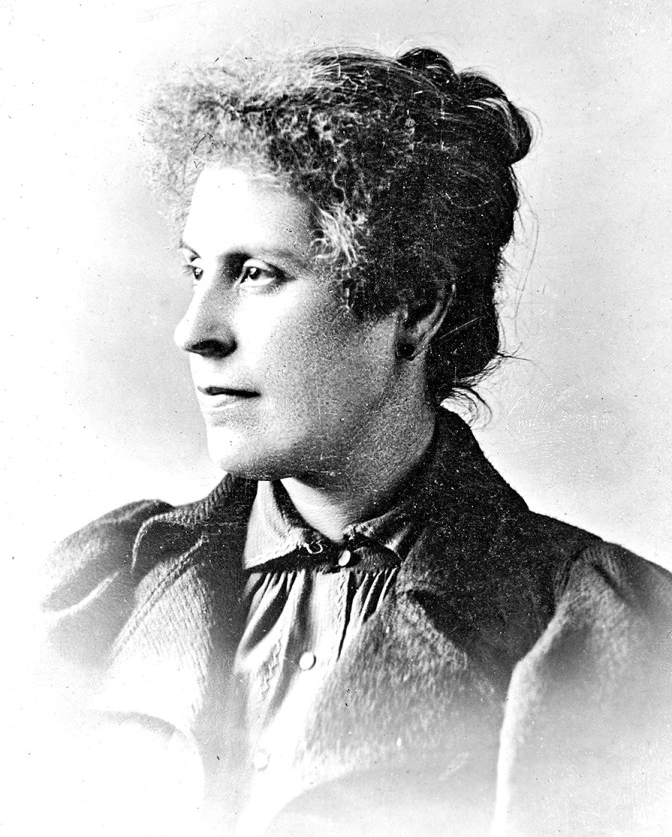
Teacher, educationalist, community worker. Daughter of Hird Lord.
Joseph Haigh MOSS
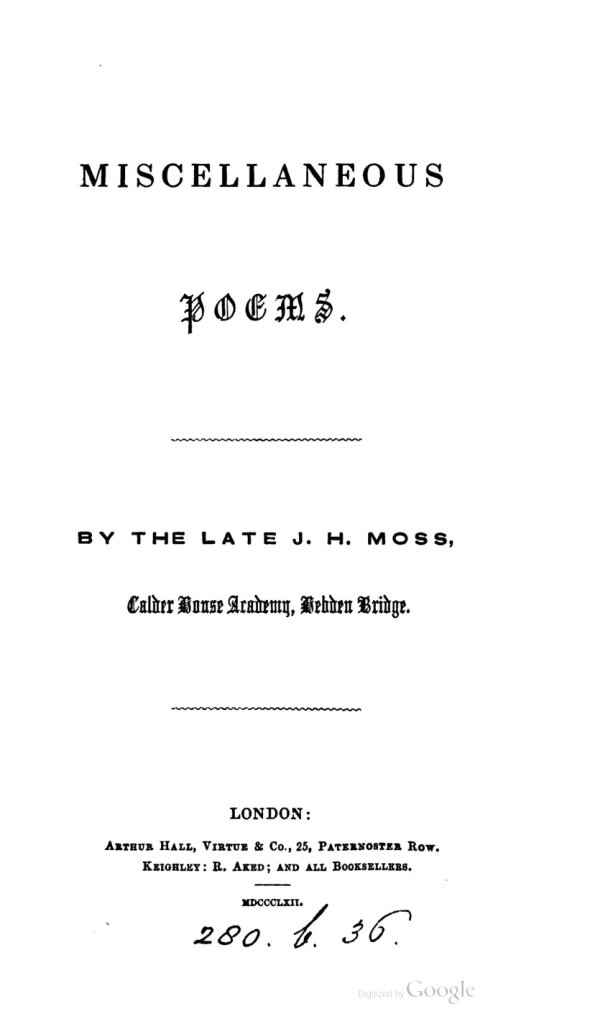
Born in Manchester, teacher, school proprietor and poet.
Albert Dentith (Dent) PARKER
Quarryman, stone mason and the designer of Wadsworth War Memorial, Smeakin Hill (aka Pecket Pike).
Harold (Harry) SCULTHORPE
Anarchist, publisher, writer.
Josiah WADE
Inventor, businessman, politician, philanthropist. Mayor of Halifax. Inventor and manufacturer of the ‘Arab’ printing press.
David Constantine WHITE
Potter, teacher and musician. Founder of Brier Hey Pottery, Mytholmroyd.
Berhane WOLDEGABRIEL
Journalist, university lecturer, charity worker. Born in Eritrea, buried in London, commemorated at Wainsgate.
Arthur SPEAK
Arthur Speak of Sowerby Bridge.
Alan LITTLEWOOD
Baker, author, Lord of the Manor of Heptonstall.
John CLAY
‘One of the best read men in Hebden Bridge’ – ‘Remarkable career of public usefulness’ – inventor of a supposed cure for cancer.
* * *
The ‘LOST SOULS’
Those who are known to be buried or interred at Wainsgate, but whose grave has not been identified.
EVERY PICTURE TELLS ASTORY
Photographs of some of the people interred or commemorated at Wainsgate – and their stories.
* * *
Crossley ASHWORTH (1852-1946)
Crossley Ashworth was born on 29th August 1852 in Wadsworth, the fifth of eight children of Thomas Ashworth and his wife Sally (born Ingham). The couple had married in 1837 when they were both 19 years old. The family lived at Wainsgate (probably Wainsgate Farm), where Thomas combined farming and hand-loom worsted weaving, later becoming a linen draper.
In 1871 he was living with his family at Wainsgate Farm and working as a cotton weaver, as were three of his siblings. In 1881, aged 28 and described as a farmer of 11 acres, he was still living at Wainsgate with his father, now a draper (it is unclear whether his mother was still alive), an older sister who was a dairymaid and two younger brothers, William and Alfred Ingham Ashworth who were calico weavers.
Crossley was 34 years old and living in Wainsgate Lane when he married his first wife, 23 year old Annie Greenwood in 1886. His occupation (as was his father’s) was listed on the marriage certificate as ‘linen draper’. Annie was the daughter of George Greenwood, ‘barber and hairdresser’ of Nutclough. The couple had two children: Alice, born in 1889 and Tom Crossley Ashworth, born in February 1895.
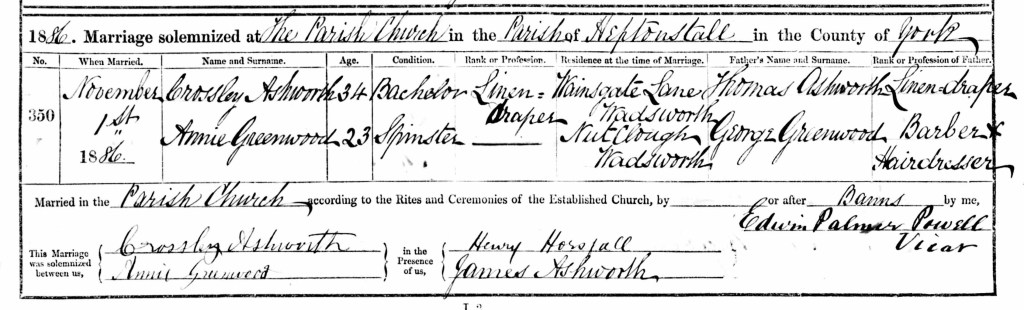
The 1891 census records Crossley and Annie living at Greenwood Cottage, Wainsgate with their infant daughter Alice and two of Crossley’s brothers, William and Alfred Ingham Ashworth. His brothers were employed as ‘cotton velvet weavers’ while Crossley is recorded as ‘living on his own means’.
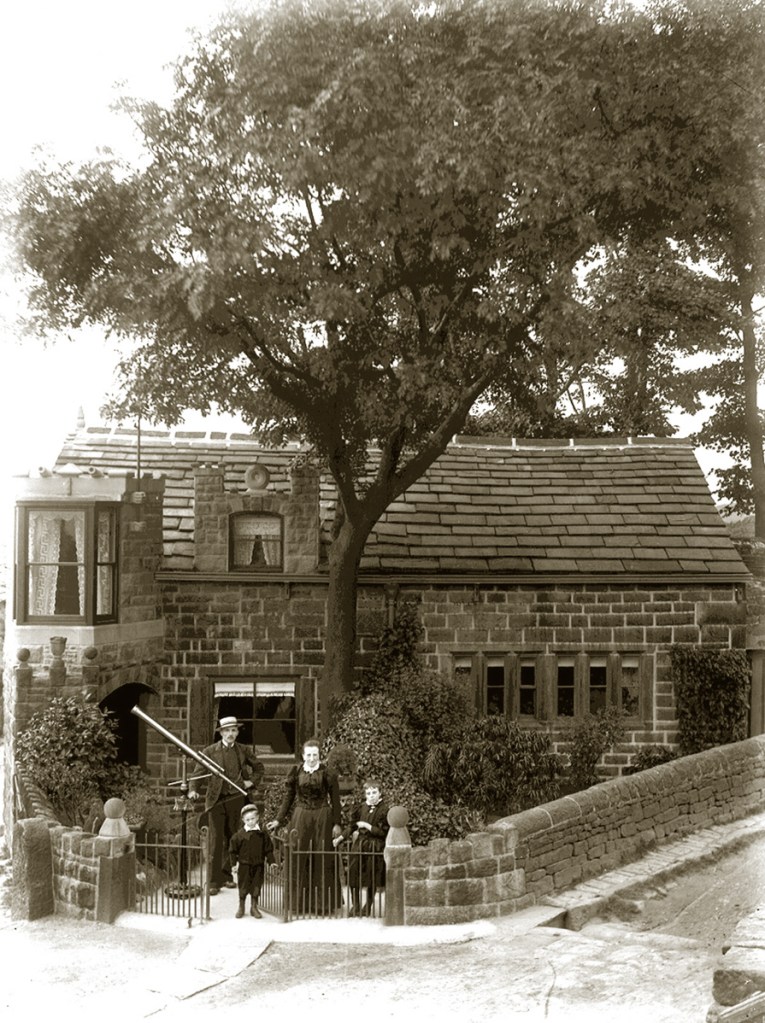
Photograph from the Alice Longstaff Collection – Pennine Horizons Digital Archive.
The telescope shown in the photograph (presumably Crossley’s pride and joy) looks like a refractor with an aperture of around 3″, on a pillar mount rather than a tripod, and would have been ideal for a keen amateur astronomer. A telescope like this would not have been cheap, probably costing the equivalent of several thousand pounds today.
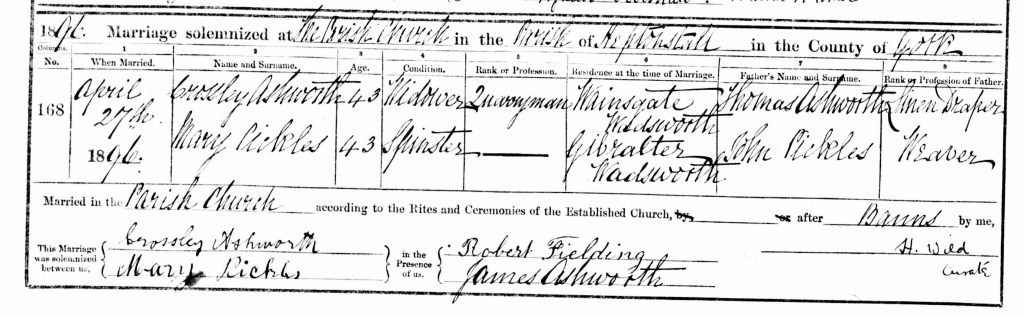
Annie died in November 1895, eight months after the birth of her son Tom, aged 32, and the following April Crossley married his second wife, Mary Pickles, 43 years old and unmarried and living at Gibraltar, Wadsworth. The marriage certificate describes Crossley, aged 43 and living at Wainsgate as a ‘quarryman’. In the 1901 census 48 year old Crossley, now described as a ‘retired farmer‘ is living at Wainsgate with Mary, Alice, Tom and his brothers William and Alfred, both now employed as ‘fustian weavers’.
In 1910 Crossley Ashworth lost both his second wife and his only daughter: Alice died in June, aged 20, and Mary died in December aged 58. The 1911 census shows the widowed Crossley living at Wainsgate with his surviving child, 16 year old Tom and his unmarried brother William, now employed as a cotton weaver. Both Crossley and Tom are described as living on ‘private means’.
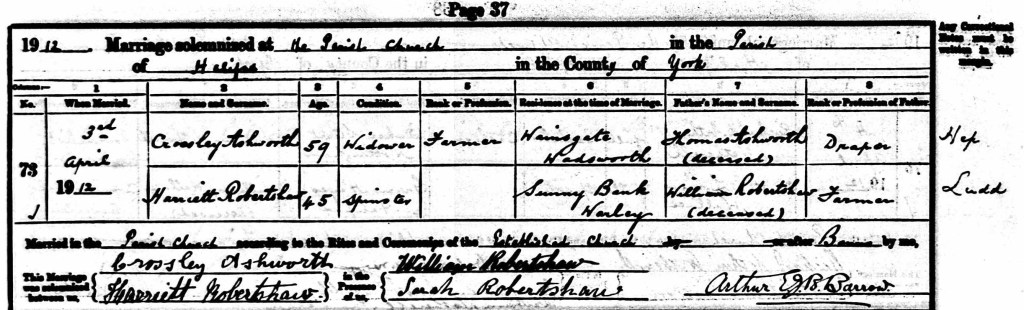
Not much more than a year after Mary’s death, 59 year old Crossley, now describing himself as a farmer, was married for a third time to Harriett Robertshaw, a 45 year old unmarried woman from Warley. In September 1939 Crossley and Harriett were living at Castle Hebden in Akroyd Lane (just round the corner from Wainsgate). Crossley’s occupation is recorded on the 1939 Register, rather bizarrely, as ‘general labourer, retired.’
* * *
Castle Hebden, a detached house on the junction of Akroyd Lane and Wainsgate, was built by Crossley Ashworth, who owned the land on which it was built. It was apparently constructed over a period of three years and three months, and was completed in the spring of 1912, although the side extension shown in the photograph was built later – probably some time between 1919 and 1934. We know that Crossley was living there in 1939, although we don’t know whether Harriett continued living there after his death in 1945/6.
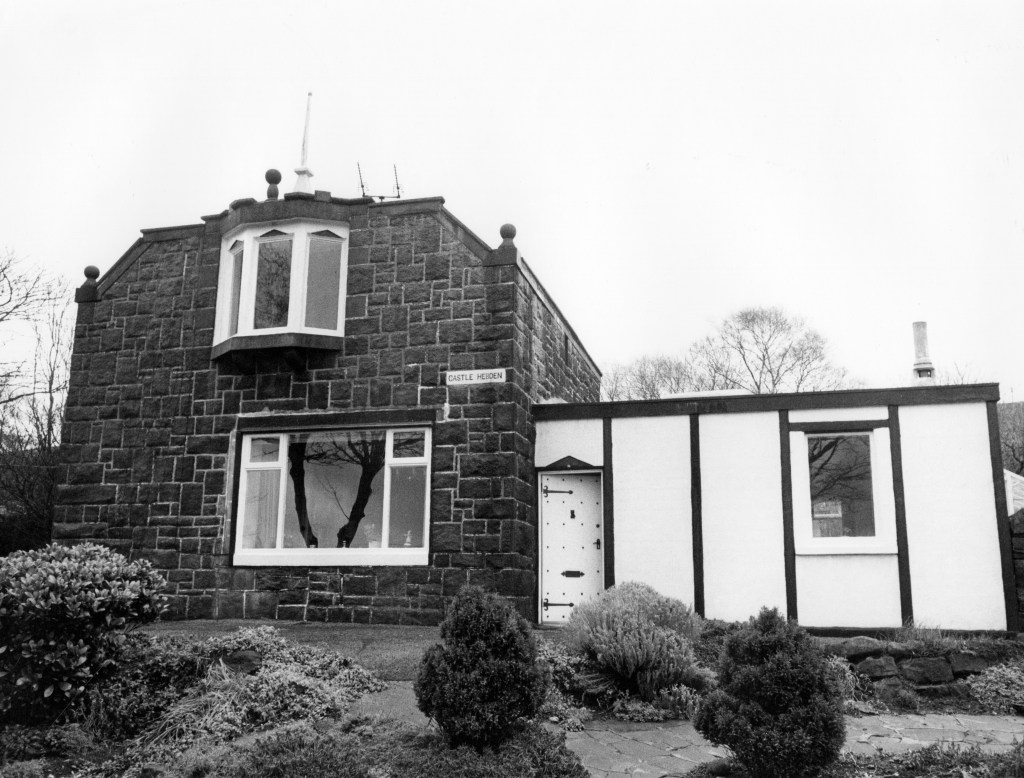
Castle Hebden – date unknown, but almost certainly post 1946. Photo from the Pennine Horizons Digital Archive, David Fletcher Collection.
The rather eccentric design of the building shows several similarities with Greenwood Cottage, which was probably converted by Crossley from a simple farm cottage sometime before 1900. Both have ball finials and a bay or oriel window, and the photograph of Greenwood Cottage appears to show two (presumably fake) cannon on the roof.
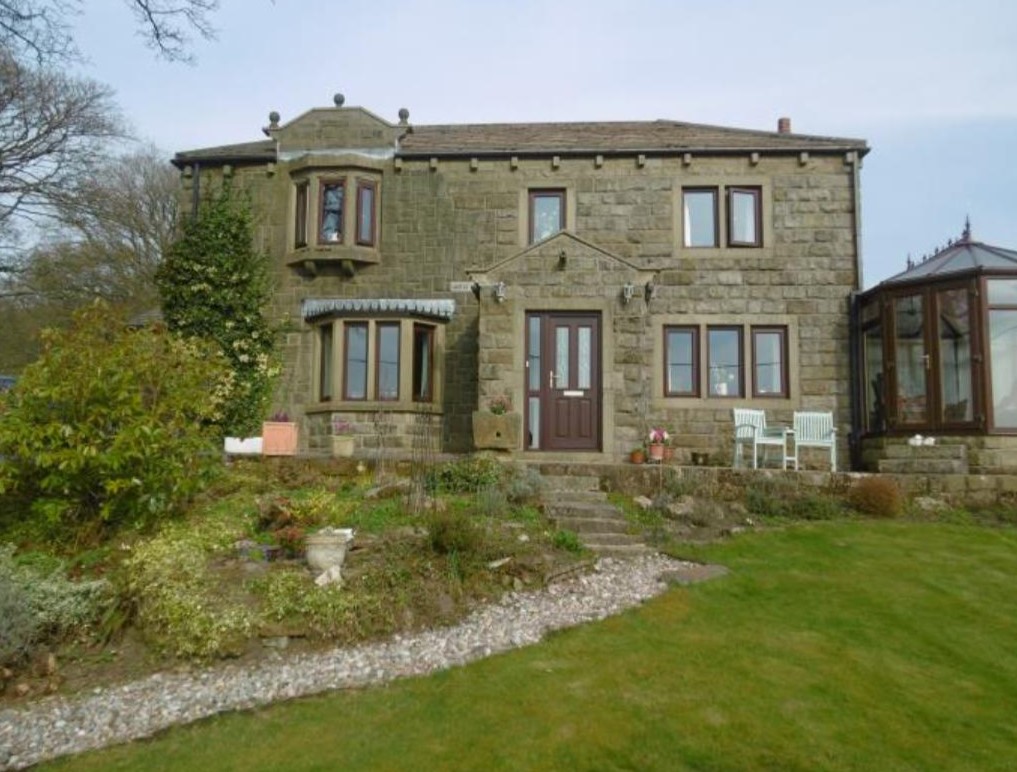
Apparently Castle Hebden also originally had two stone cannon mounted on the roof, but they were removed by a later owner. The house has been extensively altered and extended in recent years, but still retains the oriel window and ball finials.
Castle Hebden as it is now.
* * *
Crossley Ashworth died, aged 93, at the very end of 1945 or early in 1946 – his death was registered in the first quarter of 1946 in the Calder registration district. It is uncertain when Harriett died, although records indicate that she died in 1951, aged 84.
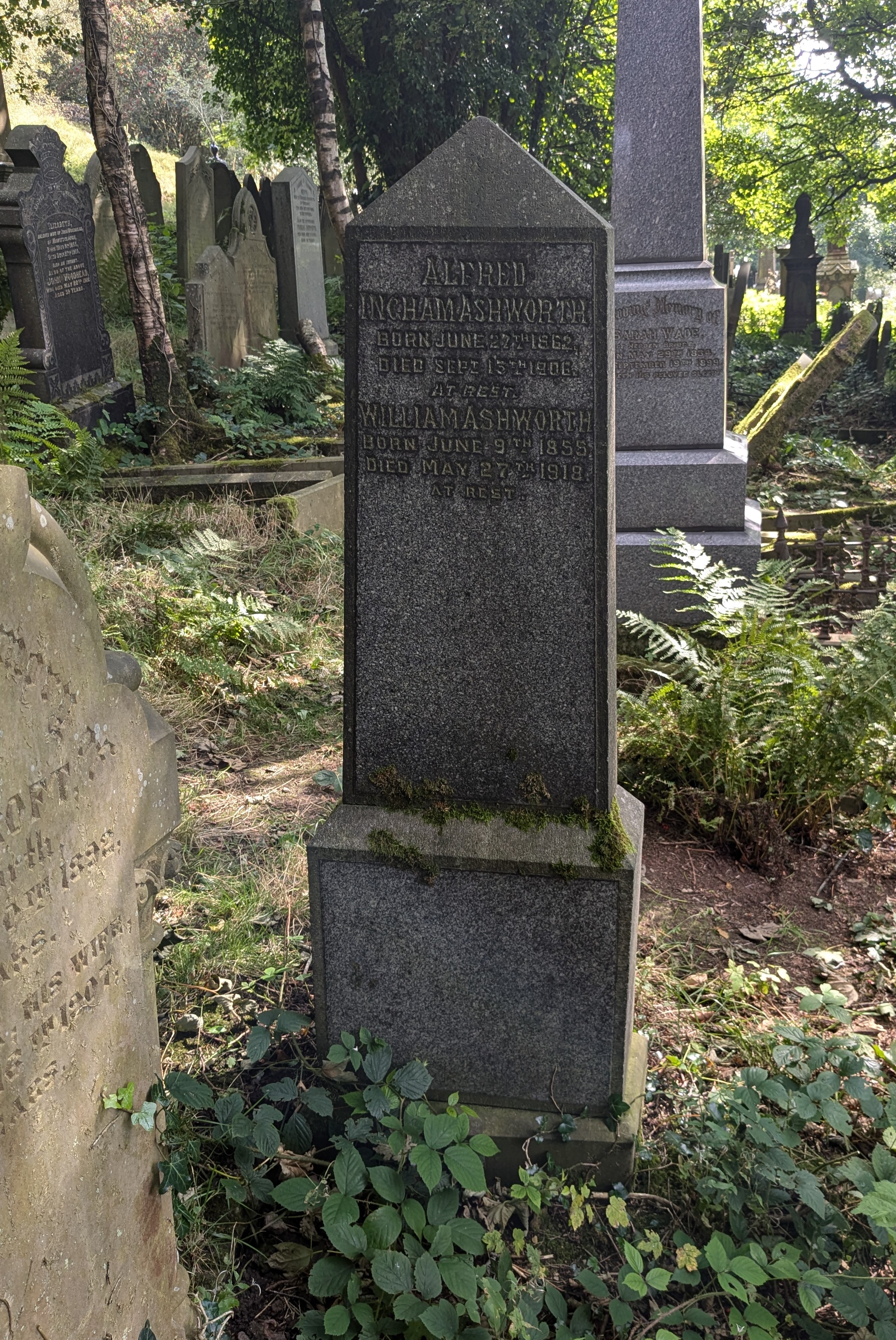
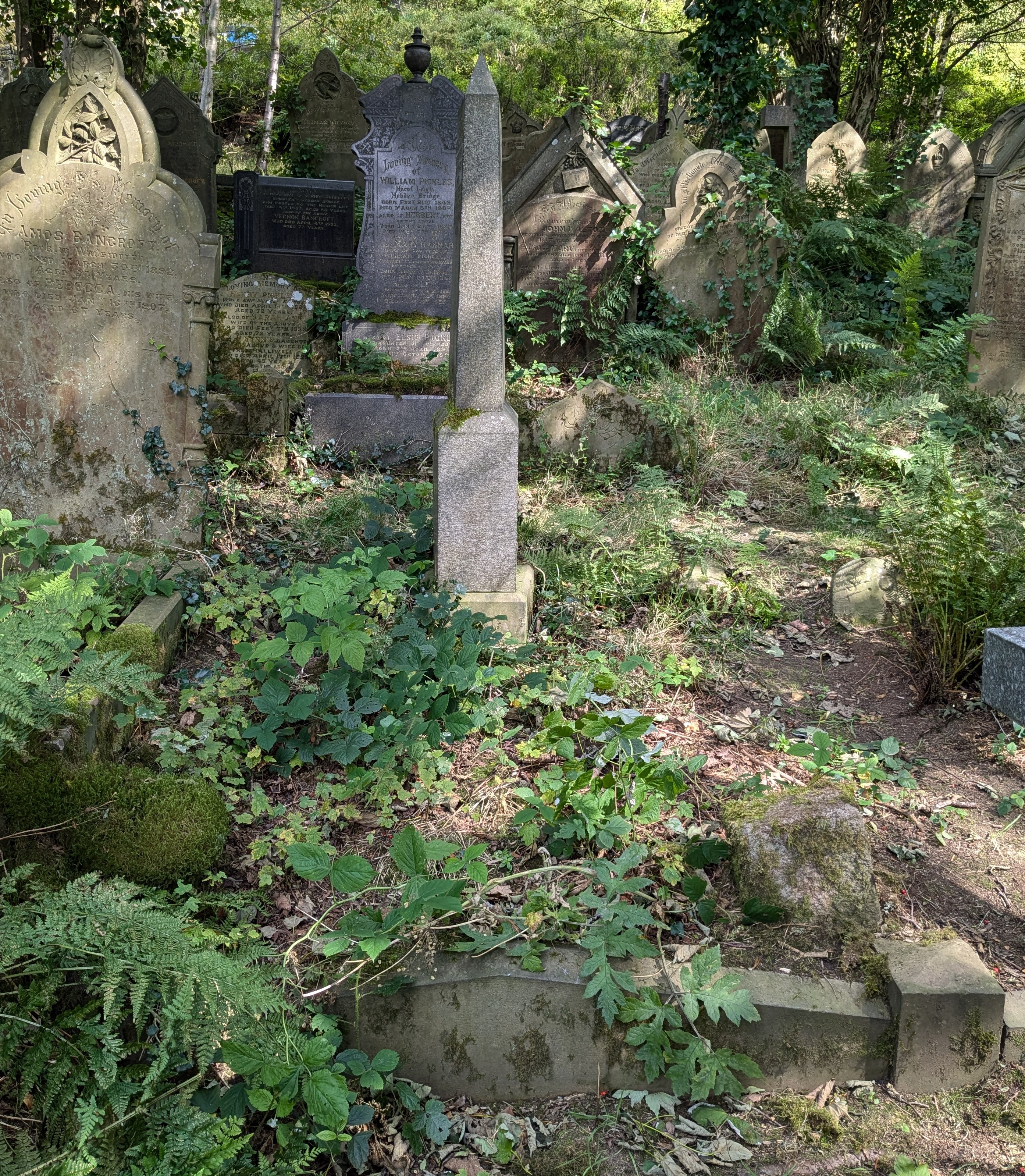
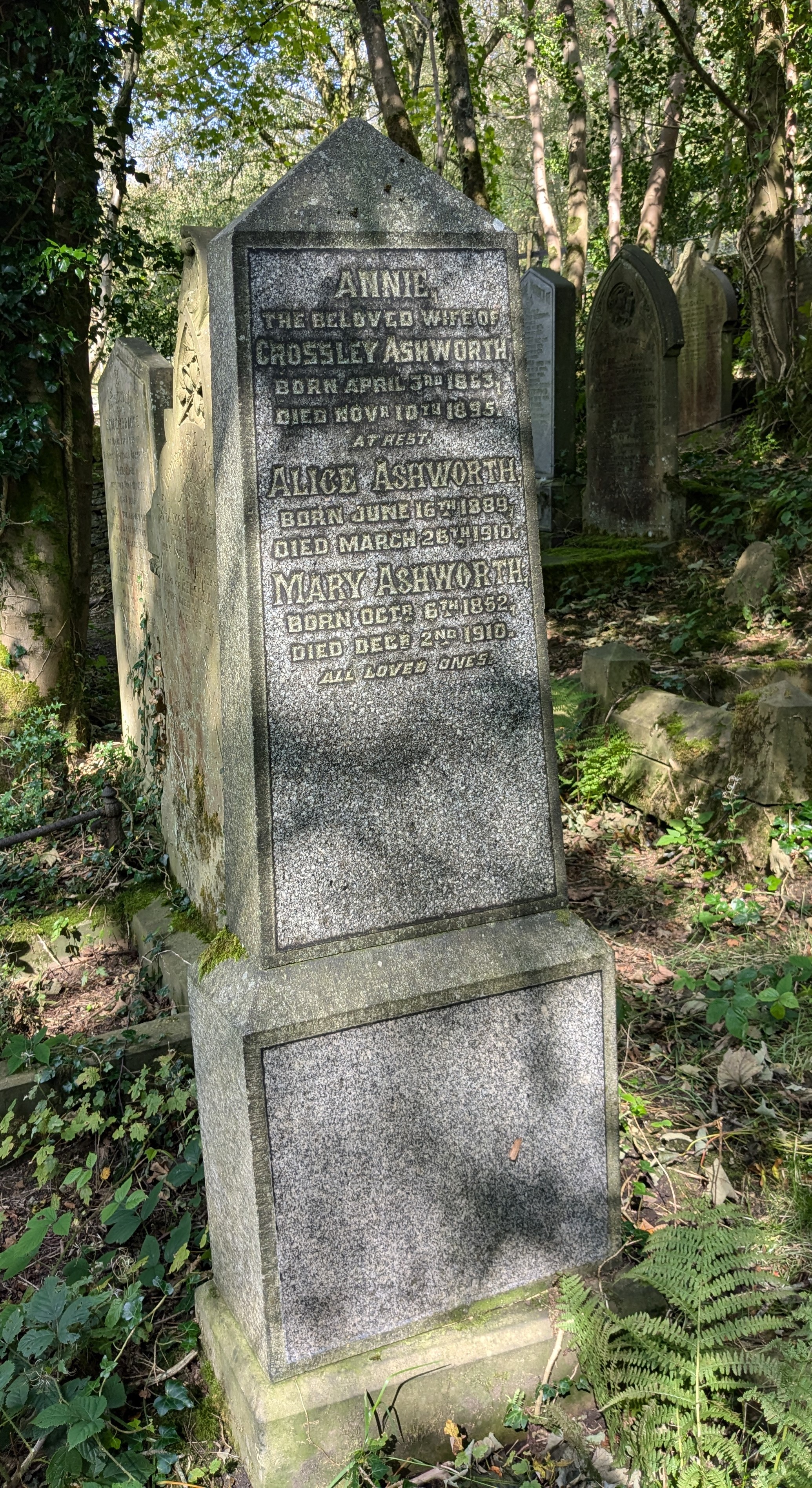
Crossley and his brother William bought two adjacent grave plots on 2nd April 1892 – Crossley bought plot B132a and William bought plot B133a. An unusual memorial stone divides the two plots, with inscriptions on both faces: the side facing B132a commemorates Alfred Ingham Ashworth (1862-1906) and his brother William Ashworth (1855-1918). The other side commemorates Crossley’s first two wives, Annie (1863-1895) and Mary (1852-1910) and his daughter Alice (1889-1910). All five are known to have been buried at Wainsgate.
Crossley Ashworth, his third wife Harriett and his son Tom Crossley Ashworth are not commemorated on the memorial stone, and there is no record of their burial at Wainsgate.
More coming soon…..
Elaine Ann CONNELL (1953-2007)
Coming soon…..
Lewis CRABTREE (c1810-1878)
Lewis Crabtree was born around 1810 in Hebden Bridge or Wadsworth, the eldest son of Richard Crabtree, a stone mason, and his wife Hannah (born Stott). The earliest record we have of his life is the 1841 census, which records Lewis living in New Road, Hebden Bridge with his parents and seven siblings and working as a stonemason – presumably with his father. Three of his four brothers, Roger, James and 15 year old William were also stonemasons.
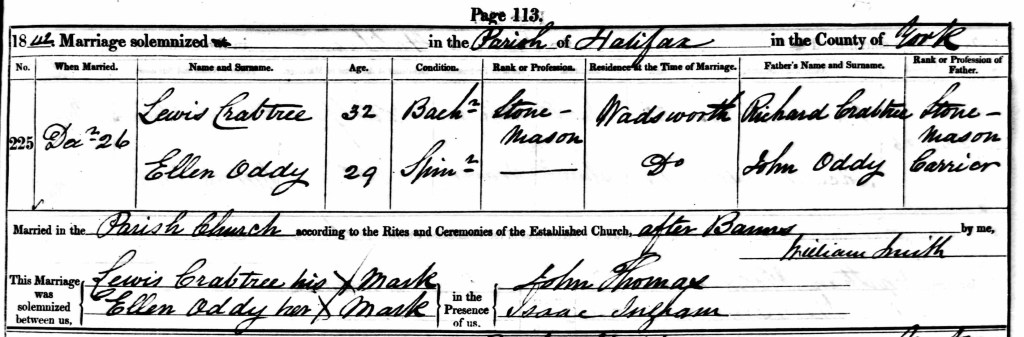
On Boxing Day 1842 Lewis married 29 year old Ellen Oddy: both Lewis and Ellen signed the marriage certificate with their mark.
Lewis and Ellen had four children: their only son, also named Lewis Crabtree (1850-1931) didn’t follow his father into the stonemasonry trade, but became a clerk and accountant. He never married or had children. Two of their daughters, Mary Hannah (1843-1923) and Eliza (1857-1928) also died without marrying or having children. Their other daughter Sarah (1846-1931) married Joseph Ingham, a cattle dealer and farmer. They had one child, a son, who they named Lewis Crabtree Ingham (1884-1943), who like his father became a dairy farmer at Great Burlees and Souter House Farms.
In 1851 Lewis and Ellen were living at 1, Union Street, Hebden Bridge, and he was a ‘Master Mason, employs 15 men’. As well as their threee young children they shared the house with William Marshall, a 20 year old apprentice stonemason from Rochdale. In 1861 the family were living at Birchcliffe, and Lewis was now a ‘Contractor employing 38 men’. Their daughters Sarah (aged 15 and described in the census as a ‘House Maid’) and 4 year old Eliza were living with their parents, but Lewis and Mary Hannah were living with relatives. Mary Hannah was working as a confectioner in Hebden Bridge and 10 year old Lewis jnr was living in Halifax and working as a worsted spinner.
The 1871 census shows Lewis and Ellen still living at Birchcliffe, but now 61 year old Lewis is described as a ‘Farmer (of 16 acres) and Stone Dealer’. Their daughters Sarah and Eliza are still living with their parents, and they also have a ‘boarder’, a 34 year old dressmaker called Ann Dawson.
More coming soon…..
Professor Robert Anthony (Bob) DEACON (1944-2017)
Bob Deacon was a prominent social policy academic and policy advisor, credited with responsibility for the introduction of the term ‘global social policy’. He was Emeritus Professor of International Social Policy at the University of Sheffield, Honorary Professor of Global Social Policy at the University of York, Visiting Fellow at ILO, UNRISD and UNU-CRIS. Bob was co-founder of the journal ‘Critical Social Policy’ and founding editor of the journal ‘Global Social Policy: an international journal of social development and public policy’.
In the 1960s and 1970s he worked at the London School of Economics and North London Polytechnic, becoming involved with left-wing and student activism, and in the early 1970s he started editing ‘Case Con’ –
‘an explicitly revolutionary socialist social work magazine and movement’ with the aim to ‘speak out against the injustices that we witnessed in our daily life and to be optimistic that this could end – that another world, and another social work, was possible’.
In 2019 Global Social Policy journal published a special issue in memory of Bob Deacon – for more about his life and work, read the introduction here.
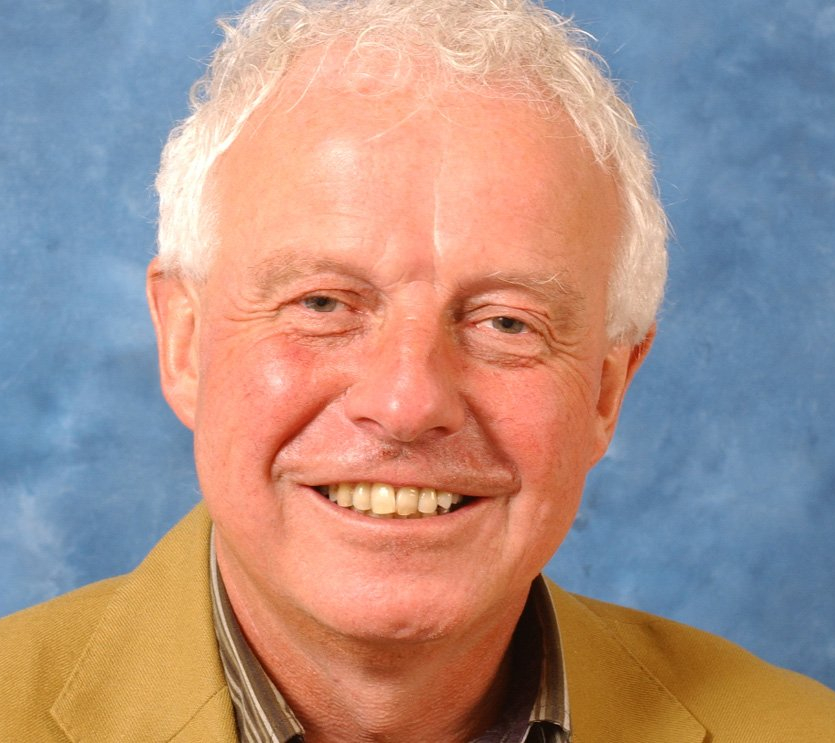

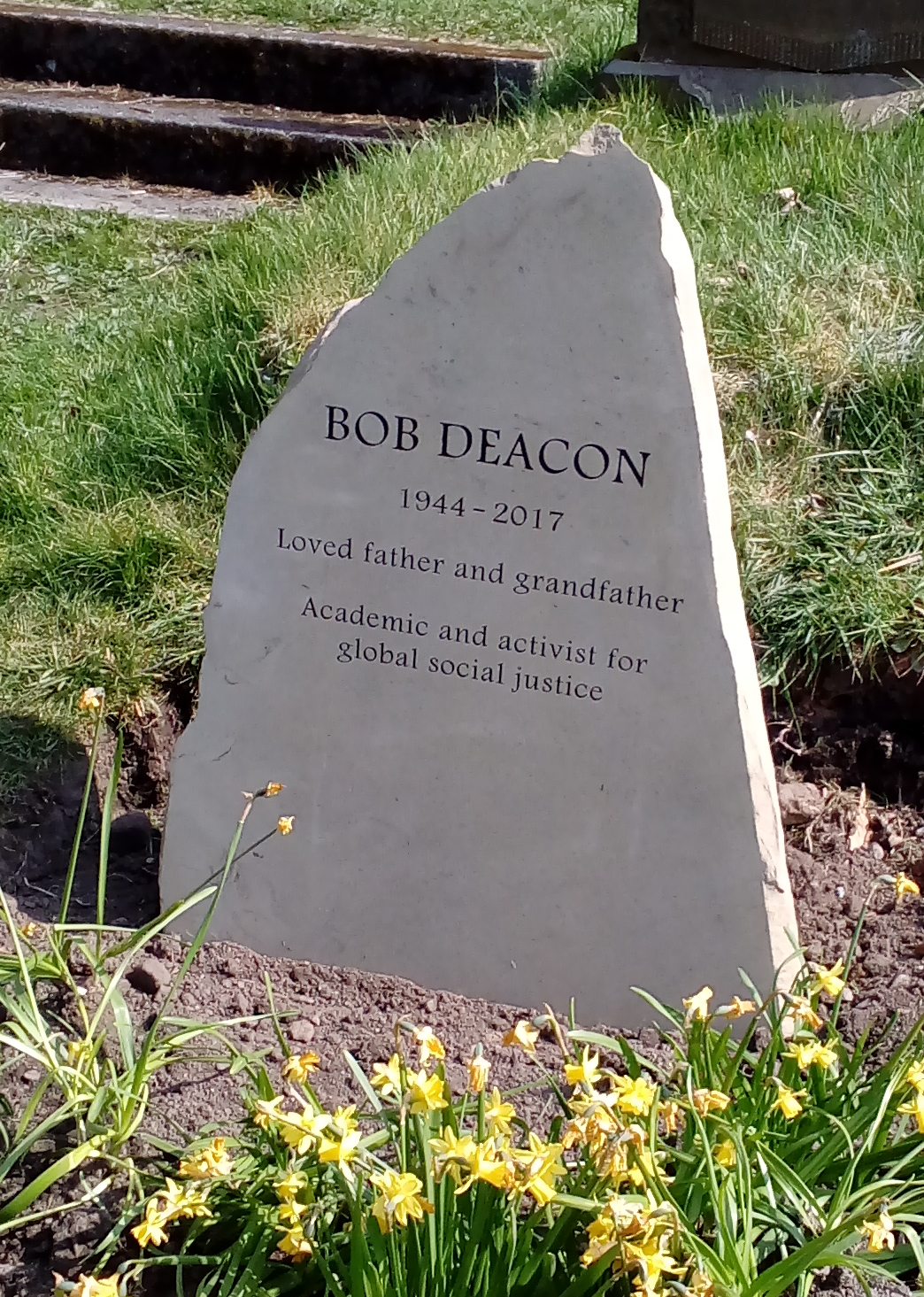
In his later years, while continuing to be part of the global academic community, he became active in local politics and community activism, and was involved with Hebden Bridge Community Association, Hebden Bridge Partnership, Friends of Hebden Bridge Station and Hebden Bridge Walkers Action. Bob Deacon died at Overgate Hospice on 1st October 2017, aged 73. He is buried in plot D1036 at Wainsgate (which he bought himself in March 2017), and his grave is marked by a simple sandstone boulder, with an inscription carved by Jeremy Bancroft. His life was celebrated with a humanist ceremony at Wainsgate which he apparently planned himself.
Ben Albert JACKSON
Coming soon…..
Robert SUTHERS (1826-1899)
Robert Suthers was born on 12th October 1826, the youngest of the eleven children of Thomas Suthers, a reed maker of Hawksclough, Mytholmroyd, and his wife Grace (born Grace Barker). Robert earned his living as a tailor, but his life was devoted to Hope Baptist Church and local history, particularly the history of Nonconformism in the area.
He wrote local history articles for The Hebden Bridge Chronicle under the pen name ‘Antiquarian’, and was a friend of Daniel Eastwood (1854-1940), Wadsworth born poet and historian and member of the Calder Valley Poets.
He was a member of Hope Baptist Church for over fifty years, holding many offices of the church and Sunday school, including manager of the Funeral Society. At his memorial service, Rev. William Jones, minister at Hope chapel spoke of Robert Suthers’ love of history:
‘…..that which made him a singular man amongst them, his love of old days, and old places, and old folks and old causes, and the delight which he had in searching ancient volumes of antiquarian interest; the pleasure he had in parish registers – the joy it gave him to decipher epitaphs on tomb stones; the zest with which he traced congregations and churches from their beginnings to their modern developments…….he worked at tailoring for his bread, but he lived for antiquarianism’.
(As reported in the Todmorden & District News, 10th February 1899)
Robert Suthers never married or had children. He lived at Hawksclough / Bethesda Row his entire life, although the 1861 census records him being a visitor at the Mayroyd home of Rev. John Crook, who had retired in 1859 as minister at Hope Baptist chapel through ill health. The census was taken on the 7th April 1861, and John Crook died, aged 64, two days later – perhaps Robert was staying with his old friend to comfort him in his last days.

Robert Suthers died on 1st February 1899 from ‘an affection of the heart’, aged 72. He was buried at Wainsgate on 4th February – his funeral was attended by many of his relations, friends and neighbours, the principal mourners being his nieces and nephews. The pallbearers were W. Harwood, William Scott, John Clay, Thomas Jenkinson, William Horsfall and James Maude, deacon of Hope Baptist Church. Messrs. Greenwood and Blackburn were the undertakers. The funeral service was conducted by Rev. William Jones of Hope chapel, who prefaced his sermon by quoting Ecclesiastes 7:2 –
‘It is better to go to the house of mourning, than to go to the house of feasting: for that is the end of all men; and the living will lay it to his heart’.
The committal was conducted by Rev. David Lindsay of Wainsgate. The following day at the Hope chapel evening service, Rev. Jones again referred to the life of Robert Suthers, quoting Isaiah 51:1 –
‘Hearken to me, ye that follow after righteousness, ye that seek the Lord: look unto the rock whence ye are hewn, and to the hole of the pit whence ye are digged’.
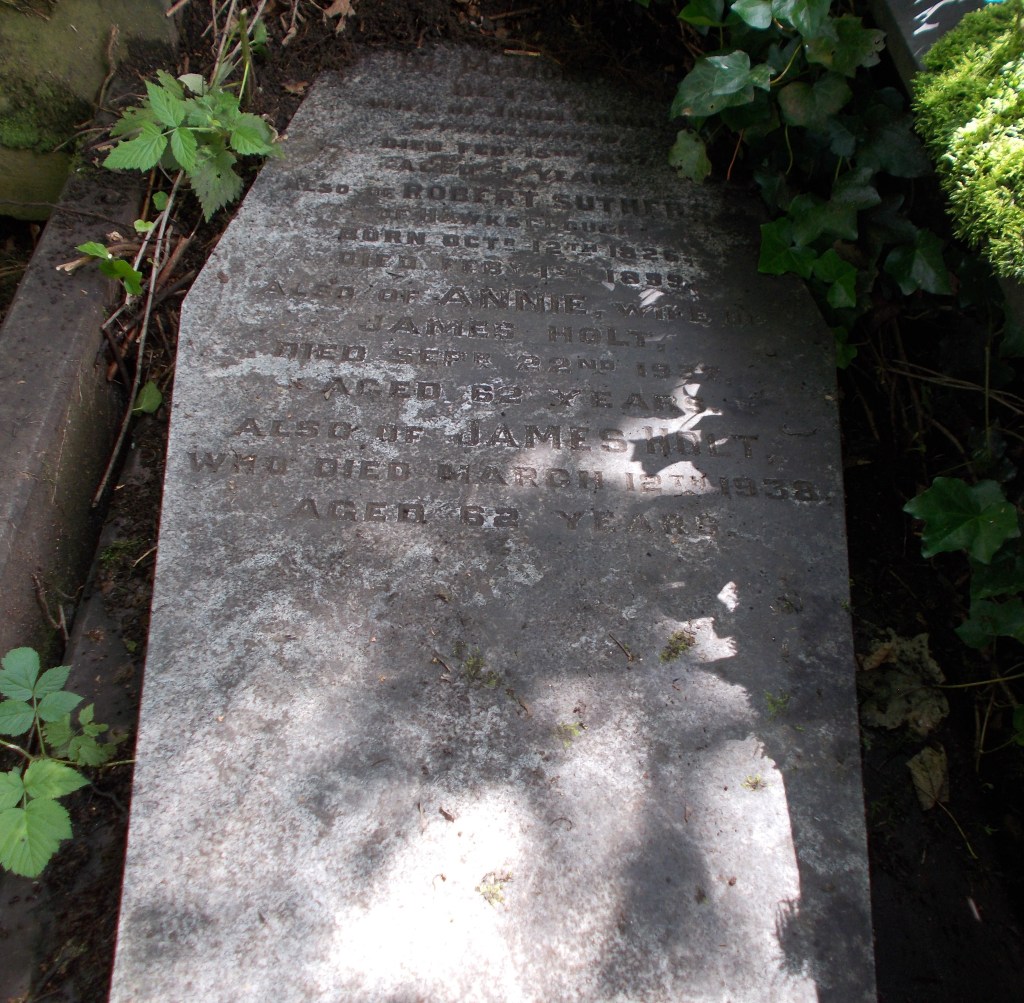
Robert Suthers had bought the plot where he was to be buried (B118a) some time before his death, and in 1897, Betsy Lumb of White Lee, Mytholmroyd, wife of John Lumb, was buried there. There were two more burials in the plot after Robert Suthers – Anne Holt, who died in 1937 aged 62, and her husband James Holt who died in 1938 aged 62, both of 9 Hawksclough, Mytholmroyd.
The three people buried with Robert are assumed to be friends or neighbours, possibly relatives of his.
The grave is marked by an unusual coffin-shaped granite slab, simply inscribed and with no epitaphs.
The report of Robert Suthers’ death in the Todmorden & District News of 3rd February said that ‘in his later years he has been identified with the Friends’, and he is known to have studied the history of the Religious Society of Friends, or Quakers. The mention of his seeming attachment to the Society of Friends caused a member to write to the paper asking them to correct the report:
“Will you kindly correct an inaccuracy which appeared in your report last week of the death of Robert Suthers, where you state that ‘in his later years he has been identified with Friends;’ whereas the fact is that he has remained a member of the Baptist denomination up to the time of his death. He has been an esteemed occasional visitor of Friends’ meetings at Todmorden and elsewhere, thoroughly enjoying their unostentatious mode of worship, but never seeking to become identified in membership with the Society of Friends.”
Hird LORD (1860-1950)
Coming soon…..
Miriam LORD OBE (1885-1968)
Coming soon…..
Joseph Haigh MOSS (1791-1861)


Coming soon…..
Albert Dentith (Dent) PARKER (1875-1952)
All the official records give his name as Albert Dentith Parker, but he went under the name Dent Parker: he was born on 10th May 1875, eldest child of John Parker and his wife Elizabeth (born Johnson).
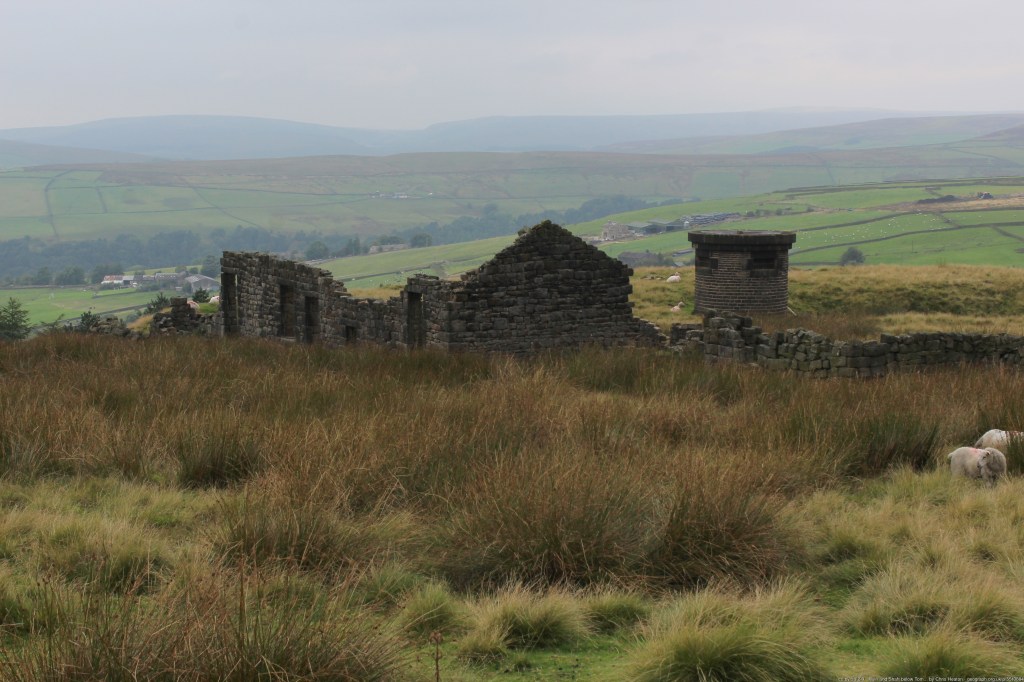
The 1881 census gives the family’s (John, Elizabeth, Albert and his two brothers) address as ‘No. 3‘, and John Parker’s occupation as ‘Stone Delver‘ – probably at nearby Delph End Quarry. Also listed as living at ‘No.3‘ are Abraham Parker, ‘Farmer of 2½ acres’ and his wife Ann – probably John Parker’s parents. The census entry for ‘No.3‘ comes between Weather House and Shawcroft Hill, and it is presumably the ruined building with an attached enclosed field (which is about 2½ acres in area), just above Weather House and next to the ventilation shaft, and marked on old maps as ‘No.3 Shaft‘.
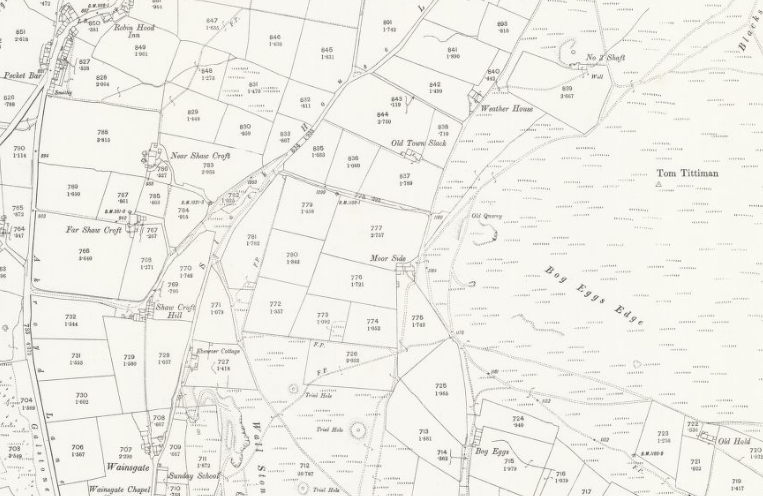
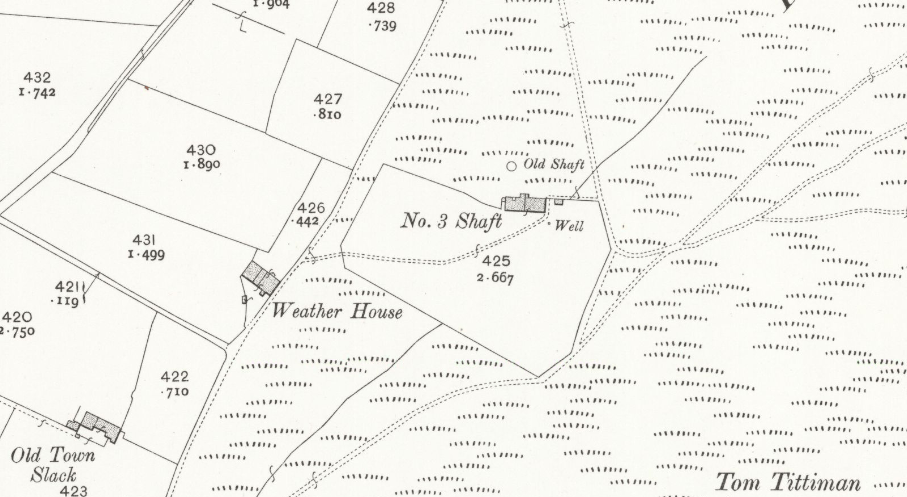
Extracts (not to scale) from OS 25″ to 1 mile maps 1892 & 1905. Reproduced with the permission of the National Library of Scotland
The house where Dent Parker lived as a child was almost certainly built in the late 1860s to house workers building the Castle Carr Tunnel, part of the watercourse carrying water from Widdop to Ramsden Wood Reservoir by the renowned civil engineer John Frederick La Trobe Bateman. The tunnel runs from Pecket Well to Luddenden valley, and has three ventilation shafts, one of which is next to the cottages. In 1871 they were two dwellings, known as ‘Waterworks Cottage’, occupied by John and Thomas Slater, their families and eight lodgers – all miners or associated trades – labourers, a Horse Driver, a Donkey Driver (9year old Enoch Slater) and two Engine Drivers.
The building was later known as ‘Greengates Foot’, and two of the tenants, John Bradley and Abraham Sutcliffe, were gamekeepers. It is not known for sure when the building fell into disuse, but it doesn’t appear to be included in the 1911 census.
In 1891, the family (John, Elizabeth and six sons) were living at Paul Row, near Littleborough, and John Parker, Albert and two of his brothers were employed as weavers. For some bizarre reason the census correctly records John Parker’s birthplace as Wadsworth, but records the rest of the family as being born in Hull: Elizabeth Johnson was probably born in Hetton, near Skipton (although her birthplace is also recorded on census forms as Elton and Etton, both in Yorkshire), and their children at that time were all born in Wadsworth.
The 1901 census shows John and Elizabeth and their nine children (eight boys and one girl) were living at 26,Windsor Road, Hebden Bridge: Albert was now 25, and working as a cotton weaver, as were four of his brothers John Parker is recorded as being a ‘Stone Quarryman – Employer’.
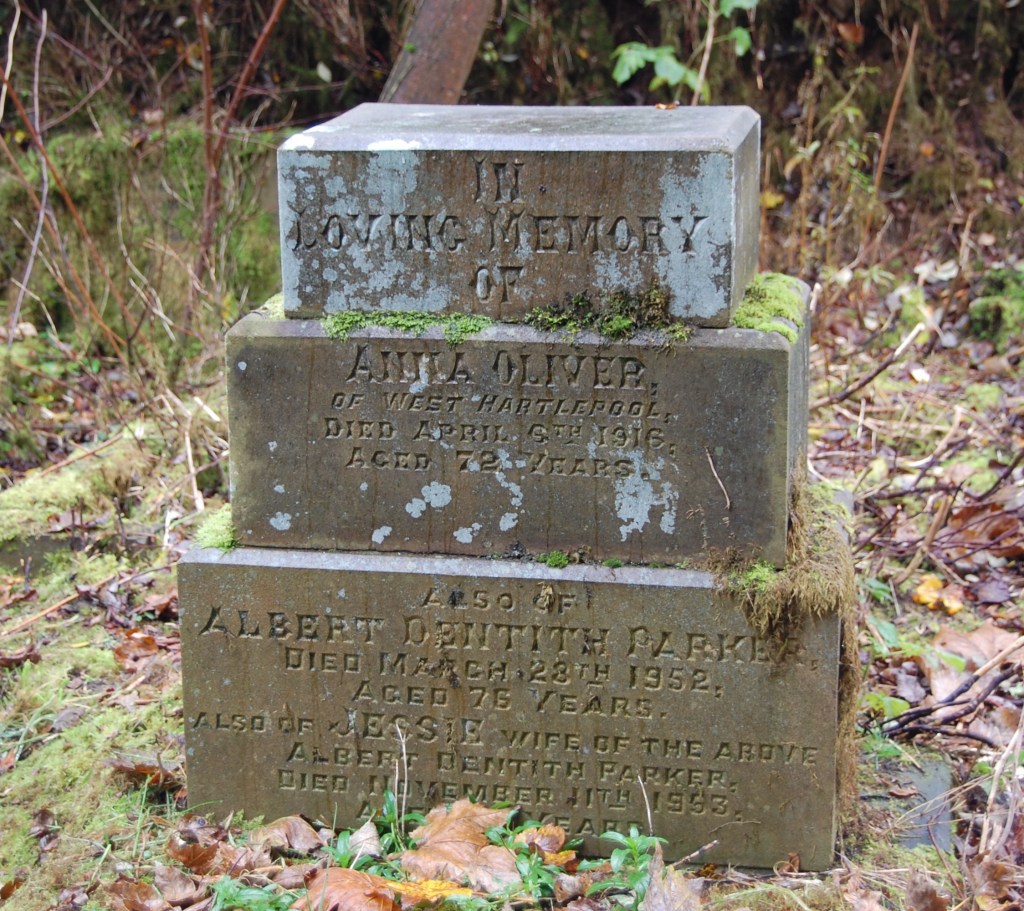
Albert Dentith Parker married in 1907, aged 32. His wife was Jessie Hopps (born Oliver), a 30 year old widow from West Hartlepool who was living at the Railway Hotel, Hebden Bridge. Albert was living at Nursery Nook, Hebden Bridge, and the marriage certificate recorded his profession as ‘Quarry Owner’, and his father’s profession as ‘Surveyor’. In 1911 Albert and Jessie were living at Nursery Nook with their two daughters, Esme Elizabeth and Edna, and Jessie’s two daughters from her previous marriage. Albert was working as a stone mason, employed by the ‘Urban Council’. Also living on Nursery Nook were Albert’s brother, Ernest Harrison Parker and his parents, who were living with four sons and a daughter – they had produced ten children, nine of whom were still alive in 1911. John Parker, now aged 61, was employed as a Highway Surveyor with Todmorden Rural District Council.
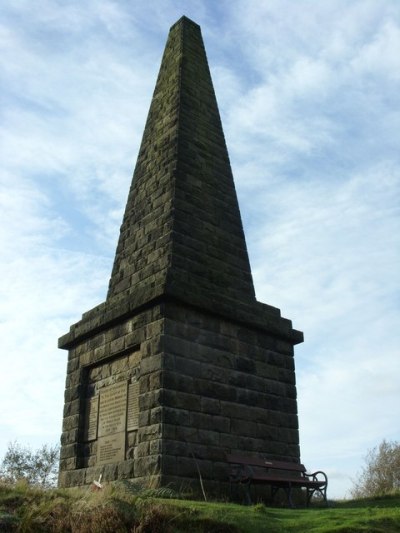
The Wadsworth War Memorial is a ‘stone obelisk of rusticated masonry, surmounting a square plinth that bears four tablets with incised inscription’, about 41 feet (12.5m) high, and based on the design of nearby Stoodley Pike (which is 120 feet high). It sits in a prominent position between Crimsworth Dean and Pecket Well Clough on a rocky outcrop known as Smeakin Hill, and is also known as Pecket Pike. It was designed by Dent Parker, and built by local builder Oldfield Watson in 1923 at a cost of £624.
Photograph by Nigel Lloyd
The monument is listed Grade II, and the Historic England listing describes it as:
‘A substantial and prominently sited memorial in the form of an obelisk that has become a cherished local landmark. It is a well-designed and well-executed memorial employing good quality materials and craftsmanship’.
In the 1939 England & Wales Register, Albert and Jessie were living at 33,Woodfield Road, Blackpool, a lodging house or ‘Company House’ as they were then known. His occupation is listed as ‘Road Foreman’: he and Jessie may have been on holiday, or he may have been working in the area and lodging in Blackpool. Albert and Jessie lived for several years at 2,Carr Head, Pecket Well and at the time of Albert’s death were living at 30,Southfield, Heptonstall.
Dent Parker died on 28th March 1952 aged 76, and Jessie died the following year, aged 77. Their grave plot (C613) was bought by Dent in 1916 for the burial of Jessie’s mother, Anna (or Hannah) Oliver of West Hartlepool.
The grave is marked by a simple pedestal comprising three blocks of sandstone: there may have been an intention to finish this with a cross or obelisk, but there is no sign of one ever having been fitted.
Harold Smallwood Hugh (Harry) SCULTHORPE (1923-2008)
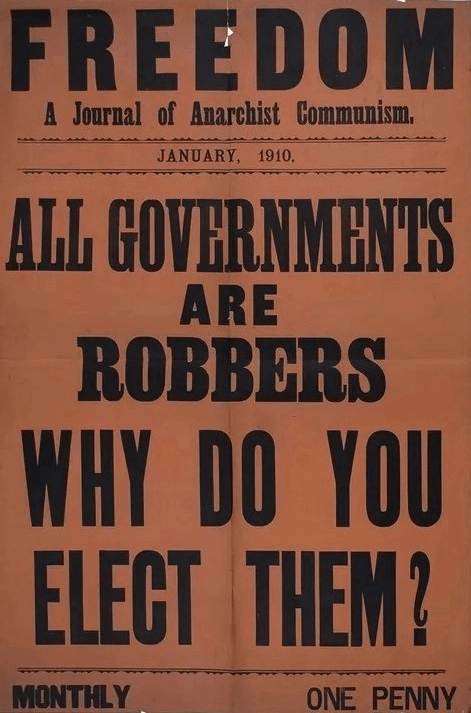
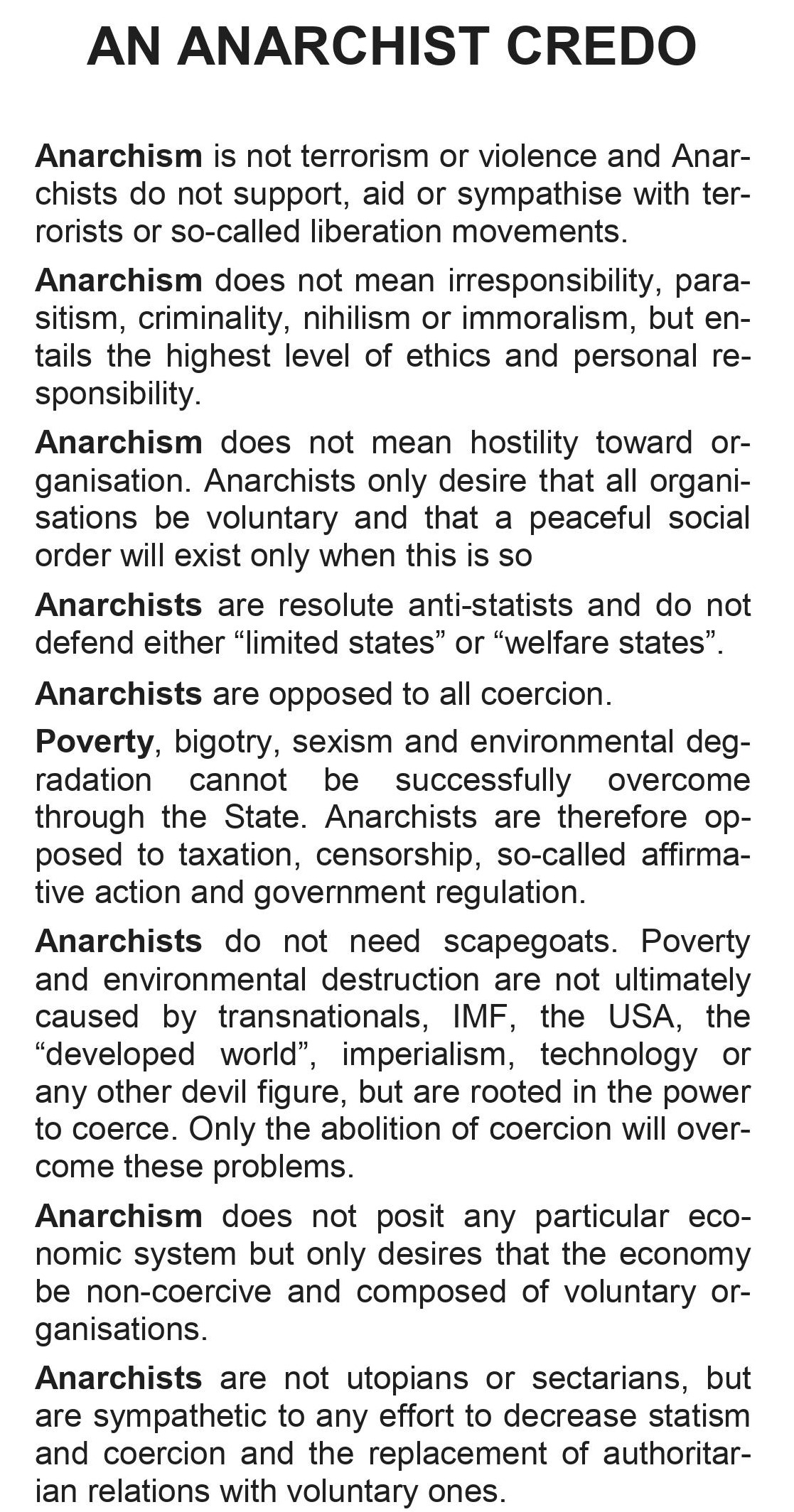
Harold (Harry) Sculthorpe‘s epitaph (plot H1024) reads ‘He lived for freedom’, and he was involved with Freedom Press, founded in 1886, the largest anarchist publishing house in the country and the oldest of its kind in the English speaking world. Until recently Freedom Press published ‘Freedom’, the only regular anarchist newspaper published nationally in the UK, and ‘The Raven‘, a quarterly magazine dealing with anarchist ideas at greater length.
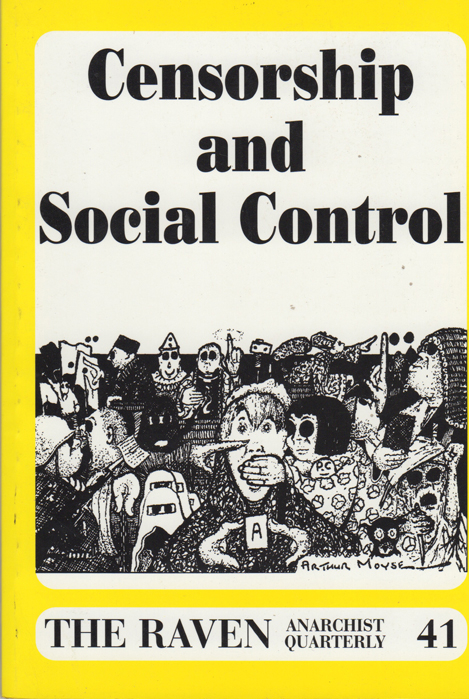
Little is known for certain about his life: probably born abroad (possibly in France), possibly the son of Harold (a shipping clerk) and Edith Sculthorpe. He is thought to have lived in Liverpool (where he founded the Liverpool Anarchist Group in 1949 or 1950) and London, and is believed to have married Joan Jenkins in 1945 and Margaret Kenwright in 1964. He was Principal Lecturer in the Department of Biological Sciences at North East Surrey College of Technology, and it was probably when he retired that he moved to Hebden Bridge.
In 1996, when he was appointed as secretary of Friends of Freedom Press Ltd., he was living at Spring Bank, Midgehole Road and at the time of his death lived at Butlers Wharf, Hebden Bridge.
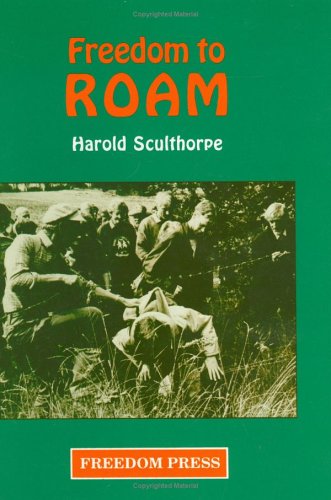
In 1993 he published ‘Freedom to Roam’, a collection of short essays about ‘the right to walk without hinderance and without damage to the environment, the paths, bridleways and open spaces of the land’.
The 23 essays in ‘Freedom to Roam’ cover various topics relating to access to the countryside, including the Ministry of Defence, water companies, Fay Godwin, ‘The Battle of Kinder Scout’, Greenham Common, hedges, pesticides, and the National Trust (an essay titled ‘Don’t trust the National Trust’).
‘No man made the land, it is the original inheritance of the whole species…….The land of every country belongs to the people of that country.’
From Principles of Political Economy by John Stuart Mill (1848) – quoted in the preface to ‘Freedom to Roam’.
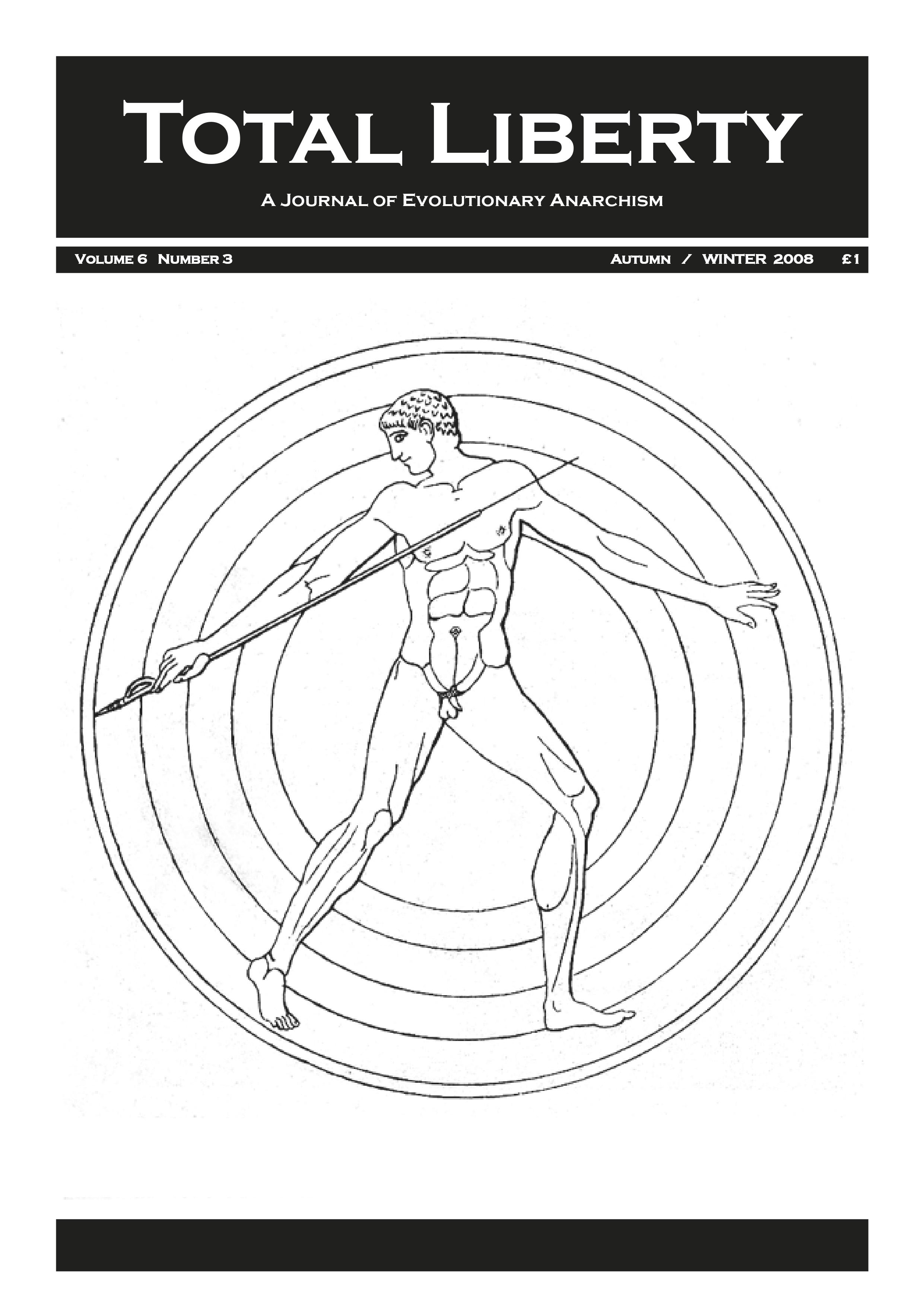
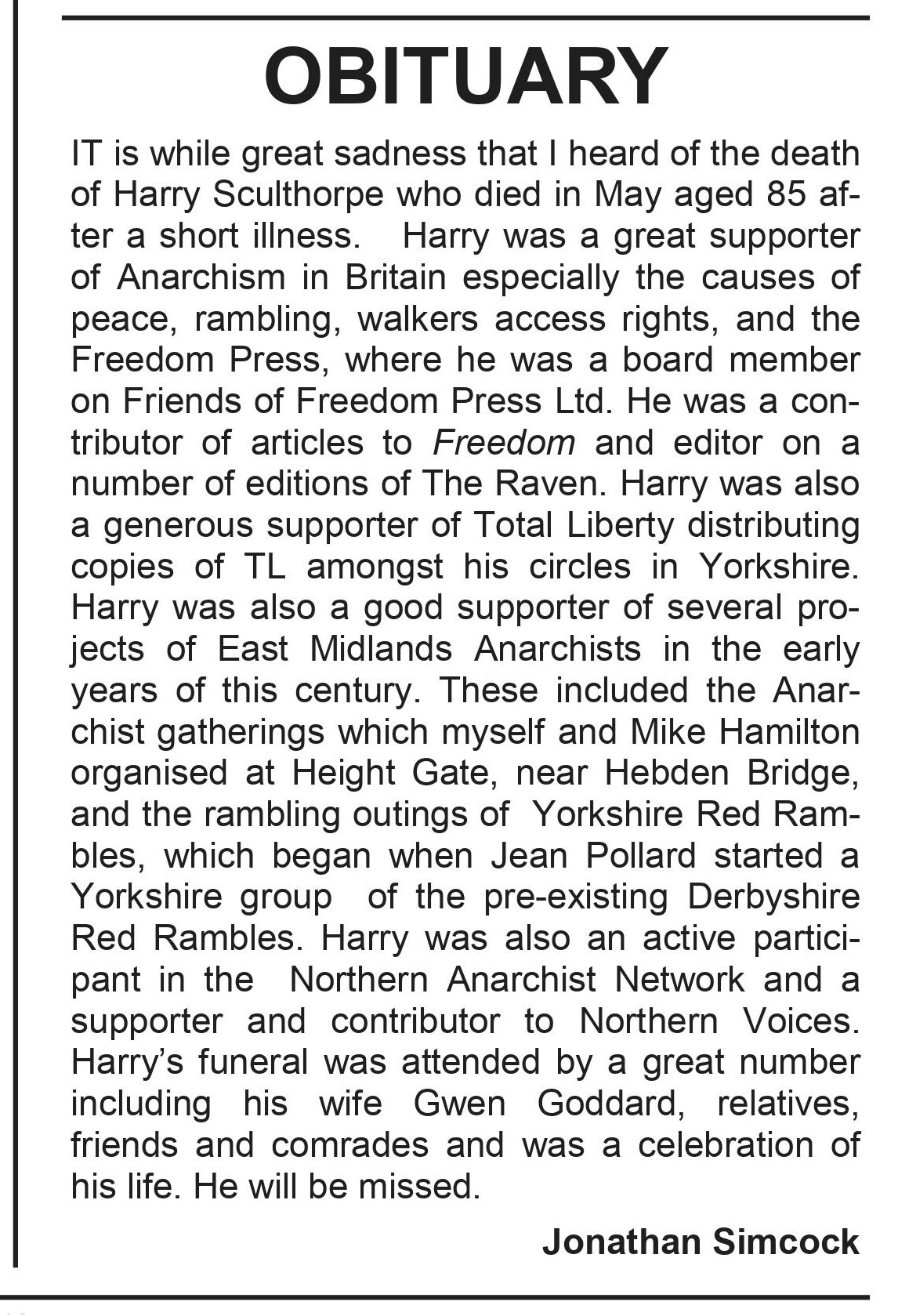
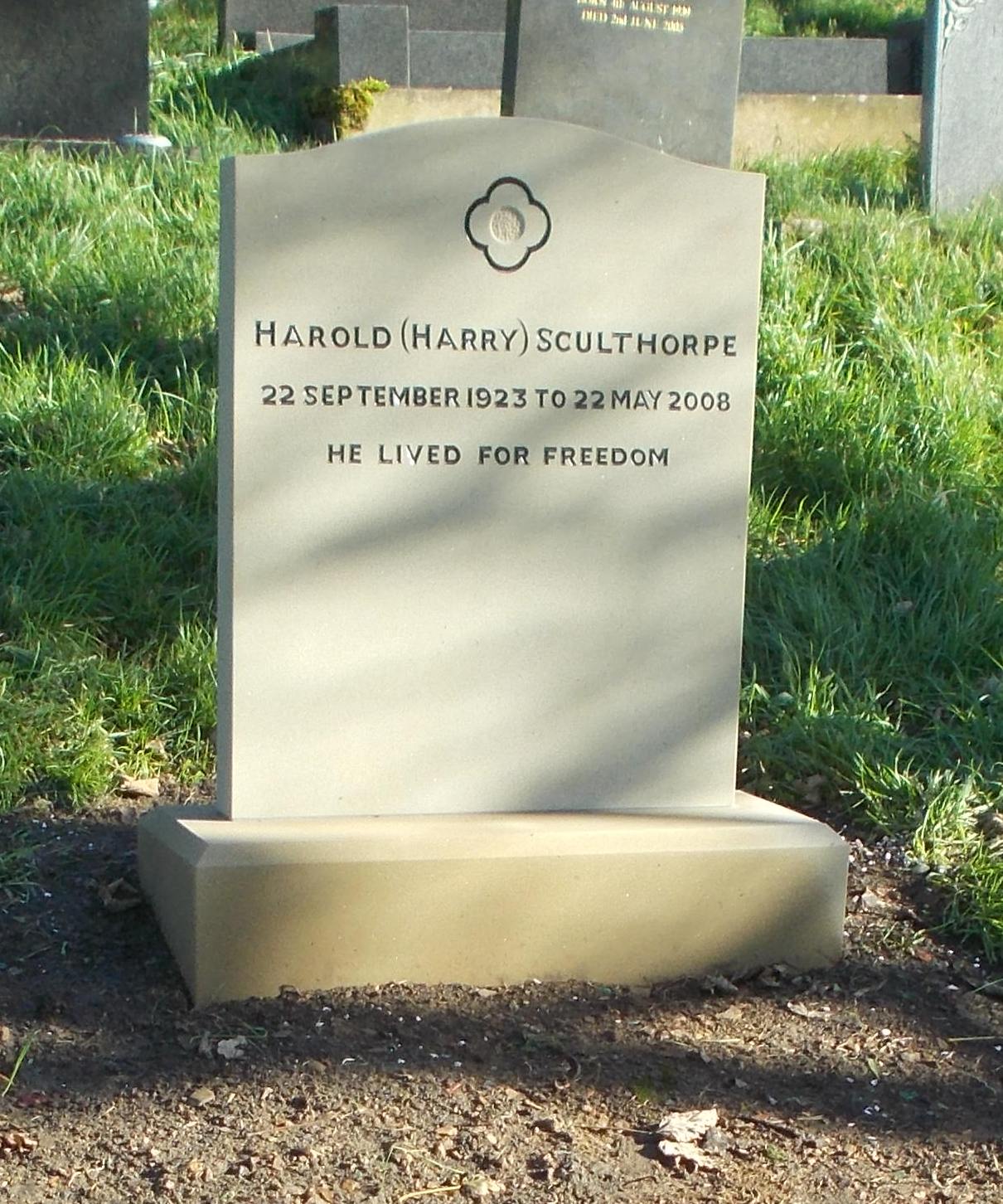
Harry Sculthorpe was a supporter of the anarchist journal Total Liberty, and an obituary by its editor Jonathan Simcock appeared in the autumn / winter 2008 edition:
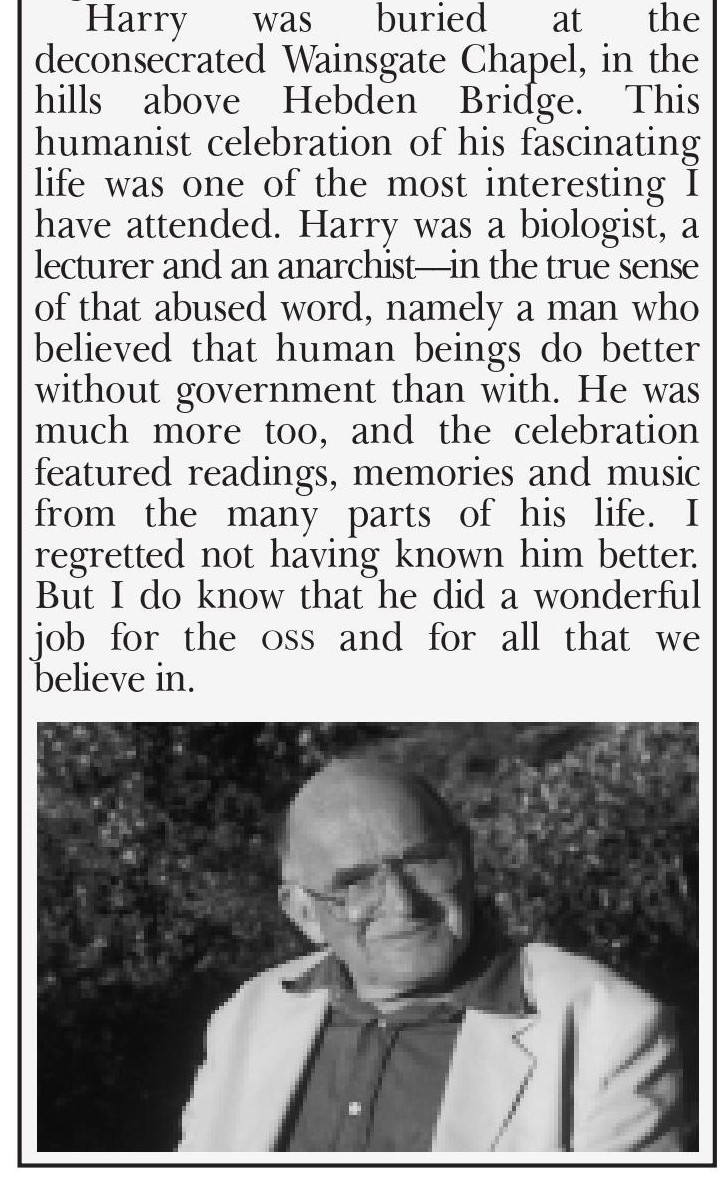
Harry and his wife Gwendoline Goddard were also supporters of the Open Spaces Society, and an obituary, written by Kate Ashbrook, was published in their magazine Open Space:

* * *
We are socialists, disbelievers in property, advocates of the equal claims of all to work for the community as seems good — calling no-one master, and of the equal claim to each to satisfy as seems good to them, their natural needs from the stock of social wealth they have laboured to produce …We are anarchists, disbelievers in the government of the many by the few in any shape and under any pretext.
From Freedom, a Journal of Anarchist Socialism, Vol 1, No. 1, October 1886
Josiah WADE (1842-1908)
Born in Hebden Bridge, son of Hannah and Joseph Wade, his father died when he was five, and by the age of eight he was working half time as a bobbin doffer in Crossley’s Mill, attending ‘Harry Bob’s School’ in Hebden Bridge and supplementing his income by hawking ‘light muffins’. At the age of thirteen he started in full time employment at Crossley’s, operating with his older brother John new machines making horse rugs for export to Mexico and South America.
In 1859 his brother John Wade (plot A392) was killed by lightning at the mill aged 18, an event which greatly affected Josiah and caused him to leave Crossley’s soon afterwards. After working as an apprentice to a local watchmaker, Charles Horner, he opened a small stationery shop in Hebden Bridge, started a printing business with his brother Edwin Wade (Plot A392), invented a machine for making luggage labels and also started a short-lived newspaper, the ‘Hebden Chronicle’.
He turned his attention to designing an improved printing press, and in 1872 he patented the ‘Arab’, considered by some to be the ‘finest clam-shell platen in the world’, which he manufactured in Halifax, initially at Well Lane and later at Crown Works at the bottom of Hopwood Lane, Hope Works in Arundel Street and finally at Dunkirk Mills at West End.
An important feature of the Arab press was that it could be easily dismantled and transported, and they were exported throughout the world:
The satirical magazine ‘The Wipers Times’, printed by British soldiers during World War 1 in Ypres, Belgium, was possibly printed on an Arab press, although it may have been a ‘Liberty’ press that was used. Both the TV film and stage play titled ‘The Wipers Times’ used Arab presses in their productions.
The Halifax Courier apparently reported in 1908 that Ernest Shackleton took an Arab press to the Antarctic. We know that Shackleton took two printing presses on this expedition (the ‘Nimrod’ expedition of 1907-1909), but evidence points to these being an ‘Albion’ letterpress and a small etching press – there is sadly no reliable record of an Arab press being taken to the Antarctic. Members of Shackleton’s expedition produced a book, ‘Aurora Australis’, while overwintered on Ross Island. Less than 100 copies were made, and it was the first book ever written, printed, illustrated and bound in the Antarctic.
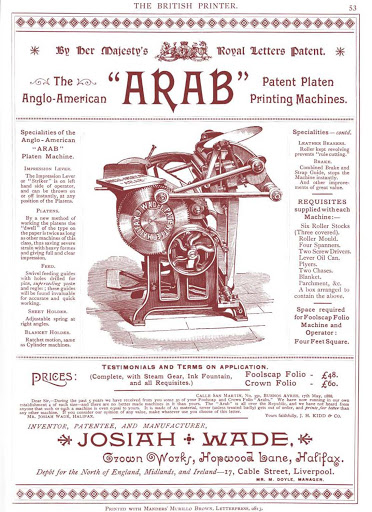
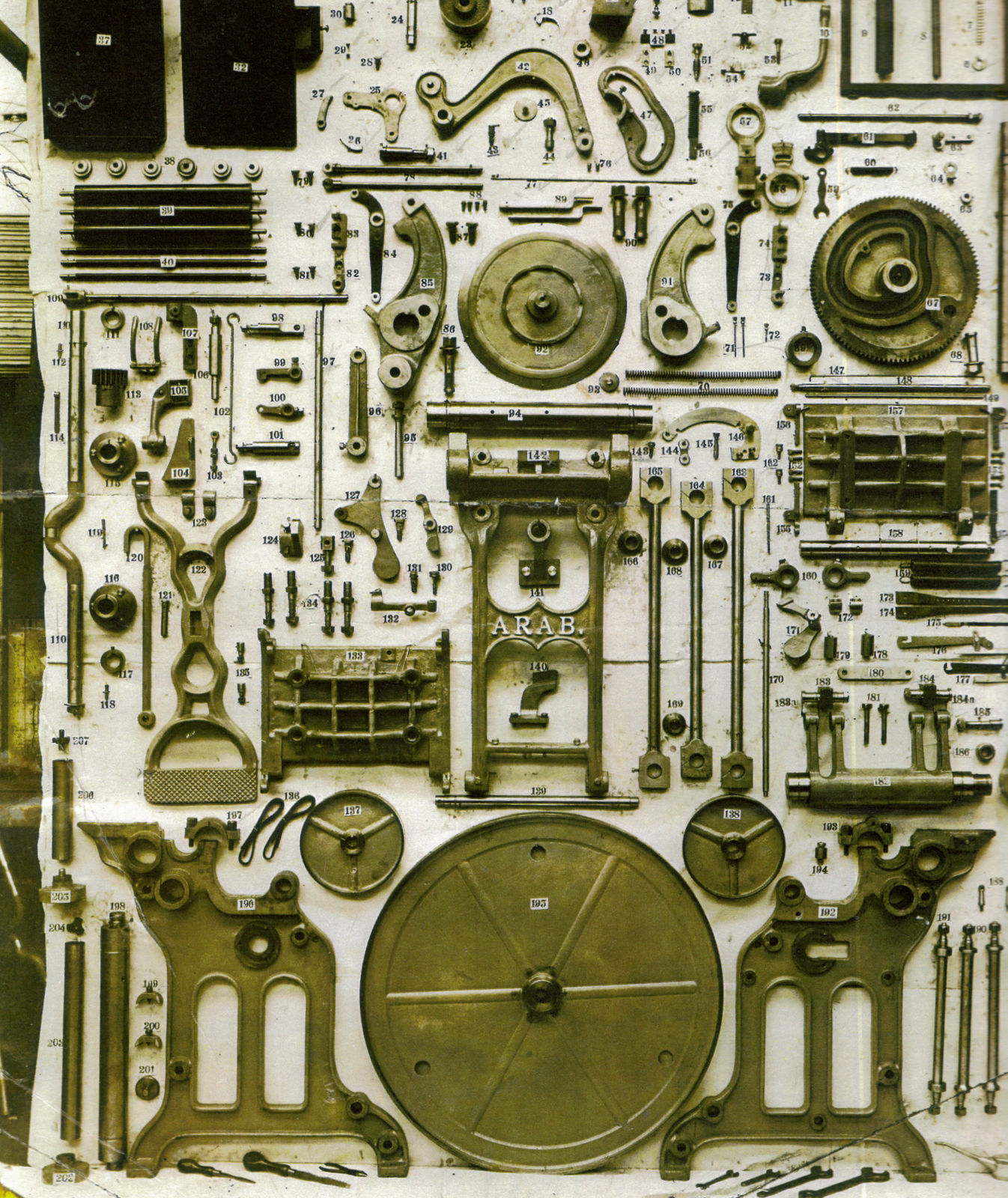
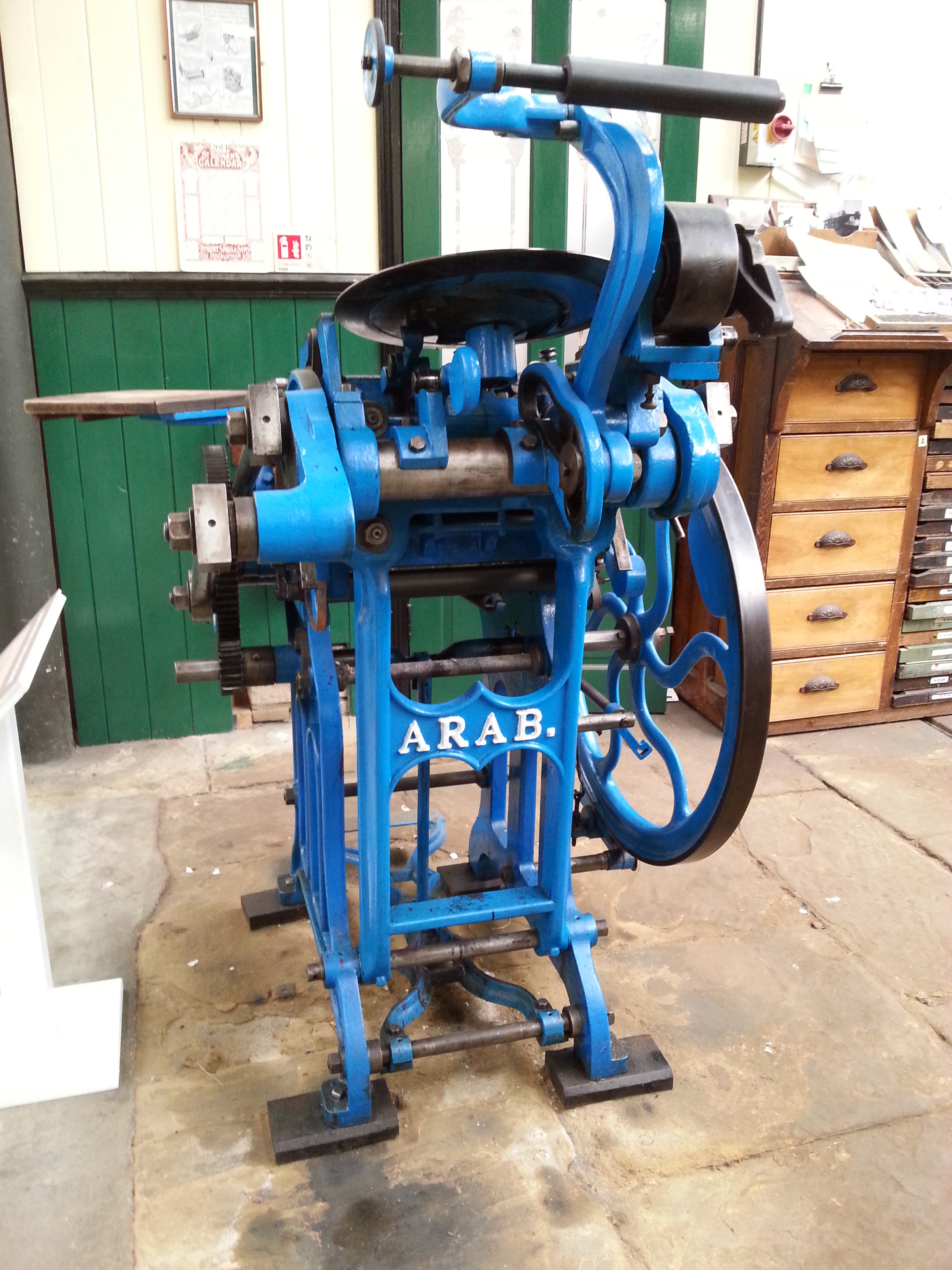
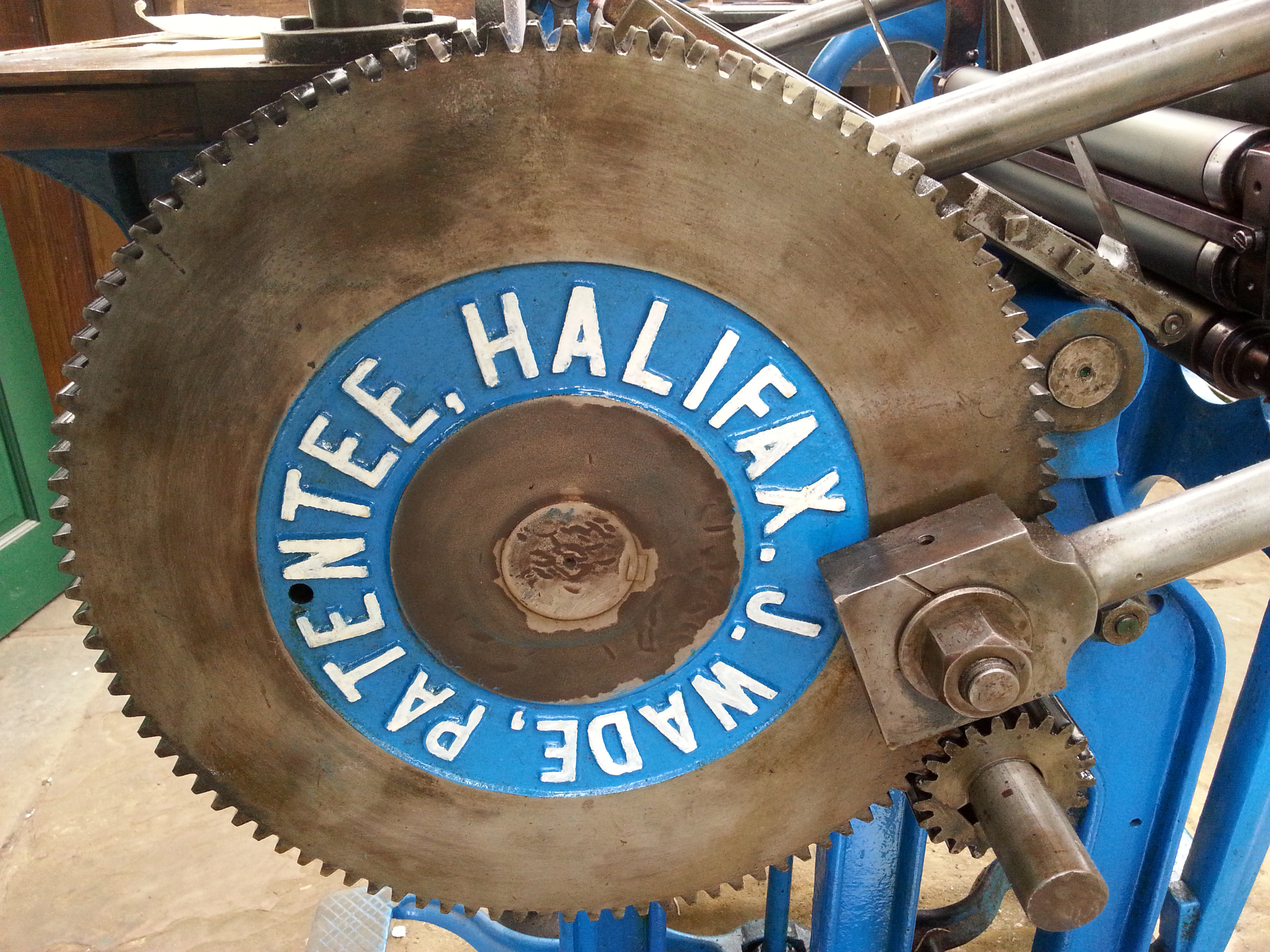
The Arab printing press designed and made by Josiah Wade. The lower photographs are of an Arab press at Bradford Industrial Museum. For more information about the Arab, click here.
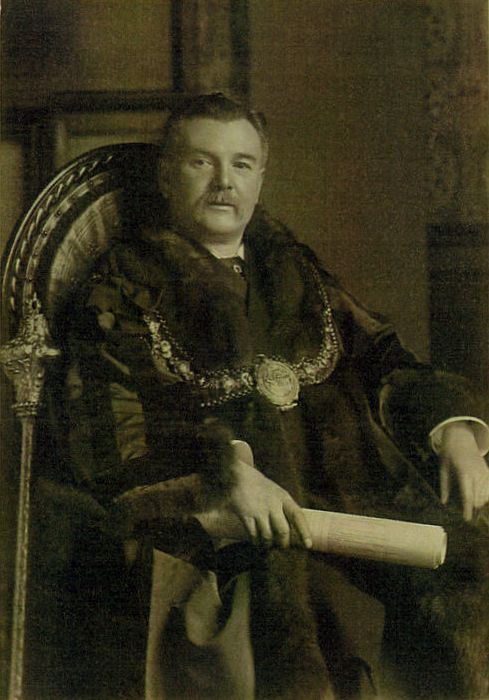
Josiah Wade took an active part in municipal life: Liberal councillor and JP, Chairman of the Watch Committee, Chairman of the Waterworks Committee, appointed to the Halifax Board of Guardians and elected Mayor of Halifax from 1902 to 1904.
He was involved with promoting Walshaw Dean and Ogden reservoirs, Halifax Technical College and St.Luke’s Hospital.
He gave Hebden Bridge its first ambulance in 1896 – ‘the machine came from Lockerbie, Scotland, and was one of the best in the country’.
Following the death of his sister Sarah in 1899, he donated £1,500 to Hope Baptist Church and Sunday School and funded the building of the Wade Institute (later known as Youth House) in Carlton Street, Hebden Bridge.
In 1871 he married Nicholas Aitken Thomson (she was from Dumfries, where Nicholas was often used as a forename for girls in the 19th century). He died of heart failure at North Park, Halifax in 1908, aged 65, and is buried with his sister Sarah Wade (1834-1899) in plot B136a, a single burial plot with a relatively modest (for someone of his importance and affluence) granite obelisk and iron railings.
His wife died in Halifax in 1926, aged 83, and is not recorded as being buried at Wainsgate. They had no children.
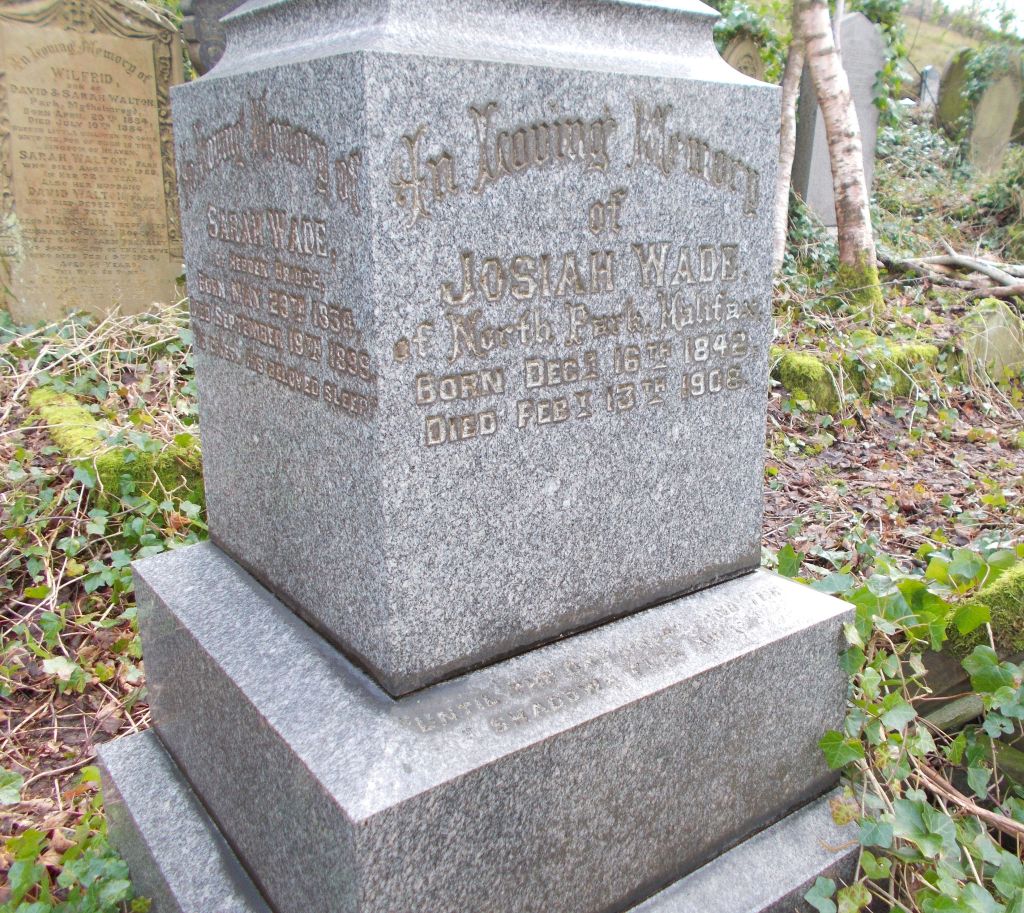
The Halifax Guardian’s report of Josiah Wade’s death stated:
‘His business career was one which stamped him as a man who by his own genius, perseverance and shrewdness, rose from the humblest position to one of affluence.’
* * *
The burial plot in which Josiah Wade and his sister are buried (B136a) was purchased by him on 10th June 1892. The burial register records one burial on that date, but does not specify which plot and no age is recorded. The entry in the register is unclear, but looks like ‘Miss Wade – Halifax’, but could also possibly be read as ‘Miss Wade (still born child) – Halifax’. (The only feasible explanation for this would be that the child was the daughter of Sarah Ellen Wade, daughter of Edwin and Grace, and unmarried at the time).
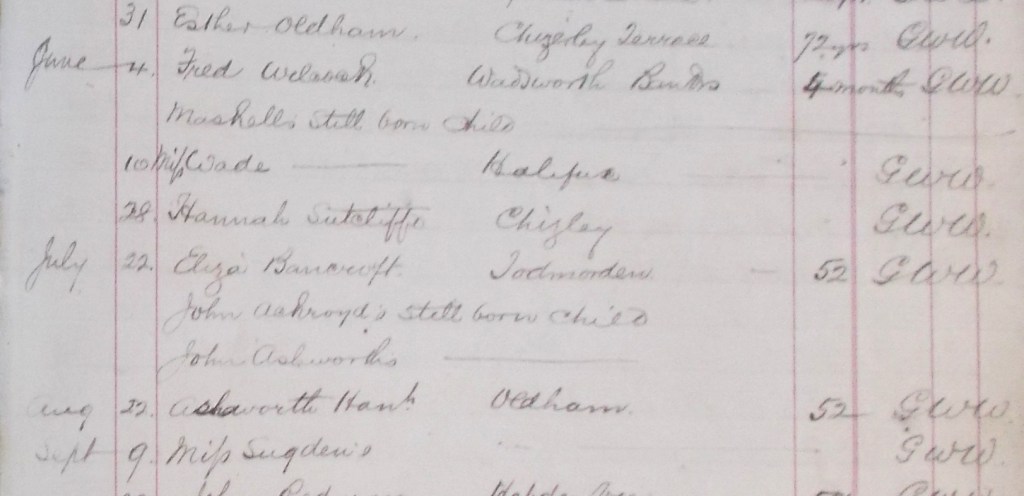
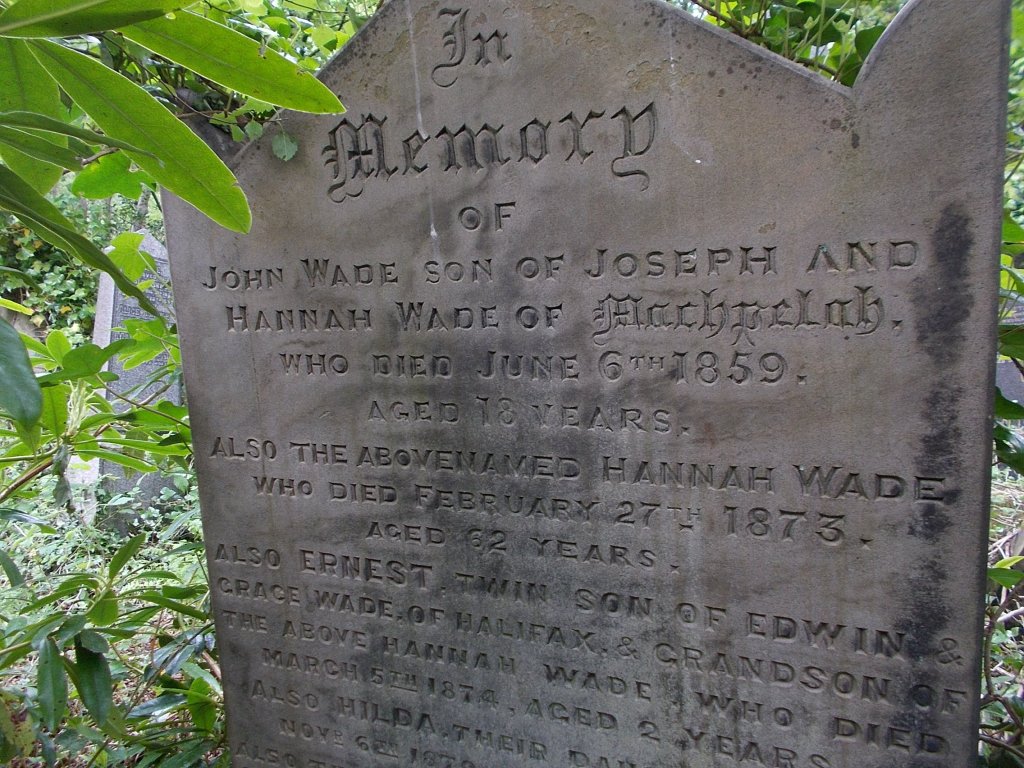
Grace Wade, widow of Josiah’s brother Edwin, died on 7th June 1892 aged 47, and is commemorated on the headstone of plot A392 where other members of the Wade family are buried – Josiah’s mother Hannah (who died in 1873), his brother John (died 1859) and two of Edwin and Grace’s six children who died in infancy – Ernest and Hilda. Edwin Wade is commemorated on the headstone, although not buried there.
Edwin had died in Cape Town, South Africa in 1881, aged 36: it is believed that Josiah had sent his brother to act as an agent for his business in South Africa because he thought that the warmer climate would improve his health (Edwin suffered from tuberculosis, the disease which almost certainly caused his death).
The final inscription on the headstone is for Grace Wade, and it is assumed that the entry in the burial register refers to her and she is buried in plot A392, although it is curious that Josiah bought his own burial plot (which is adjacent) on the day of his sister-in-law’s funeral, and it is possible that she is buried in that plot.
David Constantine WHITE (1948-2011)
Born David John White in Halifax, David was a self-taught potter and teacher of pottery. His output was large and varied, much of it made with clay that he had dug locally and processed himself. In 1981 he founded Brier Hey Pottery in Mytholmroyd, where he worked and mentored aspiring potters until his untimely death. He was a keen cyclist, and also managed to find the time to play the hammered dulcimer.
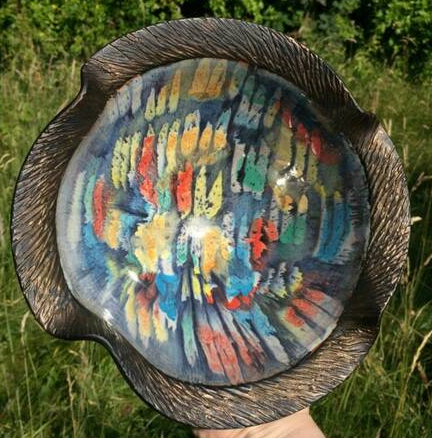
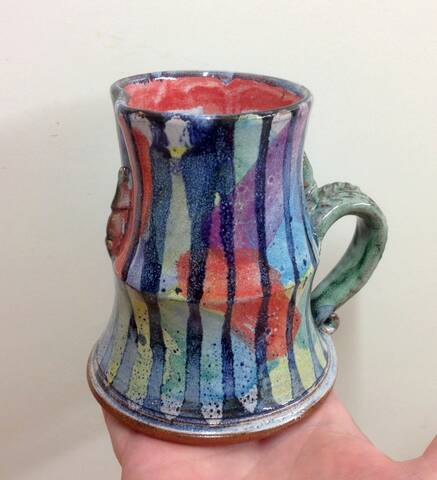
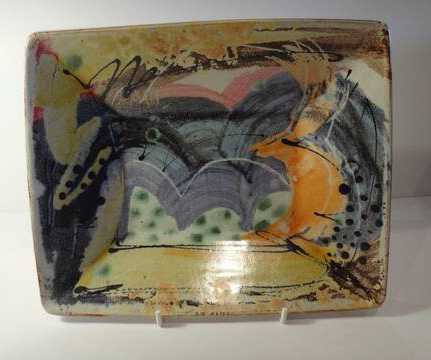
To learn more about David’s life and work and Brier Hey Pottery, click on the links.
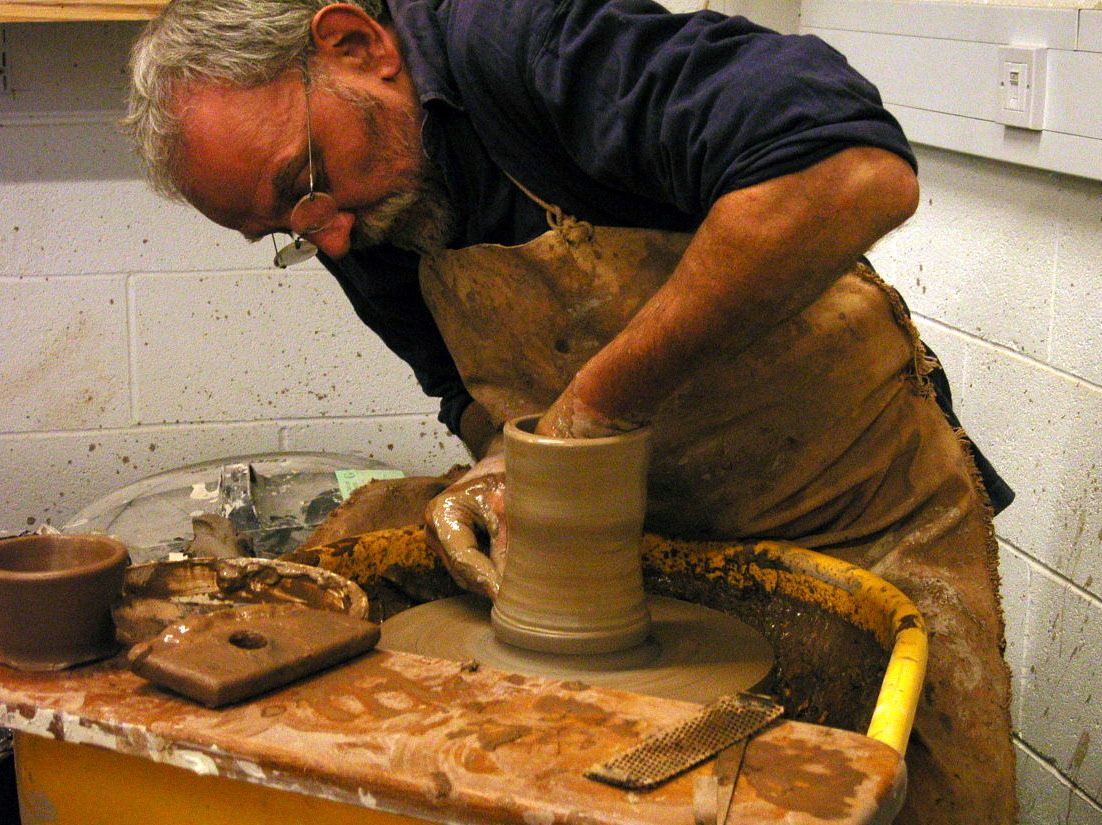
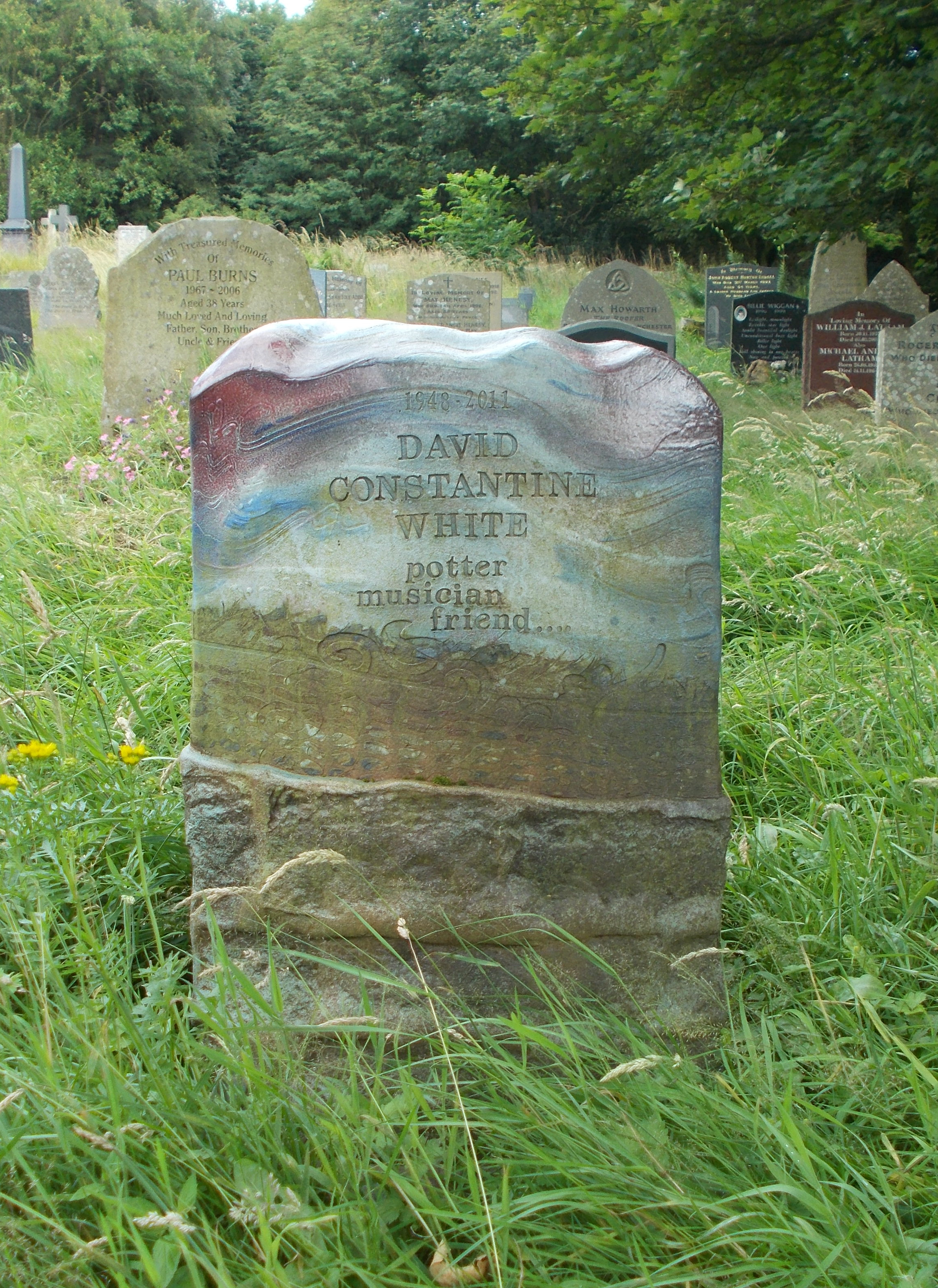
David Constantine White died on the 27th October 2011 at Huddersfield Royal Infirmary, aged 63. His grave at Wainsgate (plot H1028) is marked by a distinctive ceramic headstone made by his friend and fellow potter Jim Robison.
Berhane WOLDEGABRIEL (1946-2020)
Berhane Woldegabriel was an Eritrean who left his country as a refugee, eventually settling in the UK. Already an experienced teacher and journalist, he worked for nearly thirty years in London, mainly as an educator, translator, and interpreter. He became a dedicated peacemaker, using his great political understanding and interpersonal skills as a facilitator and conciliator amongst Eritreans in the diaspora, and amongst wider refugee communities. Alongside his commitment to his own people, Berhane embraced life as a UK citizen, and was a true universalist who loved people regardless of nationality and creed. He visited Hebden Bridge and Todmorden often and felt at home here. The landscape reminded him of his Eritrean homeland.
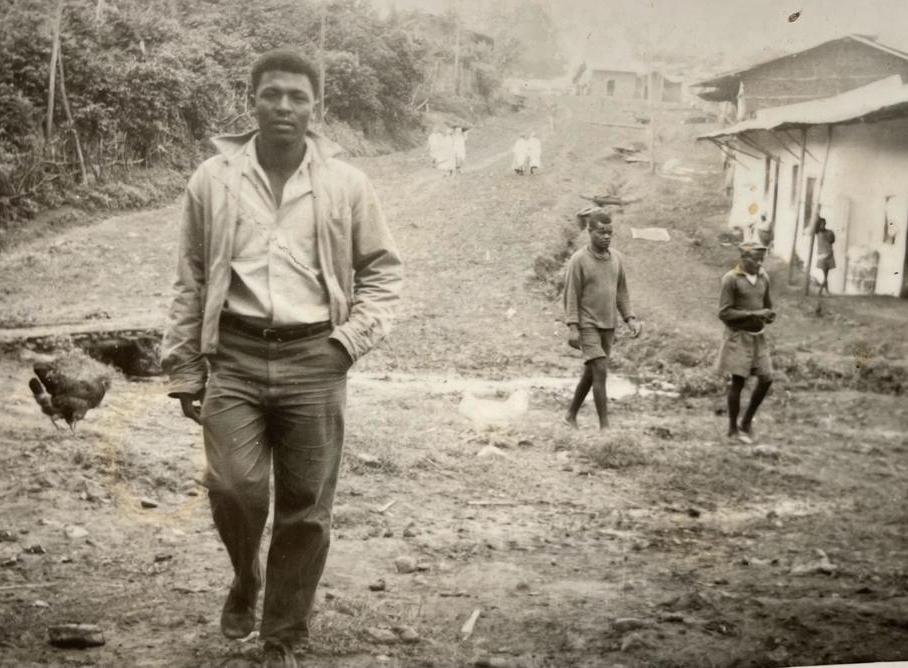

Berhane was spending the COVID lockdown in Todmorden when he received a diagnosis of terminal illness. He expressed the wish to be buried in West Yorkshire and visited Wainsgate in his last months. When his time came, this was not to be, and he was buried in London. Here at Wainsgate, a headstone is erected in his memory, made from local sandstone by Whitakers of Hebden Bridge. The inscription at the top of the stone is in Ge’ez script and
represents Berhane’s name in the Tigrinya language. The carving, to represent his faith, is of the Eritrean Orthodox cross.
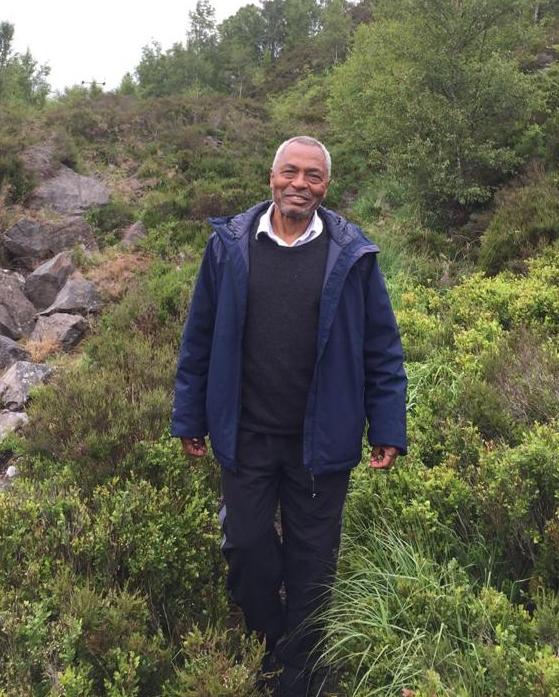
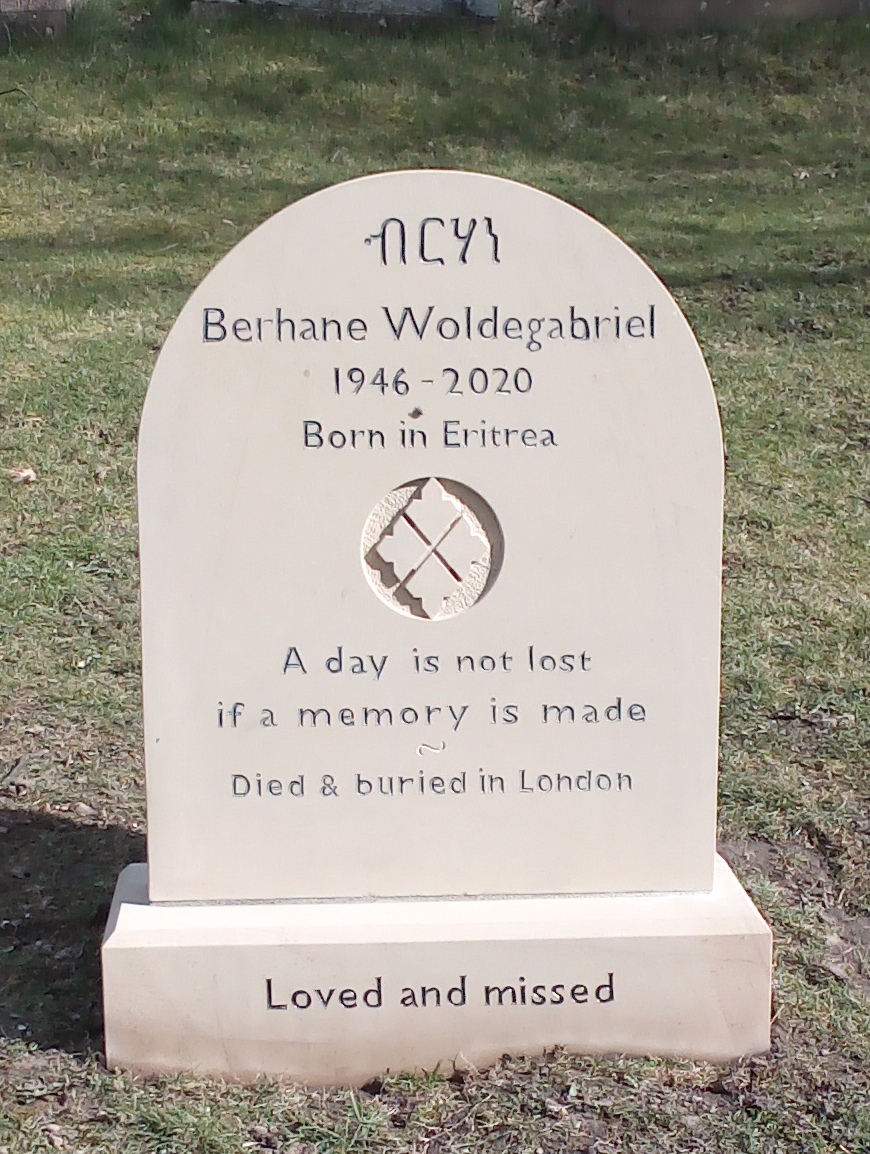
More about Berhane’s life:
Berhane was born in Eritrea, and attended Prince Mekonnen High School in the capital, Asmara, before moving to Ethiopia to train as a teacher at Debre Berhan. After qualifying he taught at various schools before continuing his studies at Addis Ababa University.
War and political upheaval meant that he could not return to Eritrea permanently, and in the late 1970s he fled the repression of the Mengistu regime in Ethiopia and escaped on foot to Sudan (a walk of 1000 miles) where he lived for the next 13 years. In Sudan he worked as a journalist, and for the United Nations High Commissioner for Refugees (UNHCR), helping with the settlement of Eritrean refugees. In 1990 he was once again forced to flee from his adopted country after his writing offended the Sudanese government, and he sought sanctuary in the UK.
From 1993 Berhane lived in London, where, latterly, he worked at SOAS, University of London, as a lecturer in Tigrinya and Amharic, whilst assisting refugees to the UK from Eritrea and other countries. He founded a charity, the Eritrean Education and Publication Trust (EEPT) as a vehicle to improve the lives of his people. Through this and the organisation Initiatives of Change (IOC) he undertook peace and conciliation work amongst various organisations, including Eritrean opposition groups. He was a proponent of what is now known as ‘disagreeing agreeably’.
In 2017 he left SOAS to undertake expeditions with Save the Children, helping refugees who were making the dangerous sea crossing from Africa to Europe. By now aged 70, he was boarding rescue dinghies in the Mediterranean to help desperate people fleeing war, conflict, or persecution in their home countries, and using his fluency in four languages to assist them in every way once they were on board the rescue ship.
Thanks to Amanda Woolley for the text and photographs.
A book about Berhane’s life – ‘Berhane, the Peace Messenger’ by Ali Hindi, Amanda Woolley, Amanuel Yemane & Peter Riddell has just been published (November 2023) by The Endless Bookcase. To find out more or order a copy (Paperback or ebook) click here.
Arthur SPEAK (1913-1998)
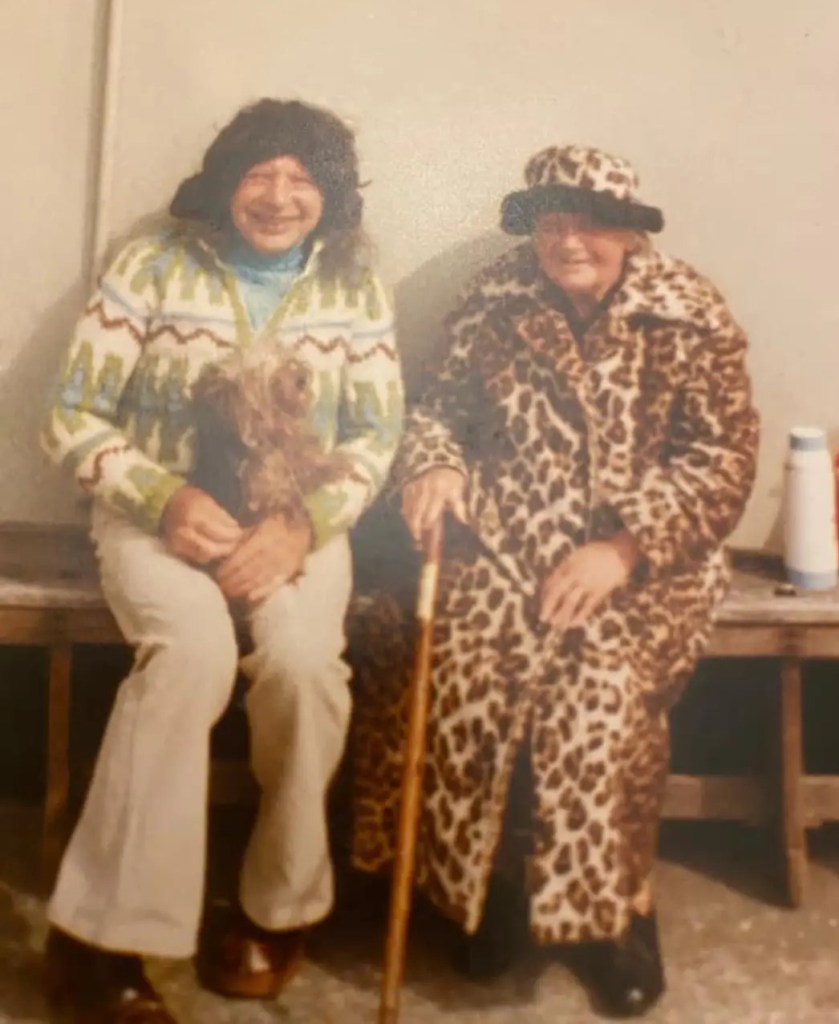
Arthur Speak and his mother, Sarah Gertrude Speak.
Coming soon…..
Alan LITTLEWOOD (1936-2023)
Alan Littlewood MA, LCG, Lord of the Manor of Heptonstall, was granted a coat of arms by the College of Arms, London, on 1st May 1986 and it was registered with the International Register of Arms in 2006 on The Register of Feudal Lords and Barons of The United Kingdom of Great Britain and Northern Ireland. He is most probably the only person buried at Wainsgate who has a coat of arms.
Arms: Per pale Argent and Purpure a Dragon rampant wings elevated and addorsed counterchanged gorged with a collar pendant therefrom a chain ending in a ring Or manacled to the sinister rear leg and supporting overall clasped in both foreclaws a Baker’s Peel in bend proper.
Crest: On a mount facing an Oak sapling acorned proper a Ram statant Argent belted Vert.
Motto: Jesus gives me power.
The image of the coat of arms and the description of it are taken from the International Register of Arms.
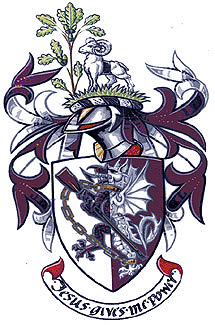
The Register describes the armiger (a person entitled to bear heraldic arms) as a ‘Master of Arts, Licentiate of the City and Guilds of London Institute, Freeman of the City of London, Liveryman of the Worshipful Company of Bakers of the said City, Fellow and Past President of the Institute of British Bakers and Life Benefactor of Diabetes U.K. and Life Member of the Friends of Cliffe Castle and Lord of the Manor of Heptonstall in West Yorkshire’.
The colour purple represents the heather of the Yorkshire moors. The dragon is for evil kept in strong chains and the baker’s peel symbolises the family interests in baking since the 1890s. The oak sapling is canting (a heraldic term for the representation of the bearer’s name in a visual pun or rebus) for Littlewood, and the ram has the green mark of the sheep that the family kept on the local moors (the family lived at Slack House Farm).
The Manor of Heptonstall is mentioned in Domesday Book, and Lords of the Manor have included Sir Henry Savile (1499-1558), Charles Greenwood (Clerk and Rector of Thornhill) and the Earl of Scarbrough. The last ‘proper’ Lord of the Manor of Heptonstall was George Halifax Lumley-Savile, 3rd Baron Savile (1919-2008), who auctioned off this and other titles (Lord of the Manor is the only English title that can be bought and sold) in the 1990s.
We don’t know how much Alan Littlewood paid for his title, although we do know that Lord Savile had sold the title of Lord of the Manor of Shelf in 1988 for £10,500. We also don’t know what rights and responsibilities (if any) went with the title, or whether the people of Heptonstall knew (or cared) about the identity of their feudal lord.
Alan Littlewood’s main claim to fame was as a baker: he was a Liveryman of the Worshipful Company of Bakers and a Fellow and Past President of the Institute of British Bakers. He published various articles and papers on the subject, and wrote a book, published in 1987 – Breadcraft – the Complete Guide to Home Breadmaking (now out of print, but there are several copies for sale on ebay for less than £5).
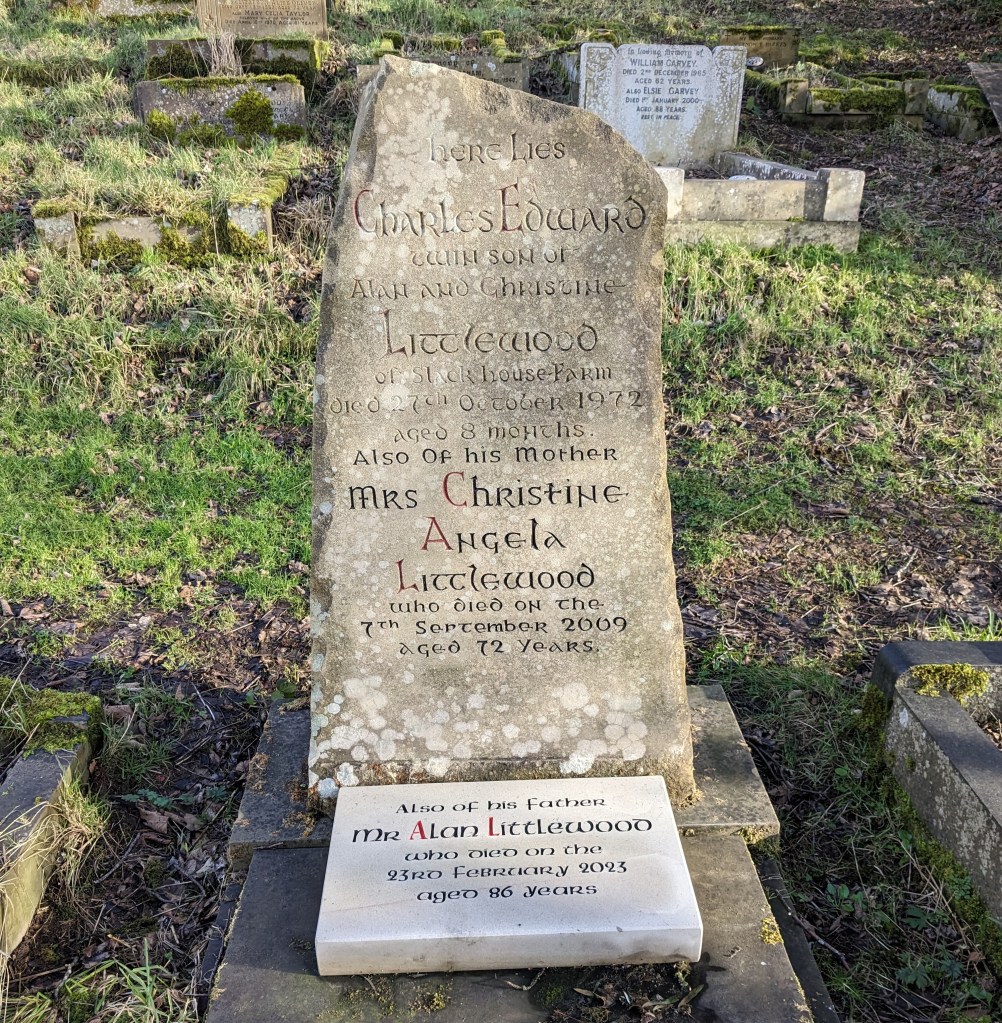
The family bought a plot at Wainsgate (I893) for the burial in 1972 of their son Charles Edward, the fifth child of Alan and his wife Christine Angela (born Hall), a twin who died at the age of 8 months. Christine died in 2009, aged 72, and Alan died in Chapel-en-le-Frith in 2023, aged 86.
The grave is marked with a large sandstone boulder, engraved in a variation of Gaelic script. The inscription for Alan Littlewood is on a stone plaque placed on the grave.
John CLAY (1853-1916)
John Clay was born on 12th May 1853 at West End, Hebden Bridge, the son of William and Ann Clay. William Clay was a calico manufacturer and draper, and John seems to have taken over the business after his father’s death in 1875 – the 1881 census records him, age 28 and married with two young children being a ‘Cotton manufacturer employing 159 workpeople’.
The family lived at Lower Stubbings, Hebden Bridge, and had a 17 year old live-in servant, Annie Elizabeth Rafter. His older brother William Henry Clay lived nearby and was described in the 1881 census as a ‘Cotton yarn agent’.

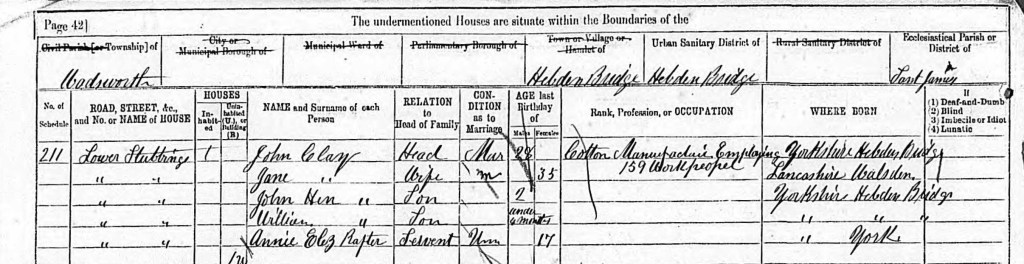
John had married Jane Firth from Walsden in 1876. She was nine years his senior, although her stated age in census records after their marriage seems to be a couple of years less than her true age – she was born on 14th March 1844. The couple were to have four children – Alice, John Henry, William and Dora. Alice, their first child, was born in 1877 but died at the age of two.
In 1891 John Clay was a ‘Manufacturing chemist (employer)’ and in 1901 he described himself as a ‘Chemical manufacturer & machinery dealer (employer)’. His son John Henry Clay is recorded in the census as ‘Manager of chemical works’ – presumably manager of his father’s business.
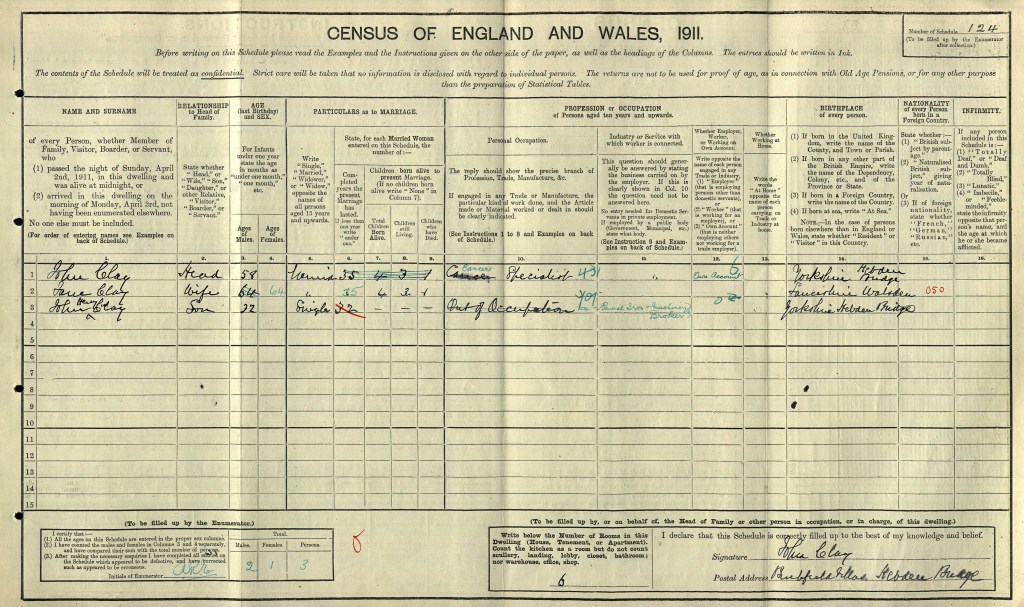
In 1911 John describes himself as a ‘Cancer specialist’, working on his own account. His obituary in the Halifax Courier gave some details of his work in this field:
‘A few years ago Mr Clay came very much before the public on account of his cancer research work. After long and careful study he experimented in the preparation of various substances and eventually proclaimed that he had discovered a serum which he declared would cure cancer without having to resort to the knife.
A large number of patients from far and near came to him for treatment, and he also opened consulting rooms in other towns. For a few years Mr Clay was kept busy in dealing with cases, and many benefited as a result of his treatment – in fact his patients organised a semi-public function at which they expressed their heartfelt thanks for his services in a tangible manner.
The medical profession in the country was somewhat sceptical about the treatment, but Mr Clay was, in August, 1910, invited to go to Paris. At the Necker Hospital he gave practical demonstrations of his treatment, these making a great impression on the hospital staff.’
His glowing obituary in the Halifax Courier (8th July 1916) made much of his enquiring mind and his ‘Remarkable career of public usefulness’. His early education was at Moss’s school in Hebden Bridge, and from a young age he was a ‘keen student and a great reader – in fact he has often been described as one of the best read men in Hebden Bridge.’ Even after he started working at the age of 13 he continued his studies, particularly science subjects and mathematics: he attended local technical and evening classes and studied at South Kensington and Owen’s College, Manchester. He also took advantage of the facilities which the local Mechanics’ Institute offered for ‘self-culture’, and was on the committee for many years.
His record of public service was exemplary: he served for over 26 years on the Local Board and Council, and was a keen advocate of establishing a public library and Secondary School in Hebden Bridge. He served on virtually every District Council committee, and was chairman of several of them. He played a leading role in the establishment of a public electricity works at Hangingroyd, and was active in the succesful effort to keep open the Walshaw Dean footpath. He was involved with the local Conference of Youth, the Literary and Scientific Society, and was invariably on the committees organising Gilchrist or Oxford Extension Lectures.
‘All movements or institutions which had for their object the educating of the people could always rely upon the warm and sympathetic support of Mr Clay.’
John Clay was described as ‘a man of strong and independent ideas’, and it seems that his views were not always popular with his colleagues on the Council – he was a champion of ‘ambitious schemes and public improvements’, many of which came to fruition despite the initial opposition to his ideas. He narrowly lost his seat at the 1911 Council election, and felt that his defeat was due to him being seen as ‘an extravagant member of the Council’.
‘That had come to him as a great shock. He had been pleased to have had some experience of public work, and any little service he had been able to render had been cheerfully given, though few knew the amount of sacrifice it entailed’.
He was a staunch Liberal, and at the time of his death was a vice-president of the Hebden Bridge Liberal Club. He was a life-long ‘temperance man‘, and was closely associated with Hope Baptist Church and Sunday school, as teacher, superintendent, deacon and trustee.
It seems hard to believe that John Clay had any spare time, but his chief hobbies were reading and walking, and he ‘thought little of going on long walking tours. On several occasions he went to the Continent, and twice toured Brittany on foot’.
John Clay died, aged 63, on 5th July 1916 at his home at Birchfield Villas, Hebden Bridge.
‘For a considerable time, Mr Clay’s health had been in decline, and latterly he was a great sufferer. With characteristic stubbornness he fought to the very last against a malignant internal disease, and was about as late as Tuesday. On Wednesday morning he attempted to rise as usual, but collapsed in the bedroom. Medical aid was quickly secured, but death relieved his suffering late in the afternoon’.
It seems more than likely that John died from cancer – the very disease for which he thought he had found a cure.

John Clay is buried at Wainsgate in plot B161a with his wife Jane (who died in 1924) and their daughter Alice who had died in 1880 aged 2.
Also buried at Wainsgate are his parents William and Ann, his siblings Mary Clay, Hannah Ashworth and William Henry Clay, his son William and daughter Dora.
Dora Clay, a schoolteacher who never married, is buried with her brother William and his wife.
The ‘LOST SOULS‘
One of the aims of the Wainsgate Graveyard Project is to identify and record the final resting place of everyone who has been interred at Wainsgate, from 1762 to the present day. Many of the names are inscribed on headstones, slabs or other grave markers: in some cases the various burial registers give the number of the grave plot: in some cases the location of a burial can be deduced from family connections or local knowledge.
But that still leaves a lot of people whose interment is recorded in the burial registers, but whose grave has not (so far) been identified. At present there are over 800 of these ‘Lost Souls’.
Some of the resting places of the ‘Lost Souls’ will be identified when further gravestones are uncovered and transcribed: some will be identified after further research into burial records and other archive documents – it is also quite possible that further historical records may be discovered which will help to fill in the gaps in our knowledge.
There will still be some whose graves will never be identified.
* * *
These are some of the people who are interred at Wainsgate and whose graves have not been identified, together with what we know (usually very little) about their lives and deaths.
‘FEMALE INFANT, Unknown‘ (died 1886)
All of the entries in the burial registers, even if a person’s full name, age, residence and burial plot are not recorded, at least give a family name. There is one entry, dated 30th May 1866, which says only:
‘Female Infant, Unknown’
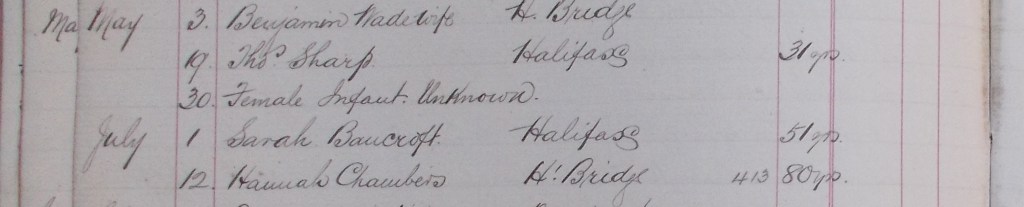
What was the story of this infant: was she a newborn baby left alive somewhere in the hope that someone would find her and rescue her? Was her body left in the graveyard in the hope that she would be given a decent Christian burial? Who was her mother? Perhaps a young unmarried woman, without a family or with a family that she knew would reject her and her child – perhaps someone too poor to bring up yet another child?
We don’t know exactly where she was buried, and we probably never will – presumably in one of the public or common graves (sometimes known as pauper’s graves) which are known to exist at Wainsgate.
Rosalia GORREBEECK (1913-1914)
Rosalia Gorrebeeck came to this country as a baby with her parents when Germany invaded Belgium in August 1914. She died in Old Town on New Year’s Eve of that year, aged just 14 months. We know that she was buried at Wainsgate, but we don’t know exactly where.
She was probably buried in a public or common grave, possibly one of the plots purchased by Wadsworth Township for public health funerals (what used to be known as a ‘pauper’s funeral’), but perhaps a local person bought a private plot for her, or allowed her to be buried in their family plot (as happened with Eugene Parmentier, the other Belgian refugee buried at Wainsgate).
John Henry Drake TURNER (1877-1920)
John Henry Drake Turner was one of the five victims of the Oxenhope Charabanc Disaster. All five were buried at Wainsgate, but John Turner is the only one whose grave has not been identified. His name is recorded in the burial register, but no headstone or other memorial has been found, and there is no record of his burial plot.
It is likely that he was buried in one of the public or common graves at Wainsgate, possibly one of the ten plots bought by ‘Miss Mitchell’ (presumably Clara Mitchell of Boston Hill) on 5th November 1920.
Hannah DESDEN (c1778-1855)
The burial register records her burial on 14th February 1855: Hannah Desden, Popples, age 77. We know very little more about her. The 1841 census has Hannah Desden, charwoman, aged 60, living alone in Hebden Bridge Lanes (she would have been around 63, but ages in the 1841 census were generally rounded down to the nearest multiple of five years). In 1851 she appears to be unmarried, living at Broad Bottom, Mytholmroyd with a lodger, 33(?) year old Mary Redman. Her age is given as 78 (which does not fit with other records) and place of birth Wadsworth. Both women are described in the census as paupers.
There are no other records of anybody called Desden connected to Wainsgate, and no record of Hannah having any relatives in the area.
Robert PENDLEBURY (c1826-1856)
Buried at Wainsgate on 14th October 1856, Robert Pendlebury was 30 years old and lived in King Street, Hebden Bridge. Other than that we know nothing about him, apart from the fact that he may possibly have been born in Lancashire.
William WHITHAM (c1781-1864)
William Whitham of Chisley was buried on 29th June 1864, aged 83, and there are three census records which appear to be him. In the 1841 census he is recorded as a weaver, living at Nook with his wife Sally. In 1851 William and Sally were living at Chiserley Stile: he is described as ‘Pauper and Weaver / cotton’ and Sally as ‘Pauper, formerly Weaver’. In 1861 William is recorded living at Middle Chisley, aged 80 and widowed: his occupation is recorded as ‘Formerly Worsted Weaver’. All the census records indicate that he was born in Wadsworth.
It is also possible that Sally was William’s second, or even third wife: records show that William Whitham of Wadsworth married Mally Greenwood in 1801 and that they had a daughter Grace born in 1803. Another record shows William Whittam (sic) marrying Mary Ford (or Lord?) at Heptonstall in 1798.
Records show that Sally almost certainly died in 1854: she may have been buried at Wainsgate, but most of the burial records for that year are missing, so this is uncertain.
More coming soon…..
EVERY PICTURE TELLS A STORY
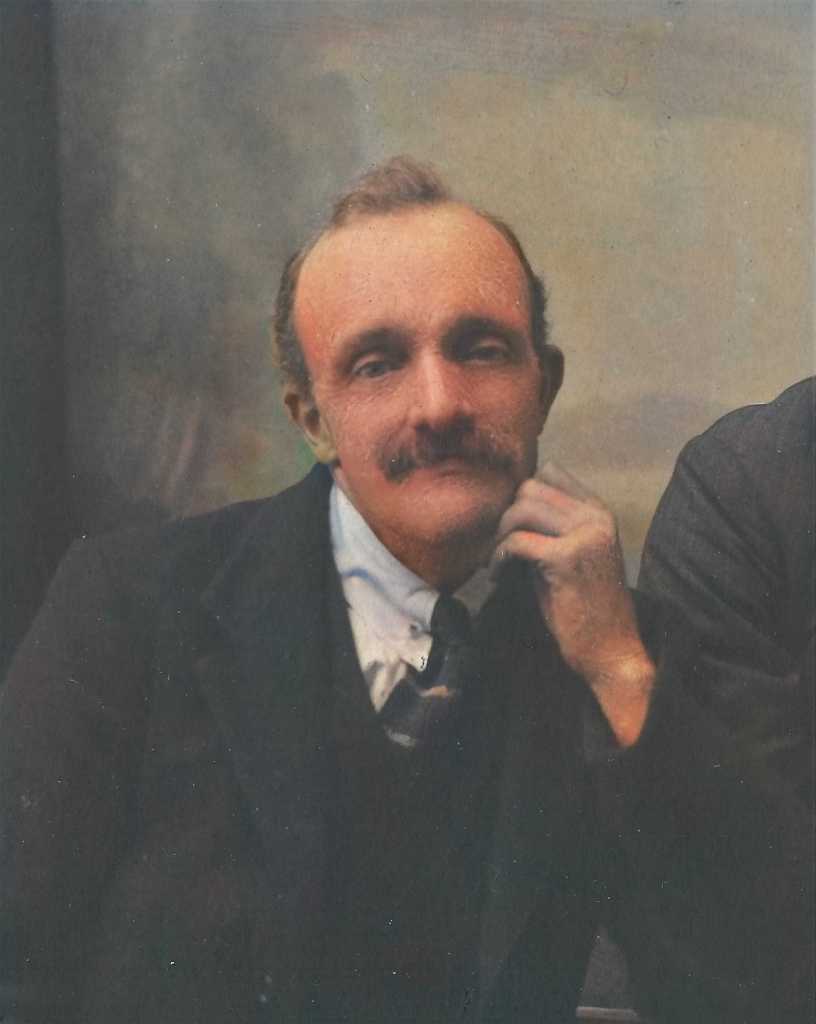
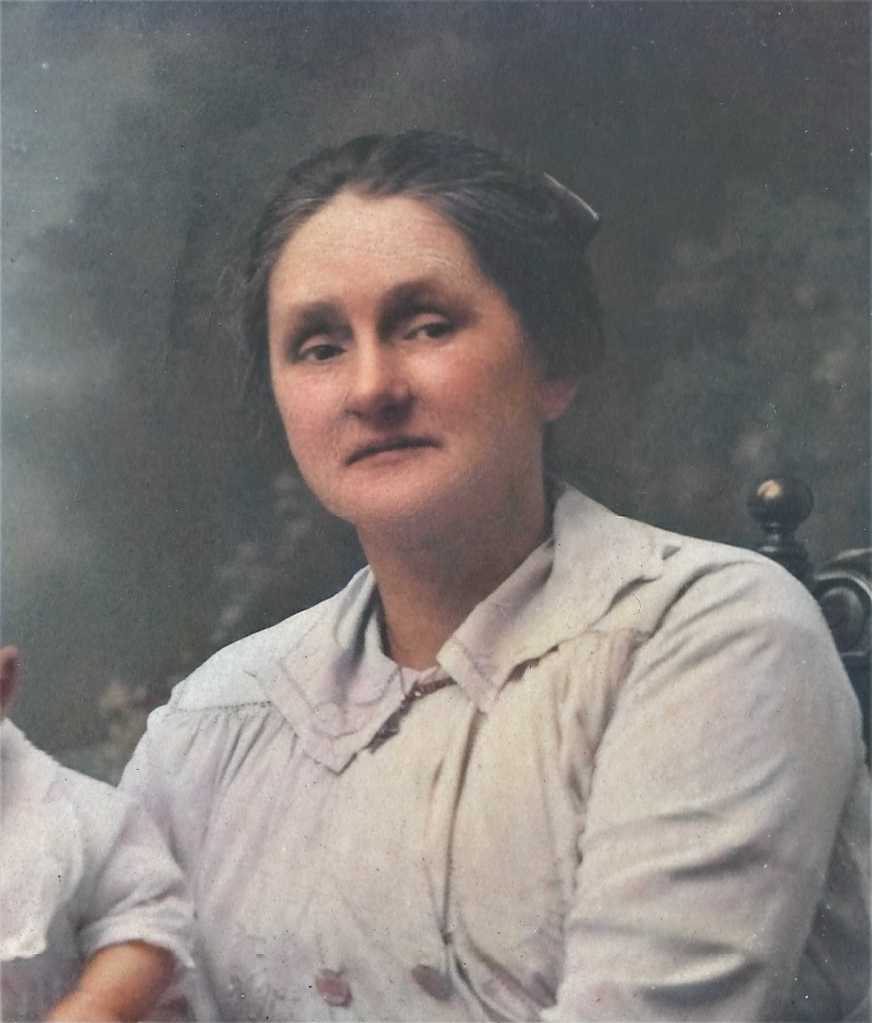
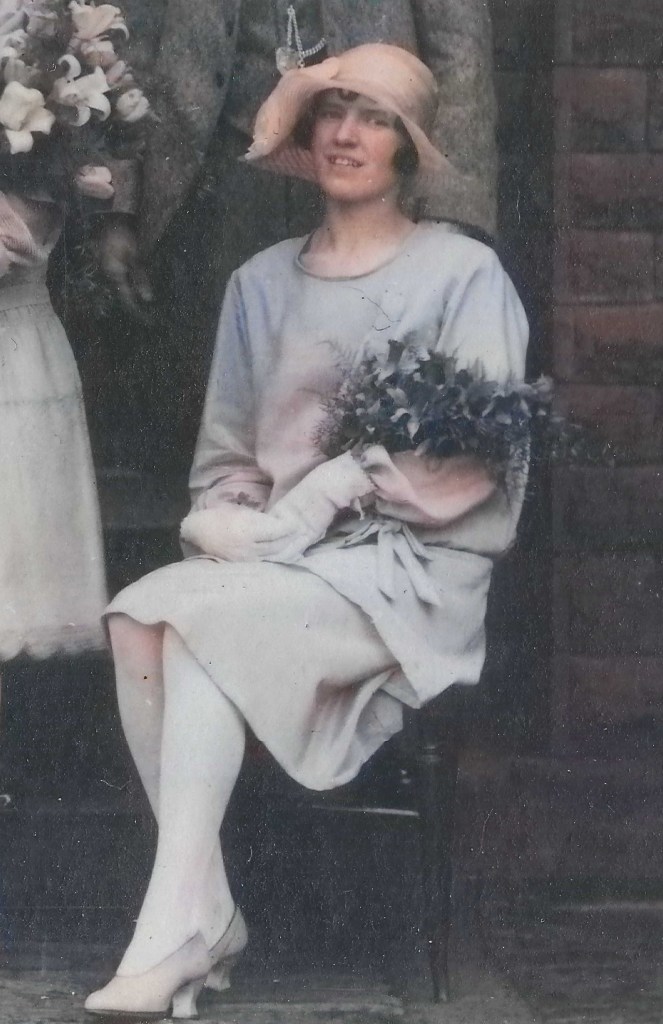
Herbert Windle (1871-1941), his wife Emily, born Emily Stirk (1874-1941) and their daughter Edith, later Edith Gudgeon (1905-1938).
Herbert was born in Earby, and worked for most of his life as a cotton weaver, and Emily was born in Bradley, near Skipton. They moved to Wadsworth around 1900, and at the time of their deaths the family were living at 5, South View, Charlestown. Herbert, Emily and Edith (who died aged 32) are buried in plot E958.
Herbert bought another plot at Wainsgate, B298a, in July 1900 which is believed to be the grave of two of their children, Ernest and Ida May and also Emily’s parents, James Chester Stirk and his wife Mary Agnes, both of whom also moved to Wadsworth from the Skipton area around 1900. Emily’s sister Elizabeth Theresa Harwood, who was born near Durham, is also buried at Wainsgate (plot E989) with her husband Ernest and son Clifford Rennison Harwood.
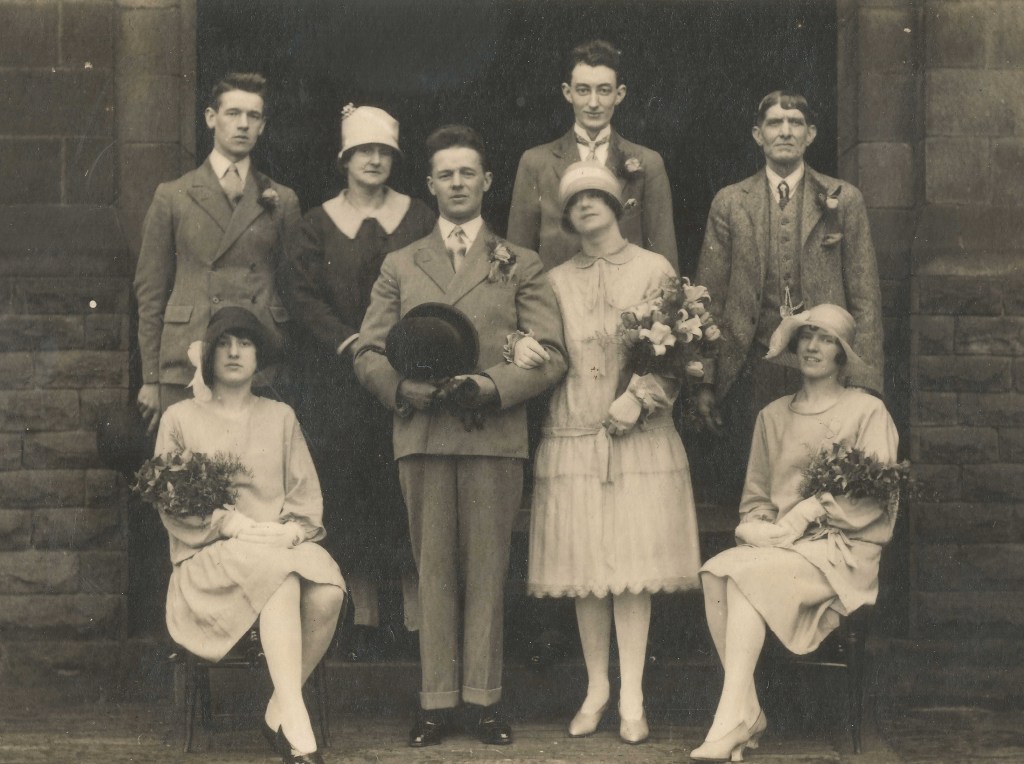
The wedding in 1928 of Herbert and Emily’s son Albert and May Fullwood.
The bridesmaids at the front are Hilda and Edith Windle, and behind Hilda are their brother Alf and mother Emily.
No sign of Herbert – perhaps he was taking the photograph?
The 1911 census records Herbert and Emily Windle as having had 13 children, 11 of whom were still living (Emily was aged 37 and they had been married for 18 years). They later had three more children. The epitaph on Emily’s headstone reads:
‘She was the Dearest of Mothers’
Thanks to Steve Holdsworth for the photographs.
* * *
Gordon Mitchell Crossley (1907-1940) was born in Todmorden, son of Harold Edwin and Mary Hannah Crossley. In 1921 thirteen year old Gordon was living with his parents and two brothers at Jumble Hole Cottages, and working as a cotton piecer at Callis Mill.
He married Mabel Sowden in 1935, and the couple had a son and a daughter, David and Judith. The 1939 Register records Mabel and the children living at 5, Ingle Dene, Charlestown with Mabel’s widowed mother and two sisters, while Gordon was living on his own in Halifax and working as a ‘boot & shoe repairer’.
Gordon died at 5, Ingle Dene aged 33. The cause of death was recorded as ‘Hodgkin’s Disease‘, and his occupation as ‘Master Boot & Shoe Repairer’.
Mabel never remarried, and died at Machpelah, Hebden Bridge in 2000, aged 97. The cause of her death was recorded as ‘old age‘. Gordon and Mabel are buried at Wainsgate in plot E985.
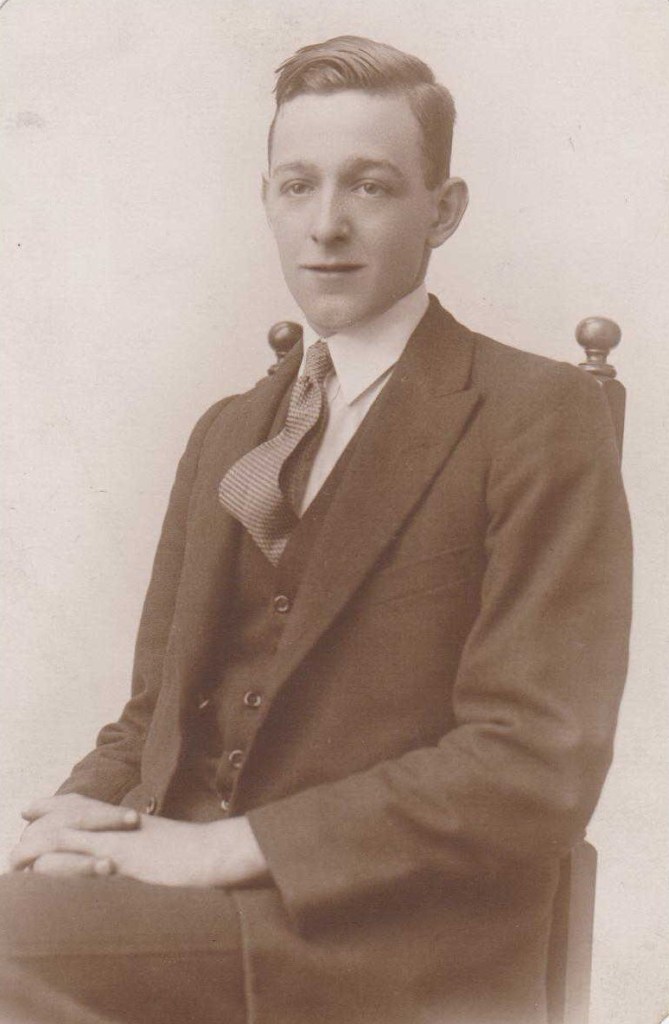
Mabel’s parents, Arthur and Harriet ‘Hetty‘ Sowden are also buried at Wainsgate in plot B312a, together with their son John, who died in 1914 aged 12, believed to have drowned in the canal near Stubbing Wharf.
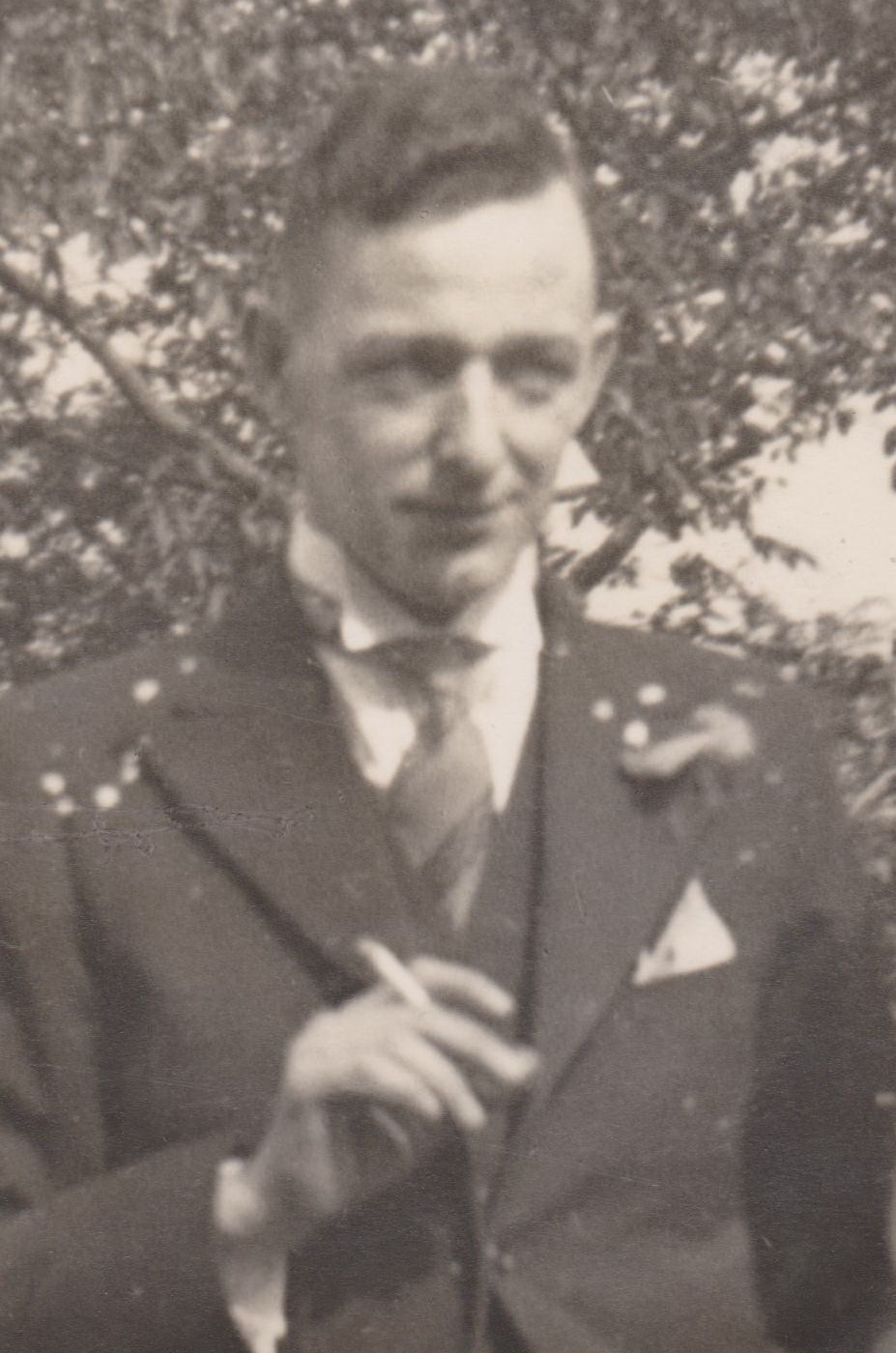

The photograph on the right is captioned ‘Mary Hannah, Gordon Mitchell and Harriet’. Mary Hannah is presumably Mary Hannah Crossley, Gordon’s mother, and Harriet is probably Harriet ‘Hetty‘ Sowden, Mabel’s mother. Perhaps the photograph was taken at Gordon and Mabel’s wedding – is that confetti on his shoulders?
* * *
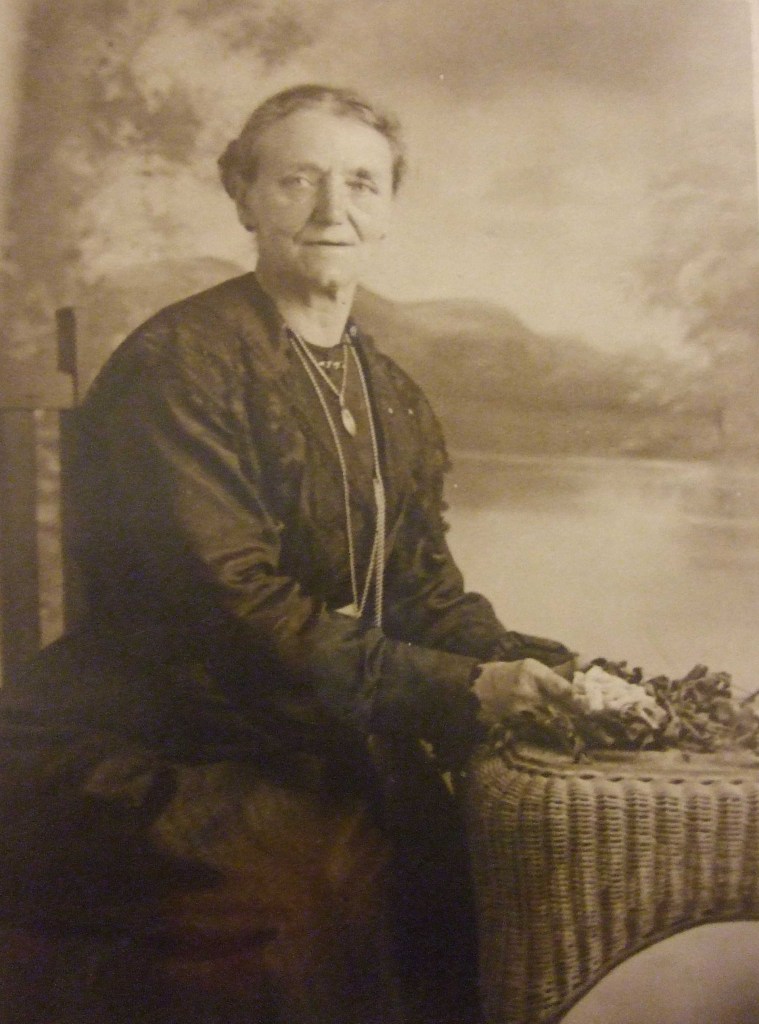
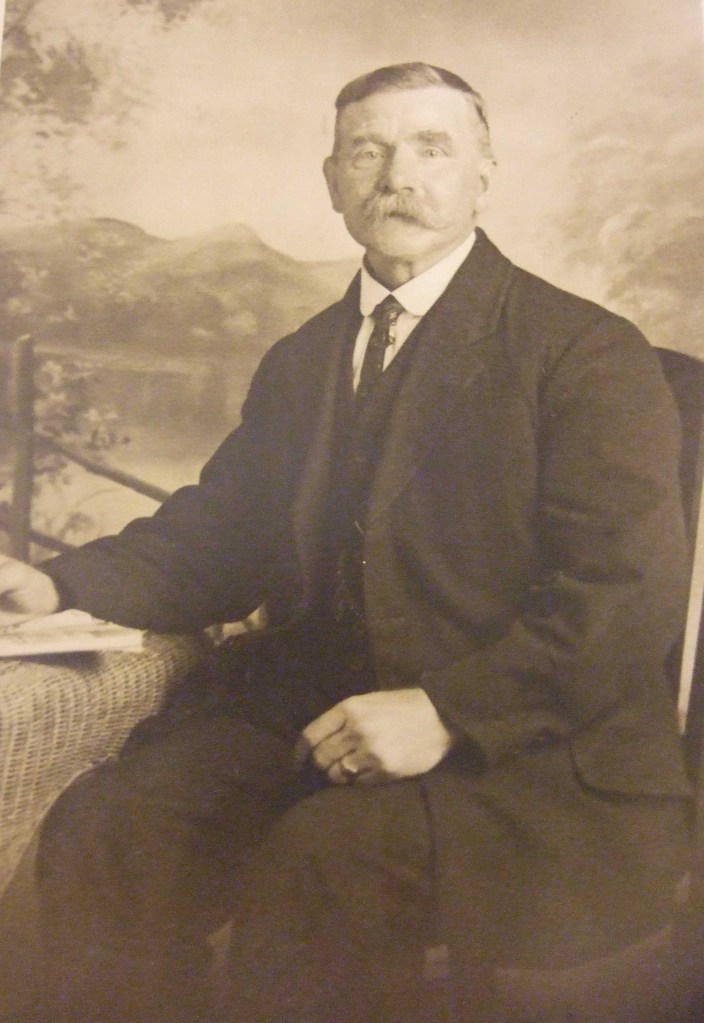
Adam Pawson (1865-1946) and his wife Ellen Pawson (1859-1942).
Adam Pawson was born at Cookridge, near Horsforth, but when he was a child the family moved to Coniston Cold, where Adam, his father and his siblings worked in the silk mill at Bell Busk. After his first marriage in 1886 he lived in Skipton, working as a silk dresser, and was still living there with his second wife Ellen in 1911. By 1921 they had moved to Wadsworth, and were living at 4, Chiserley Field Side, where he remained until his wife’s death in 1942. Adam was living at 14, Osborne Street in Hebden Bridge when he died in 1946, aged 80.
Adam’s first marriage in 1886 was to Hannah Dobby, born in Ripon. After producing seven children, Hannah died in 1904. aged 38. In 1909 Adam married Ellen Foster (born Ellen Dobby – Hannah Dobby’s older sister). Ellen had married Ben Foster in 1879, but he died in 1887 aged 29. Ellen died in 1942, aged 83.
Adam and Ethel are buried in plot E935, which was bought by Adam in January 1938. The grave is marked by a small marker stone, inscribed ‘A.P No.935’.
Adam’s eldest son from his first marriage is also buried at Wainsgate. David Pawson (1887-1941) was born in Gargrave and living at Green End, Wadsworth when he died. He is buried in an unmarked grave, plot D1092, which was bought by his wife on the day of his burial in 1941.
* * *
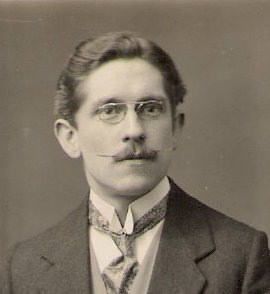
Thomas Waring Cockbain (1887-1967) was born in Manchester, the son of Thomas Cockbain, a master tailor born in Keswick. Like his father and at least two of his siblings Thomas also became a tailor, working at the Co-operative Wholesale Society mantle factory at Broughton. He married Ethel Johnson, born in Eccles, in 1911, and they lived, at least until 1939, in Winton and Eccles. He served in the Royal Army Ordnance Corps during WW1.
We don’t know when or why they moved to Wadsworth, but the 1957 Electoral Register shows them living at 6, Hebden View with their daughter Grace and her husband Humphrey Gilson.
Thomas died in 1967 aged 79 and Ethel in 1974 aged 87. They are buried in plot K693, which was purchased by their daughter Grace and her husband. The burial register records Thomas living in Pecket Well at the time of his death, and Ethel was living at 6, Hebden View when she died.
* * *
Sam Foster (c1859-1939) and his wife Clara Foster (c1859-1926).
Sam was born in Bradford, the son of Jeremiah Foster, an engineer and ‘engine tenter’, and his wife Sarah. He started work as a comb setter in a worsted mill, and in 1881 married Clara Duxbury, also from Bradford. In 1901 Sam and Clara and their four children were living in Chapel Avenue, Hebden Bridge, and Sam was employed as a sewing machine repairer, and he continued to work as a sewing machine mechanic at wholesale clothing factories in Hebden Bridge and Todmorden.
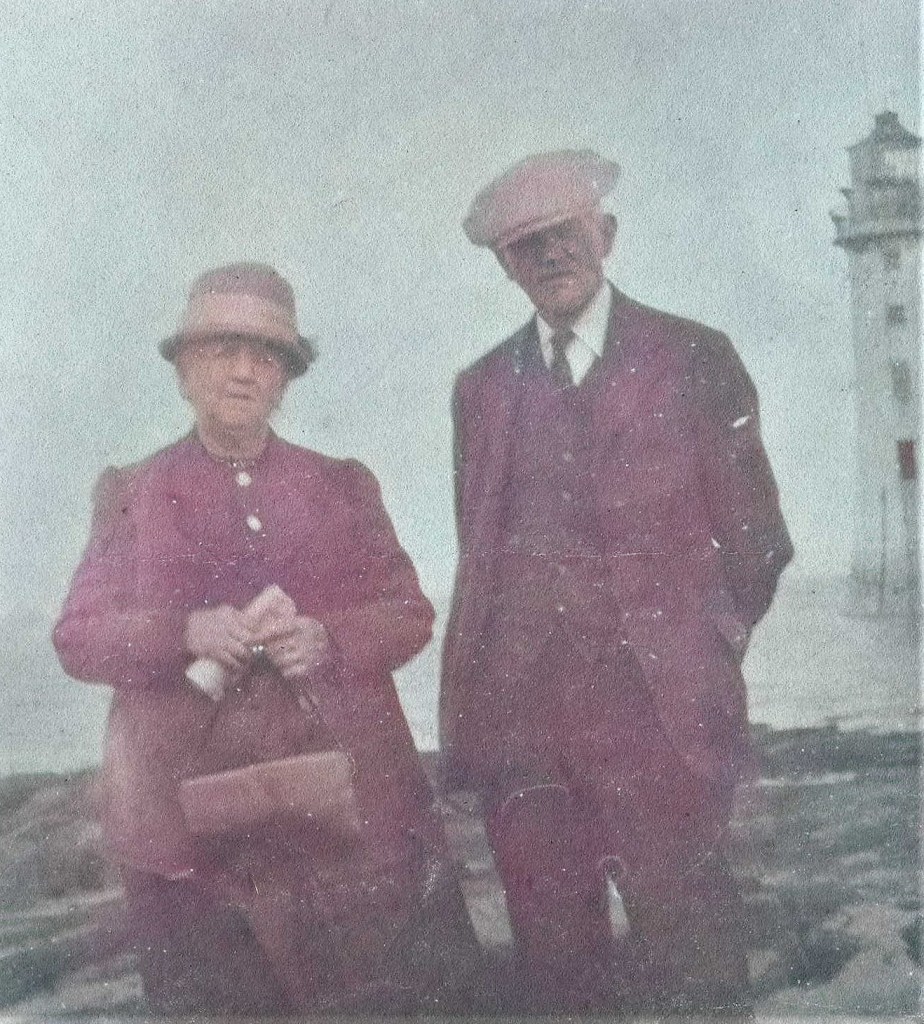
Sam and Clara had eight children altogether, although by 1911 only three were still alive: four had died in infancy and their daughter Alice Uttley died in early 1911 aged 27.
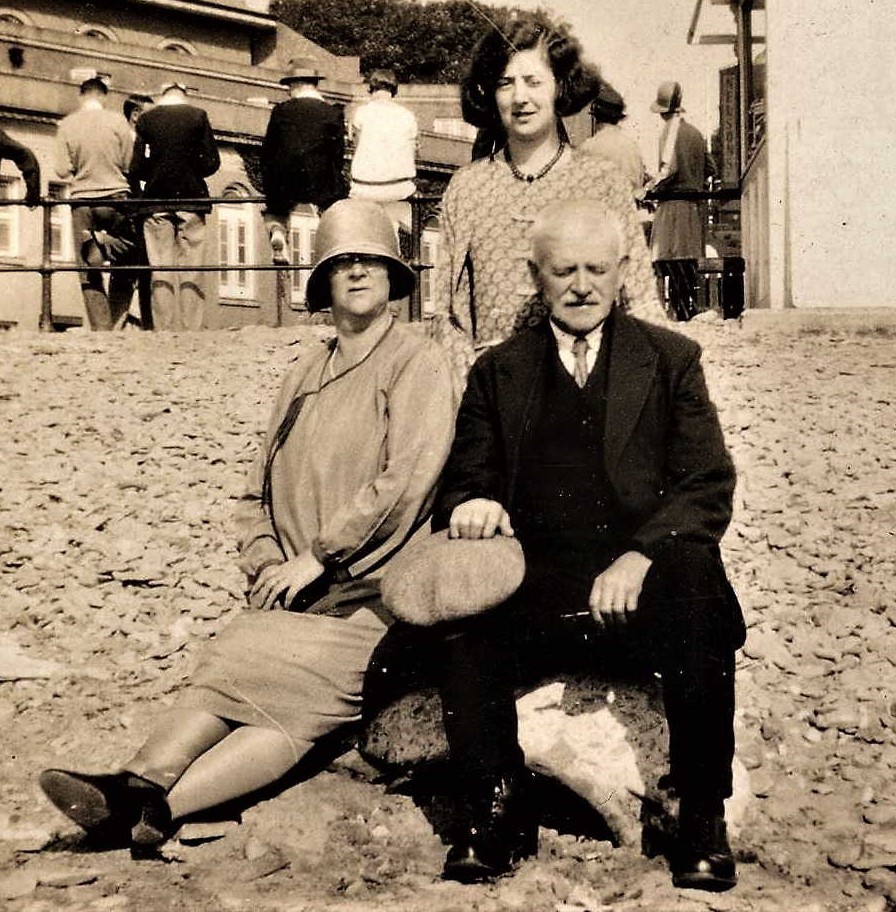

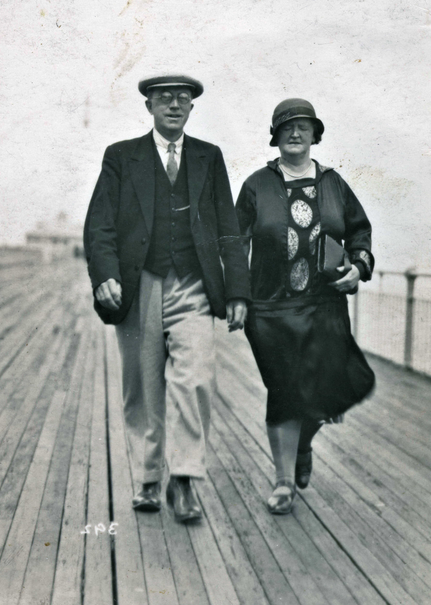
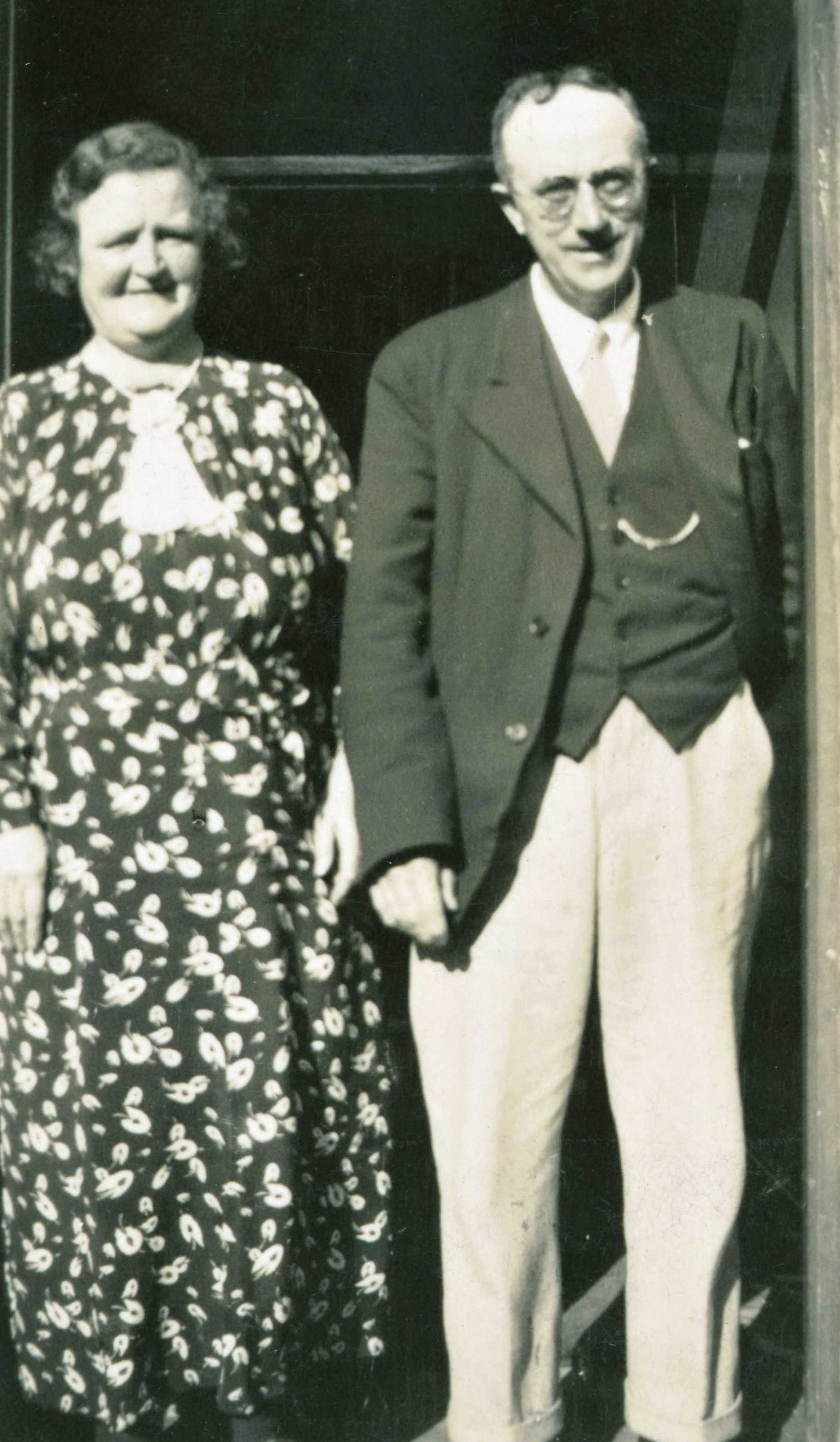
These photographs were taken after Clara’s death in 1926, and show Sam, their unmarried daughter Mary Jane Foster (1886-1958) and their granddaughter Olive Hamer. The photo on the left is believed to be on the Isle of Man, and the one on the right is a windy looking Whitley Bay, taken in 1930. Olive was the daughter of Sam and Clara’s eldest daughter Edith and her husband George Hamer.
Sam and Clara lived at 12, Rose Grove, Hebden Bridge, where Clara died in 1926, aged 67. Sam died in 1939, aged 80, at Old Town House, where he was living with Edith and George and their daughter Olive and son Arnold and Sam’s unmarried daughter Mary Jane. Sam and Clara are buried at Wainsgate in plot F856.
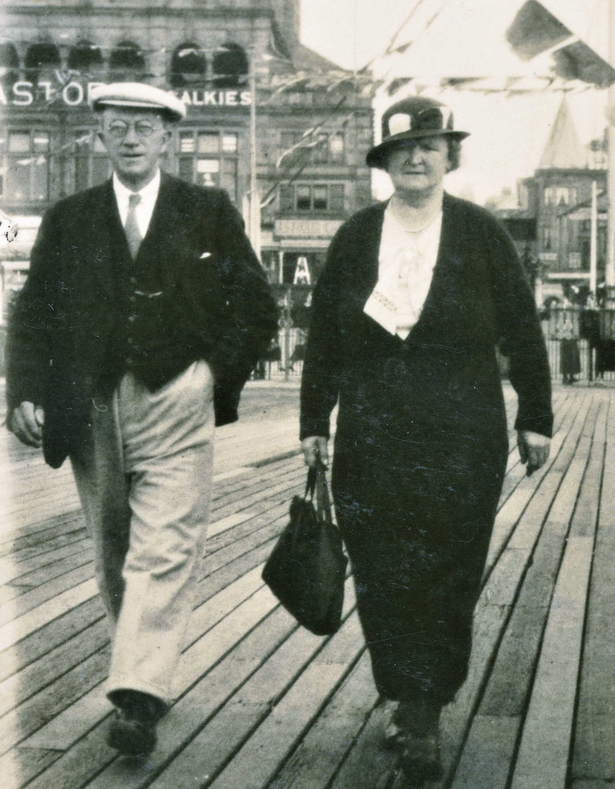
George and Edith Hamer at the seaside: the centre photo was taken in Southport in 1933, and the one on the right is New Brighton, 1936. Edith Foster (1882-1953) was Sam and Clara’s eldest daughter, who married George Hamer (1881-1947) in 1905. George was a cotton weaver, born in Barkisland, and his father William was a farmer who moved from Barkisland to Old Town Farm. George and Edith and their son Arnold Hamer (1912-1966) are buried at Wainsgate in plot J803.
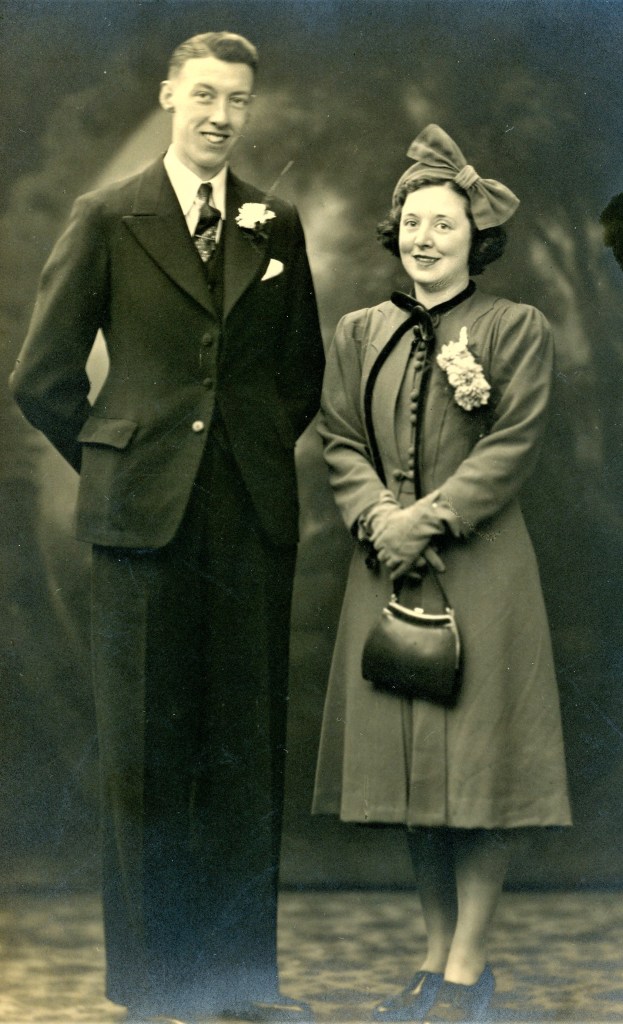
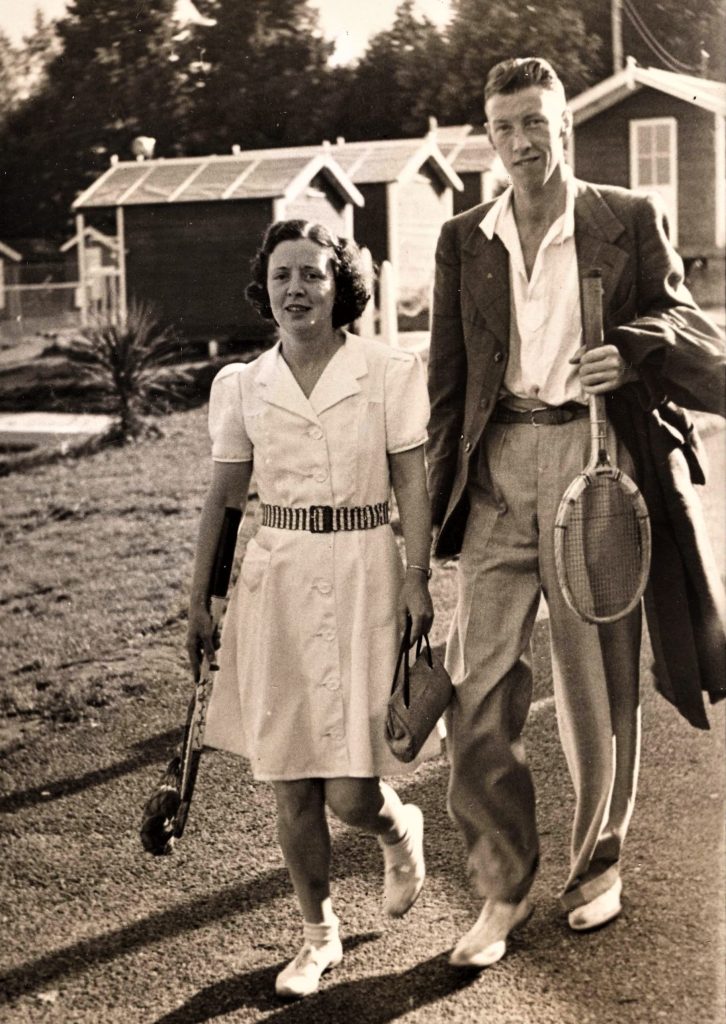
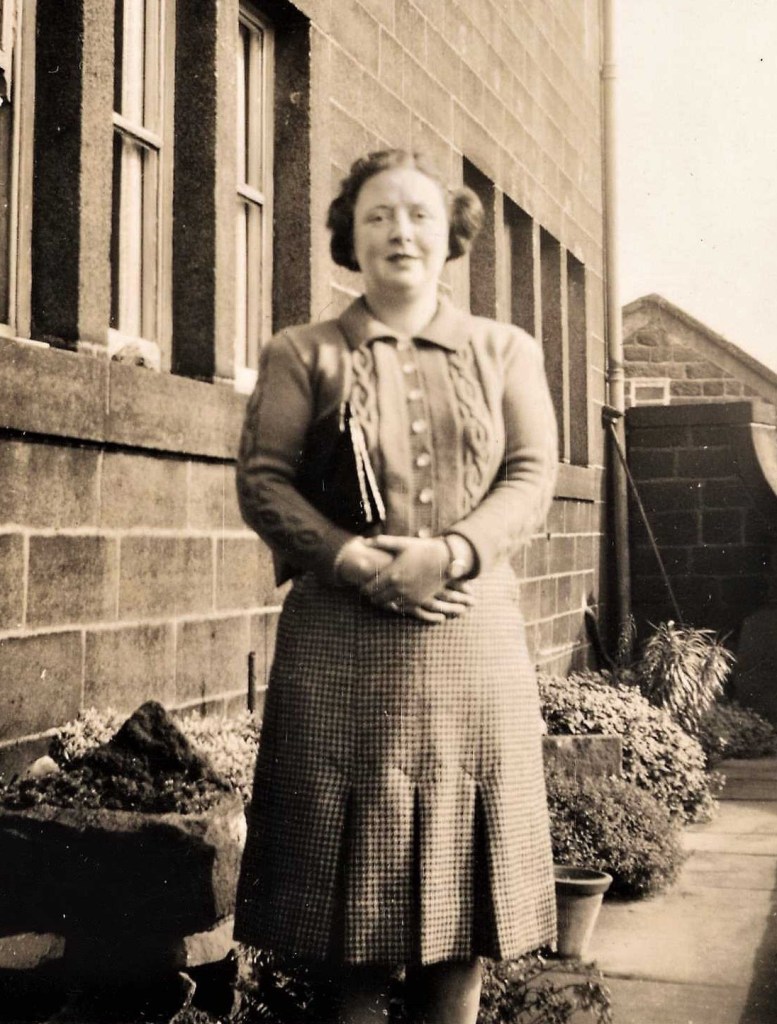
Olive Hamer (1908-1989), George and Edith Hamer’s youngest daughter, married John Crabtree, a wool comber at Mitchell’s mill and member of Wainsgate Tennis Club early in 1940. John joined the 41st (Oldham) Royal Tank Regiment later that year, and was stationed in Egypt. He was wounded in October 1942 during the Second Battle of El Alamein and died of his wounds, aged 27. The photograph of Olive on the right is dated 13th October 1942: John died two weeks later on 28th October.
In 1945 Olive married John Birkett (1911-1980), born in Ennerdale, Cumberland, into a farming family who moved to Wadsworth sometime between 1923 and 1930. Olive and John had one daughter, Kathleen Jean Birkett, who died in 1972, aged 22. Olive was living in Heywood, Lancashire, when she died on 13th October 1989, aged 81, and her ashes were interred in the Birkett family grave at Wainsgate, plot E961.
Thanks to Susan Wilkinson for the photographs of the Foster and Hamer families.
* * *
 WAINSGATE GRAVEYARD PROJECT