Click on the LINKS to find out more…..
NAMES
Kerrenhappuch, Rizpah, Hagar, Hephzibah, Hezekiah, Zipporah, Gamaliel, Heber.
Arvida, Zerada, Aquila.
THE MEN WITH TWO NAMES
Born Elijah Treasure in Somerset, ended up in Hebden Bridge calling himself Charles Smith.
Alexander Callagan or Alexander Currie?: born in Scotland, his death & burial were registered in two names.
PLACES
OCCUPATIONS
FREEMASONS
A number of people interred or commemorated at Wainsgate were Freemasons.
The RECHABITES
The Independent Order of Rechabites (also known as The Sons and Daughters of Rechab).
BAND of HOPE
‘Look not upon the wine, for at last it biteth like a serpent and stingeth like an adder’.
CAUSE OF DEATH
Lightning – Maternal Death – Accidents.
TAPHOPHOBIA & VIVISEPULTURE
Taphophobia – the irrational fear of being buried alive.
Vivisepulture – the act or practice of burying someone alive (either deliberately or unintentionally).
DÖSTÄDNING
or Swedish Death Cleaning.
FUNERAL POTATOES
An American potato dish, often served at after-funeral dinners.
NAMES
BIBLICAL NAMES
Kerenhappuch MOSS (born WHEELWRIGHT) (1852-1921)
Kerenhappuch was the youngest of Job’s three daughters, Jemima, Kezia & Kerenhappuch, born late in his life after prosperity had returned to him, and described as being the most beautiful women in the land. Kerenhappuch Wheelwright’s elder sisters were also named Jemima & Kezia.
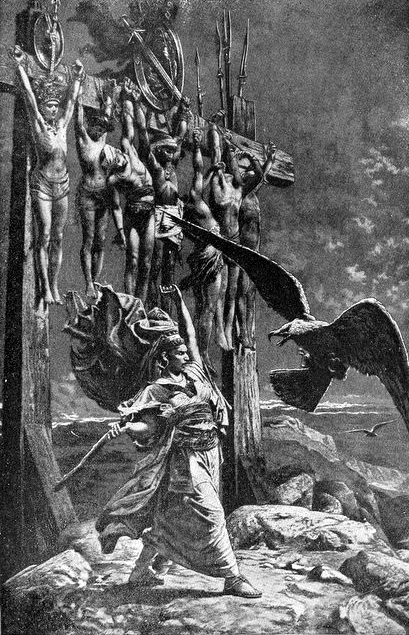
Rizpah KITCHEN (born GREENWOOD) (1884-1957)
Rizpah was the daughter of Aiah, and one of Saul’s concubines. Her sons Armoni & Mephibosheth were killed by the Gibeonites, and their bodies, together with those of the five sons of Merab, Saul’s daughter, hung up at the sanctuary of Gibeah. Rizpah watched over their bodies for five months, keeping vigil until their remains were taken down and buried:
‘Then Rizpah the daughter of Aiah took sackcloth and spread it for herself on the rock. From the beginning of the harvest until the rain poured down from the heavens on the bodies she suffered neither the birds of the air to rest on them by day, nor the beasts of the field by night’. (2 Samuel 21:10).
Rizpah defending the bodies of the seven sons of Saul by George Becker
The biblical story is referenced in Tennyson’s poem ‘Rizpah’ (1878), the true story of the mother of a highwayman who was hanged in Sussex. James Rook’s body was hung in an iron cage at the place of his execution, and his mother, devastated by the loss of her son, collected his bones as his body rotted and they fell to the ground. She buried her son’s remains secretly in Old Shoreham churchyard.
* * *
Hagar Ann HAMER (born HAIGH) (1869-1939)
Hagar was an Egyptian slave of Sarah, who gave Hagar to her husband Abraham to produce an heir. The product of the union was Ishmael, Abraham’s firstborn. Hagar & Ishmael were later banished to the wilderness of Beersheba after Sarah gave birth to Isaac.
Hephzibah BANCROFT (1853-1853)
Hephzibah GREENWOOD (1859-1939)
Hephzibah (meaning “my delight is in her”) was the wife of Hezekiah, King of Judah, and mother of Manasseh of Judah.
Hezekiah PARKER (1823-1896)
Hezekiah SHAW (1827-1862)
Hezekiah (meaning “Yahweh strengthens”) was the son of King Ahaz & Abijah, and 13th King of Judah, married to Hephzibah.
Zipporah GREENWOOD (born ASHWORTH) (1870-1942)
Zipporah was one of the seven daughters of Jethro, priest of Midian, and wife of Moses, with whom she had two sons, Gershom and Eliezer.
Gamaliel THOMAS (1820-1848)
In the Jewish tradition, Gamaliel the Elder (Rabban Gamaliel I) was president of the Sanhedrin, the supreme Jewish Court in Jerusalem. A well respected teacher and grandson of the great Jewish teacher Hillel the Elder, he took a compassionate and tolerant attitude regarding interpretation of the Law, and was known to be particularly tolerant towards Christianity. In the Christian tradition, Gamaliel is recognised as a Pharisee and doctor of Jewish Law, and is thought to have taught Paul the Apostle.
Heber EASTWOOD (c1789-1865)
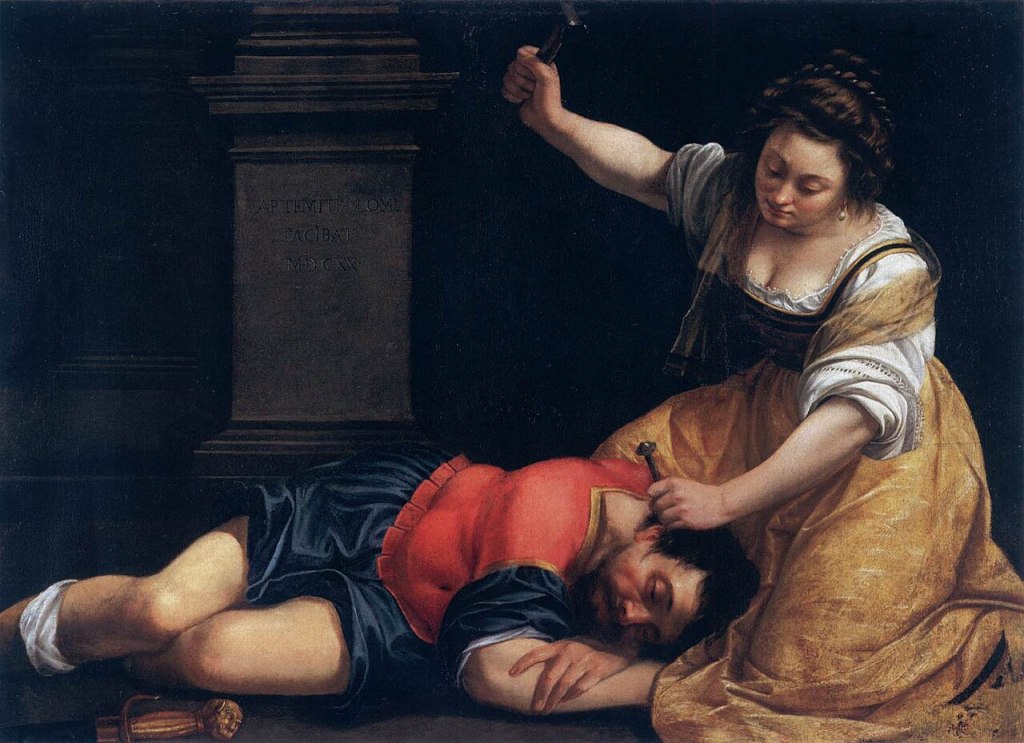
There are at least two possible Biblical origins for the name Heber: The most likely is probably Heber the Kenite, husband of Jael.
Jael was the heroine of the Battle of Mount Tabor, described in chapters 4 & 5 of the Book of Judges. She delivered the Israelites from the army of King Jabin when she killed Sisera (commander of Jabin’s army) by driving a tent peg through his skull while he slept.
Jael and Sisera by Artemisia Gentileschi (c1620)
Heber is also an Irish masculine given name (etymologically unrelated to the Biblical name). The Irish name is an Anglicisation of the Irish Gaelic Éibhear.
UNUSUAL & INTERESTING NAMES
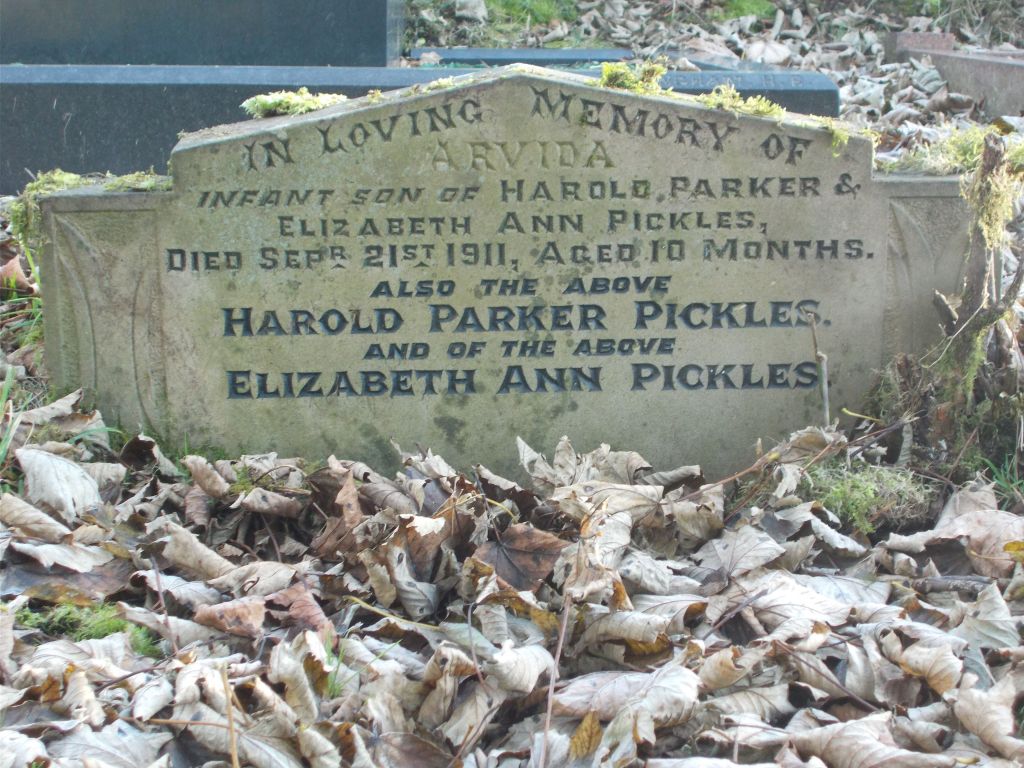
Arvida PICKLES (1910-1911)
Arvida was the first child (a son) of Harold Parker Pickles (1884-1959) and his wife Elizabeth Ann, born Ashworth (1884-1975). The couple lived at Chiserley Terrace, Wadsworth in 1911, and Harold was employed as a cotton manufacturer’s clerk. Arvida died in September 1911 aged 10 months, and is buried at Wainsgate with his parents (plot C599).
But why did they name their son Arvida?
I have found no other instance of Arvida being used as a male forename. It has been used as a female forename in Sweden, Norway and Finland, and is the female form of the male forename Arvid. Harold and Elizabeth are believed to have also had a daughter, born in 1917, who they named Myrtle.
Arvida is also the name of a small industrial town in Quebec, Canada, once home to the largest aluminium plant in the world and now a heritage site. It was founded in 1927 by Arthur Vining Davis, president of the Alcoa aluminium company.
Zerada COCKCROFT (1868-1870)
Thomas Walshaw MATTHEWS (1906-1965)
Aquila THOMAS (1850-1882)
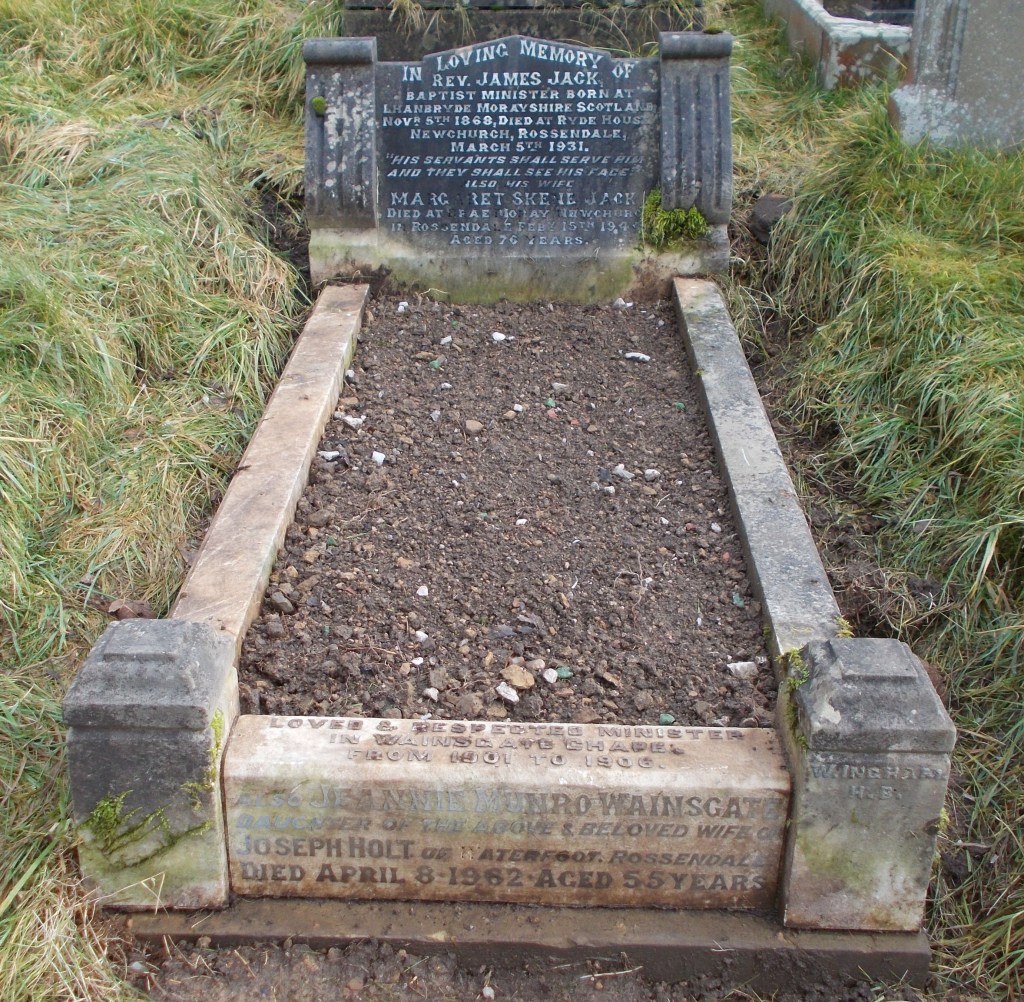
Jeannie Munro Wainsgate HOLT (born JACK) (1906-1962)
The second of two daughters of Rev. James Jack (minister at Wainsgate from 1901 to 1906) and his wife Margaret, both of whom were born in Scotland.
Jeannie was born in Bingley in September 1906, but presumably conceived while her parents were living at Wainsgate. She married Joseph Holt in 1931 and was living in Clitheroe when she died in 1962 aged 55. She was buried with her parents at Wainsgate.
THE MEN WITH TWO NAMES
Elijah TREASURE / Charles SMITH (1832-1889)
Born and married in Somerset as Elijah Treasure, moved to Hebden Bridge via Farnham and Sunbury, settled with his family in Foster Lane / Foster Mill Lane, but now calling himself Charles Smith.
Coming soon…..
Alexander CALLAGAN / Alexander CURRIE (c1860-1930)

The entry in the Wainsgate burial register for 7th April 1930 records the burial of:
‘Alexander Callagan or Currie – 557, Rochdale Rd., Walsden – age 70′.
His death was registered in both names at Todmorden, both entries having the reference Vol 9a Page 273.
He was buried in plot B124a, marked by a small marker stone with the inscription ‘A.C. No.124’. The receipt book records the plot being sold to Alexander Currie, Garden Square on the 27th September 1889. There are no records of anyone else called Callagan or Currie ever being interred at Wainsgate. So who was Alexander Currie / Callagan, and why did he have two names?
* * *
He was almost certainly born in Ayr, Scotland, sometime around 1860. But was he born Currie or Callagan?
He almost certainly married Emily Moses (daughter of John and Caroline Moses): the marriage was registered in Todmorden registration district in the first quarter of 1881.
He is known to have had four children, three of whom were still alive in 1911 and one of whom had died: three of them were baptised in Hebden Bridge on 8th September 1886: John Willie Currie (born 1886 in Hebden Bridge), Ann (also known as Annie) Elizabeth Currie (born 1884 in Hebden Bridge) and Margaret Christina Whittaker Currie (born around 1882 in Ayr). All three were the children of Alexander and Emily Currie of Foster Mill Lane, and their father’s trade was recorded as Tailor. Lily Currie (almost certainly born in Hebden Bridge in 1888) was baptised on 28th November 1888 (parents details the same as before).
Lily died 1n 1889, aged 1. She died at around the time her father bought the burial plot at Wainsgate and is presumably buried there, although the burial is not recorded in the burial register.
We can try to track the life of Alexander and his family through census records:
1881: the 1881 Scotland Census (taken on 3rd April) records Alexander Currie, tailor, aged 21, born in Ayr and Emily Currie, tailoress, aged 21, born in England. They are both lodging in Glasgow with John and Jessie Sharpe, and it is almost certain that these are the newly married Alexander and Emily.
1891: the 1891 England Census records Alexander, six year old Annie Elizabeth and four year old John Willie living at 8, Foster Mill Lane, Hebden Bridge.

Alexander is recorded as being married, but where is his wife Emily? She has not been found in the 1891 English Census or Scottish Census, and no records have been found suggesting she had died. His other surviving daughter, nine year old Margaret Christina Whittaker Currie was living nearby at 30, Foster Lane with her grandparents, John Whittaker, his wife Margaret Whittaker and their 24 year old daughter Mary Elizabeth Whittaker.

John is recorded as being born in Wadsworth, and his wife and daughter were (like his granddaughter), born in Scotland. Mary Elizabeth Whittaker was later to marry Thomas Butterworth in 1897.
1901: Margaret (recorded as Maggie), aged 19 and John Willie, aged 14 were living at Nutclough, Hebden Bridge, with their grandparents John Whittaker, a 59 year old dyer’s labourer, born in Hebden Bridge, and his 58 year old wife Maggie Whittaker, born in Ayr.

But where were their parents Alexander and Emily (assuming she was still alive) and their sister Annie Elizabeth?
* * *
PLACES
Coming soon…..
OCCUPATIONS
Coming soon…..
FREEMASONS
Several people (all men) who are buried or commemorated at Wainsgate will have been Freemasons – particularly those who were businessmen, tradesmen or ‘professional’ men. The principal local Craft Lodge was (and still is) the Lodge of Prince Frederick No.307, and the associated Royal Arch Chapter, the Chapter of Good Intent No.307.
The first meeting of ‘The Hebden Bridge Lodge of Ancient, Free and Accepted Masons’ was held on 28th January 1796 when the warrant was issued. Meetings were held in the “Ring of Bells” (in Halifax?) until July 1809, when the Lodge moved to Heptonstall and held its meetings at the Stag Hotel. In 1822, the Lodge moved to the White Horse Inn, Hebden Bridge, moving to Hope Street in 1890 and finally on 23rd October 1911, Prince Frederick Lodge No. 307 moved to the Masonic Hall in Hangingroyd Lane, Hebden Bridge. The Masonic Hall was sold at auction in 2022, and the building has now been converted into apartments.
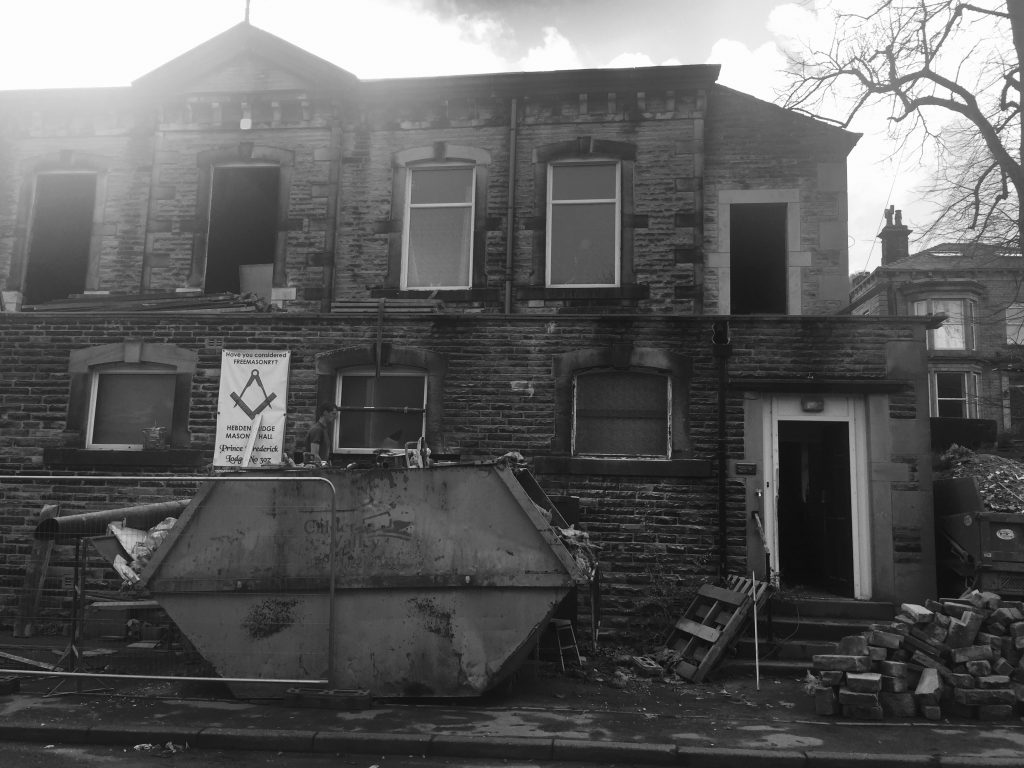
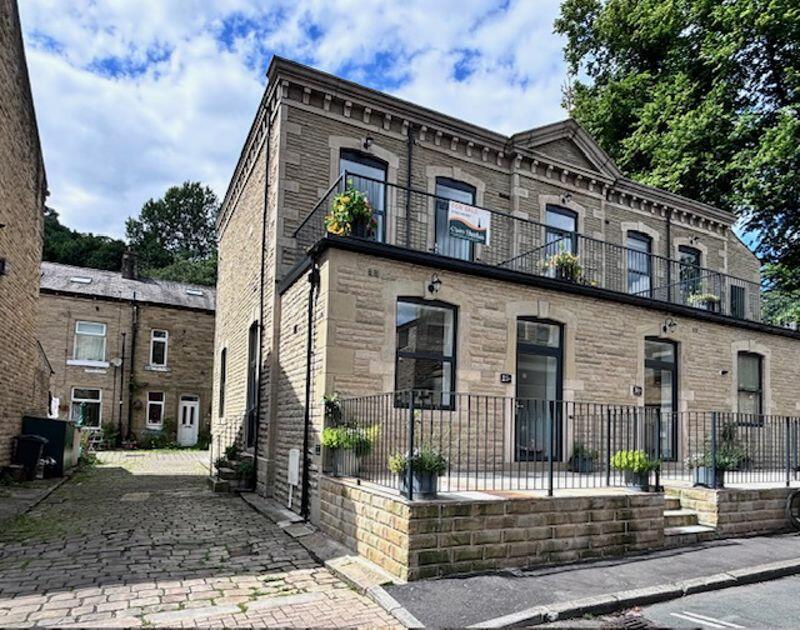
Photograph by Heather Morris.
The other local Craft Lodge is the Lodge of Prince George No.308, which currently meets at Eastwood Masonic Hall (formerly the Station Hotel) on Halifax Road. Also meeting there are the Royal Arch Chapter of Affability No.308, Studley Lodge No. 6364 (a ‘daylight lodge’), Caldene Mark Master Masons Lodge No.501 and Caldene Royal Ark Mariners No.501.
* * *
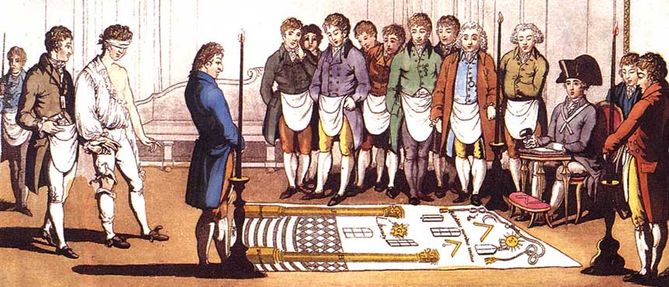
Freemasonry has been described as a ‘beautiful system of morality, veiled in allegory and illustrated by symbols’, and charitable work is claimed to be a core principle of Freemasonry. Some see Freemasonry as a malevolent and conspiratorial secret society which exists solely to benefit its members, but most people probably view it as a quaint but harmless club where men wear funny aprons and exchange secret handshakes.
Freemasons past and present include George Washington, Sir Winston Churchill, Wolfang Amadeus Mozart, Robert Burns, Oscar Wilde, Rev. Jesse Jackson, Davy Crockett, Sir Alf Ramsey, Peter Sellers, Edwin ‘Buzz’ Aldrin, Duke Ellington, Chester Burnett (Howlin’ Wolf) and Rick Wakeman.
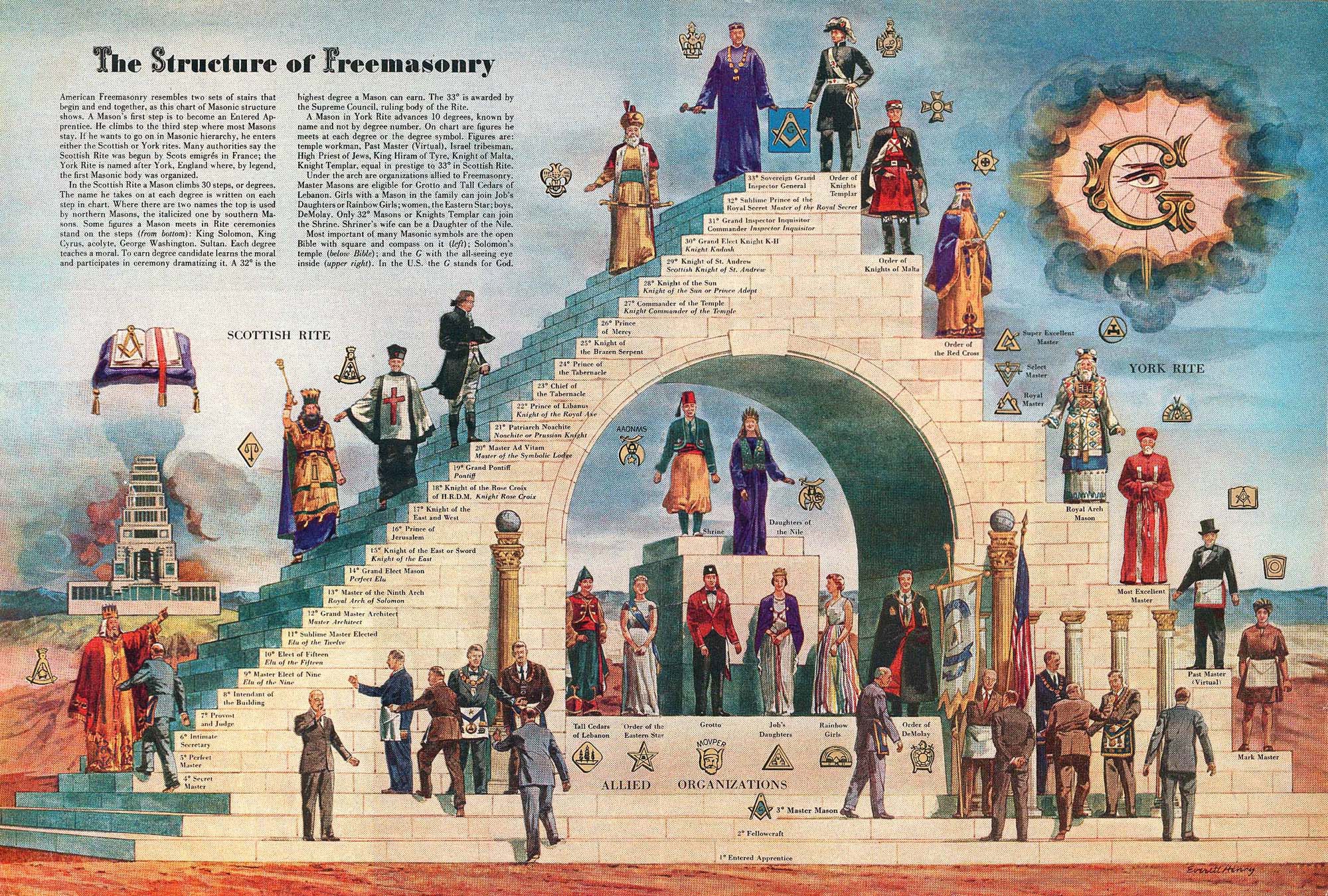
Life is far too short to attempt to research and describe on this website the whole baffling history and structure of the various branches of Freemasonry. Follow the various links in this section if you really want to find out more…..
* * *
The following are known to have been Freemasons and members of the Lodge of Prince Frederick –
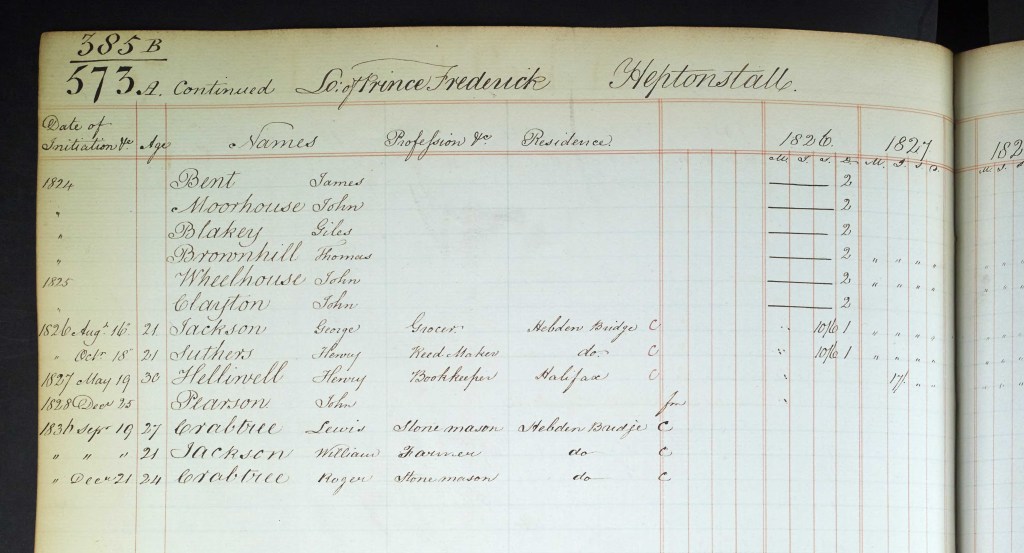
Lewis Crabtree (c1810-1878)
Initiated on 19th September 1836 at the age of 27, and described in the records as a stonemason resident in Hebden Bridge, he remained a Freemason until his death in 1878. Lewis Crabtree was a stonemason and builder of many of Hebden Bridge’s finest buildings, including Stoodley Pike.
Thomas Homer Wade (1834-1893)
Son of John Wade, a worsted manufacturer and his wife Betty (born Maxwell). In 1860 he married Elizabeth Hannah Lister, daughter of James Lister, a ‘Timber merchant, carpenter & quarryman employing 38 men & 4 boys’. Thomas is recorded in the 1861 Census as a ‘ Chemist & Druggist’, but in 1871 he was a cotton spinner, in 1881 a ‘Merchant, Cotton Fustian’ and in 1891 a ‘Fustian Merchant’. His wife Elizabeth died in 1872 aged 33, and their only two known children both died in childhood – Herbert Owen died in 1867 aged 2, and Florence Annie died in 1873 aged 11. Thomas, Elizabeth, Herbert and Florence are all buried at Wainsgate (A551-554). Also buried in this plot are Thomas’s brother Benjamin Wade, his wife Mary Ann (who also died in her 30s) and three of their children.
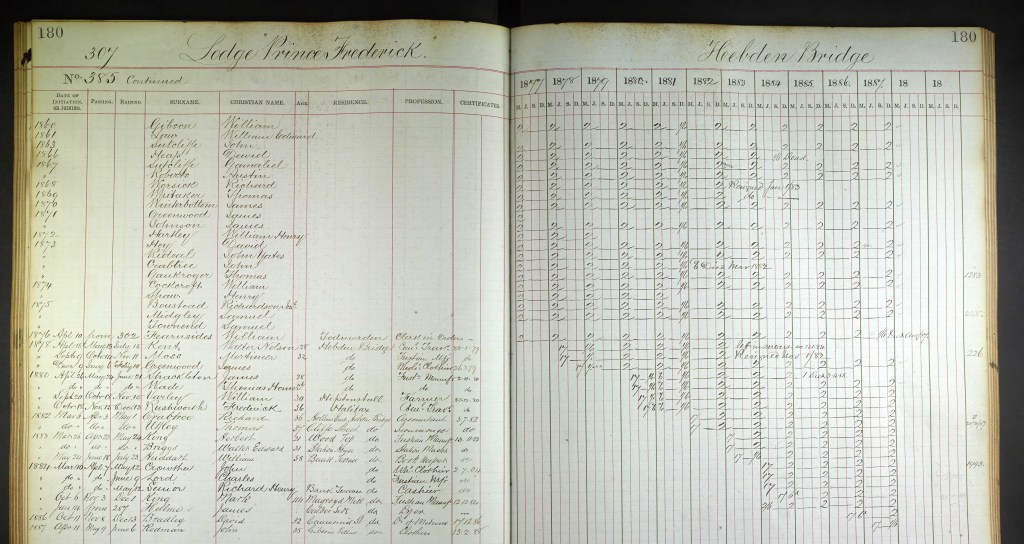
Thomas Homer Wade was initiated on 26th April 1880, aged 46, and is described in the records as a Fustian Manufacturer, resident in Hebden Bridge. He never remarried after his wife’s early death, and at the time of his death at the age of 59 he was living at Machpelah with a housekeeper and a domestic servant. He remained a member of the Lodge of Prince Frederick until his death.
Herbert Pickles (1869-1931)
Recorded as being a member of the Lodge of Prince Frederick – a wholsale clothier, aged 43 and resident in Hebden Bridge. At the time of his death he was living at Mayfield Villas, Hebden Bridge, and he died at The Duke of York’s Home, Duckworth Lane, Bradford.
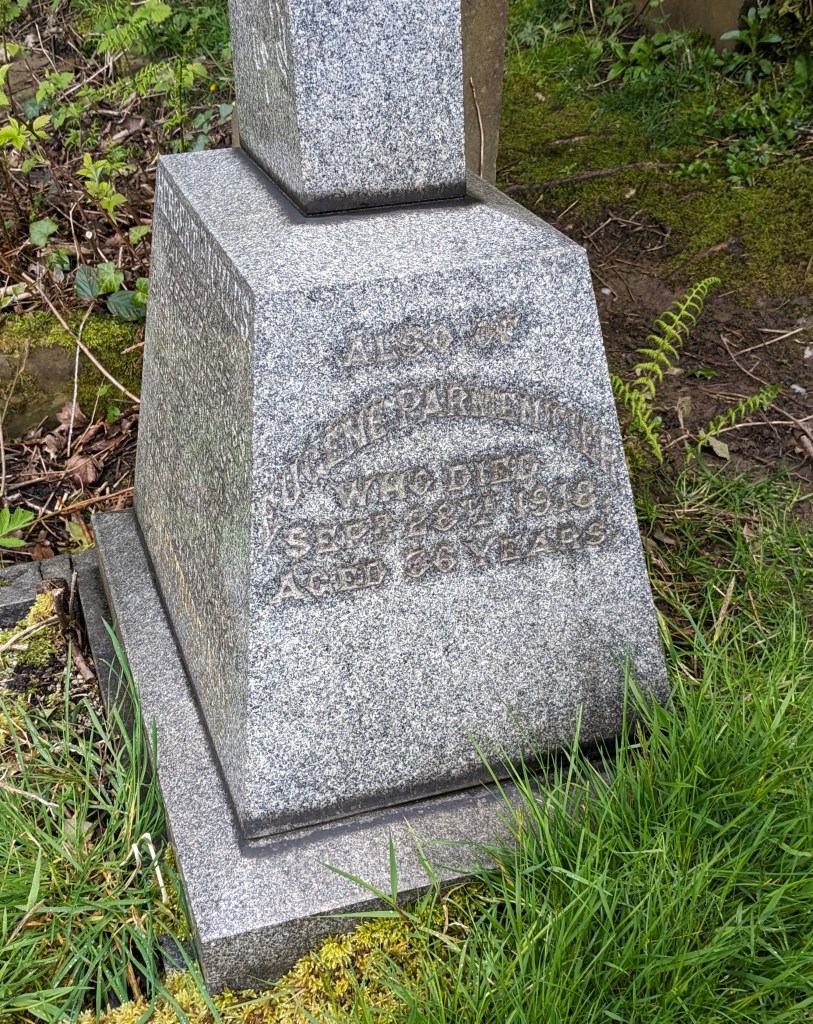
He is buried in plot B206a at Wainsgate with his wife Sarah Ann, daughter Gertrude May and an unnamed infant. Also buried in the same plot and commemorated on the granite celtic cross memorial is a Belgian refugee, Eugene Parmentier, who died in 1918 aged 36. Two sons, William and Harry, are also buried at Wainsgate.
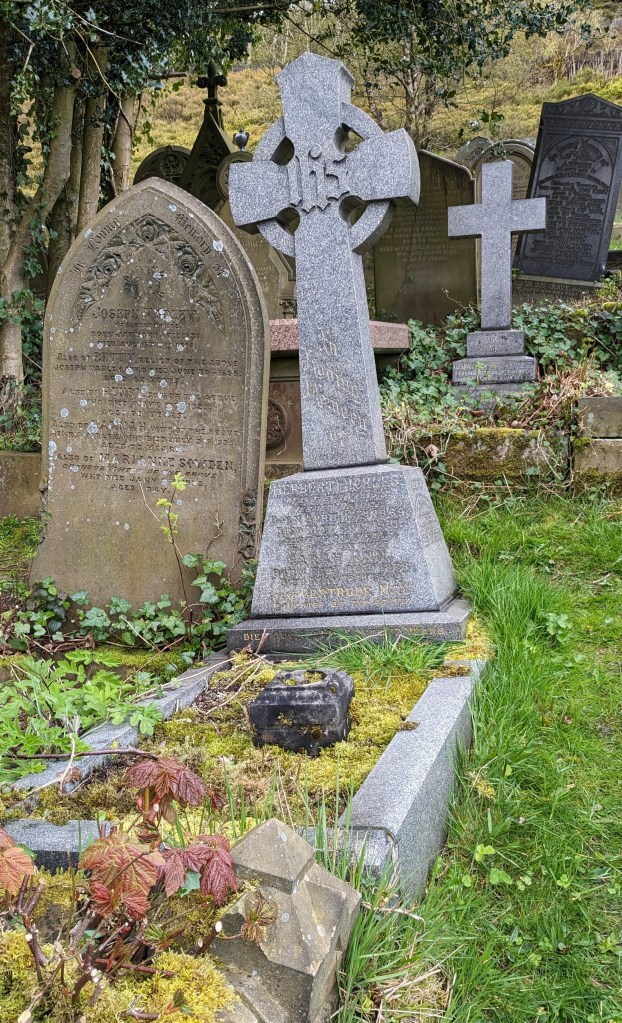
The membership register lists the three significant dates of his membership: His initiation (completion of the first Masonic degree as an Entered Apprentice) was 23rd September 1912: his passing (progression to Fellowcraft, the second degree) was 28th October 1912, and his raising to the third degree of Master Mason was 9th December 1912.
* * *
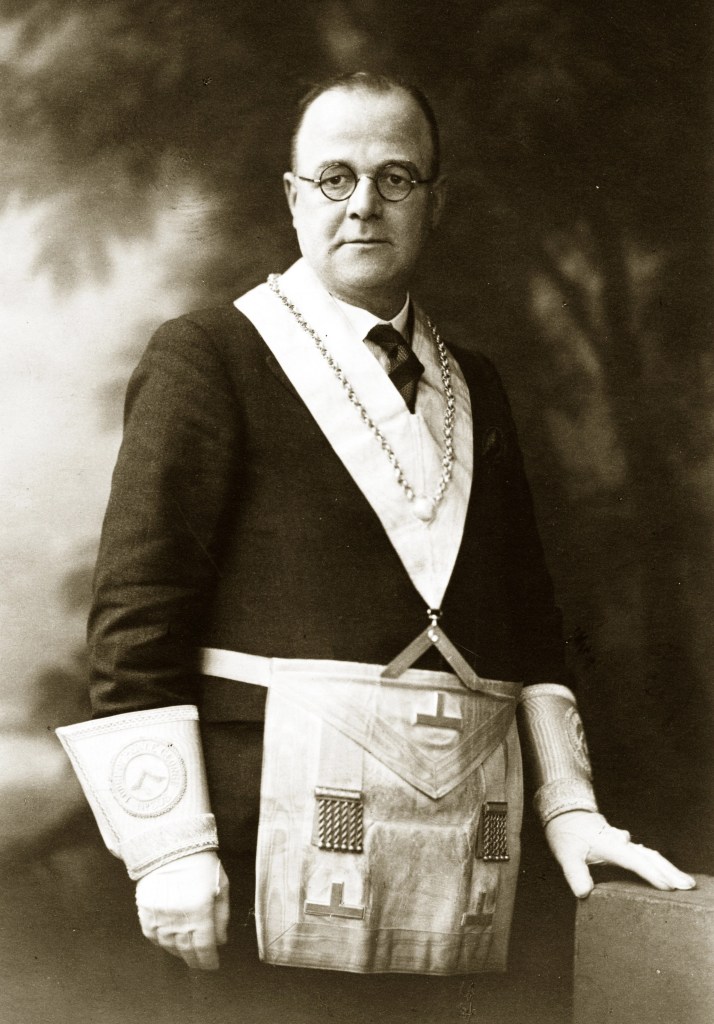
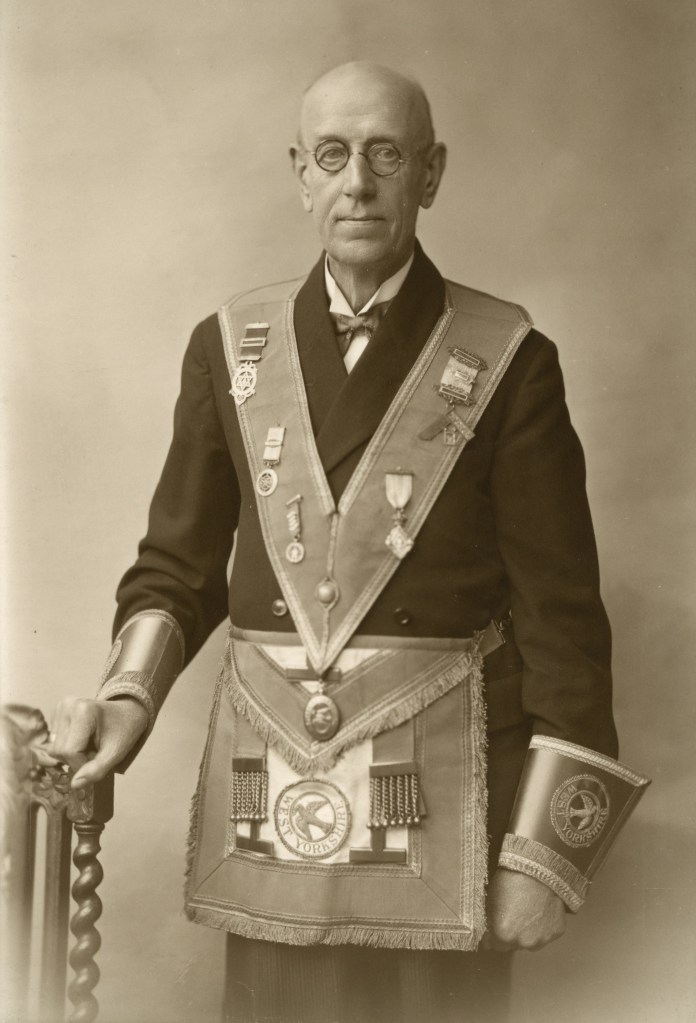
These two photographs of unidentified local Masons were found in the Pennine Horizons Digital Archive.
Does anyone know who they are?
THE RECHABITES
The Independent Order of Rechabites (also known as The Sons and Daughters of Rechab) was a fraternal organisation and Friendly Society founded in Salford in 1835, and was part of the wider temperance movement promoting abstinence from alcohol. The Order spread to Australia and the USA, and still exists in the UK as Healthy Investment, a mutual Friendly Society specialising in ethical savings and investment products.
The original Rechabites were a Biblical clan, descendents of Rechab through Jehonadab, who forbade his people to drink wine or live in cities and commanded them to live a nomadic life: branches of the Independent Order of Rechabites were known as Tents, and the governing body was the Movable Committee, which met in a different place every two years.
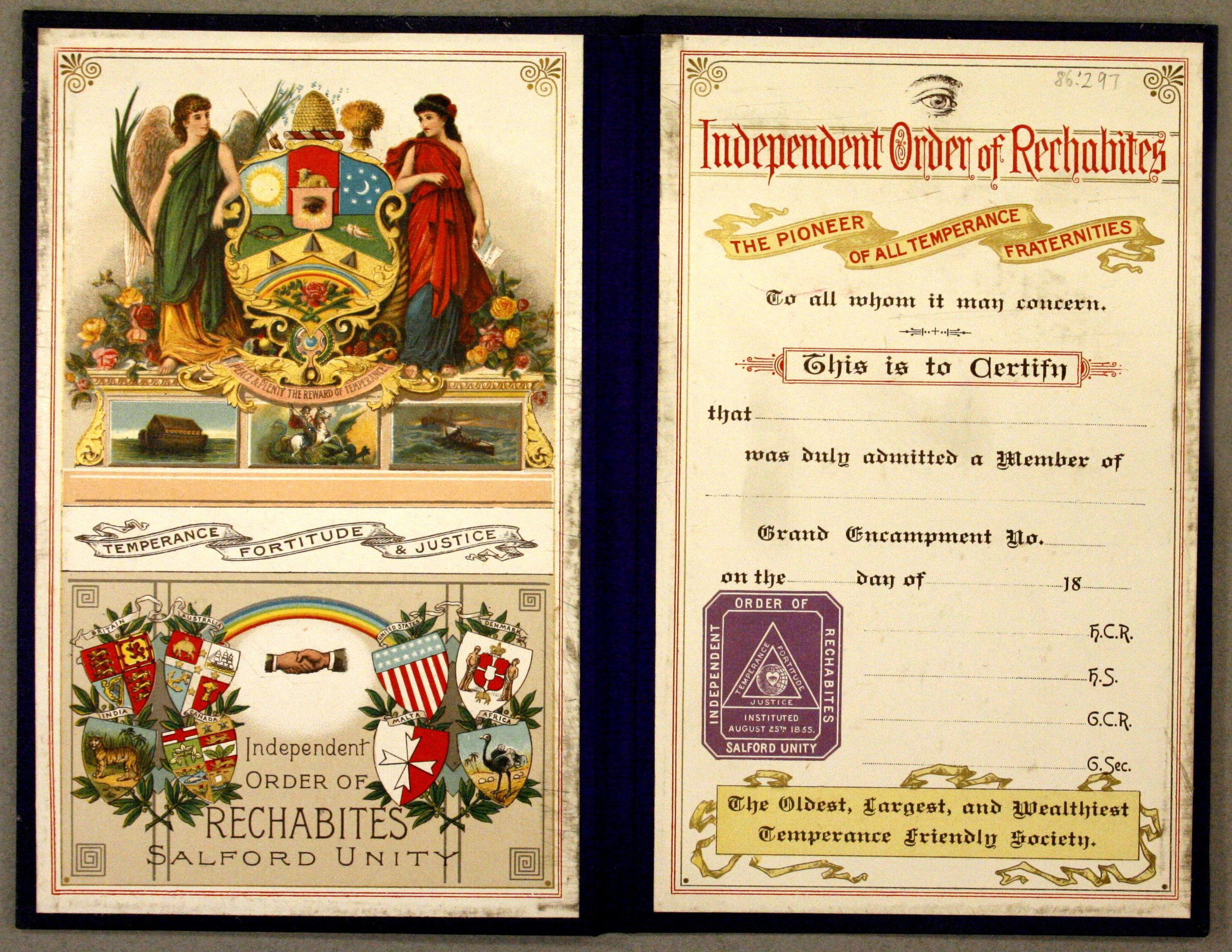
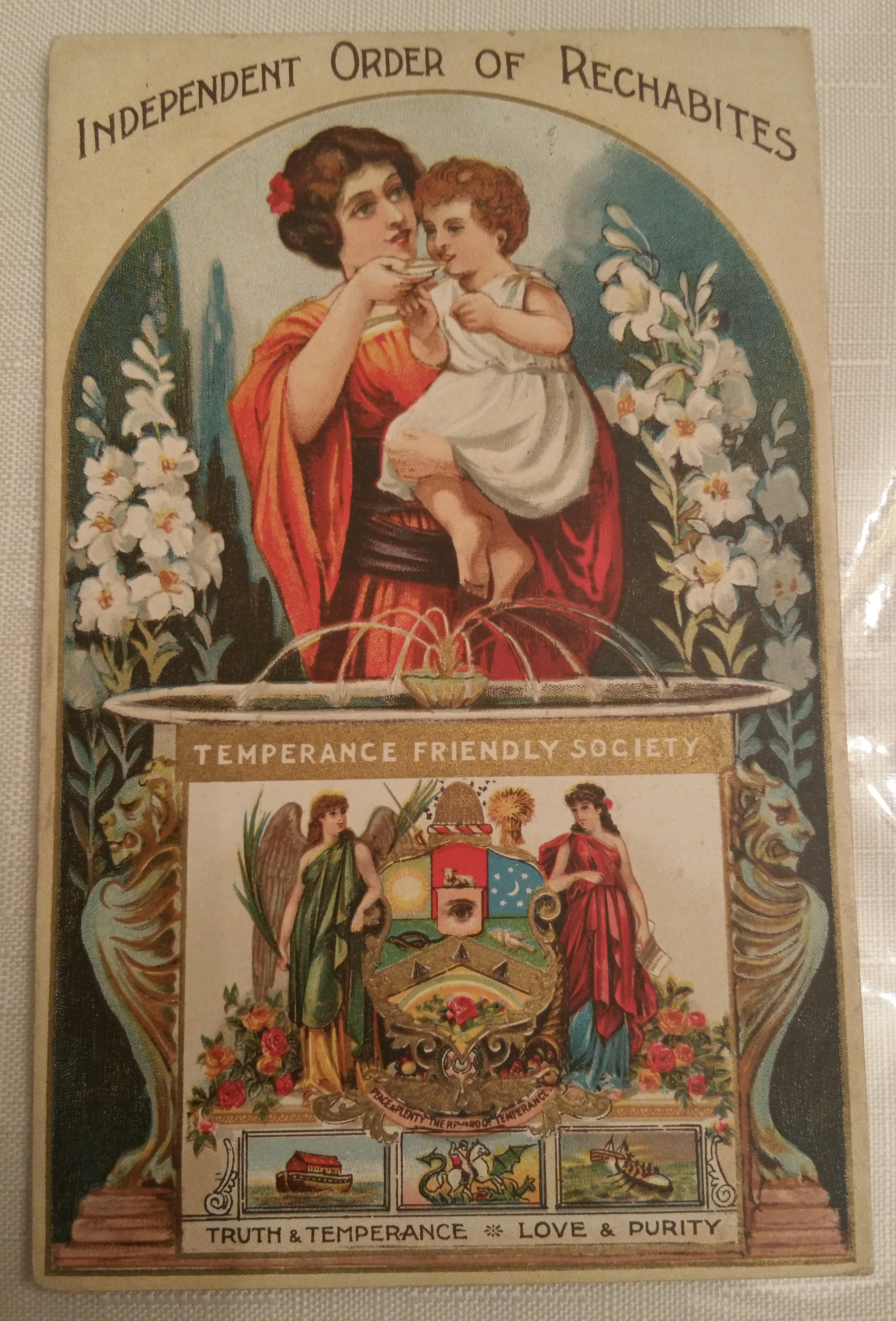
Wilbert Jackson, who is buried at Wainsgate, was a Rechabite. He had enlisted in 1915 as an ambulance driver with the Royal Marine Medical Unit, but two weeks later, while undergoing training in London, he died of pneumonia at Norwood Cottage Hospital, Crystal Palace.
BAND of HOPE
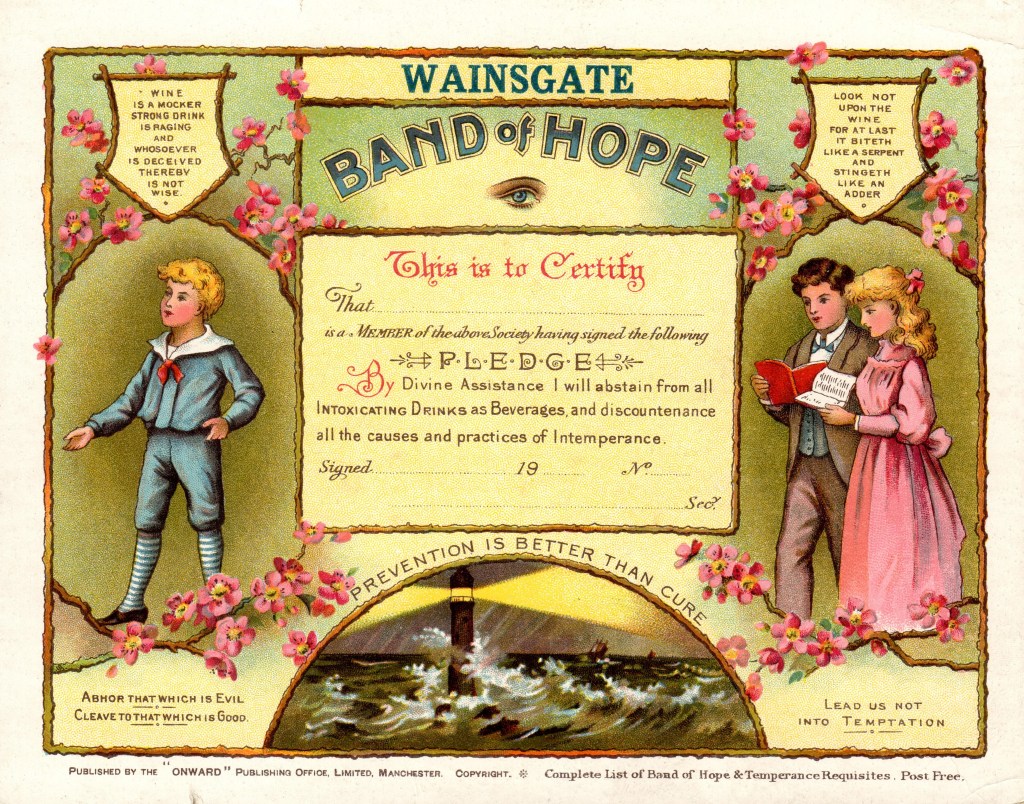
Coming soon…..
CAUSE OF DEATH

Some get the awful, awful diseases
Some get the knife, some get the gun
Some get to die in their sleep
At the age of a hundred and one
From Life’ll Kill Ya (Warren Zevon, 2000)
When I’m 73
and in constant good tumour
may I be mown down at dawn
by a bright red sports car
on my way home
from an allnight party
From Let Me Die a Youngman’s Death by Roger McGough (1967)
Skull with Burning Cigarette by Vincent van Gogh, 1885
There is very little information in the burial registers or gravestone inscriptions about how people died, apart from those who died in wars. The 1845 burial register entry for David Jackson aged 21, says ‘drowned’: Hilda Crabtree ‘died from burning’, aged 3 in 1896. In the same year, Abraham Astin aged 71 ‘died on a footpath near Acre Mill’. Two entries in the burial register record people being killed by lightning:
LIGHTNING
John Ashworth died in July1847, aged 63, and according to the burial register he was ‘killed by Thunder Bolt’. The Halifax Guardian report (which may not have been entirely correct) says that John Ashworth of Bessy Bridge left home to get a fire poker repaired by a local blacksmith, James Harwood. On his way home he sheltered from the storm that had overtaken him in an outhouse at Mount Skip. When the rain subsided he left the outhouse to continue his journey home, but was immediately struck by lightning and killed instantly (contrary to popular belief, carrying a metal poker would not have made him more likely to be struck by lightning). He is buried in plot FY230 with his wife Sally and son James, both of whom predeceased him.
John Wade died in June 1859, aged 18, ‘killed by thunderbolt’. He was apparently struck by lightning while leaning out of a window at Crossley’s Mill in Hebden Bridge, where he worked with his younger brother Josiah Wade. Josiah was so upset by his brother’s death that he left Crossley’s soon afterwards. John Wade is buried in plot A392, together with his mother Hannah and brother Edwin Wade.

MATERNAL DEATH
‘Death borders upon our birth and our cradle stands in the grave’
Joseph Hall, Bishop of Exeter (1574-1656)
The World Health Organization defines maternal death as the death of a pregnant mother due to complications related to pregnancy, underlying conditions worsened by the pregnancy or management of these conditions. This can occur either while they are pregnant, during childbirth or within six weeks of resolution of the pregnancy.
Throughout the 18th and 19th centuries many women died during, or shortly after childbirth. The number of cases of maternal mortality peaked in 1874 when the maternal mortality rate reached the highest level ever recorded in English national statistics, and again in 1893. It was only in the 1930s that maternal death rates started to fall drastically.
Although death rates generally were high, they were usually among people who had been ill beforehand. Death in relation to childbirth was mostly in young women who had been quite healthy before becoming pregnant. They often died leaving the baby and other children in the family from previous births with a widowed husband.
* * *
Sarah Ashworth (born Sarah Howarth) died on 31st December 1865, aged 27. She had married James Ashworth, a cabinet maker of Blue Bell, Midgley on 28th May 1864, and their first child, James, was born on 20th October that year. Their second child, Ann Elizabeth, was born on 16th December 1865, but Sarah died at home two weeks later. The cause of death recorded on her death certificate was ‘Dibility (sic) from Child Birth’.
Sarah Ashworth is believed to be buried at Wainsgate in plot A549: the plot was bought by John Ashworth of Midgley, and is marked by a marker stone inscribed J.A. The burial register entry reads ‘John Ashworth wife, Midgley, 27 yrs’.
* * *
Sarah Brotherton, daughter of John and Sally Brotherton of Purprise, died on March 19th 1841 aged 21, and is commemorated on the family gravestone, OY113. The burial register also records ‘Sarah Brotherton child’ of Purprice, buried on 6th April 1841 – the child is not named, no age is recorded, and he or she is not commemorated on the gravestone with her presumably unmarried mother, who most likely died during, or shortly after, giving birth.
It seems that the child was probably a girl, named Sarah like her mother: the GRO index for the Todmorden registration district records the birth of a Sarah Brotherton in the first quarter of 1841, and the deaths of Sarah Brotherton in the first and second quarters of that year.
* * *
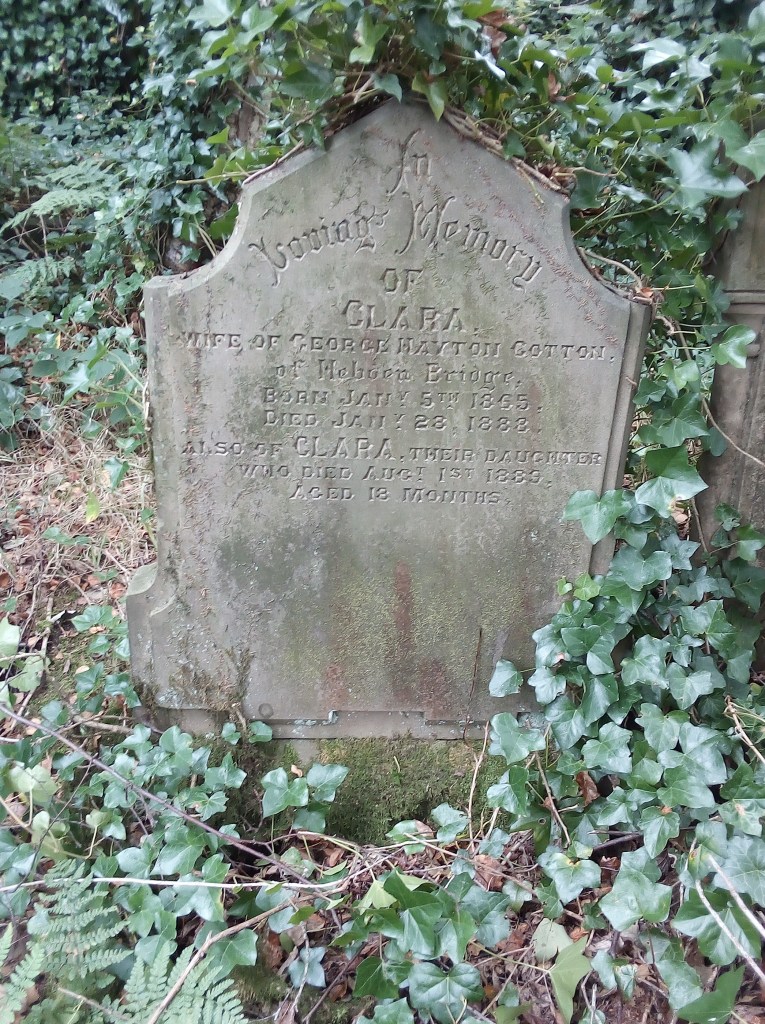
Clara Armstrong married George Hayton Cotton (born in Barnsley) in 1886, and in 1887 they had a son, Charles Armstrong Cotton. Clara gave birth to a daughter in January 1888, but died during or shortly after the birth on 28th January, aged 23. The infant, also named Clara, died in August 1889.
Both names are recorded on the headstone on plot B98a, which was bought by George Cotton in February 1888.
George married Mary Pickles in 1894, and the 1911 census records them as having had two children, both of whom had died. The burial register suggests that these were twins, born in Decenber 1894 – one lived for seven hours, the other for four days, and both were buried at Wainsgate.
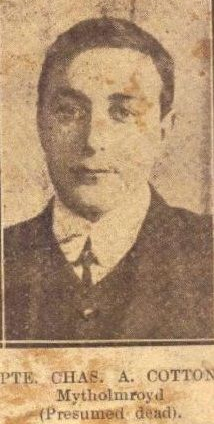
George’s son Charles was killed in Arras in 1917 while serving with the Duke of Wellington’s Regiment.
Mary Cotton died in 1924, aged 66, and George died in Blackpool in 1937, aged 77. Although they are not named on the headstone, it is assumed that they and their infant twins were buried in plot B98a with George’s first wife and their child.
TAPHOPHOBIA & VIVISEPULTURE
Taphophobia: the irrational fear of being buried alive as a result of being incorrectly pronounced dead.
Taphophobia is closely related to other phobias such as fear of death (Thanatophobia), fear of tombstones (Placophobia), fear of cemeteries (Coimetrophobia) and fear of tight and enclosed spaces (Claustrophobia). The word Taphophobia originates from Greek taphos meaning “tombs or graves” and phobos meaning “deep dread or fear”.
Vivisepulture: the act or practice of burying someone alive, either accidentally on the mistaken assumption that they are dead, or intentionally as a form of torture, murder, or execution.
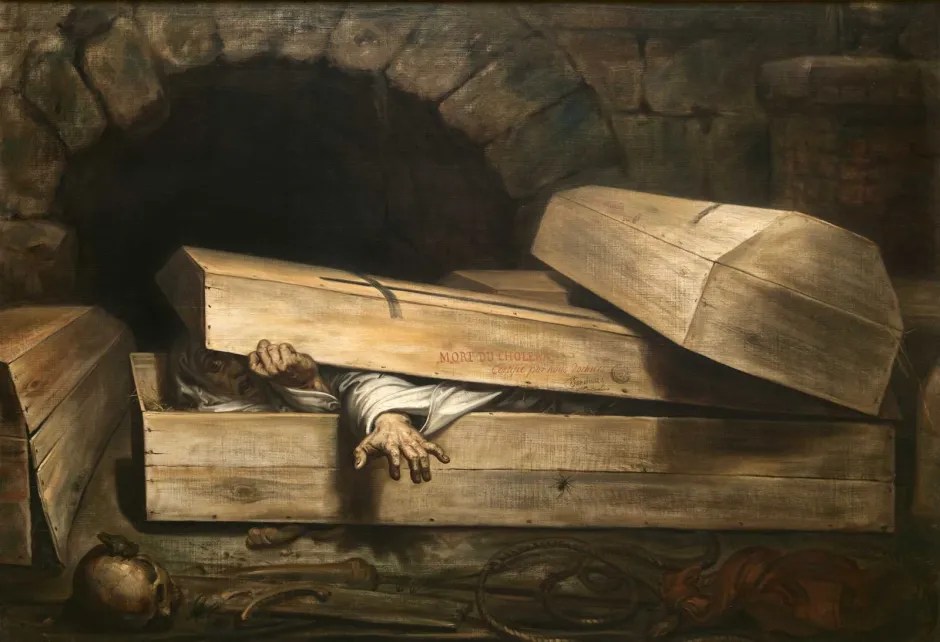
Before the era of modern medicine, the fear was not entirely irrational. Throughout history, there have been numerous reported cases of people being buried alive by accident. In 1905, the English reformer William Tebb (vegetarian, abolitionist, pacifist, anti-imperialist and anti-vaccinationist) collected accounts of premature burial. He found 219 cases of near live burial, 149 actual live burials, 10 cases of live dissection and 2 cases of awakening while being embalmed.
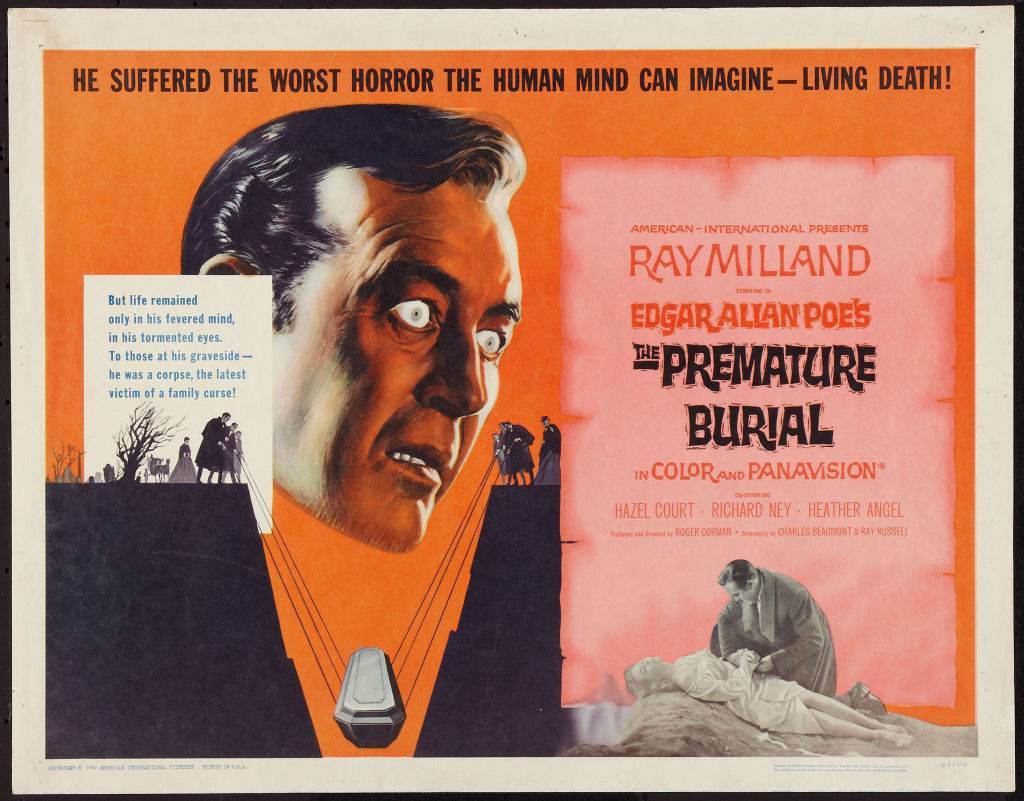
Although there have been many stories of people being accidentally buried alive and dying a horrific death after regaining consciousness, it has been argued that the incidence of unintentional live burial has been overestimated and that the normal, physical effects of decomposition are sometimes misinterpreted as signs that the person whose remains are being exhumed had revived in their coffin. Edgar Allan Poe wrote several horror stories involving people being buried alive, including The Premature Burial (adapted into a film in 1962 by Roger Corman), about a person suffering from both catalepsy and taphophobia.
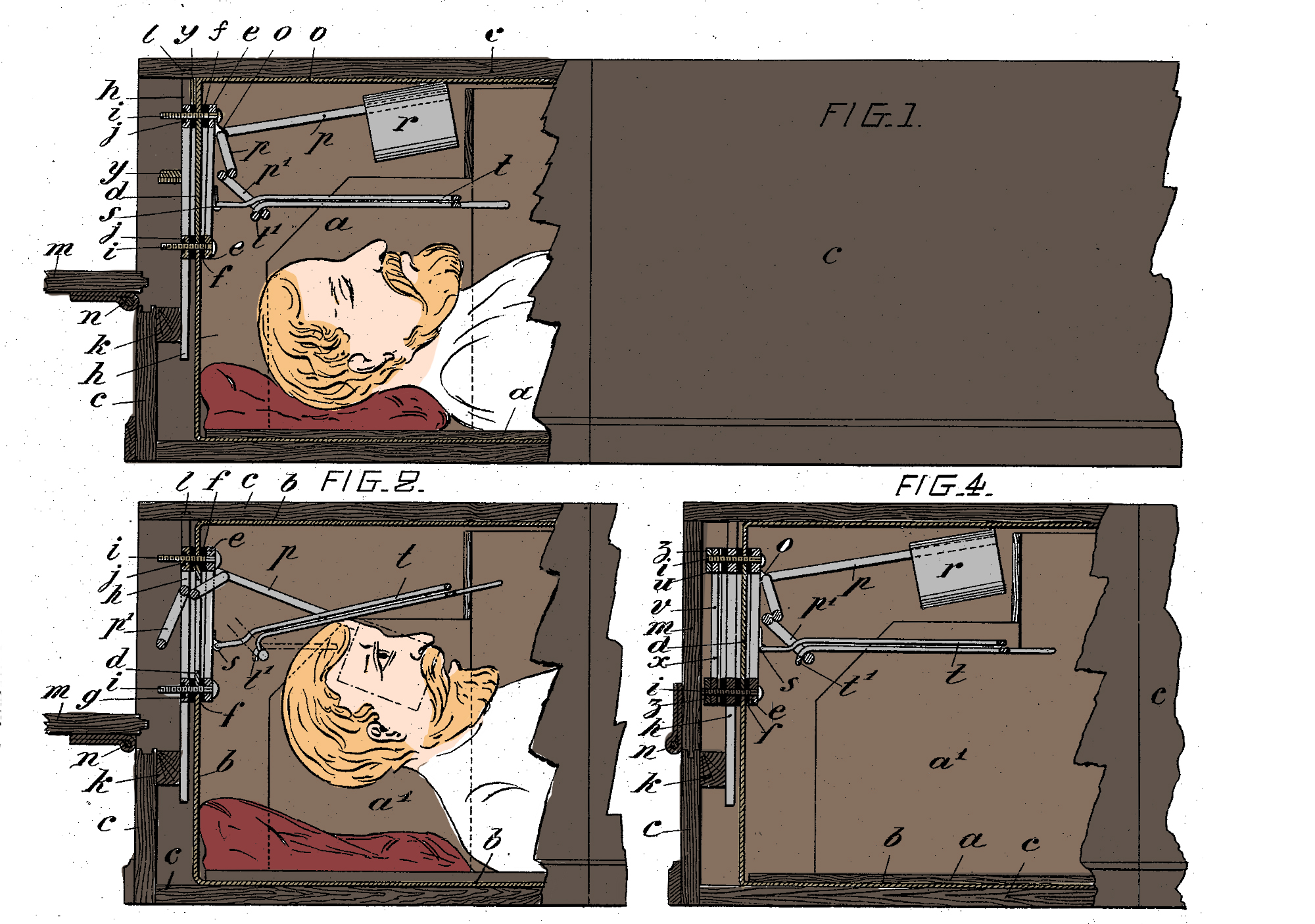
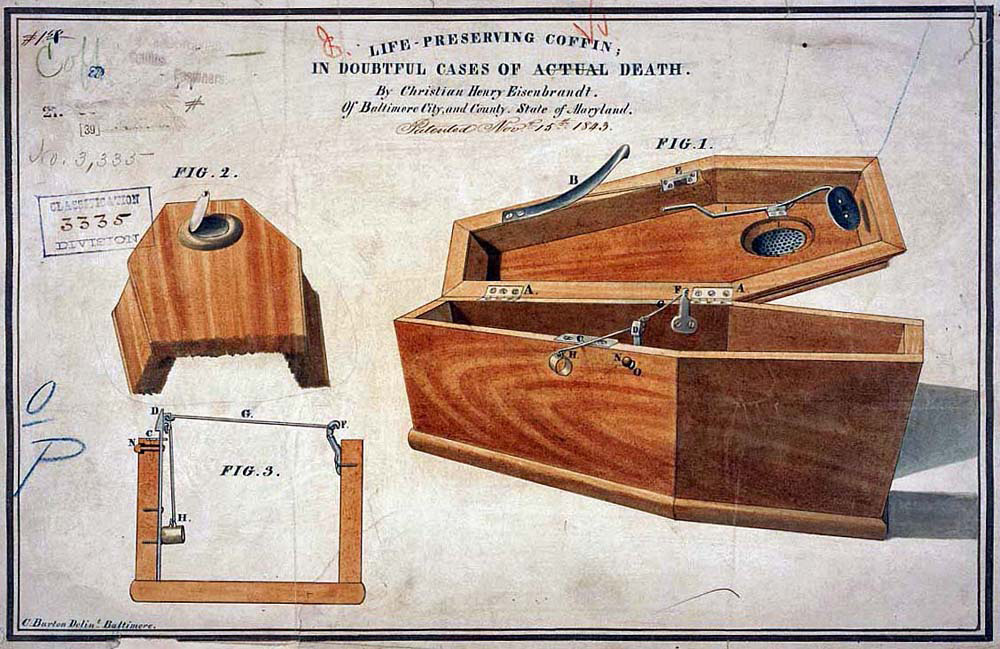
Fear of being buried alive led to the invention of various devices (glass lids for observation, ropes attached to bells, lights and flags for signalling, speaking tubes and breathing pipes) to allow the unfortunate victims of premature burial a chance of survival and rescue. There are, however, no documented cases of the left-for-dead being saved by such contraptions.
Several notable historical figures are thought to have been afraid of being buried alive, including Frédéric Chopin (who requested that his heart be cut out to ensure his death), George Washington (who requested that his body be laid out for three days), and Hans Christian Andersen and Alfred Nobel (who both asked to have their arteries cut open before they were buried).
This account from 1842 was documented in William Tebb’s 1905 book Premature Burial and How It May be Prevented: With Special Reference to Trance, Catalepsy, and Other Forms of Suspended Animation:
‘A man apparently died, and his death was certified to both by the attending physicians and the medical inspector; he was put into a coffin, and the religious ceremonies were performed in good style. At the end of the funeral service, and as he was about to be buried, he awoke from his trance.
The clergy and the undertakers sent in their accounts for the funeral expenses; but he refused to pay them, giving as his reason that he had not ordered them; whereupon he was sued for the money.’
DÖSTÄDNING (Swedish Death Cleaning)
Döstädning is the practice of getting rid of all the stuff you’ve accumulated that you don’t need anymore, mainly to avoid your family and friends having to sort it all out when you’ve gone.
Although not necessarily something exclusive to or originating in Sweden, the idea gained international popularity following the publication in 2017 of the book The Gentle Art of Swedish Death Cleaning by Swedish artist and author Margareta Magnusson. There’s now even a rather tacky looking TV series of the same name.
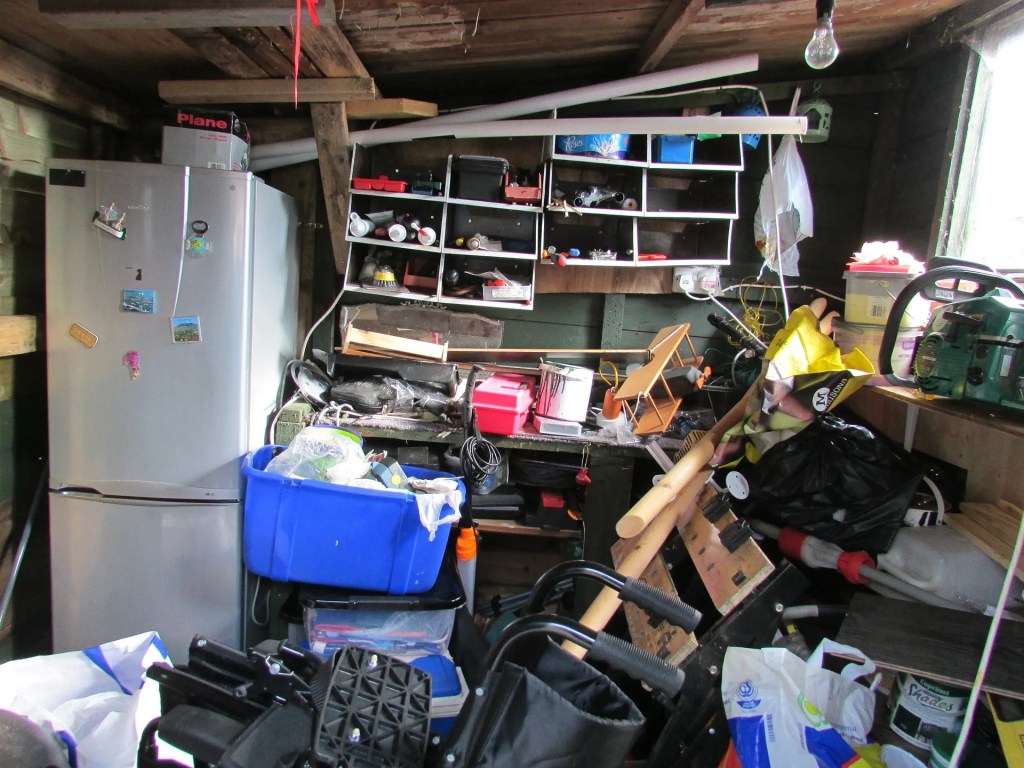
Photo by Bill Kasman / Pixabay (and no, it’s not my house)
“You could die tomorrow, who’s going to take care of all this crap?”
Margareta Magnusson
FUNERAL POTATOES

Recipe coming soon…..
 WAINSGATE GRAVEYARD PROJECT