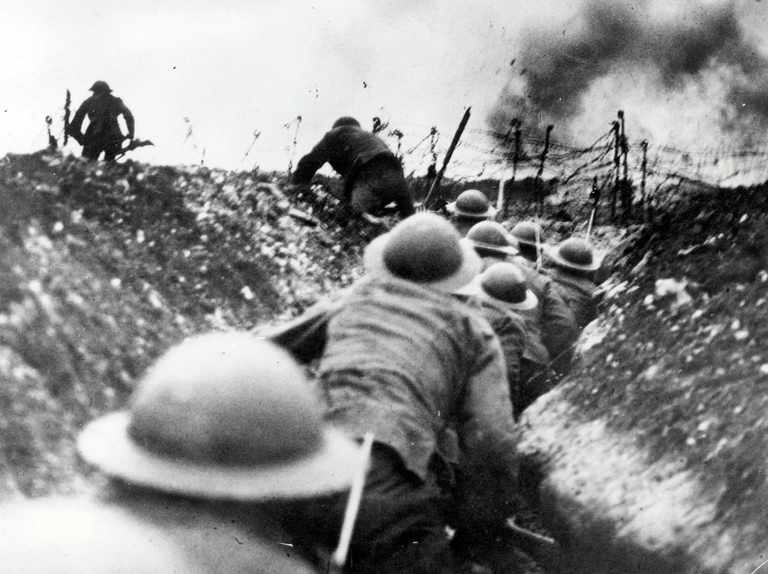
To save your world you asked this man to die:
Would this man, could he see you now, ask why?
Epitaph for the Unknown Soldier (1955) by W. H. Auden
Twenty-six men who died while serving in the two World Wars are commemorated in some form at Wainsgate, either in the graveyard or on the Wainsgate war memorial and photograph.. There is also one, Percy Brown Roe, who survived the war and died in the Oxenhope charabanc disaster in 1920, but whose grave has a Commonwealth War Graves Commission headstone. There is also Arthur Kitchen, who is not listed on the Wainsgate memorials and whose name does not appear on a headstone in the graveyard: his wife, daughter, mother and grandmother are buried at Wainsgate, so he has been included in this list. Twenty-six died during WW1, and only one, John Crabtree, was killed during WW2.
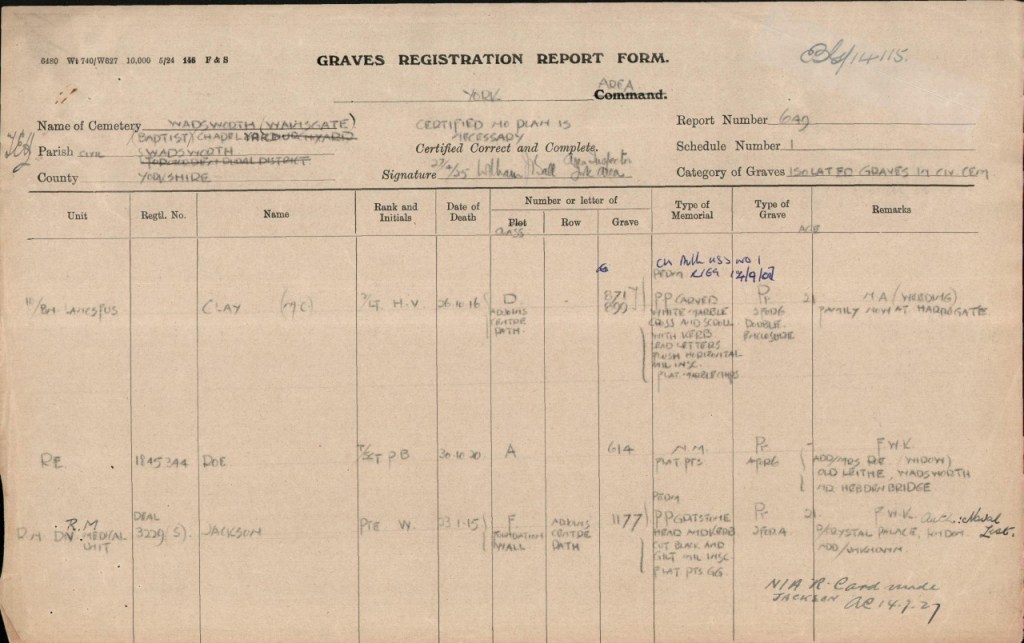
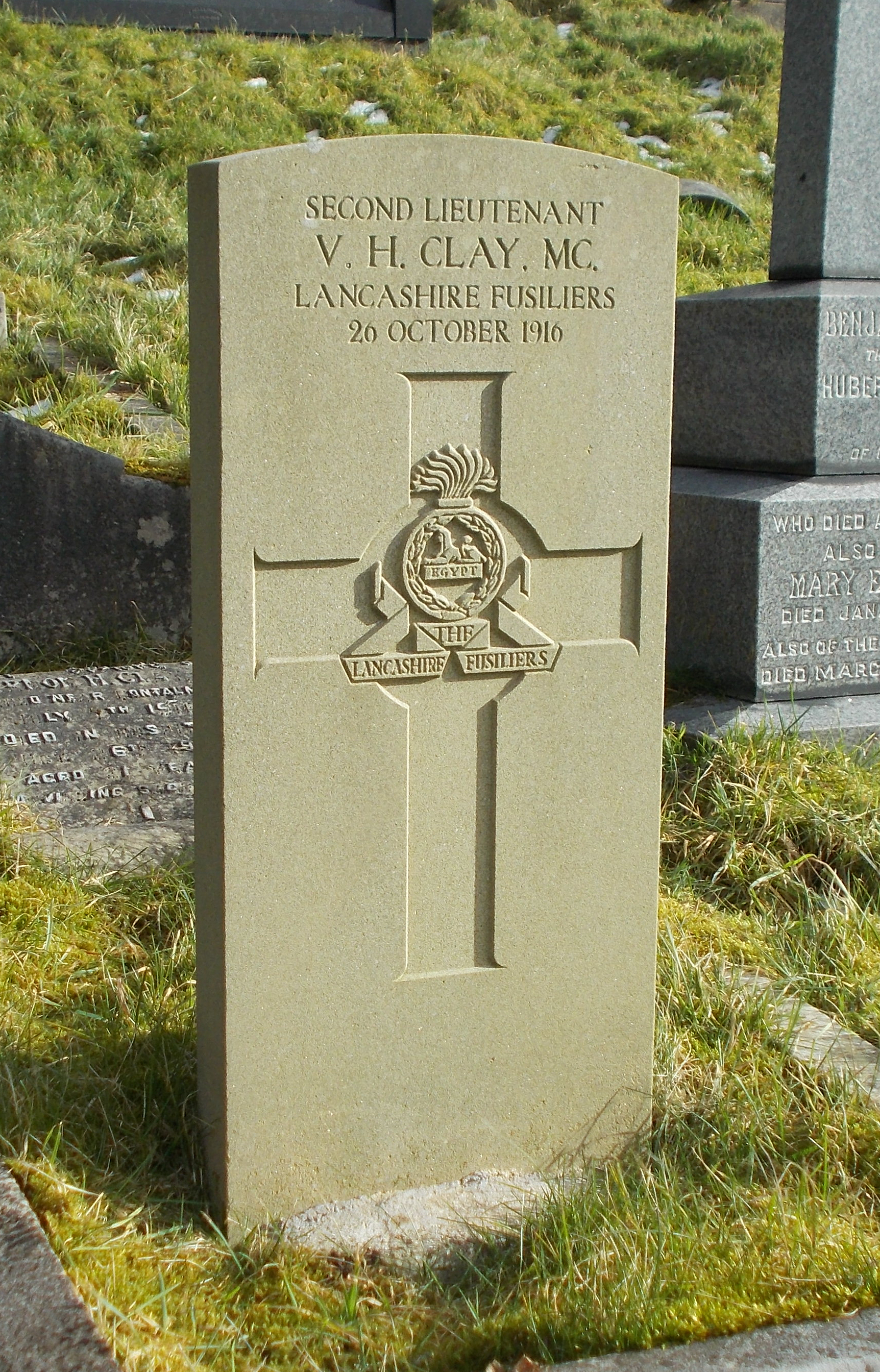
The three who died in this country (Vernon Harcourt Clay, Wilbert Jackson and Percy Brown Roe) are all buried at Wainsgate. Vernon Clay was seriously wounded in France, brought back to England, and died at Chelsea Hospital. Wilbert Jackson died of pneumonia while undergoing training in London, and is buried with his mother. His headstone also commemorates his brother, Sam who was killed in France in 1916. These three graves are maintained by the Commonwealth War Graves Commission, and those of Vernon Clay and Percy Roe have standard CWGC headstones.
All of the others who died in WW1 are interred or commemorated in France or Belgium, apart from Ellis Sutcliffe, who was killed in Mesopotamia (now Iraq) and is commemorated at Basra Memorial, and Albert Barrett Harwood, who was lost at sea, and is commemorated at the Tower Hill Memorial in London. John Crabtree was killed in Egypt in 1942, and is interred at El Alamein War Cemetery. Those who are not buried at Wainsgate are commemorated on family headstones in the graveyard, with the exception of Thomas Roger Ashworth, Arthur Kitchen, Archibald Sunderland and Ellis Sutcliffe.
All of the men who died were serving in the Army, with two exceptions: Wilbert Jackson was with the Royal Marines (Royal Naval Division Medical Unit), and Albert Barrett Harwood was in the Merchant Navy.
Only one of those who died (2nd Lieutenant Vernon Harcourt Clay) was a commissioned officer. He was also the only one who had been decorated, having been awarded the Military Cross (which was only awarded to officers) for ‘conspicuous gallantry during operations’.
The average age of those who died was 26. The oldest, George Sowden, was 39. The youngest, Vernon Ashworth, eldest son of Wainsgate’s choirmaster, was 19. Three families each lost two sons: Sam and Wilbert Jackson, Fred and Willie Southwell, and George and James Sowden.
The Southwell family had already lost a son, Albert, killed in Canada’s worst mining disaster in June 1914, weeks before the outbreak of WW1. His father, John Southwell, died in 1916, not knowing that two more of his sons would be killed in the war shortly afterwards.
Click on the LINKS to find out more about the men who died…..
INTERRED AT WAINSGATE
Vernon Harcourt CLAY
Wilbert JACKSON
Percy Brown ROE
INTERRED ELSEWHERE AND COMMEMORATED AT WAINSGATE
Louis ARMSTRONG
Ernest ASHWORTH
Thomas Roger ASHWORTH
Vernon ASHWORTH
Willie ASHWORTH
John CRABTREE
Henry William DEWHIRST
Frederick DUNKLEY
John Edward GIBSON
Albert Barrett HARWOOD
Fred HARWOOD
James Hervey HORSFALL
Sam JACKSON
Astin JARVIS
Ethelbert REDMAN
Fred SOUTHWELL
Willie SOUTHWELL
George SOWDEN
James SOWDEN
Archibald SUNDERLAND
Clarence Ingham SUNDERLAND
Arnold SUTCLIFFE
Ellis SUTCLIFFE
James Thomas SUTCLIFFE
OTHERS (NOT COMMEMORATED AT WAINSGATE)
Arthur KITCHEN
The WAR MEMORIALS
Click on the LINKS to find out more…..
WAINSGATE WAR MEMORIAL & PHOTOGRAPH
OLD TOWN METHODIST CHAPEL WAR MEMORIAL & PHOTOGRAPH
WADSWORTH WAR MEMORIAL (SMEAKIN HILL)
WADSWORTH ROLL OF HONOUR (1914-1919)
Click on these LINKS for some sidetracks…..
The BATTLE OF the SOMME
One of the most devastating wartime events in human history. Between July and November 1916, over 1 million Allied and German troops were killed or seriously wounded.
TOWER HILL MEMORIAL
The Mercantile Marine Memorial in Trinity Square Gardens, Tower Hill, London.
CIVILIAN CASUALTIES
Jean Winifred Humphrys is buried at Wainsgate. Her husband, Edward Joseph Humphrys, was killed in 1943 in a German bombing raid on Reading.
The 1936 WADSWORTH AIR CRASH
Not directly related to Wainsgate and not occuring during wartime, but an important event in Wadsworth’s history.
POSTSCRIPT
* * *
The WAR MEMORIALS
WAINSGATE WAR MEMORIAL & PHOTOGRAPH
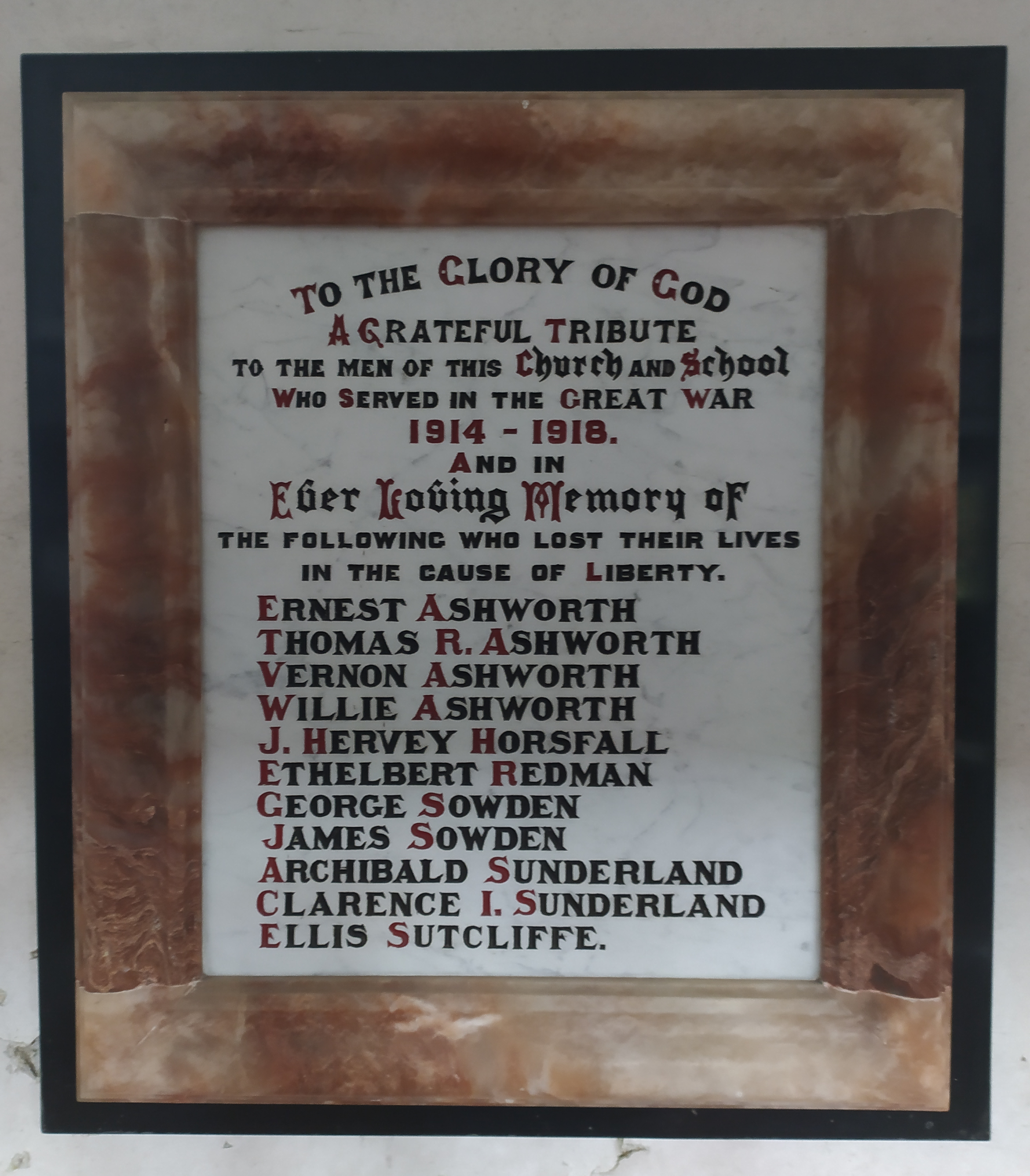
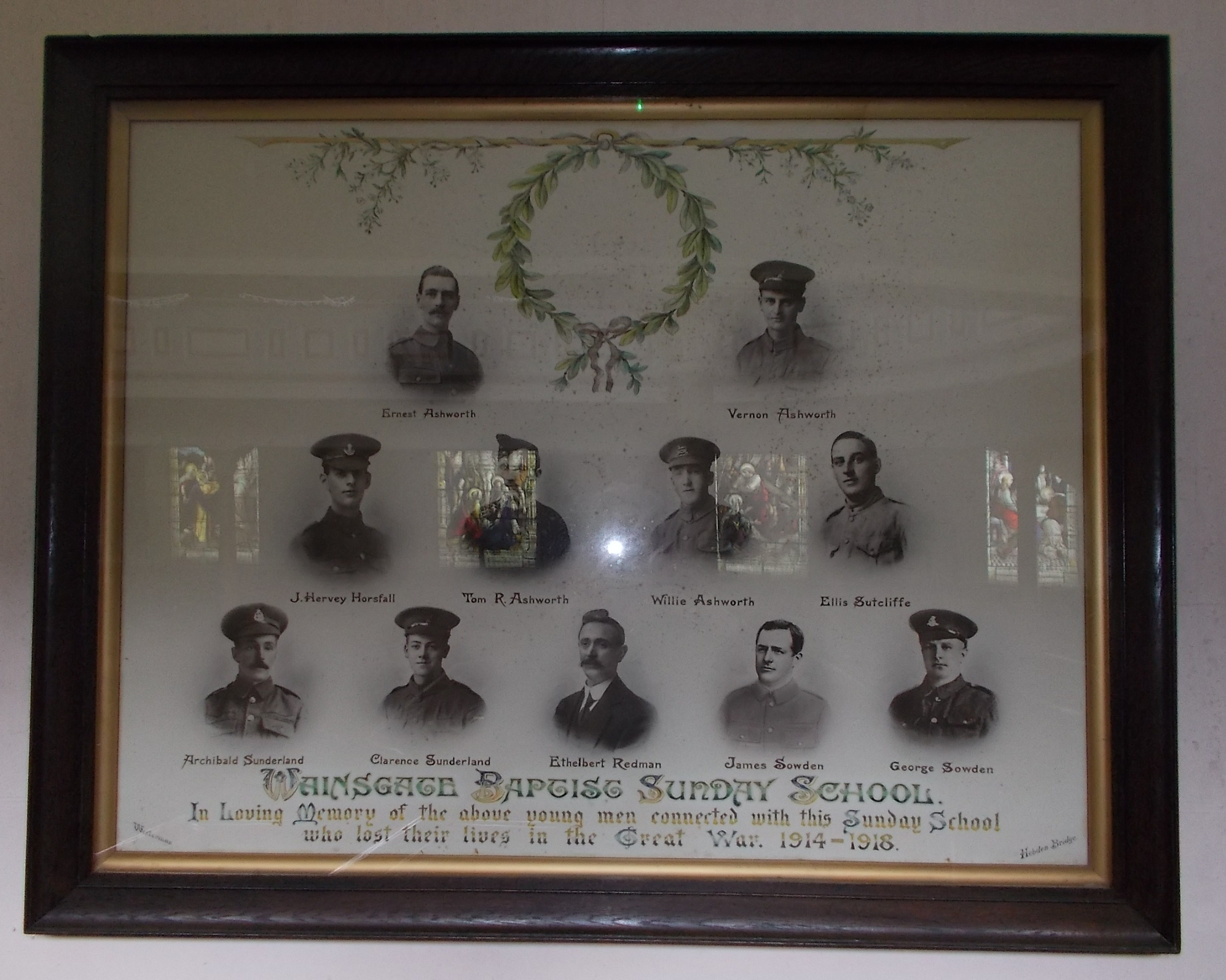
Eleven of the men who died in WW1 are commemorated on the Wainsgate war memorial and photograph, both of which are located inside the chapel and are dedicated to the men of Wainsgate Chapel and Sunday School who ‘lost their lives in the cause of liberty’ in the ‘Great War 1914-1918’.
OLD TOWN METHODIST CHAPEL WAR MEMORIAL & PHOTOGRAPH
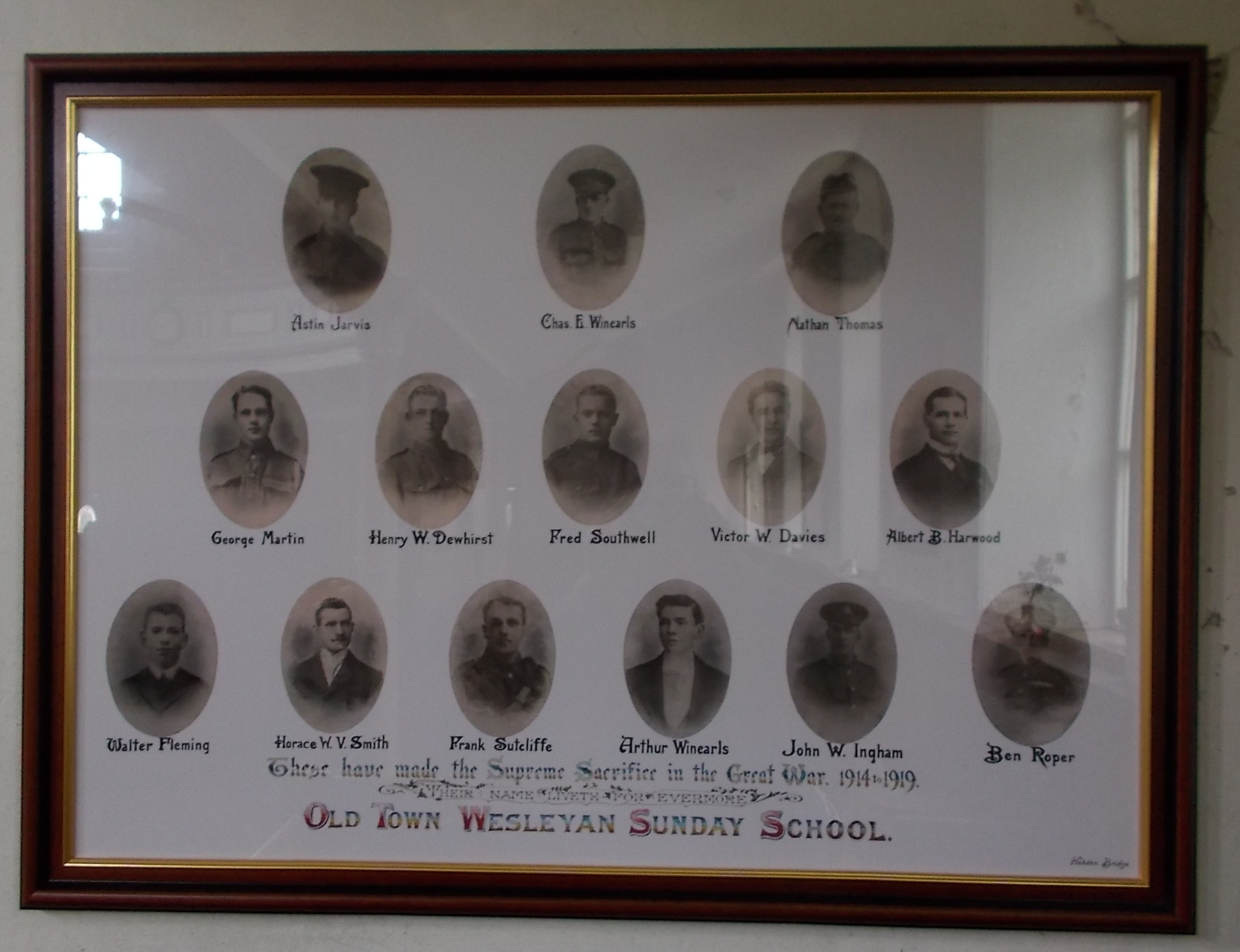
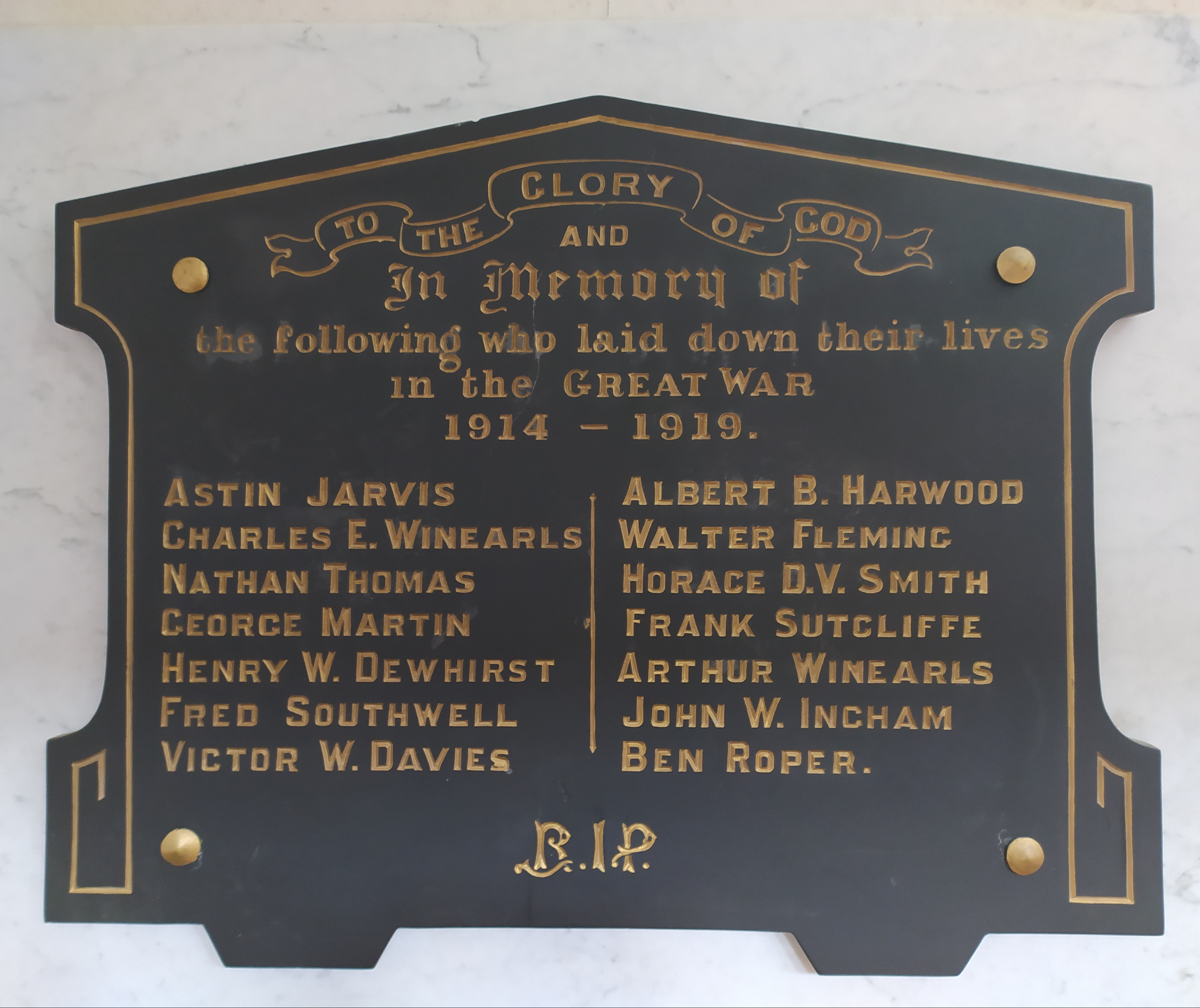
Four men who are commemorated in the graveyard (Astin Jarvis, Henry William Dewhirst, Fred Southwell and Albert Barrett Harwood) are commemorated on the photograph and memorial from Old Town (Wesleyan) Methodist Chapel, Walker Lane, which have both been relocated to Wainsgate following the closure of the Methodist Chapel.
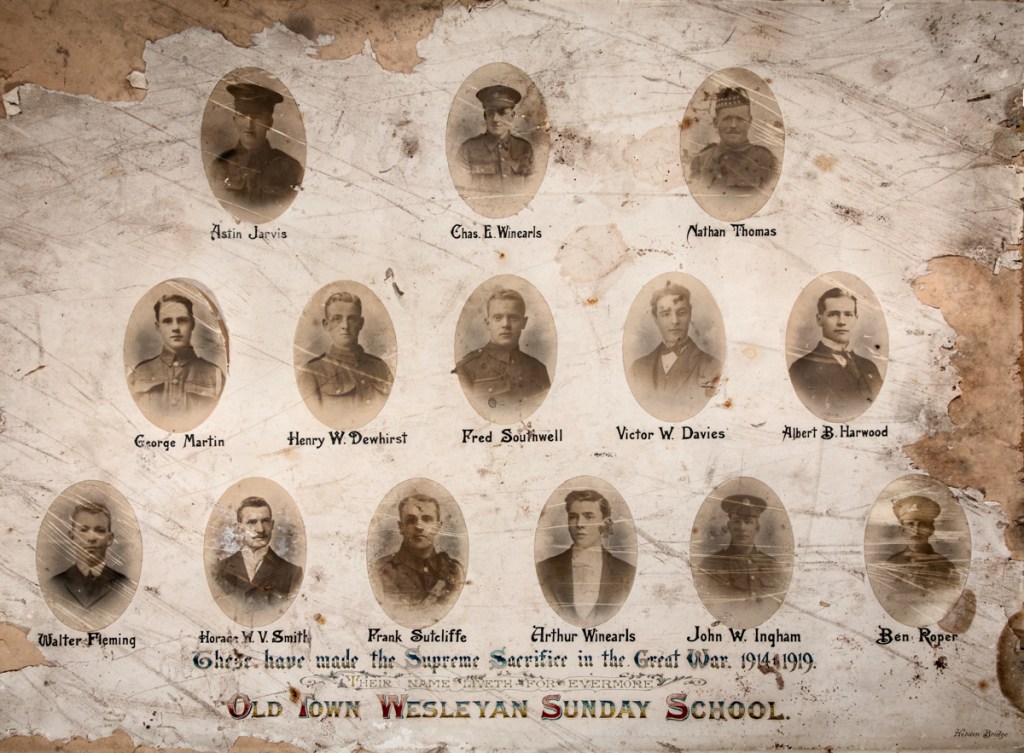
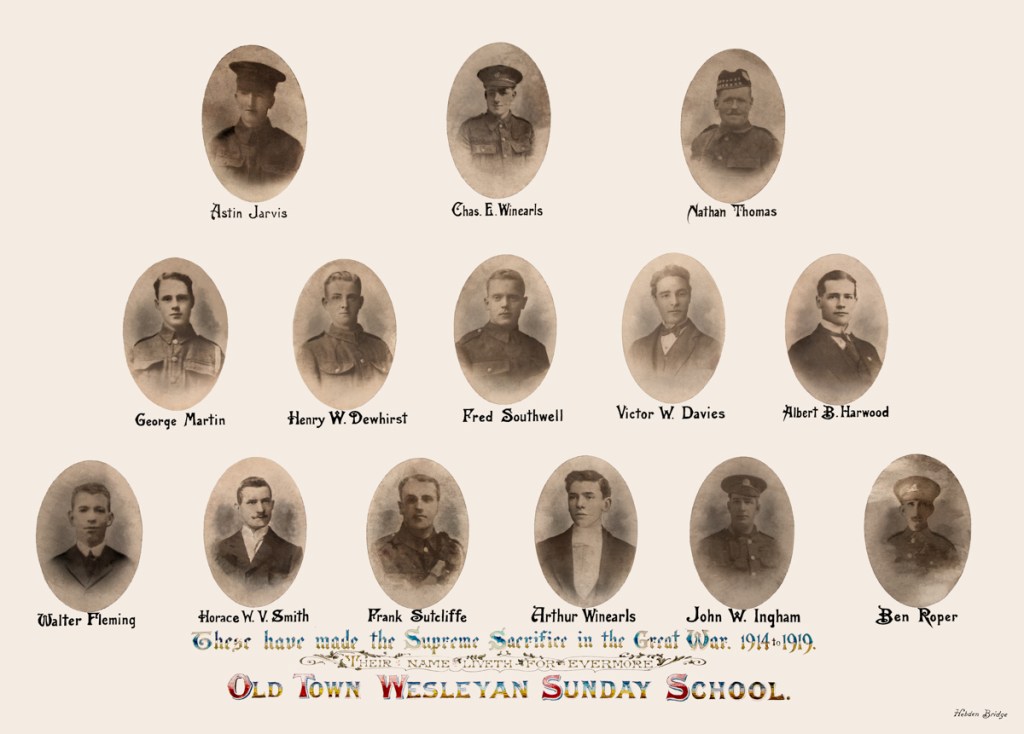
Images from the Alan Bramwell Collection – Pennine Horizons Digital Archive.
The original photomontage was discovered while Walker Lane chapel was being converted into two houses in 2018. It was photographed by Alan Bramwell, who then spent many hours digitally restoring the image, which was framed and is now displayed in Wainsgate chapel.
* * *
The Walker Lane memorial and photograph both refer to the ‘Great War 1914-1919’. The war formally ended with the signing of the Treaty of Versailles on 28th June 1919 rather than the Armistice of 11th November 1918, and this date is considered by some to be the true date when the war ended. The UK Parliament officially declared the war ended on 31st August 1921.
WADSWORTH WAR MEMORIAL
The Wadsworth War Memorial is a ‘stone obelisk of rusticated masonry, surmounting a square plinth that bears four tablets with incised inscription’, about 41 feet (12.5m) high, and based on the design of nearby Stoodley Pike (which is 120 feet high). It sits in a prominent position between Crimsworth Dean and Pecket Well Clough on a rocky outcrop usually known as Smeakin Hill (although sometimes also called Smeekin Hill, Smeeking Hill or Smeaking Hill), and is also known as Pecket Pike. It was ‘designed by Mr. D Parker, local surveyor’ – Dent Parker (Albert Dentith Parker, 1875-1952, who is buried at Wainsgate in plot C613), and built by local builder Oldfield Watson at a cost of £624 on land given by Mr Wear (or Weir), a Bradford businessman of Crimsworth Farm.
The monument was unveiled by Major R. H. Barker on 23rd September 1923, although the tablets with the names of the 34 men who had died in the war were not present when the monument was unveiled and were added later. There was a procession from Old Town Green for the dedication ceremony, and the memorial was handed over to Mr C. H. Bricknell, Chairman of Wadsworth Parish Council by the Rev. Joseph Fielding, pastor of Waisgate Baptist Church, who had been Chairman of the Memorial Committee. The tablet with the names of the six men who had died in WW2 was unveiled on 7th November 1948: the unveiling and dedication were accompanied by a choir conducted by Raymond Ashworth, choirmaster at Wainsgate.
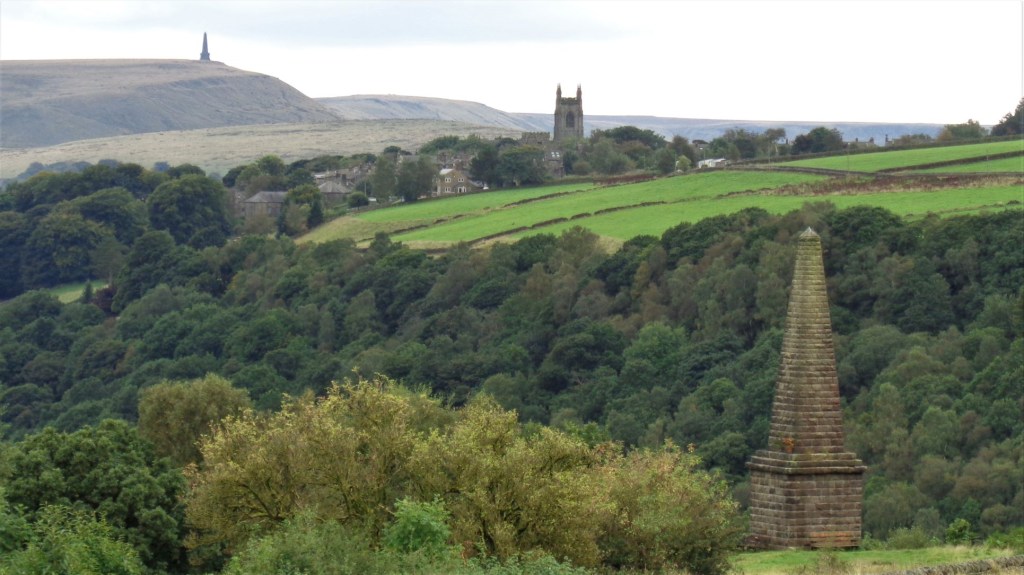
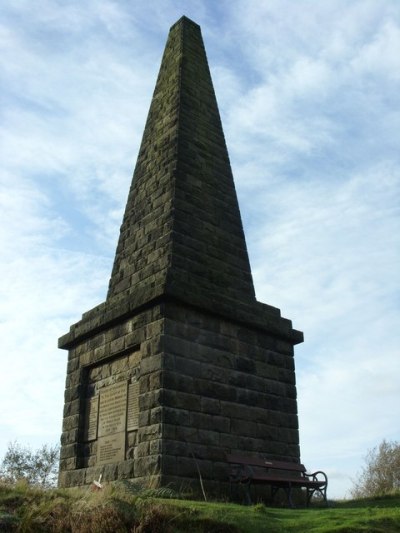
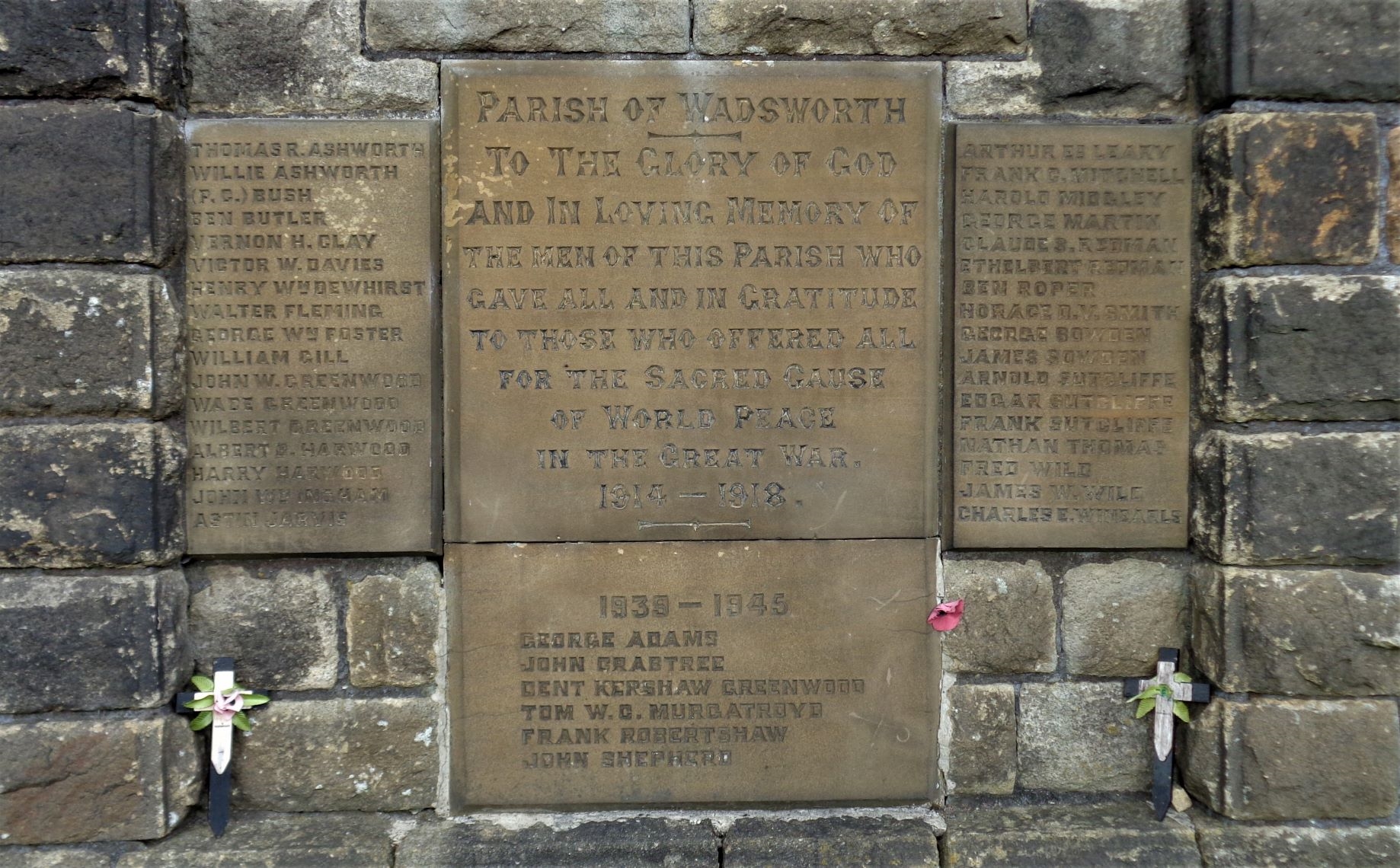
Photographs by Kevin Waterhouse and Nigel Lloyd. The top photograph shows the Wadsworth War Menorial with the tower of St.Thomas the Apostle Heptonstall and Stoodley Pike in the background.
The memorial is listed Grade II, and the Historic England listing describes it as:
‘An eloquent winess to the tragic impact of world events on the local community, and the sacrifice made in the nonflicts of the 20th century. Architectural interest. A substantial and prominently sited memorial in the form of an obelisk that has become a cherished local landmark. It is a well-designed and well-executed memorial employing good quality materials and craftsmanship’.
The Wadsworth War Memorial commemorates thirty-four men from the parish who died in WW1 and six who died in WW2: of these, ten associated with Wainsgate died in WW1 (Thomas Roger Ashworth, Willie Ashworth, Vernon Harcourt Clay, Henry William Dewhirst, Albert Barrett Harwood, Astin Jarvis, Ethelbert Redman, George Sowden, James Sowden and Arnold Sutcliffe) and one, John Crabtree, died in WW2.
WADSWORTH ROLL OF HONOUR 1914 – 1919
All the men from Wainsgate who died in the First World War are included in the Wadsworth Roll of Honour 1914 – 1919 , which contains details and brief biographies of 63 men from Wadsworth who died in the conflict. The Roll of Honour is kept at Wainsgate, and can be viewed whenever the chapel is open to the public.
The document has been scanned, and a pdf copy can be viewed and downloaded here:

These hearts were woven of human joys and cares,
Washed marvellously with sorrow, swift to mirth.
The years had given them kindness. Dawn was theirs,
And sunset, and the colours of the earth.
These had seen movement, and heard music; known
Slumber and waking; loved; gone proudly friended;
Felt the quick stir of wonder; sat alone;
Touched flowers and furs and cheeks. All this is ended.
From The Dead (IV) by Rupert Brooke (1887-1915)
* * *
INTERRED AT WAINSGATE
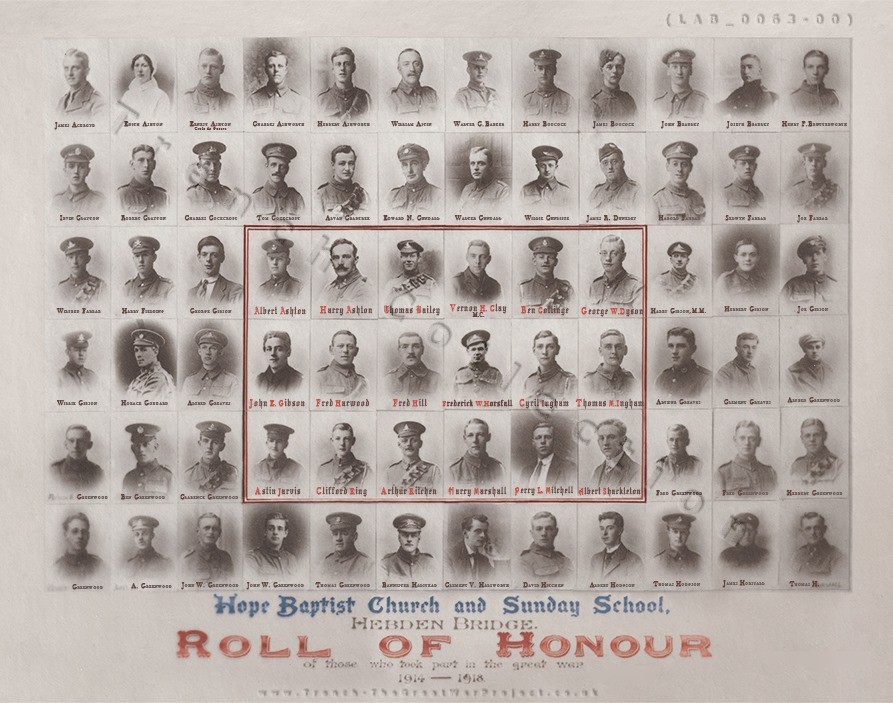
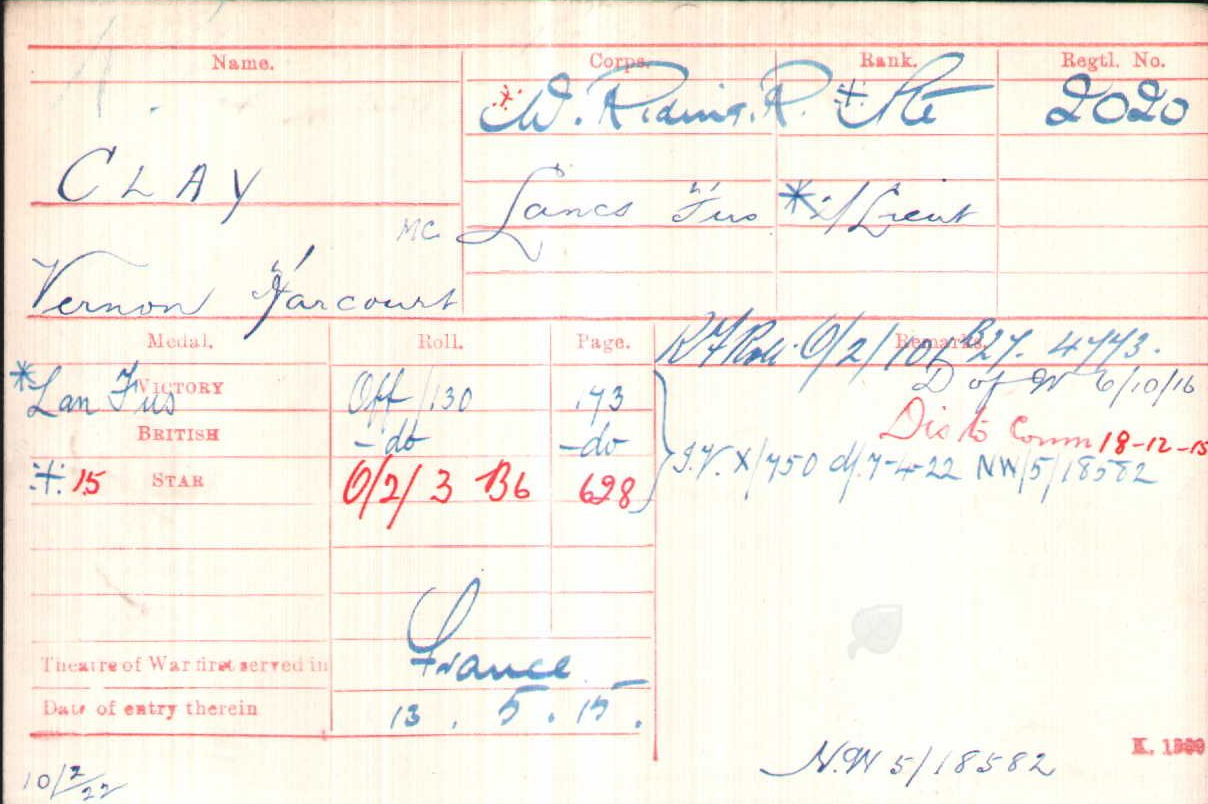
Vernon Harcourt CLAY MC (1895-1916)
Second Lieutenant, 10th (Service) Bn. Lancashire Fusiliers. Died of wounds 26th October 1916, age 21.
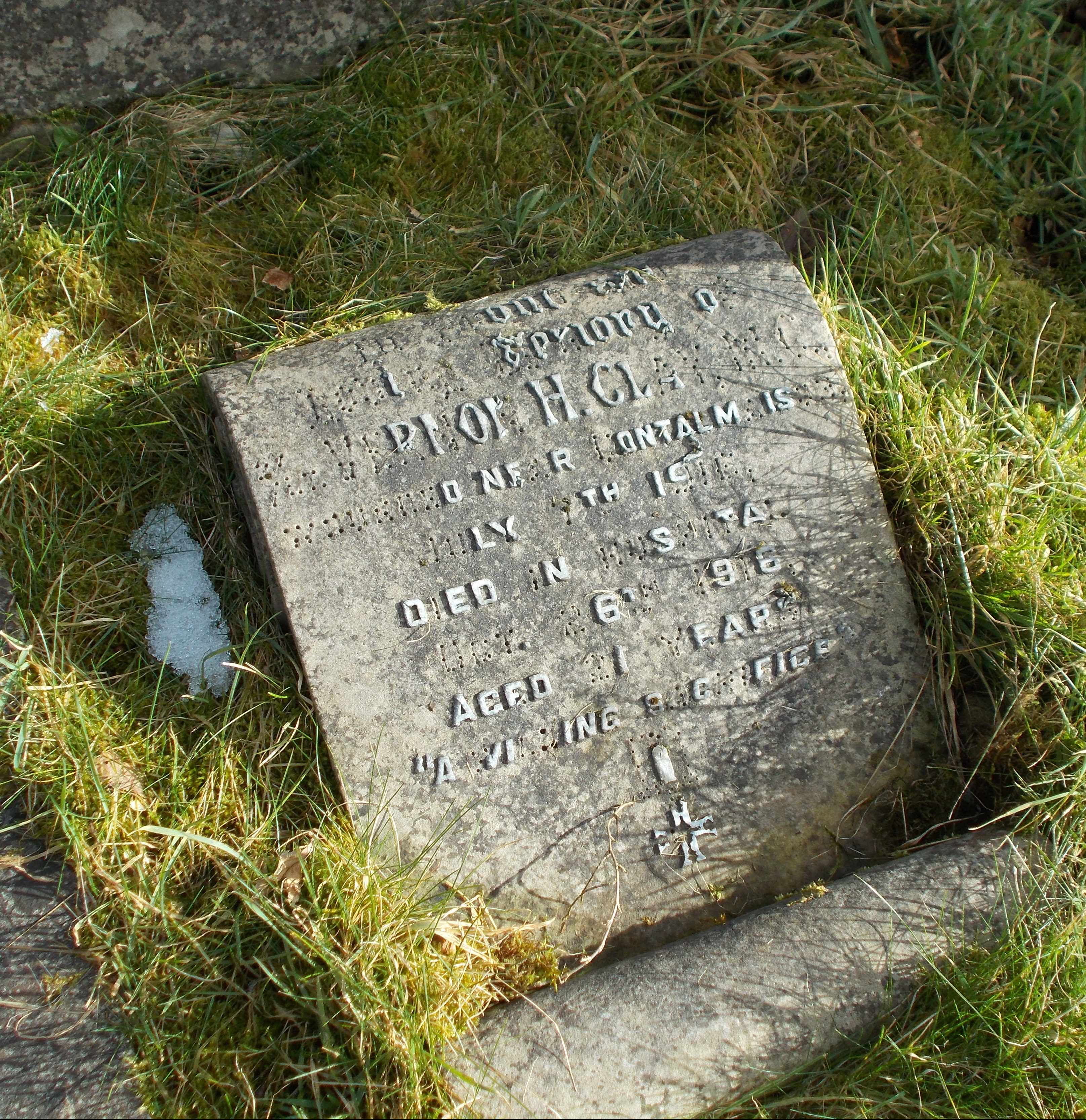
CWGC headstone, plot E899. Also on this plot is a white marble scroll with lead lettering and a representation of a Military Cross, although much of the lettering is missing. The scroll includes the epitaph ‘A Willing Sacrifice’.
His parents, brother and sister are buried in an adjacent plot, E871. Commemorated on the Hope Chapel war memorial and photograph and on Wadsworth War Memorial, Smeakin Hill.
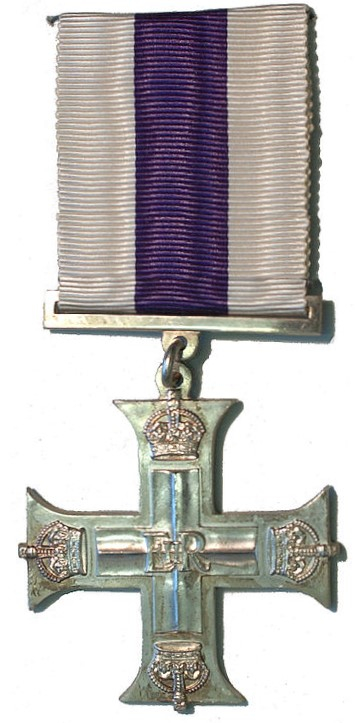
Vernon Harcourt Clay was the second son of James Clay and Eva Ann Clay (born Thorp) of Stoodley Range, Hebden Bridge. His elder brother Laurence, a medical officer at Crumpsall Hospital, Manchester had died at the age of 25 in 1906, and he also had an older sister, Doris Gwendoline. Vernon was educated at Hebden Bridge Secondary School and New College Harrogate, and after completing his education joined his father’s fustian business at Hangingroyd, Hebden Bridge.
At the outbreak of war he was on holiday in Switzerland, but returned home and enlisted immediately as a Private in the West Riding Regiment. As a young man of ‘superior education and gifts of character’ he could probably have obtained a commission at once, but chose to serve in the ranks and only accept military honours when he had ‘earned them by hard work, efficiency, heroism and sacrifice’: he was commissioned as a 2nd Lieutenant in the Lancashire Fusiliers in December 1915. He was awarded the Military Cross for ‘conspicuous gallantry during operations’ but on 7th July 1916, during the Battle of Albert (the first two weeks of the Somme Offensive) he was hit by shrapnel from a shell that exploded close to him near Contalmaison, suffering serious head wounds and blinded in both eyes. He died in the Chelsea Hospital, London, on 26th October 1916, with his parents and sister at his bedside.
‘For conspicuous gallantry during operations. He successfully led a risky reconnaissance. He shot two of the enemy with his revolver, led a bombing attack establishing a stop, and repulsed several hostile bomb attacks during the afternoon. Next day he made another dangerous reconnaisance.’
Supplement to the London Gazette, 25th August 1916 – report of Vernon Clay’s award of the Military Cross.
His funeral service was held at Hope Baptist Church, Hebden Bridge, a church that he had been closely involved with, and he was buried at Wainsgate on 30th October. The funeral service and committal were conducted by Rev. Edward Owen.
Vernon was a member of Caldene Hockey Club, Hebden Bridge Liberal Club and was secretary of the Young Men’s Mutual Class at Hope Baptist Church. His obituaries said that he had:
‘a keen sense of humour and was fond of innocent fun and frolic………..his buoyancy of spirit, his great hopefulness and boundless enthusiasm……..the grandeur of scenery appealed to him mightily, and whatever was beautiful in nature, art, poetry and human life gave him genuine delight’.
After his death his father, a prominent local businessman, councillor and JP, endowed Hebden Bridge Secondary School with a scholarship in his memory.
* * *
The BATTLE OF the SOMME
The Battle of the Somme took place between 1st July and 18th November 1916 in northern France. More than three million men fought in the battle and over a million from both sides were killed or wounded, making it one of the most devastating wartime events in human history. On the first day of the Somme offensive over 19,000 British troops were killed and nearly 40,000 wounded – the greatest loss of life in one day in British military history.
The British army was the largest volunteer force ever to go into battle – thousands of young men had responded to Kitchener’s call to go to war, and were full of enthusiasm and patriotic spirit. Their leaders – commander-in-chief General Sir Douglas Haig and his generals and senior officers – were largely elderly, unimaginative, incompetent and uncaring: dreaming of cavalry charges while sending their troops to face the German machine guns. Junior officers, like Vernon Clay, were often young former public schoolboys, often intelligent and thoughtful but given no tactical responsibility by their senior officers. They led their men from the front, and many were killed or wounded as a result: the life expectancy of a junior officer in WW1 was about six weeks.
Vernon Clay was mortally wounded at the end of the first week of the Somme Offensive, and died a few weeks before it ended. Between 1st July and 18th November 1916 around 420,000 British & Commonwealth troops, 200,000 French troops and at least 450,000 German troops were killed or seriously wounded. At the end of it all, the Anglo-French armies had not achieved their operational objectives and had advanced about 6 miles (10km) on a front of 16 miles (25km).
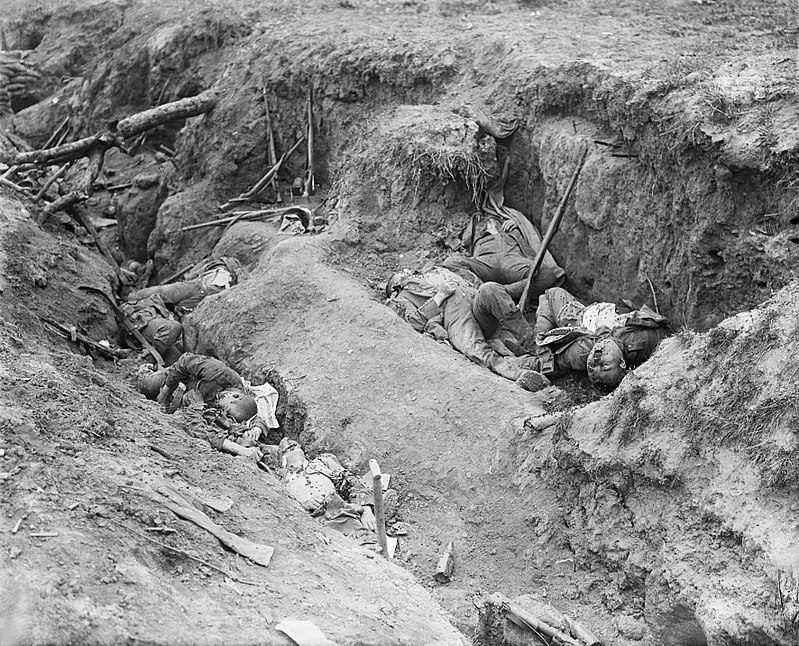
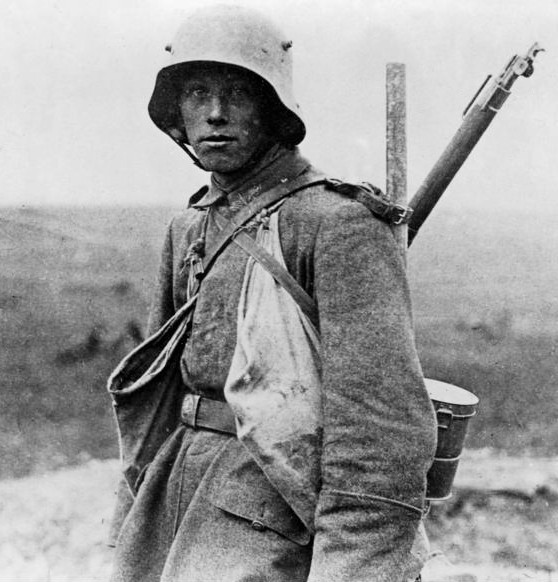
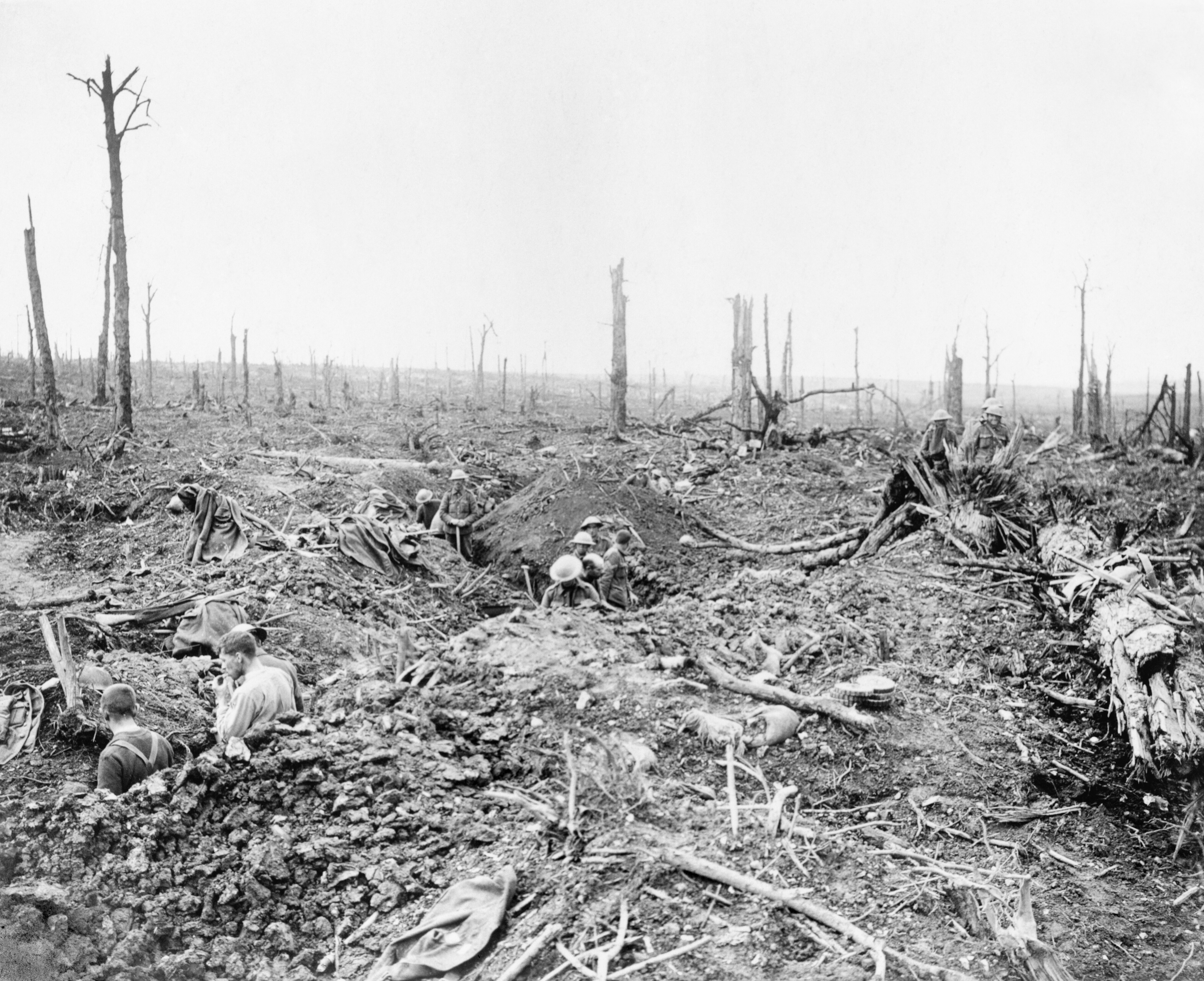
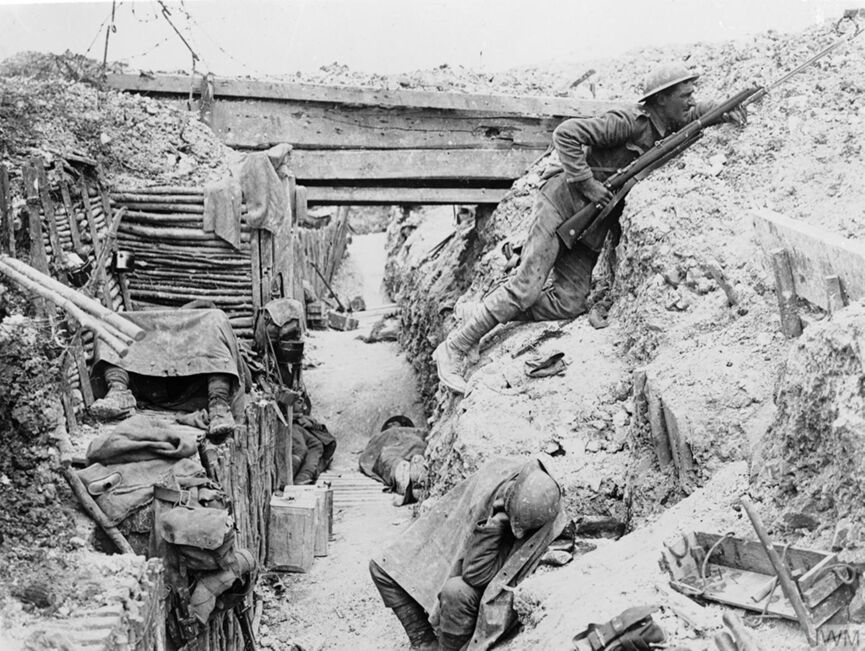
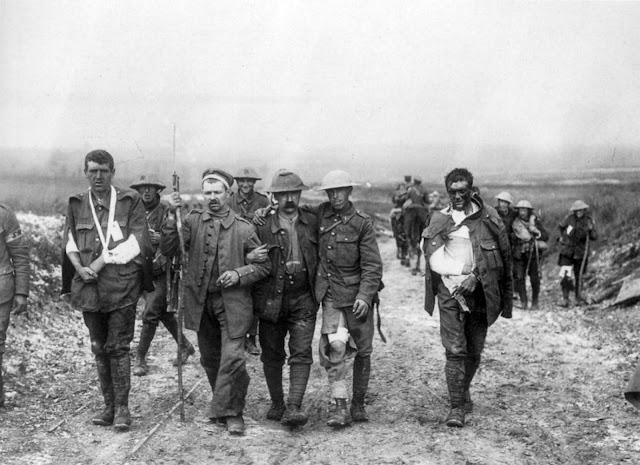
‘Somme. The whole history of the world cannot contain a more ghastly word‘.
– Friedrich Steinbrecher, German soldier, from a letter home written 12th August 1916. Steinbrecher was killed in action in 1917.
* * *
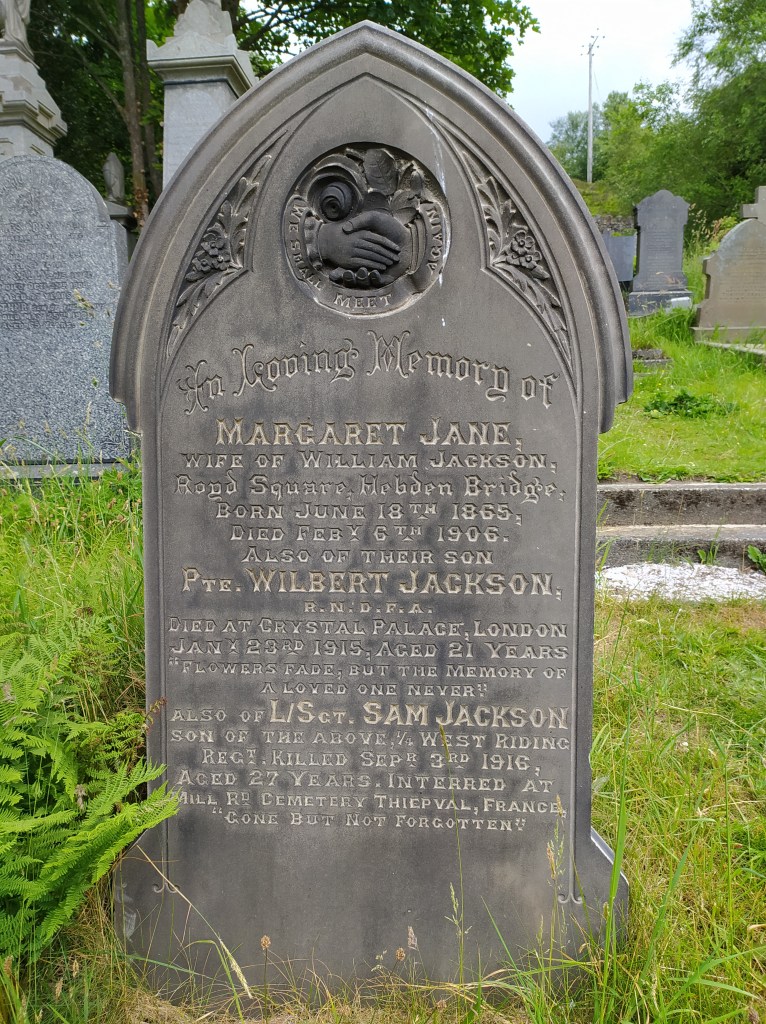
Wilbert JACKSON (1893-1915)
Private, Deal/3229(S), RM Medical Unit, Royal Naval Division, Royal Marines. Died 23rd January 1915, age 21. Died of pneumonia while undergoing training.
Commemorated on family headstone, plot B1177 (which is maintained by the CWGC), together with his brother Sam Jackson who was killed in France in 1916 and his mother, Margaret Jane Jackson, who died in 1906. ‘Flowers fade, but the memory of a loved one never.’ Commemorated in Hebden Bridge Methodist Church Book of Remembrance.
Wilbert was the son of William and the late Margaret Jane Jackson (William Jackson’s second wife, over 20 years his junior, who died in 1906 aged 40). The family lived in Hebden Bridge, and Wilbert worked for Ashworth Shuttles at Royd Works and was a member of Hebden Bridge Liberal Club, a Rechabite, and played football for Hangingroyd Shamrocks AFC. He was a member of the St.John Ambulance Brigade, and on 5th January 1915 enlisted as an ambulance driver with the Royal Marine Medical Unit. Two weeks later, while undergoing training in London, he died of pneumonia at Norwood Cottage Hospital, Crystal Palace.
His memorial service was held at Cross Lanes Chapel, and he was buried with his mother at Wainsgate on 26th January 1915.
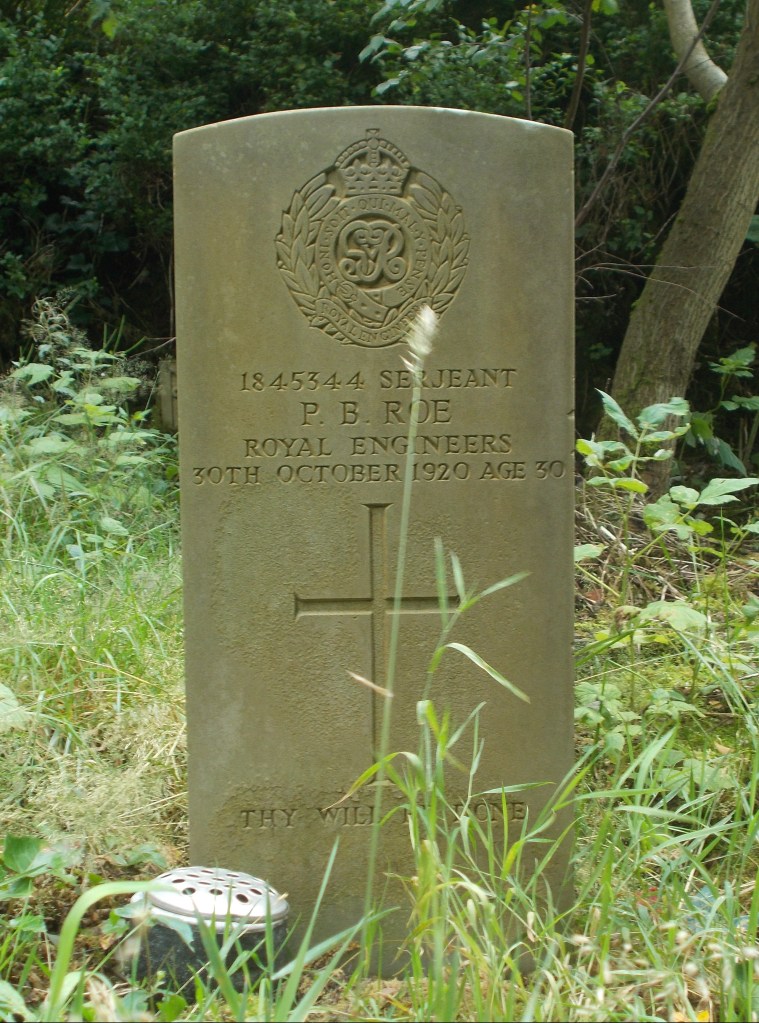
Percy Brown ROE (1890-1920)
Serjeant, 1845344, Royal Engineers. Died 30th October 1920, age 30. Killed in the Oxenhope charabanc disaster.
CWGC headstone, plot C614, where he is buried with his three young children who predeceased him and his wife Alice who died in 1938. He is not commemorated on any of Calderdale’s war memorialds.
Previously served with the Durham Light Infantry before and during WW1 – his marriage certificate (November 1915) records his profession as ‘Lance Corp. 10838 Durham Light Infantry’ and his residence at the time of marriage as ‘No. 2 Company, War Depot, The Barracks, Newcastle-upon-Tyne’.
Born in Addingham, the son of Thomas Roe, a greengrocer, Percy was a member of Old Town Bowling Club. He was described on his death certificate as a ‘warehouseman in a cotton mill’ (possibly Acre Mill), living at Hebden View, Wadsworth with his wife Alice (born Johnson, daughter of John Thomas Johnson of Hebden View, Wadsworth). They married at Wainsgate Chapel in 1915 and had three children, all of whom died in infancy: Catharine Mary, died 1917 aged 2 months, Albany, died 1919 aged 4 days and Wilfred died in March 1920 aged 2 months. Alice died in 1938, aged 47: she had purchased the burial plot on 31st January 1917, shortly before the death of their daughter Catharine Mary.

Percy had been a regular soldier before the war, serving in India with the Durham Light Infantry, and was serving with them at the time of his marriage in November 1915 – Since his death was not attributable to his wartime service in the army, a CWGC headstone would indicate that he was serving in the armed forces at the time of his death, and the inscription describes him as a Serjeant in the Royal Engineers, presumably a volunteer in the Territorial Force.
To qualify for a Commonwealth War Graves Commission (CWGC) memorial, a person must be either:
A serving member of a Commonwealth military or auxiliary force who died during the official dates of World War I (4th August 1914 to 31st August 1921) or World War II (3rd September 1939 to 31st December 1947). The location and cause of death are immaterial to their qualification.
Someone who after leaving service with a Commonwealth military force, died during these qualifying periods from an injury or illness attributable to their wartime service.
Members of certain civilian organisations (Mercantile Marine, Merchant Navy, British Red Cross Society, YMCA, Home Guard and others) may also qualify.
INTERRED ELSEWHERE AND COMMEMORATED AT WAINSGATE

Louis ARMSTRONG (1889-1916)
Private, 19th (2nd Public Schools) Bn. Royal Fusiliers. Died 2.1.1916, age 26. Died of wounds, interred at Bethune Town Cemetery, France.
Commemorated on family headstone, plot C594. The inscription after his name reads ‘A Duty Nobly Done, for the Dear Homeland’.
Mortally wounded by a shell explosion while tending to his sergeant, who had fallen ill – the sergeant died instantly, and Louis died an hour later.
His name is sometimes written as Lewis, but Louis is the correct spelling (he had a sister names Louisa who died in infancy in 1884). He may have pronounced it Lewis rather than Louie, which could have caused some confusion. There has always been uncertainty over the correct pronunciation of the name of his namesake, the American trumpeter and singer.
Born in Hebden Bridge, Louis was one of eleven children (two of whom died in infancy) of Thomas and Esther Armstrong. Thomas, a fustian cutter, had died in 1910, and in 1911 Esther and four of her surviving children were living at 46, Windsor Road. Louis was employed as a ‘work booker’ by E. Greenwood & Co., fustian manufacturers. One of his obituaries states that he ‘on one occasion by his presence of mind was enabled to save the life of a girl worker’, but we don’t know any more about the incident. He was a well known and popular sportsman in the Calder Valley, playing for Hebden Bridge AFC and Hebden Bridge Rugby Club.
One of his obituaries stated that he had three brothers also serving: another said that he had a brother ‘Elliot’ serving in the King’s Royal Rifles and another brother (‘E. Armstrong’) due to be called up. We know that his older brother Albert Elliott Armstong was awarded the Military Medal in 1916, but no record has been found of another brother (he had a younger brother Edward) serving in the military.
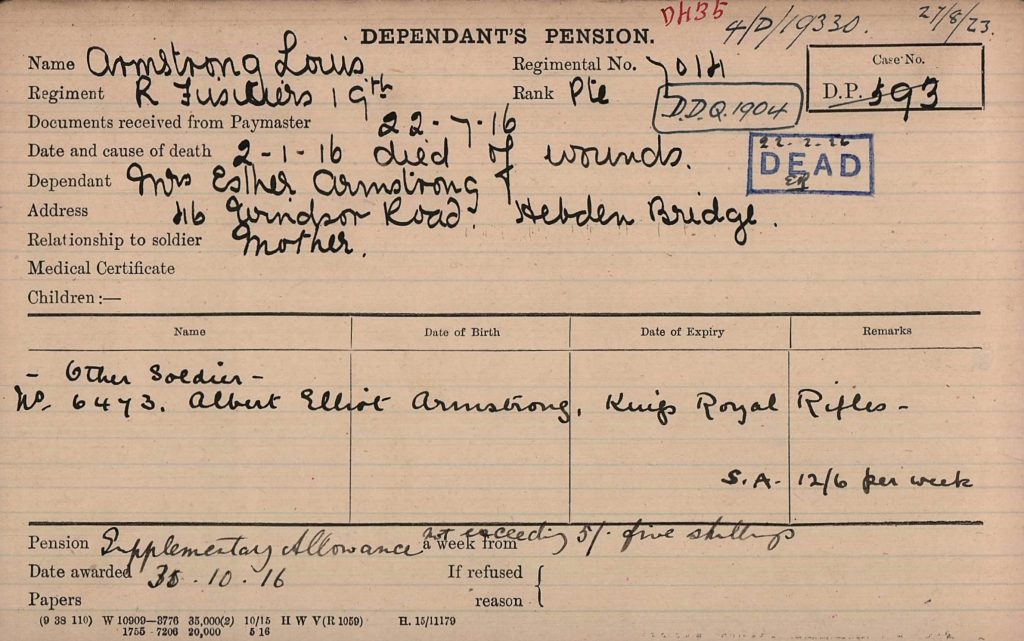
Louis enlisted in May 1915, one of 45 men from Hebden Bridge who volunteered in the same week. Of those 45 men, only 24 survived the war.
A letter from one of his comrades, Pte. Fred Wilde, confirmed his death:
‘It is with deepest regret that I confirm the death of Lewis. We went up to the cemetery to have a look at the graves of our comrades. We found the last resting place of our Lieut. and the next grave we came to was one we most dreaded to find – that of Lewis. Poor lad! …….To-day we are going out to buy a wreath to place on his grave. Oswin (Pte. Oswin Greenwood) is writing to his mother at once because we know all sorts of rumours will be flying about’.
Another comrade and ‘boon companion‘, Pte. Edward Jagger, stated that Louis was ‘a first-rate cook’ and very popular, as well as being a brave and fearless soldier. An excerpt from what was possibly Louis’s last letter home dated 29th December 1915, a few days before his death, is quoted in Hardship & Hope by Peter Thomas:
‘Up to the waist in mud and water in the trenches. Five days without a shave or wash. Spent Saturday night having to stand-to with bayonet fixed, whilst the Germans, 100 yards away, were sweeping the parapet with machine gun fire’.
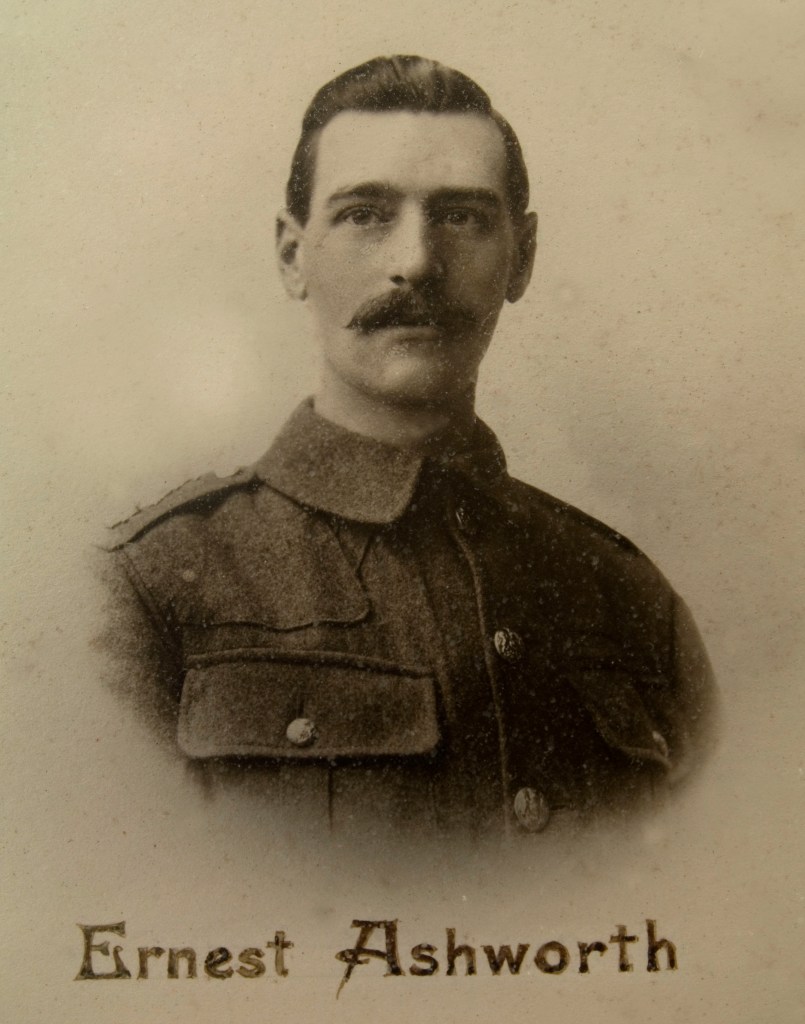
Ernest ASHWORTH
Private, 2nd Bn. South Lancashire Regiment. Died 10.4.1918, age 33. Reported missing, commemorated at Ploegsteert Memorial, Belgium. Commemorated on family headstone, plot F795, and on Wainsgate war memorial.
Vernon Ashworth, who was killed in action in 1917, was his cousin.
Thomas Roger ASHWORTH
Private, 2nd Bn. Duke of Wellington’s (West Riding Regiment). Died 18.4.1915, age 35. Killed in action, commemorated at Ypres (Menin Gate) Memorial, Belgium, and on Wainsgate war memorial and Heptonstall Wesleyan war memorial. Believed to have been killed at Hill 60, on the same day as James Sowden. Had previously served as a regular soldier in India and in South Africa in the 2nd Boer War.
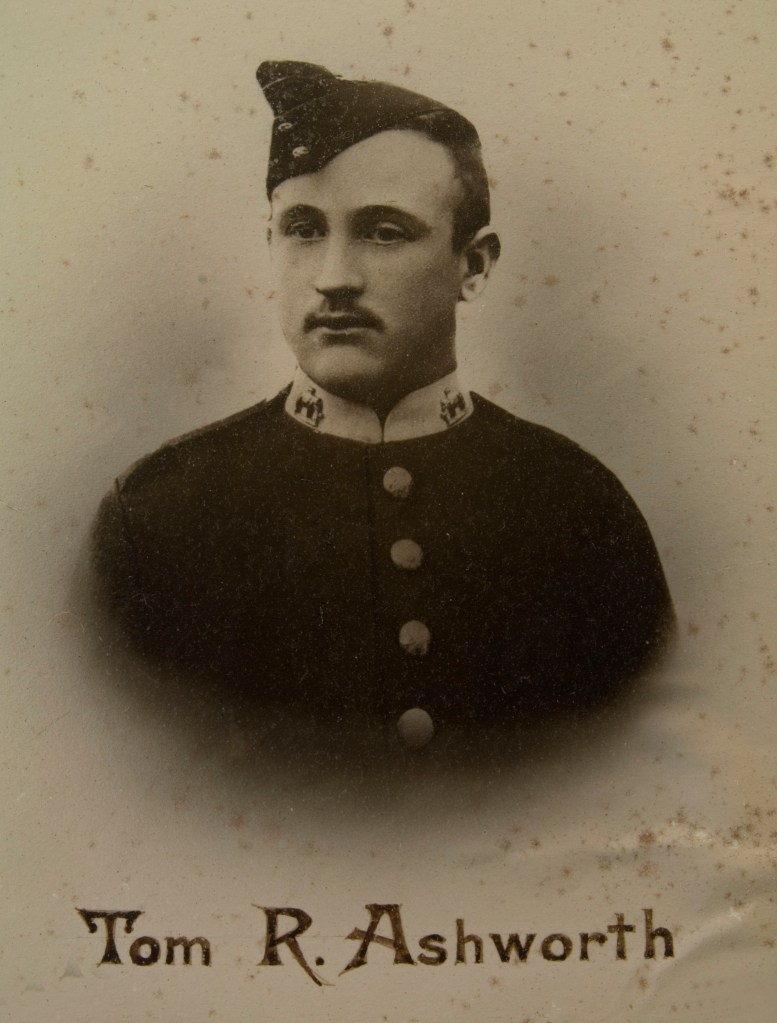
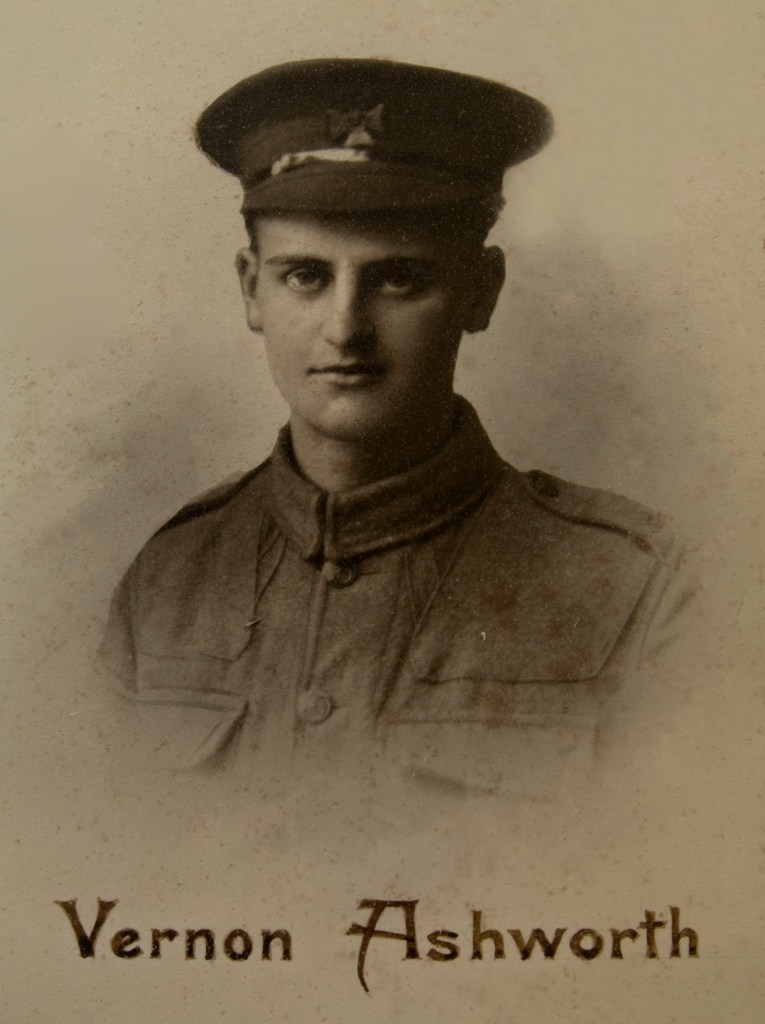
Vernon ASHWORTH
Rifleman, 18th Bn. King’s Royal Rifle Corps. Died 20.9.1917, age 19. Killed in action, commemorated at Tyne Cot Memorial, Belgium. Commemorated on family headstone, plot C664, and on Wainsgate war memorial. Son of Albert Richard Ashworth and brother of Raymond Ashworth (both choirmasters at Wainsgate).
Ernest Ashworth, who was killed in action in 1918, was his cousin.
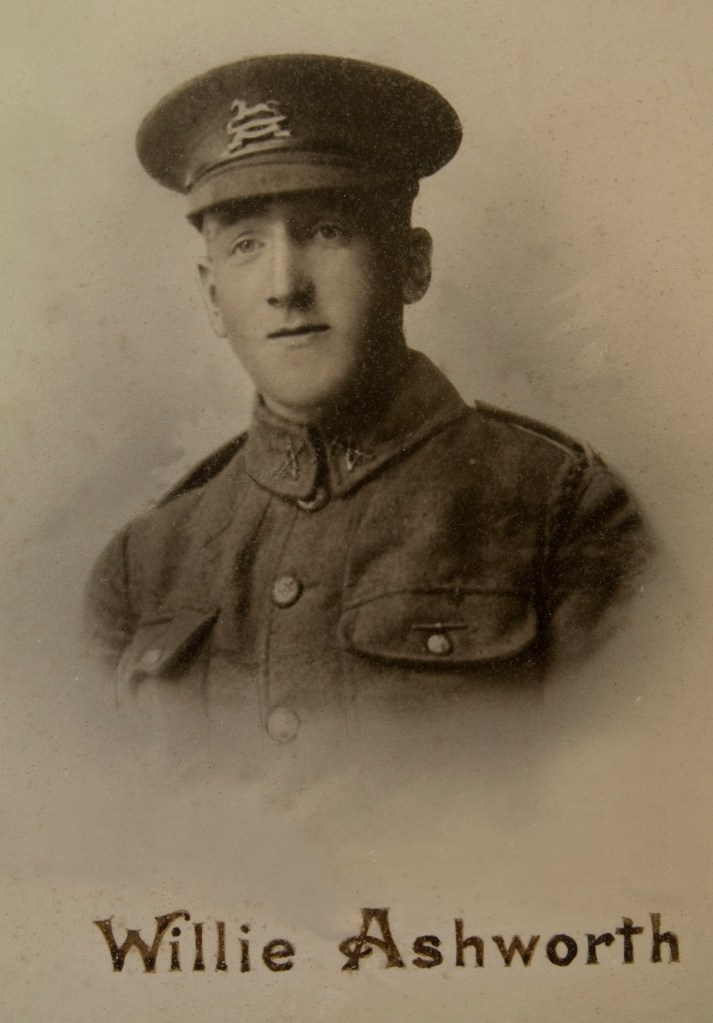
Willie ASHWORTH
Private, 10th Bn. West Yorkshire Regiment (Prince of Wales’s Own). Died 13.10.1918, age 22. Died of wounds, interred at Selridge Cemetery, France. Commemorated on family memorial, plot G684/685, and on Wainsgate war memorial.
John CRABTREE (1915-1942)
Trooper, 41st (Oldham) Royal Tank Regiment, Royal Armoured Corps. Died 28th October 1942, age 27. Died of wounds, interred at El Alamein War Cemetery, Egypt.
Commemorated on family headstone, plot E909, where his sister Minnie is buried, and on Wadsworth War Memorial, Smeakin Hill.
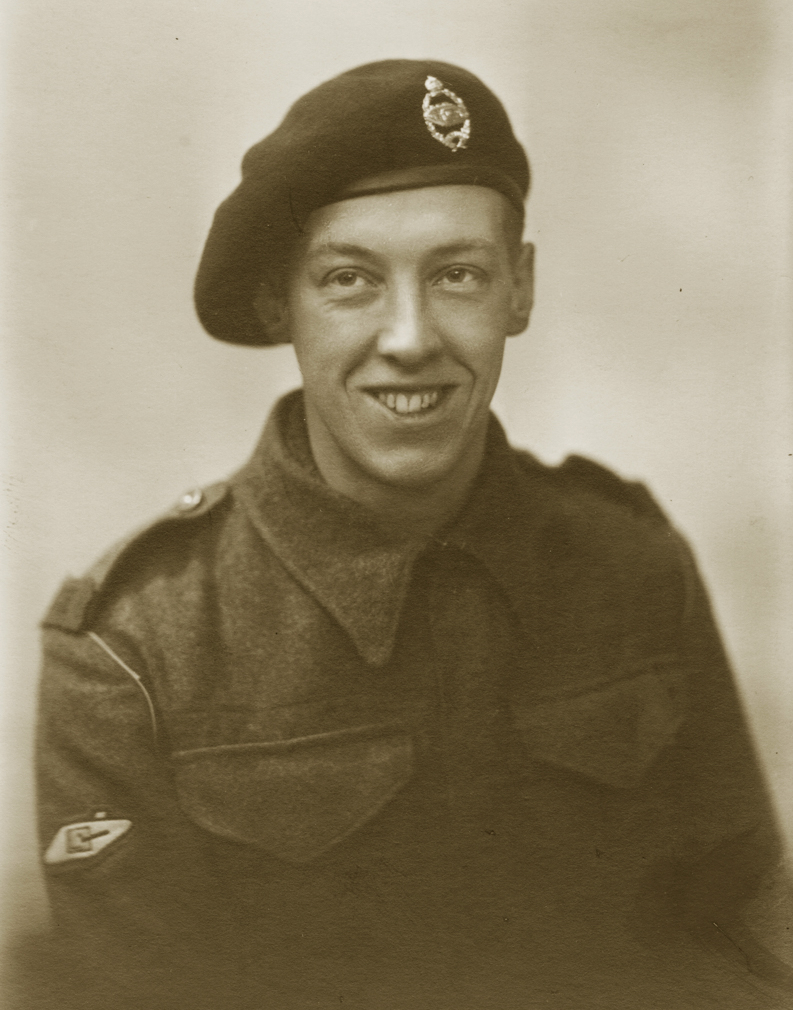
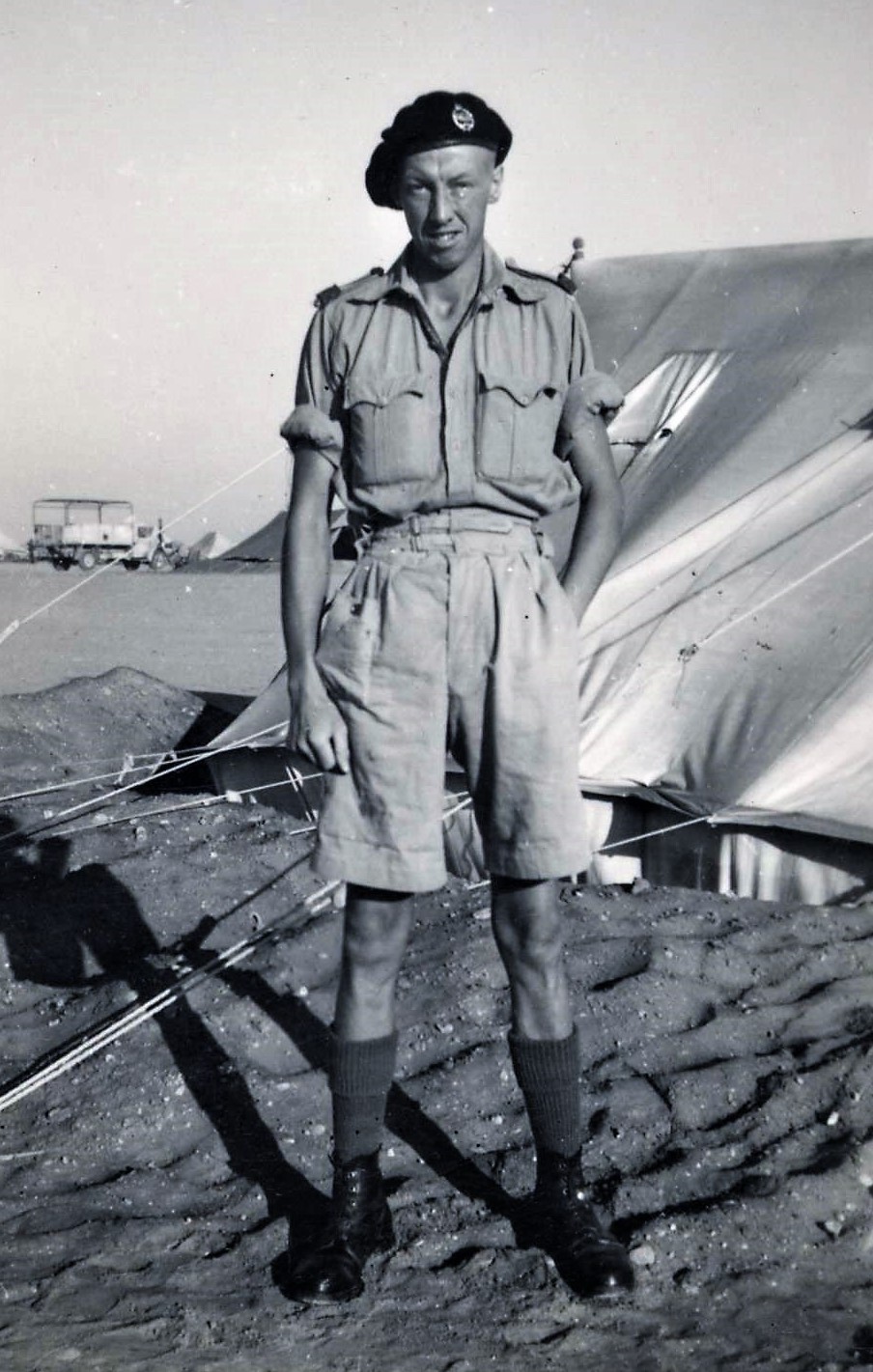
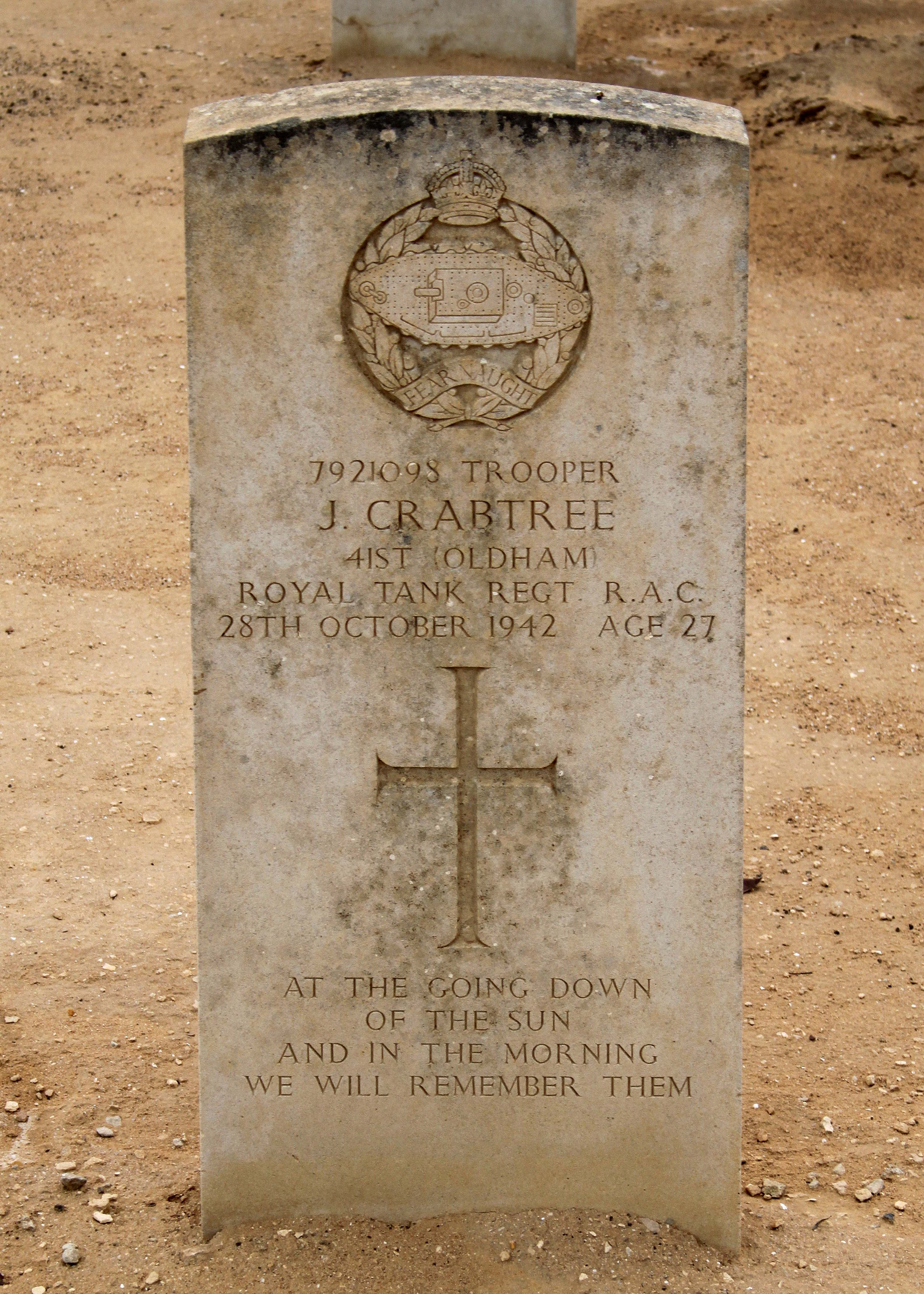
Photo of John Crabtree (left) from the Alice Longstaff Collection – Pennine Horizons Digital Archive. Photo of John Crabtree (centre) – Susan Wilkinson. Photo of CWGC headstone at El Alamein War cemetery by David Milborrow – The War Graves Photographic Project.
John Crabtree (known as Jack) was born on 30th March 1915, son of Arthur and Martha Crabtree. In 1939 he was living at Slack House Farm with his uncle Stephen Pickles, a dairy farmer, and his wife Mary Pickles. His older sister Minnie Crabtree, also living at Slack House Farm, had died of pulmonary tuberculosis in 1935 aged 23, and 19 year old John bought the burial plot at Wainsgate where she was buried and he was later commemorated. John was employed as a wool comber at Mitchell’s Mill, Old Town, and was a member of Wainsgate Tennis Club.
He married Olive Hamer in early 1940, and enlisted in the army later that year. After John’s death Olive married John Birkett in 1945, and is interred at Wainsgate with her second husband and other menbers of his family (plot E961).
John Crabtree was killed in the Second Battle of El Alamein – apparently shot and mortally wounded while getting out of his tank. He was initially buried at El Gharbaniyat Military Cemetery, and re-interred at El Alamein War Cemetery in December 1943.
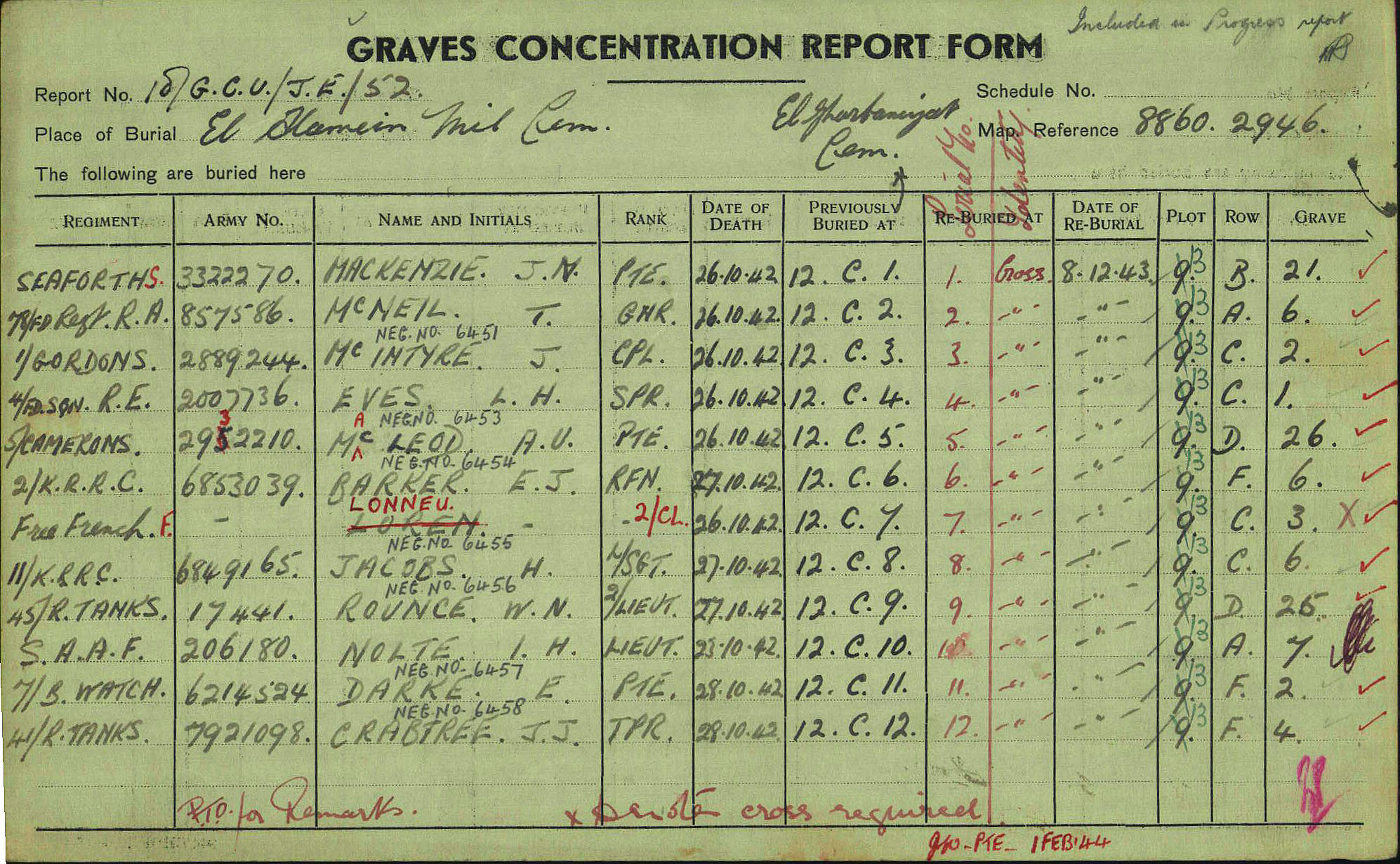

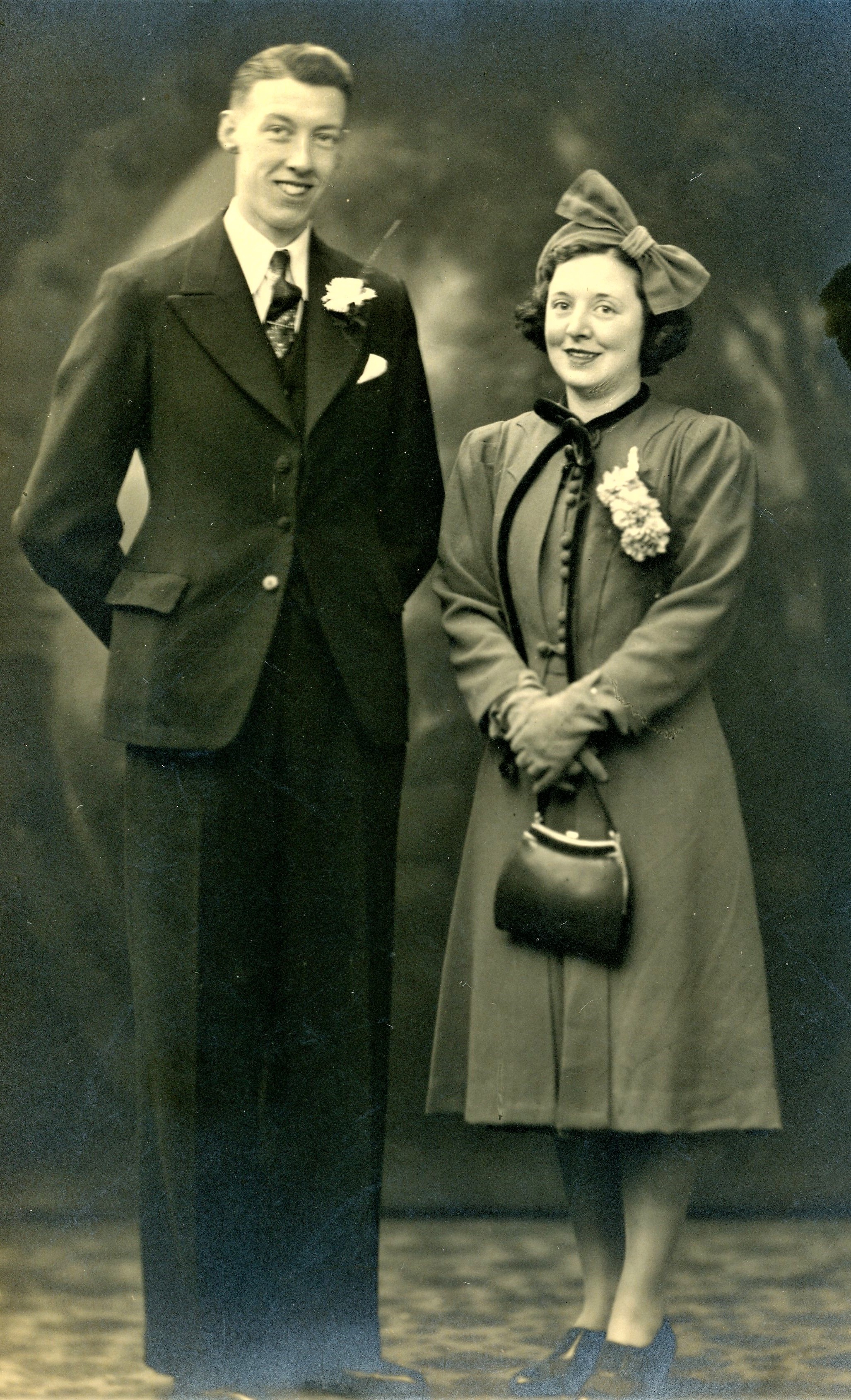
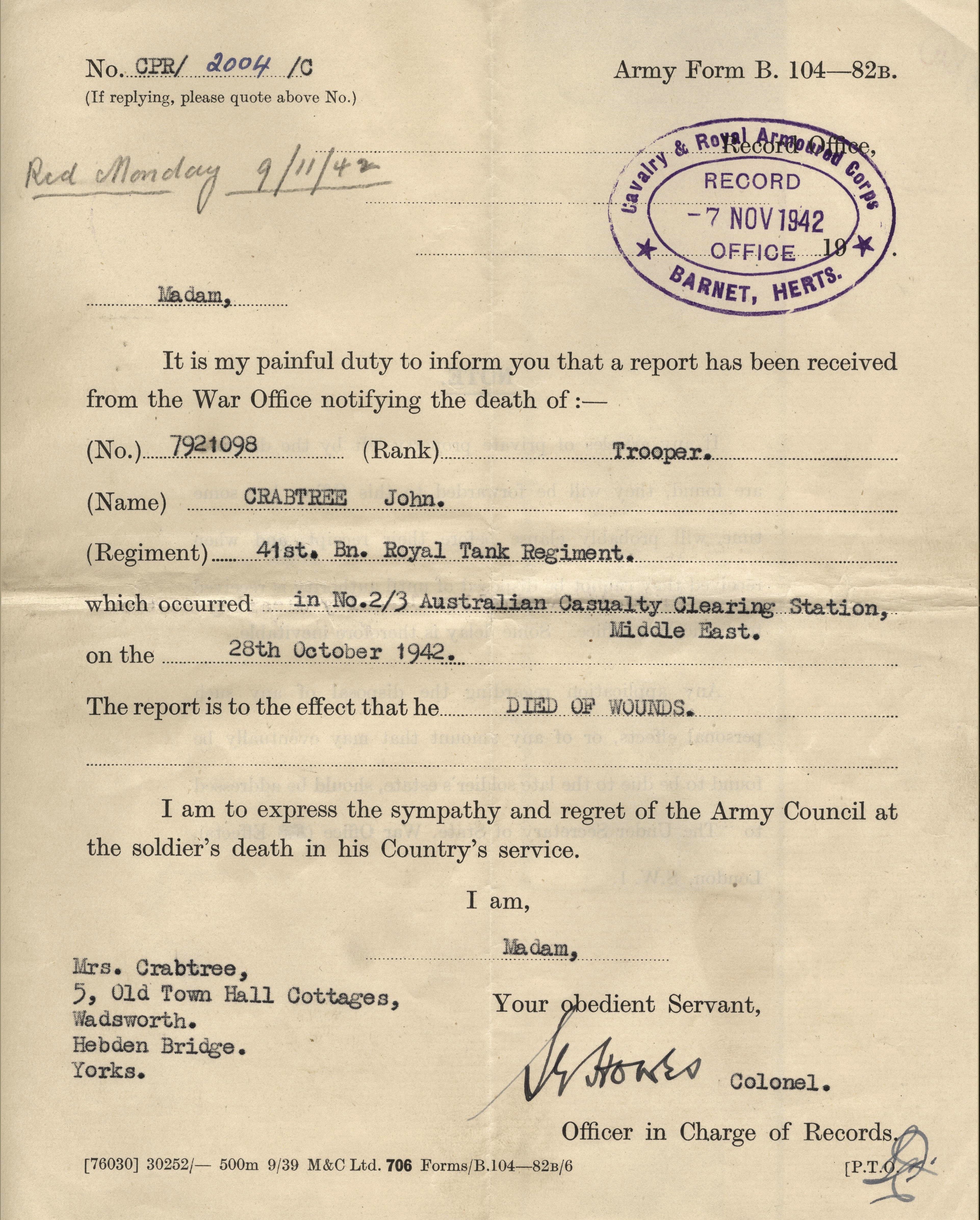
Thanks to Susan Wilkinson for providing information and images.
Henry William DEWHIRST
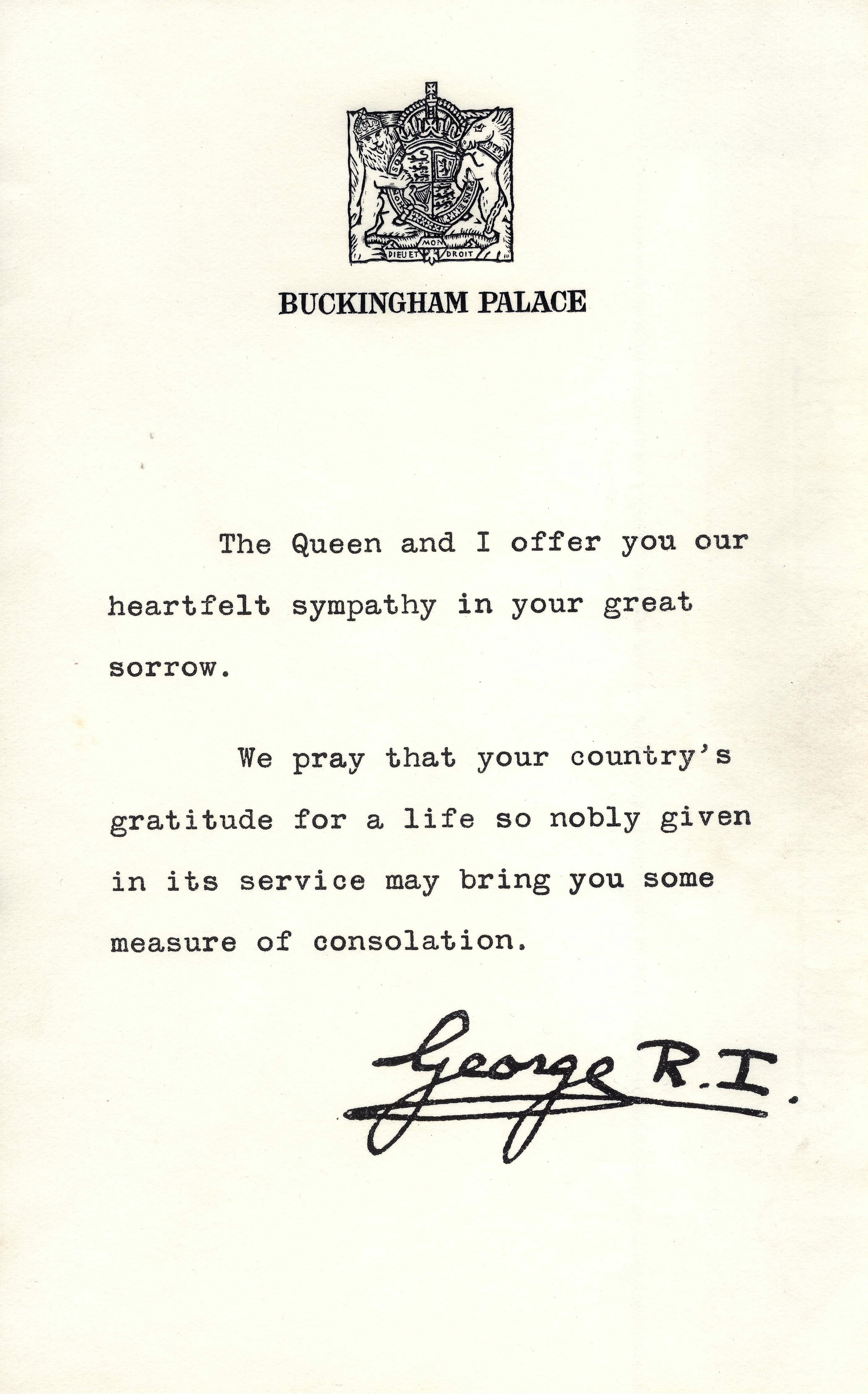
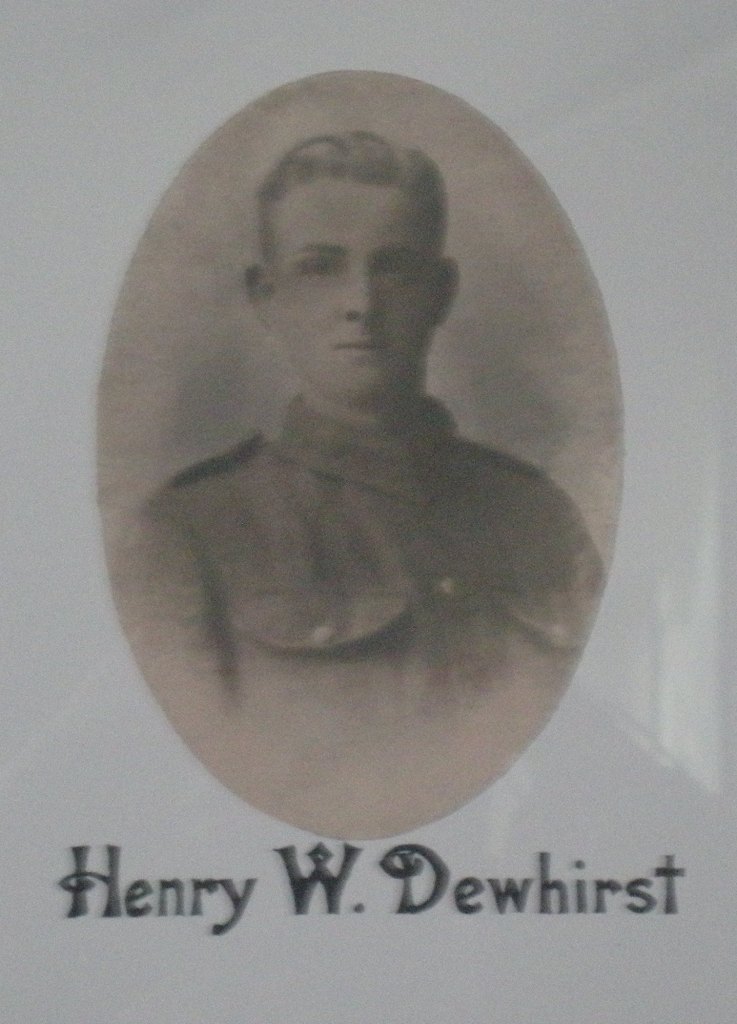
Private, 2nd/4th Bn. Duke of Wellington’s (West Riding Regiment). Died 5.3.1917, age 21. Died of wounds, interred at Dernancourt Communal Cemetery Extension, France. Commemorated on family headstone, plot B321a, and Wadsworth Methodist war memorial.
Frederick DUNKLEY (1880-1918)
Gunner, 124th Heavy Battery, Royal Garrison Artillery. Died 10.4.1918, age 37. Died of wounds, interred at Haverskerque Cemetery, France.
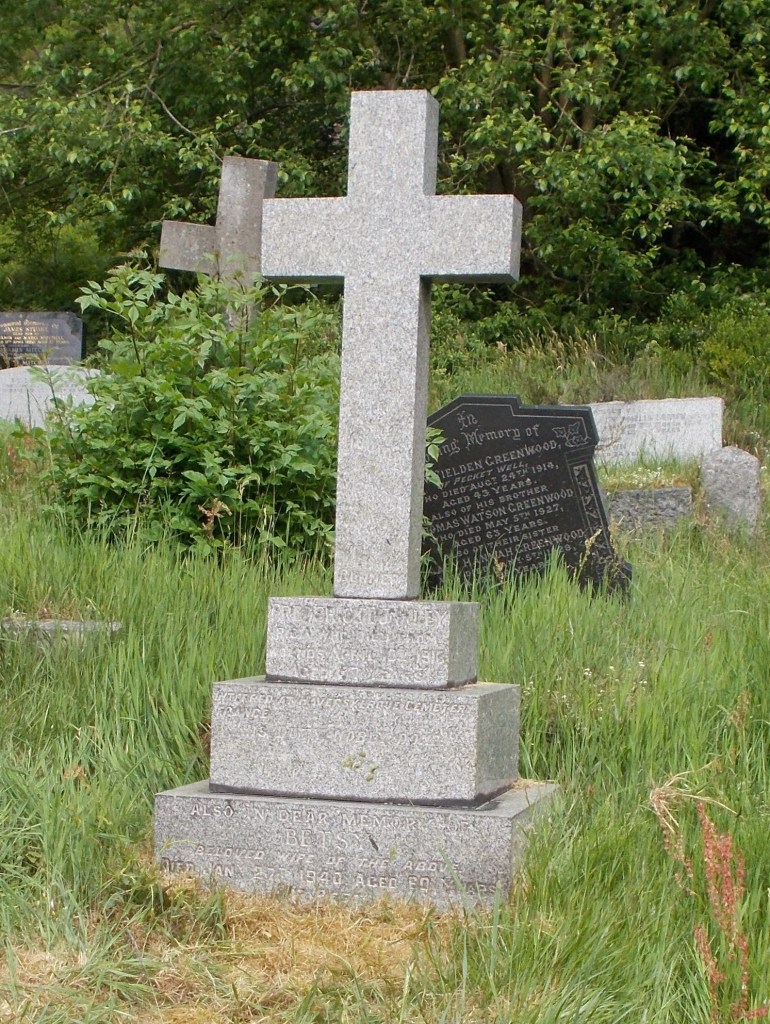
Commemorated on family memorial, plot F769 with his wife and youngest son, in Hebden Bridge Methodist Church Book of Remembrance and on Hebden Bridge AFC memorial (now lost).
Wounded in the right arm, died at No.33 Casualty Clearing Station.
Born in Wadsworth in 1880, Frederick Dunkley was the son of James Dunkley, a plasterer born in London and his second wife Hannah (born Parker). Hannah died in 1882 aged 31, and in 1887 James married his third wife, Sarah Spencer. Frederick married Betsy Sutcliffe in 1901, and the couple had two sons – Horace, born in 1902 and Walter, born in 1913. Before the war the family lived at 4, Rose Grove, Hebden Bridge, and Frederick worked as a stover at Lee Mill Dyeworks (some sources list his occupation as stoker, but stover is more likely). He played for Hebden Bridge Rugby Football Club and Salem Cricket Club, and was also a member of the local Fire Brigade. He enlisted in the Royal Garrison Artillery in March 1917, aged 36.
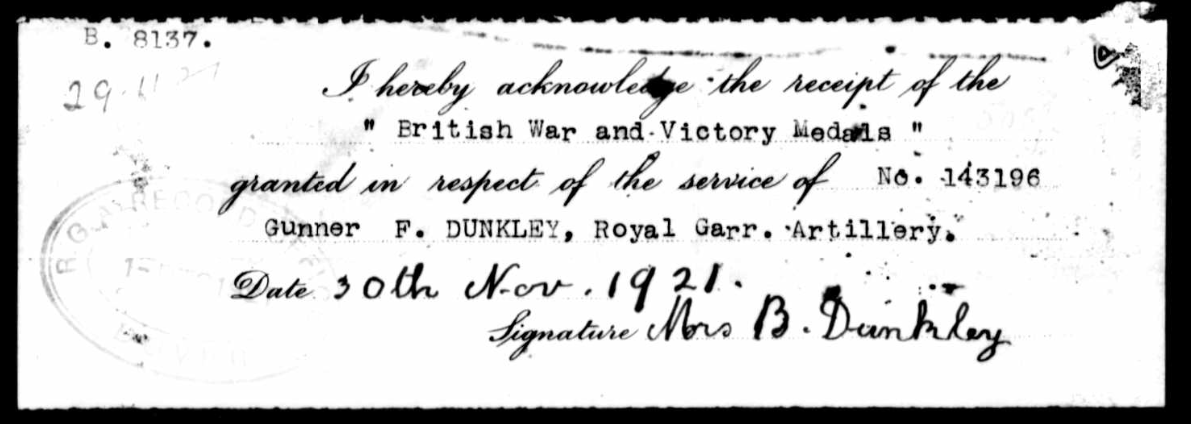
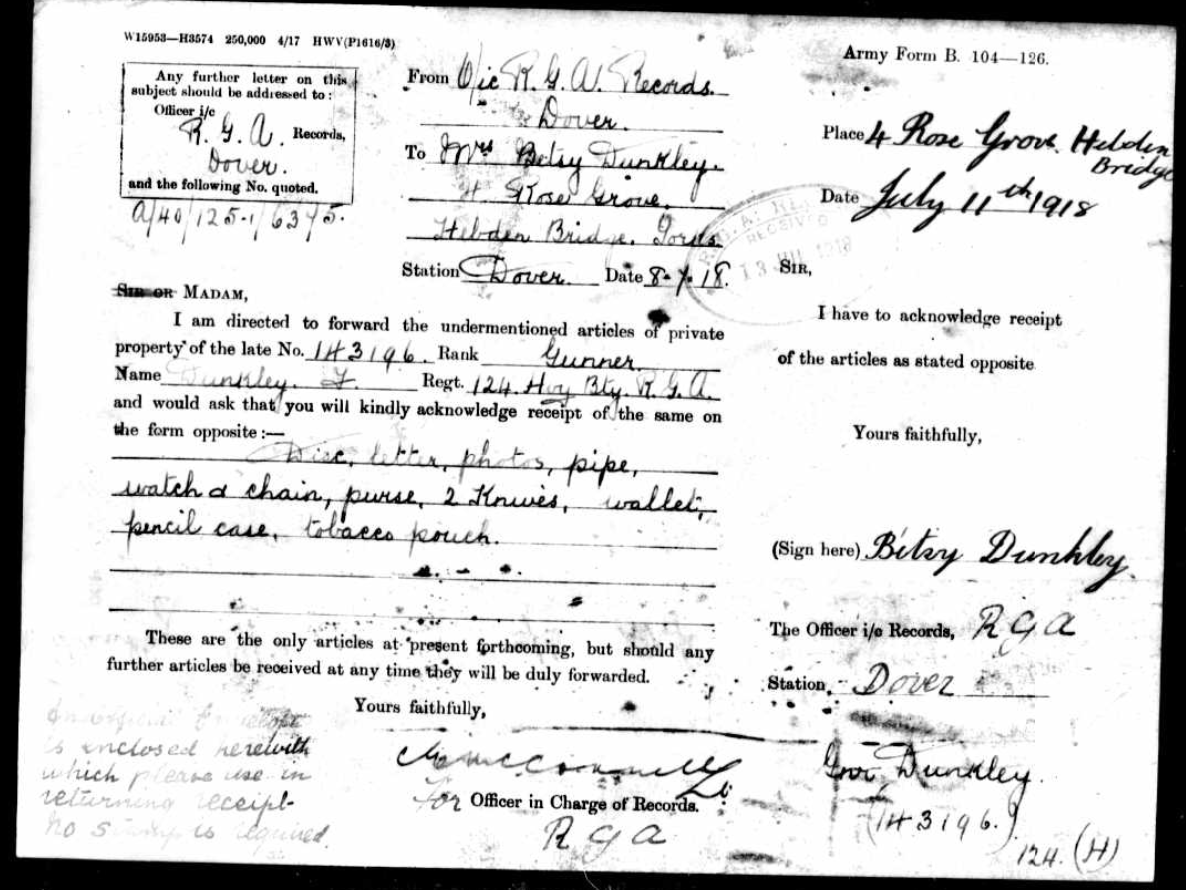
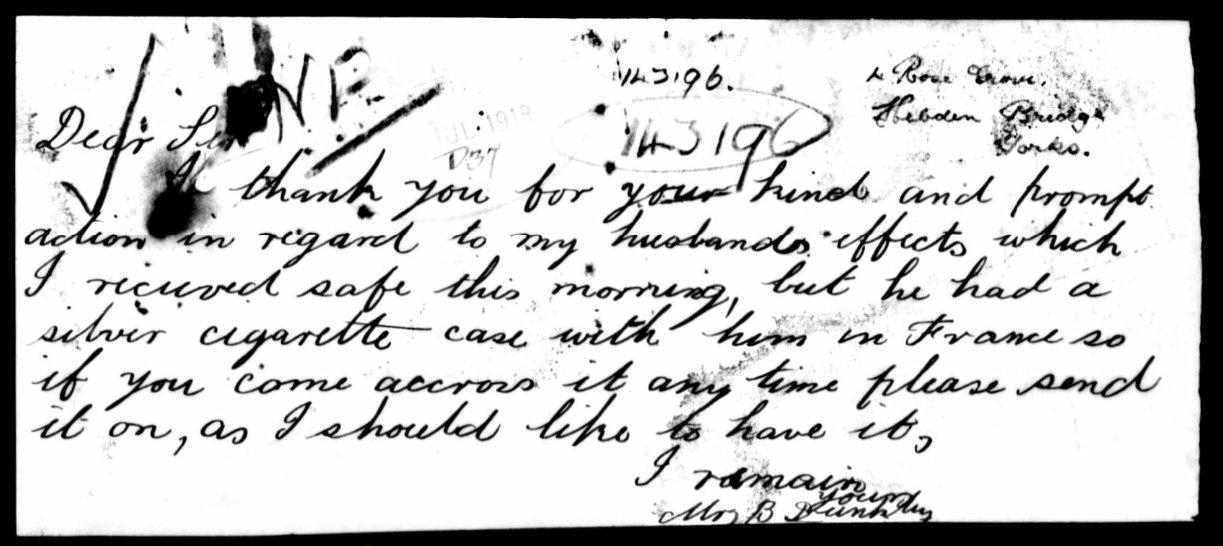
After Frederick’s death, Betsy was sent his personal possessions: Disc (identity tag), letter, photos, pipe, watch & chain, purse, two knives, wallet, pencil case and tobacco pouch. Her letter acknowledging their receipt pointed out that he also had a silver cigarette case when he went to France, which she would like to have. There is no record of whether the cigarette case was ever found and returned to her.
His memorial service was held at Salem Wesleyan Chapel. Betsy died in 1940 aged 60, and Walter died in 1943 aged 30: both are buried in plot F769 which Betsy bought in 1920, and Frederick is commemorated on the memorial. Horace died in 1977 aged 75: he is believed to have been living in Filey and was cremated, but there is no record of where his ashes were interred or scattered. Both Walter and Horace became Master Tailors, and Horace later became the proprietor of the Southdown Hotel, Filey.
Frederick’s biological mother Hannah Dunkley, grandparents James and Mary Ann Dunkley and their daughter Mary Ann Clack are also buried at Wainsgate in plot B107a.
John Edward GIBSON
Private, 22nd Field Ambulance, Royal Army Medical Corps. Died 27.10.1917, age 20. Killed in action, commemorated at Tyne Cot Memorial, Belgium. Commemorated on family headstone, plot B299a, and Hope Chapel war memorial. Killed while bringing in wounded under shellfire at Ypres.
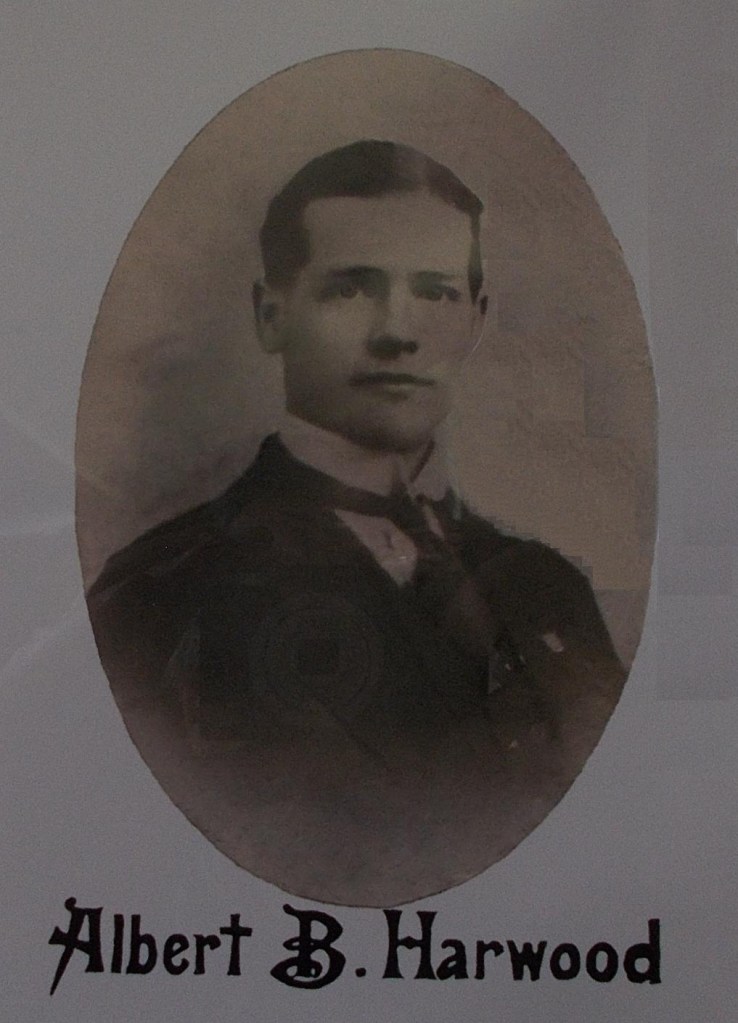
Albert Barrett HARWOOD (1893-1917)
Junior Wireless Operator, Mercantile Marine. Died 15th April 1917, age 23. Lost at sea. Commemorated at Tower Hill Mercantile Marine Memorial, London.
Commemorated on family headstone, plot J751 (where his parents and brother are buried), Old Town Wesleyan Chapel war memorial and photograph and on Wadsworth War Memorial, Smeakin Hill.
Killed when the troop ship SS Arcadian was sunk by a U-boat in the Mediterranean.
Albert was one of the three children of Samuel and Mary Jane Harwood, who lived at Chiserley Terrace and later Coronation Terrace, Old Town. He attended Old Town Wesleyan Chapel and Sunday School, and worked as a clerk at Acre Mill and later at R.B Brown & Son of Hangingroyd, Hebden Bridge. He was engaged to a Miss Scholey. Albert improved his education by attending technical clases in shorthand, typing, book keeping and accountancy, and he and his younger brother Frank Spencer Harwood received six months wireless training in Manchester before joining the Mercantile Marine as Wireless Operators.
The two brothers both started their service in the Mercantile Marine in June 1916, and Albert’s service, brief as it was, took him all over the world: Port Said, Suez, Aden, Mombassa, Durban, Barbados, Trinidad, Colon, Marseilles, Gibraltar and Bombay. He spent his 23rd birthday in November 1916 in Zanzibar. He enjoyed visits ashore, and sent home letters describing the places he had visited.

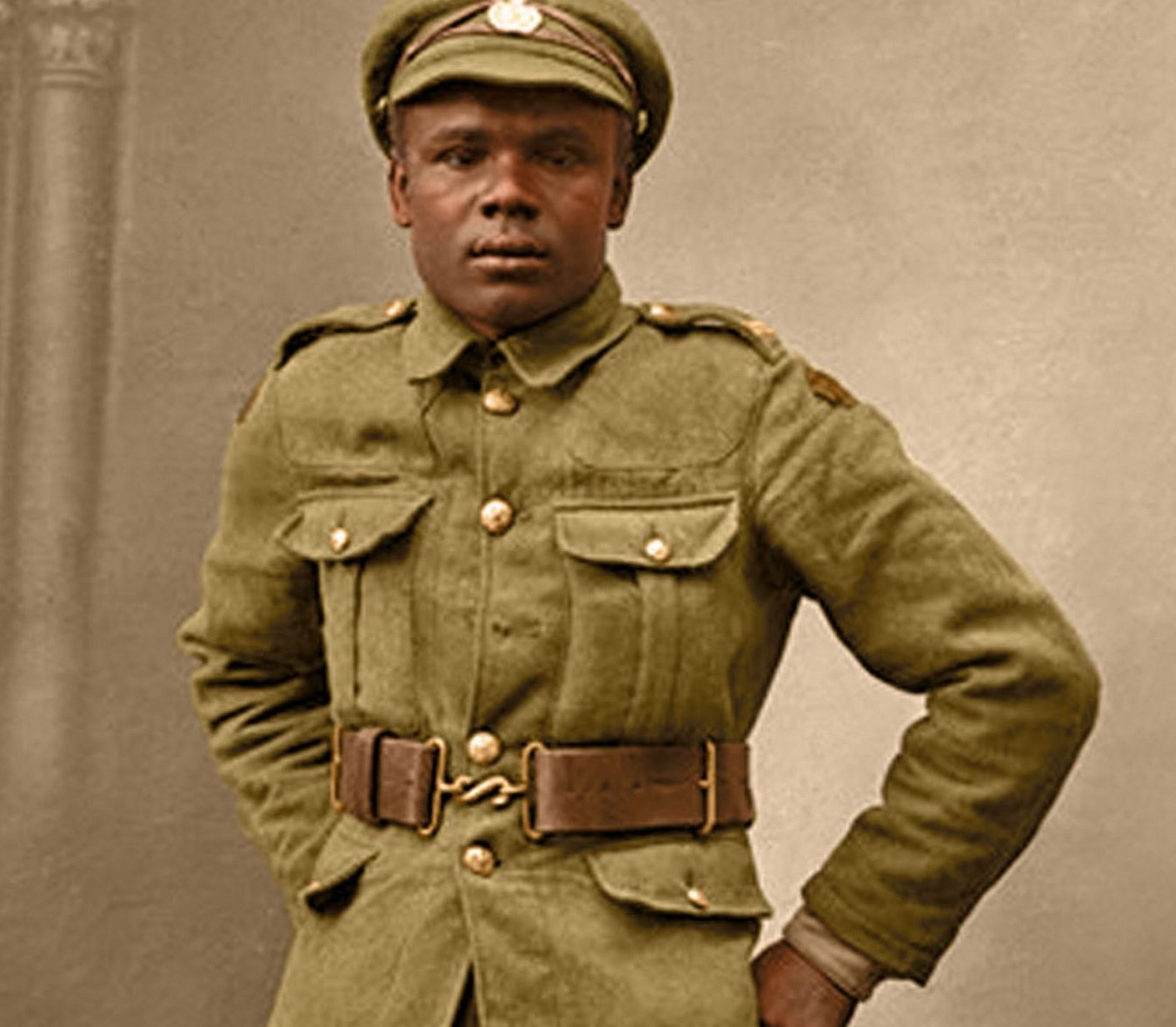
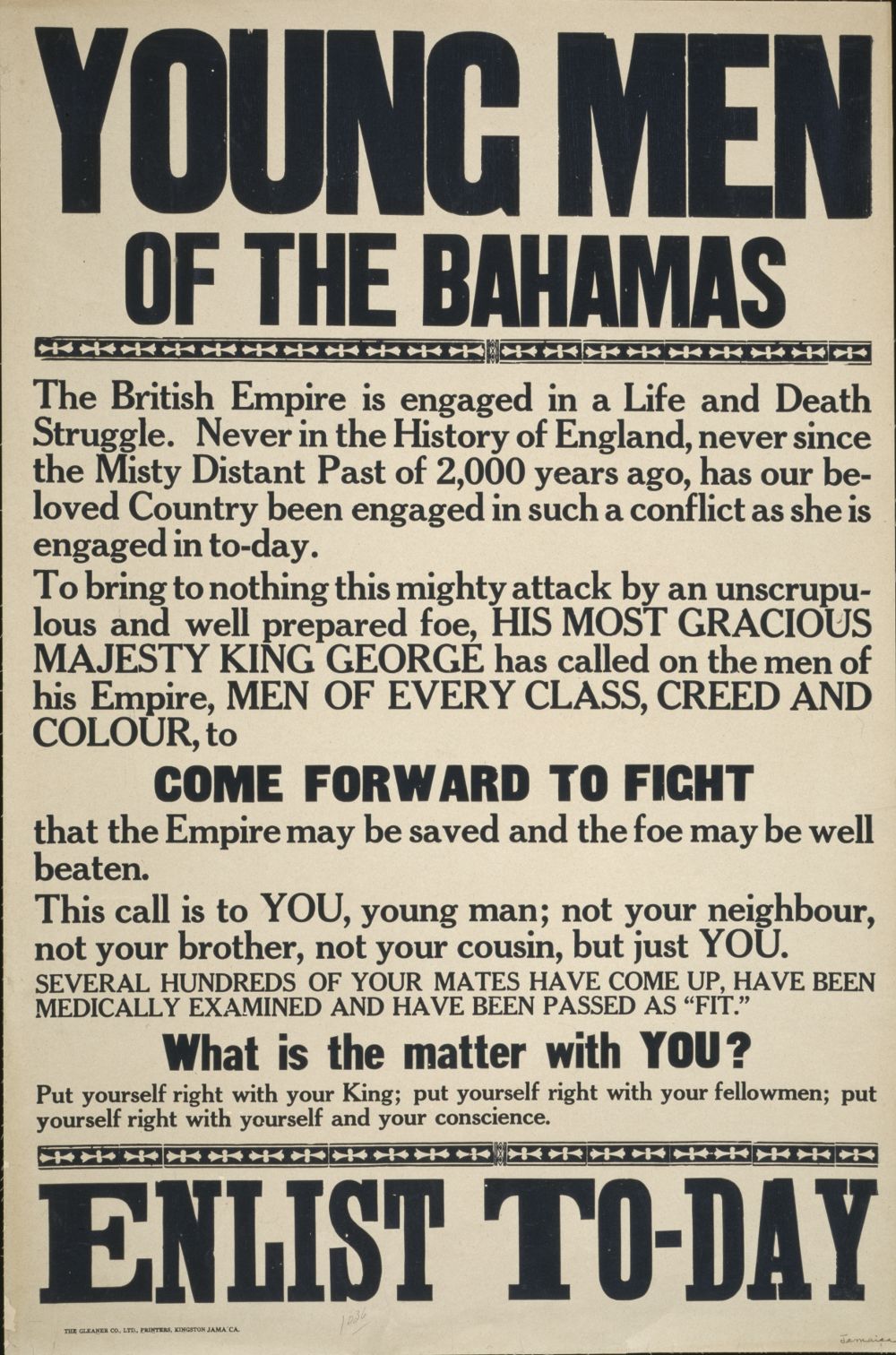
The British West Indies Regiment was a unit of the British Army during the First World War, formed from volunteers from British colonies in the West Indies. Albert travelled to Barbados and Trinidad on the troopship SS Arcadian, which was probably taking West Indian troops to fight in Europe.
Frank Harwood was a Wireless Operator on a hospital ship that struck a mine in October 1916 while collecting wounded men from France: several crew were killed but Frank survived. Albert heard of the incident while in the East, and was all too aware of the dangers they faced. In one letter home he said ‘I do not suppose I shall be long before I am in the same fix.’
Albert was a Junior Wireless Operator on the troopship SS Arcadian when it was sunk by a torpedo from the German submarine UC74 in the Mediterranean, close to the island of Milos, en route from Thessaloniki to Alexandria. The ship sank within six minutes of being hit, and of the 1,335 troops and crew on board 279 lives were lost, including 35 crew members. The survivors were rescued by an escorting Japanese Navy destroyer (Japan fought with the Allies in WW1) and the Q-ship HMS Redbreast. Among those who died were the the eminent bacteriologist Sir Marc Armand Ruffer, who was returning to Alexandria after advising on the control of an epidemic among troops based at Thessaloniki.
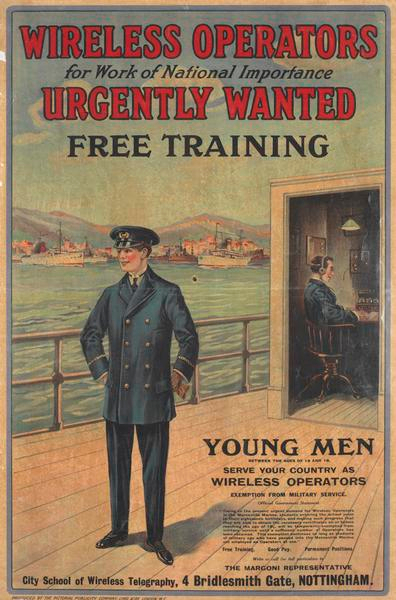

SS Arcadian, originally called SS Ortona, was built at Barrow-in-Furness in 1899 for the Pacific Steam Navigation Company, and was bought by the Royal Mail Steam Packet Company in 1906. In 1910 she was rebuilt by Harland & Wolff in Belfast as a cruise ship (8,939 gross tons, 320 First Class passengers) – the largest dedicated cruise ship in the world at that time – and renamed Arcadian.
When Samuel and Mary Jane Harwood received a message from the Marconi Company informing them that their son was dead, they had no idea whether it was Albert or Frank:
‘It is with the deepest regret that we have to advise you that the vessel on which your son was serving has been sunk, and that as a result he has unfortunately lost his life. At present it is impossible to give you any particulars of this sad occurence, but should we be in a position at a later date we shall not fail to advise you. We wish to convey our sincere sympathy in the loss of one who carried out his duties so satisfactorily and who was so well loved by all his fellow officers with whom he came into contact. Although your loss is irreparable, we think that notwithstanding the comfort may be slight, you will be proud to feel that your son gave his life for his country equally as bravely as the number of our young men who have given their lives in actual combatant services.’
A later message confirmed that it was Albert who had died, aged 23. Frank survived the war and died in 1982, aged 85. Samuel Harwood died in 1938 aged 77, and Mary Jane died in 1941 aged 80.
* * *
TOWER HILL MEMORIAL

The Mercantile Marine Memorial in Trinity Square Gardens, Tower Hill, was commissioned by the Imperial War Graves Commission, designed by Sir Edwin Lutyens and unveiled by Queen Mary in 1928. The memorial is a vaulted corridor in Portland stone reminiscent of a Doric temple and similar to Lutyens’ structures in cemeteries on the Western Front. The walls are clad with bronze panels which bear the names of the missing. The dedication, in bronze letters on the south face of the attic reads:
1914 – 1918
TO THE GLORY OF GOD
AND TO THE HONOUR OF
TWELVE THOUSAND
OF THE MERCHANT NAVY
AND FISHING FLEETS
WHO HAVE NO GRAVE BUT THE SEA
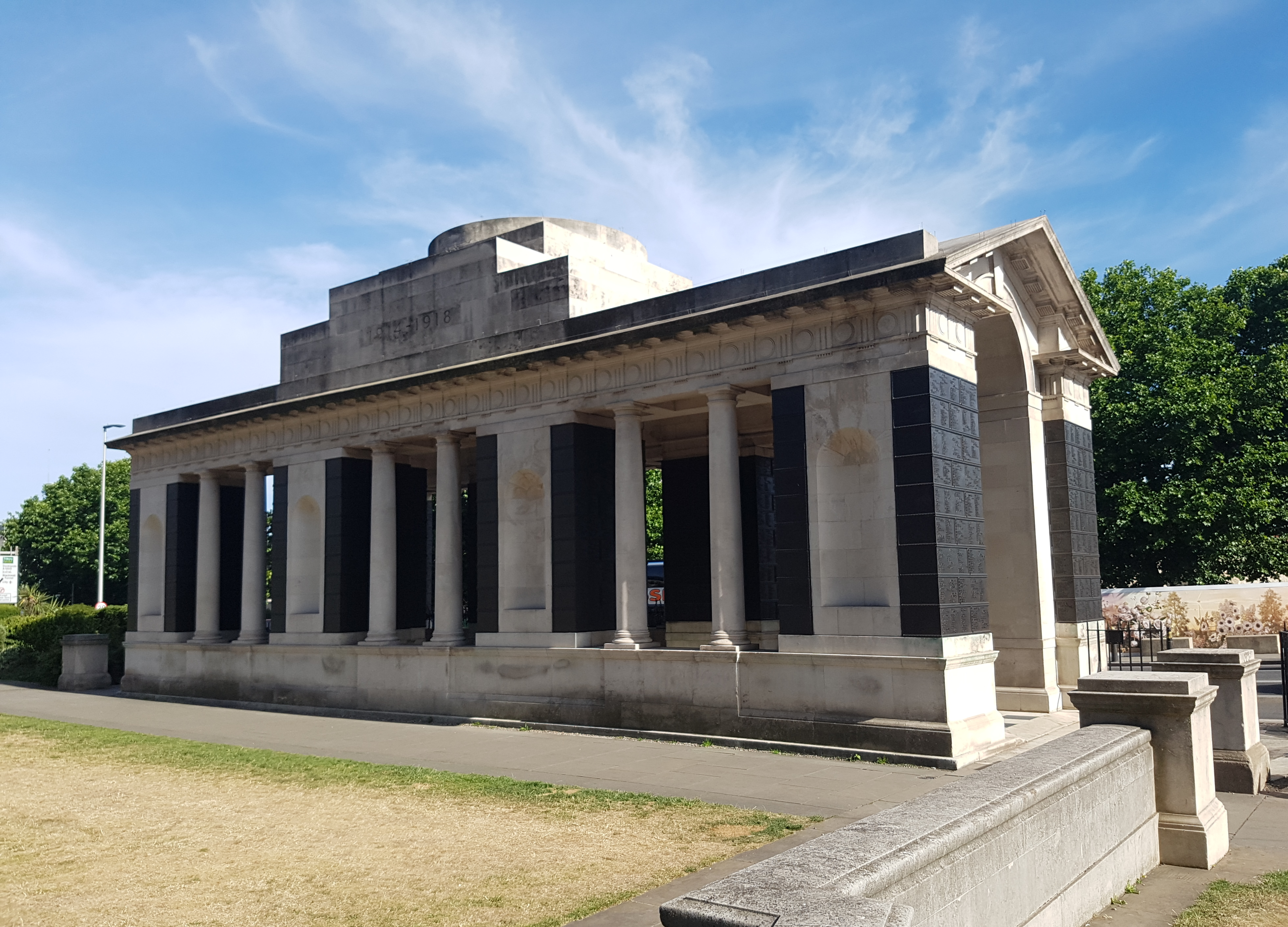

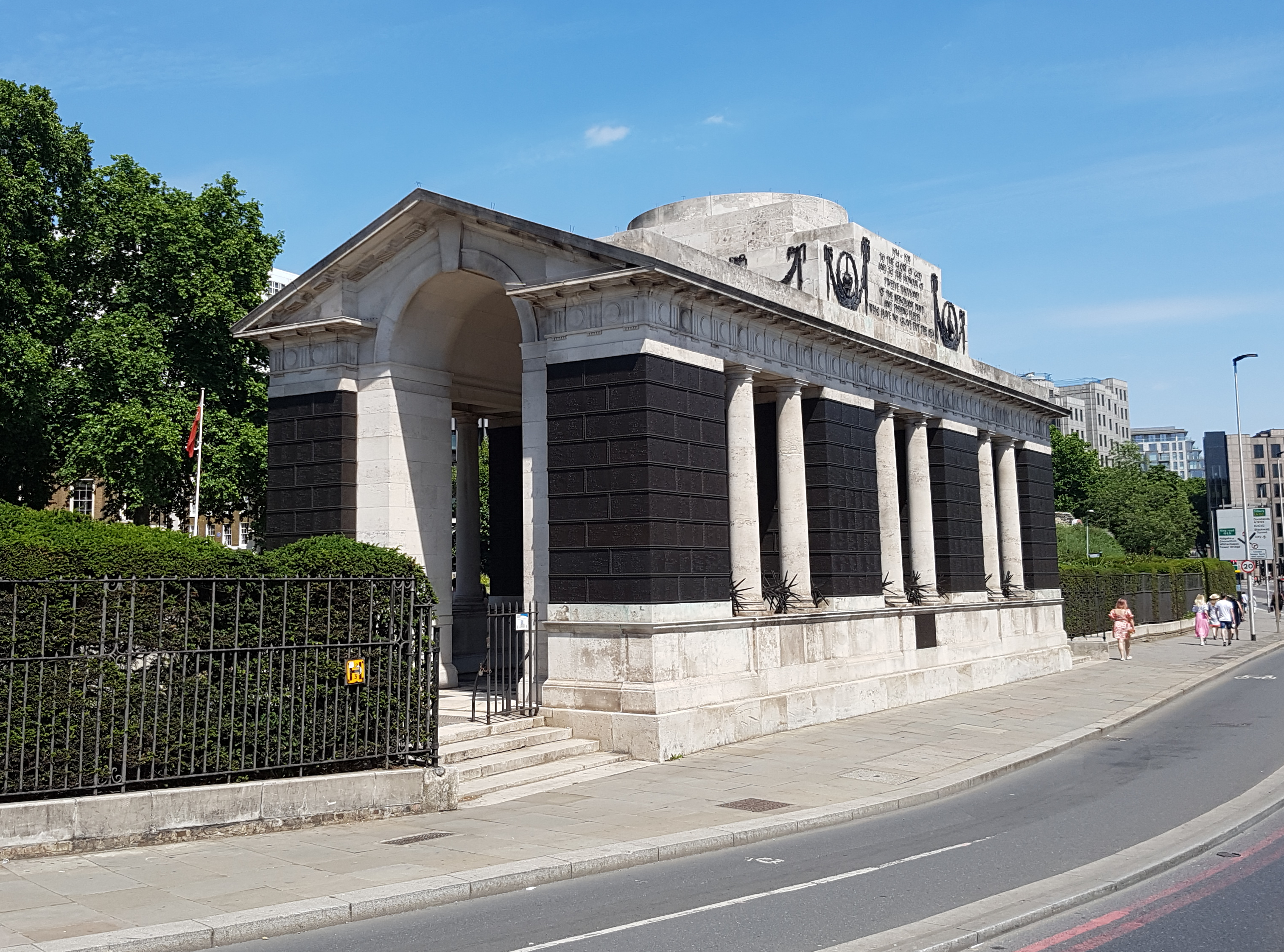
Photographs of Tower Hill memorial by Steve Pilcher
The IWGC sought advice on the form of the memorial from the seafarers’ unions, who consistently requested a memorial in the form of a home for aged seamen or similar, but the commission was set against functional memorials in the belief that they became associated more with their function than with commemoration. It rejected the request, overruling its own advisory committee in doing so, on the grounds that its charter did not allow it to fund the ongoing costs of an institution. It insisted that merchant seamen would be commemorated on a monument.
The site at Tower Hill also includes a memorial, in the form of a sunken garden, commemorating 24,000 of the 32,000 merchant seamen and men of the fishing fleets who lost their lives during the Second World War.
A smaller memorial to members of the Merchant Navy and Royal Fleet Auxiliary who were killed in the 1982 Falklands War was added in 2005.
The sunken garden contains bronze panels engraved with the names of those commemorated. It was designed by Sir Edward Maufe and unveiled by Queen Elizabeth II on 5th November 1955.
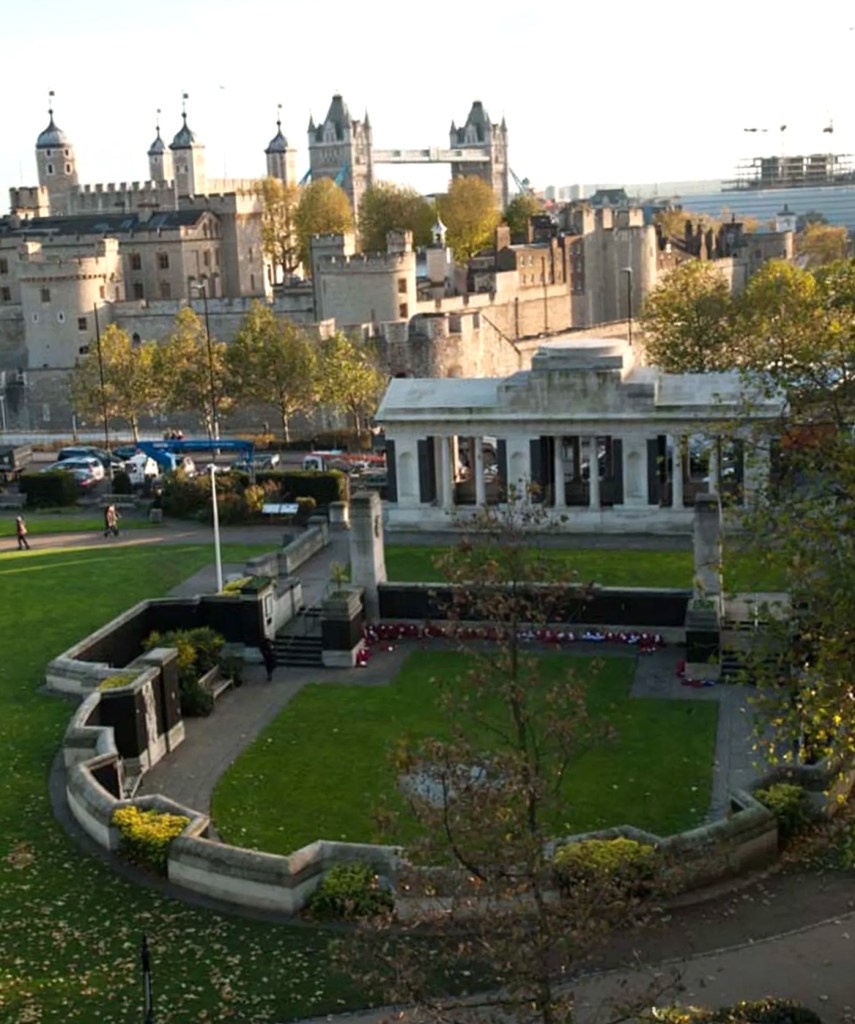
Lutyens’ original design was for a massive arch (reminiscent of the Thiepval Memorial, which he was designing for the IWGC at around the same time) at Temple Steps on the bank of the Thames, but this was rejected on the advice of the Royal Fine Arts Commission. Lutyens was furious, feeling the merchant seamen had been relegated to “some hole in the corner because they happened to be low in social status”.
* * *

Fred HARWOOD
Gunner, V.32 Heavy Trench Mortar Battery, Royal Field Artillery.Died 10.7.1917, age 24. Killed in action, interred at Coxyde Military Cemetery, Belgium. Commemorated on family memorial, plot F761, and Hope Chapel war memorial.
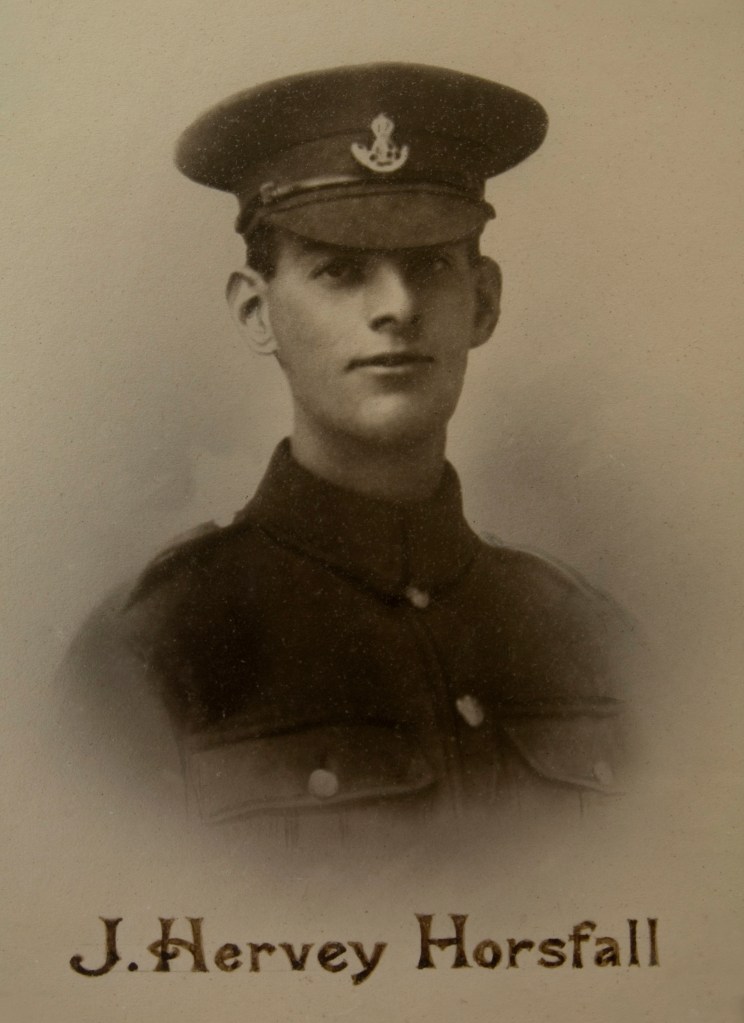
James Hervey HORSFALL
Private, 2nd Bn. Duke of Wellington’s (West Riding Regiment). Died 3.5.1917, age 27. Reported missing, commemorated at Arras Memorial, France. Commemorated on family headstone, plot B1174, and on the Wainsgate war memorial. His obituary records that he was killed in a bombing action in which he showed such bravery as to be recommended for the Military Medal.
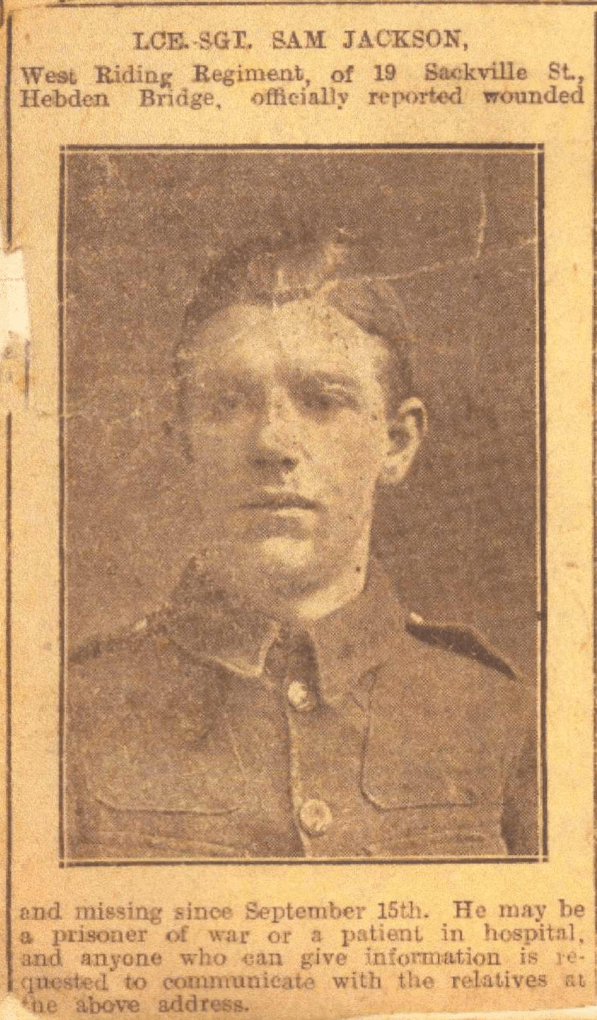
Sam JACKSON
Lance Serjeant, 1st/4th Bn. Duke of Wellington’s (West Riding Regiment). Died 3.9.1916, age 26. Reported missing, commemorated at Mill Road Cemetery, Thiepval, France. Commemorated on family headstone, plot B1177, together with his brother Wilbert who died in London in 1915.
The text of the newspaper cutting says that Sam had been missing since September 15th – presumably this was in 1915 (he enlisted in August 1914 and went to the front in April 1915).
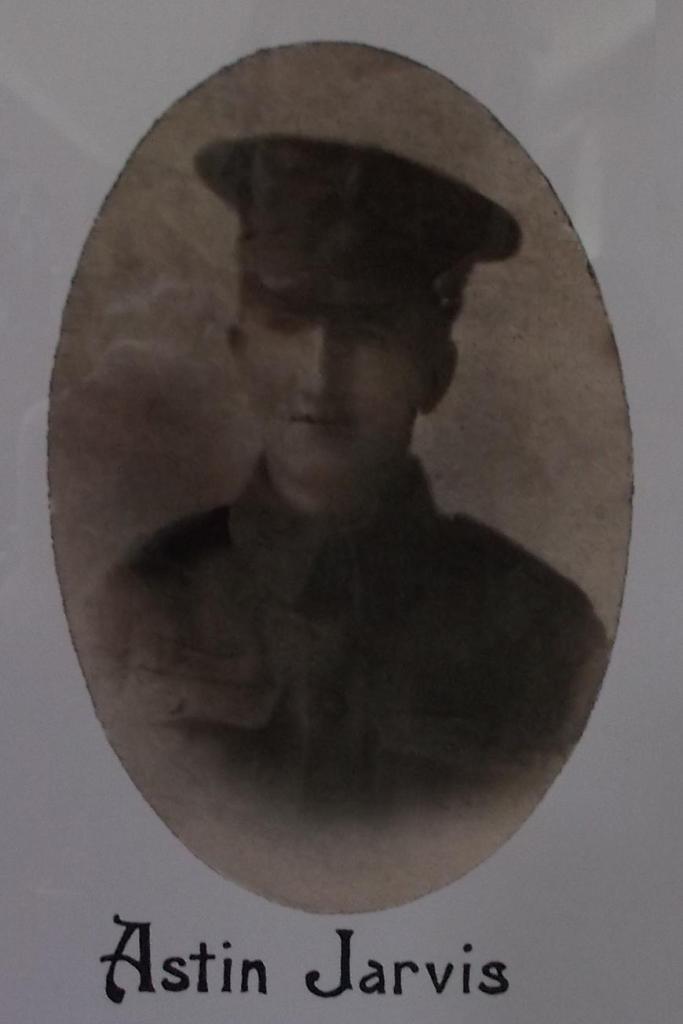
Astin JARVIS
Rifleman, 20th Bn. King’s Royal Rifle Corps. Died 10.4.1917, age 25. Died of wounds, interred at Duisans British Cemetery, Etrun, France. Commemorated on family headstone, plot F825, Wadsworth Methodist war memorial and Hope Chapel war memorial.
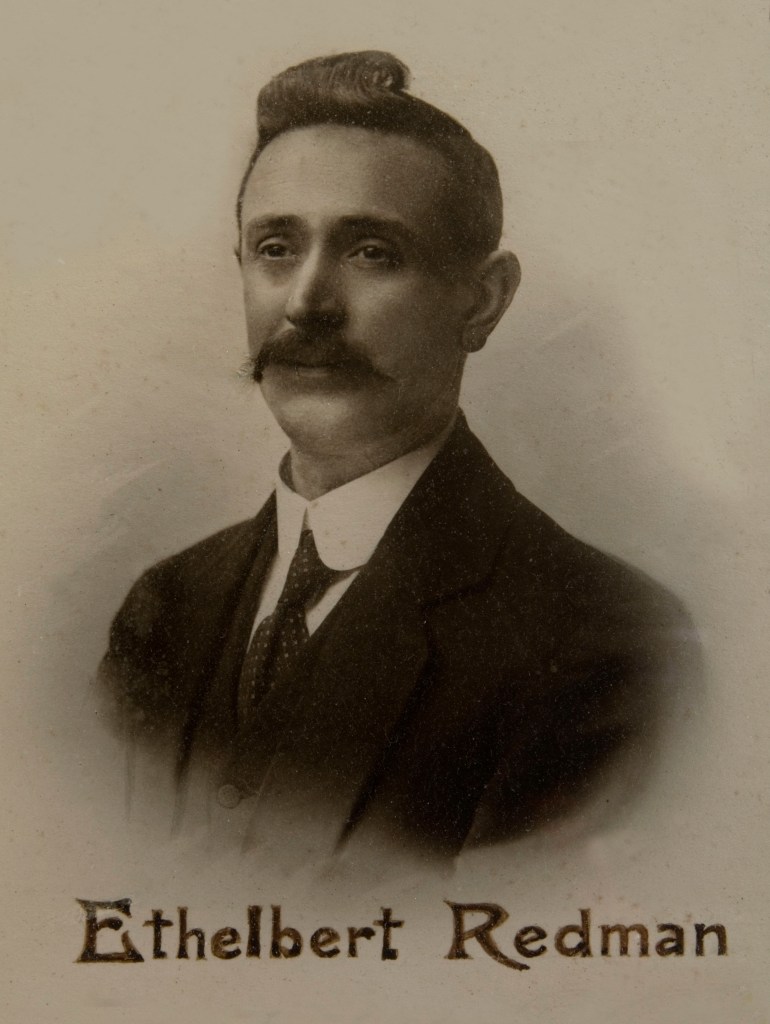
Ethelbert REDMAN
Private, 1st/7th Bn. Duke of Wellington’s (West Riding Regiment). Died 10.3.1918, age 37. Died of wounds, interred at Lijssenthoek Military Cemetery, Belgium. Commemorated on his wife’s family headstone, plot B36a/37a, and on the Wainsgate war memorial.
Fred SOUTHWELL
Private, 9th Bn. Duke of Wellington’s (West Riding Regiment). Died 25.8.1918, age 27. Died of wounds, interred at Mill Road Cemetery, Thiepval, France. Commemorated on family headstone, plot F759, together with his brother Willie who was killed in Belgium in 1917. Commemorated on Wadsworth Methodist war memorial.

Willie SOUTHWELL
Private, 9th Bn. King’s Own Yorkshire Light Infantry. Died 4.10.1917, age 20. Killed in action, commemorated at Bedford House Cemetery, Belgium. Commemorated on family headstone, plot F759, together with his brother Fred who was killed in France in 1918.
George SOWDEN
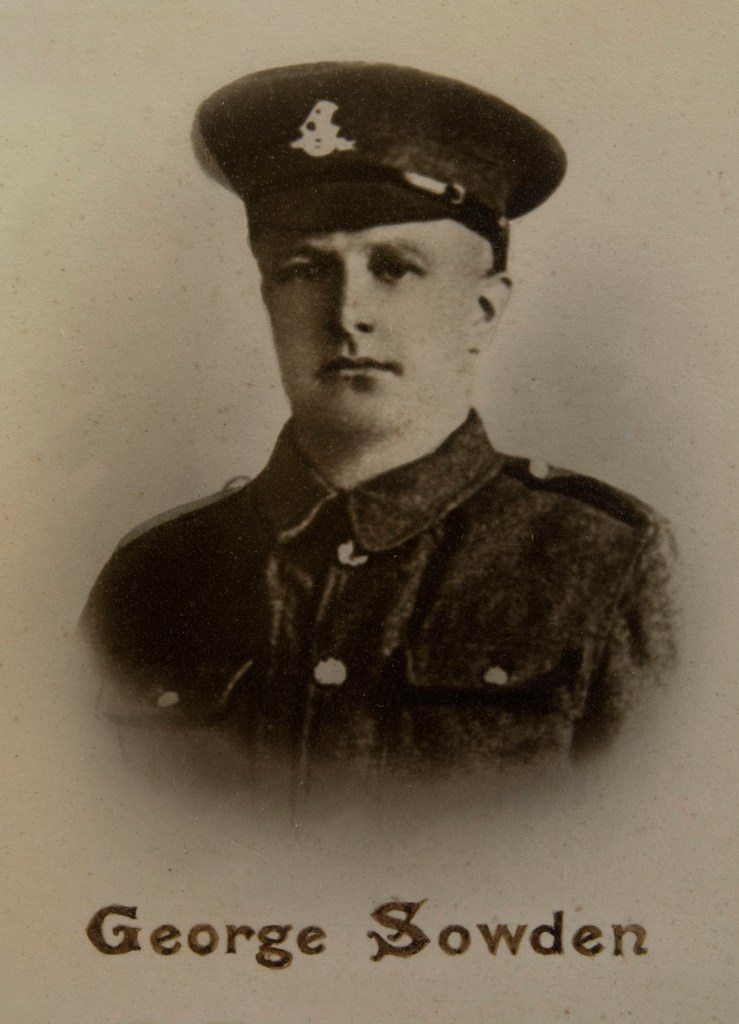
Private, 2nd Bn. Duke of Wellington’s (West Riding Regiment). Died 10.4.1917, age 39. Died of wounds, interred at Duisans British Cemetery, Etrun, France. Commemorated on family headstone, plot B25a, together with his brother James who was killed in Belgium in 1915. Commemorated on Wainsgate war memorial.
James SOWDEN
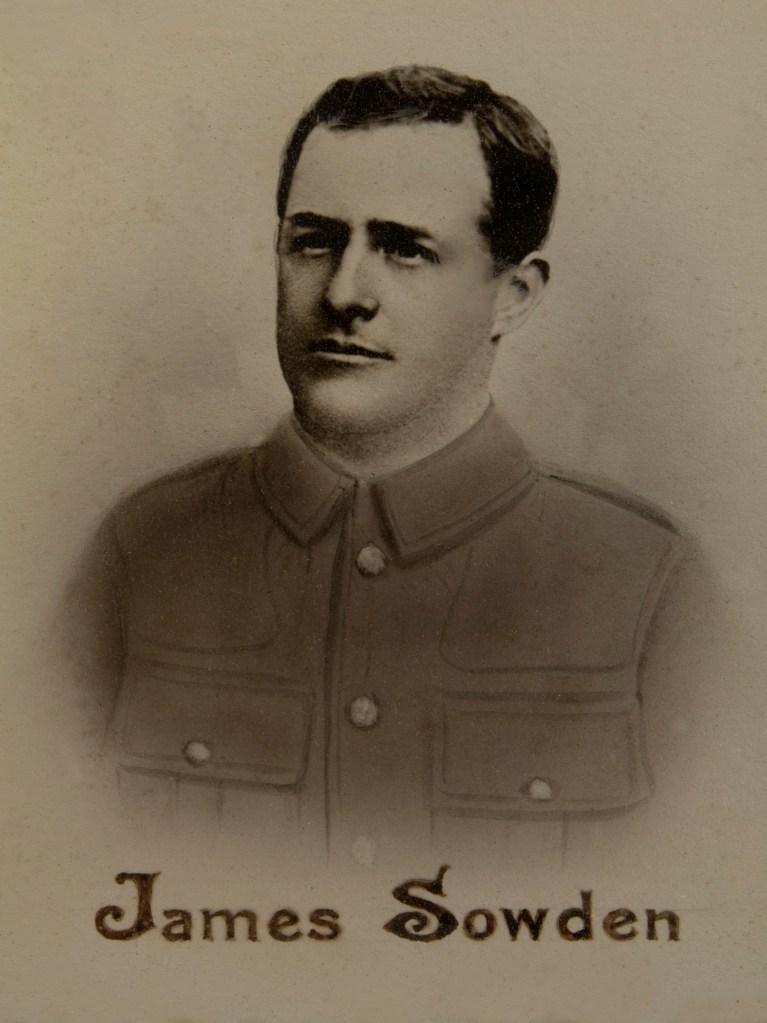
Lance Corporal, 2nd Bn. Duke of Wellington’s (West Riding Regiment). Died 18.4.1915, age 33. Killed in action, commemorated at Ypres (Menin Gate) Memorial, Belgium. Commemorated on family headstone, plot B25a, together with his brother George who was killed in France in 1917. Commemorated on Wainsgate war memorial. Believed to have been killed at Hill 60, on the same day as Thomas Roger Ashworth. Previously served as a regular soldier in India.
Archibald SUNDERLAND
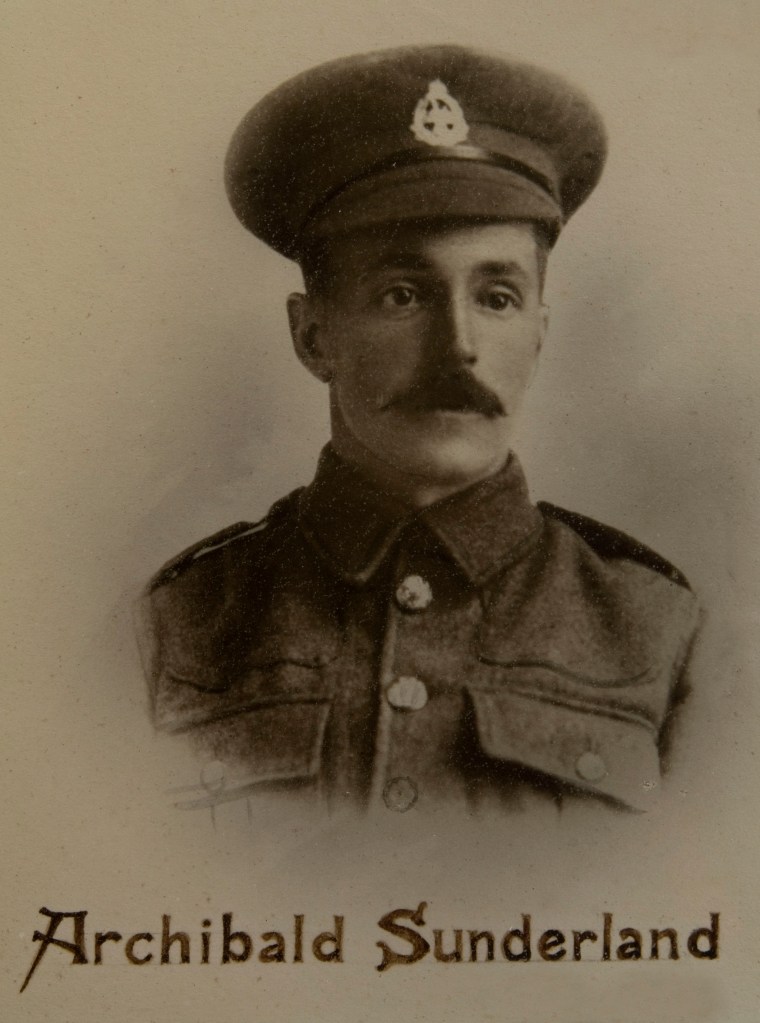
Private, 9th Bn. Lancashire Fusiliers. Died 16.8.1917, age 32. Killed in action, commemorated at Tyne Cot Memorial, Belgium, and on Wainsgate war memorial.
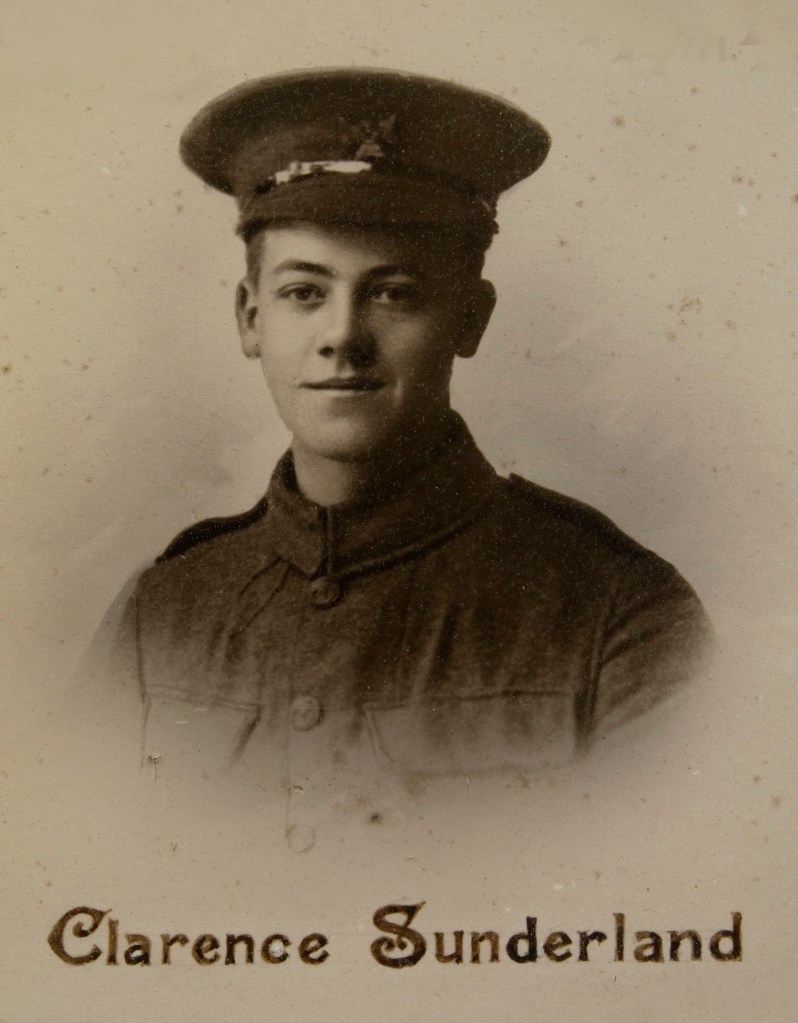
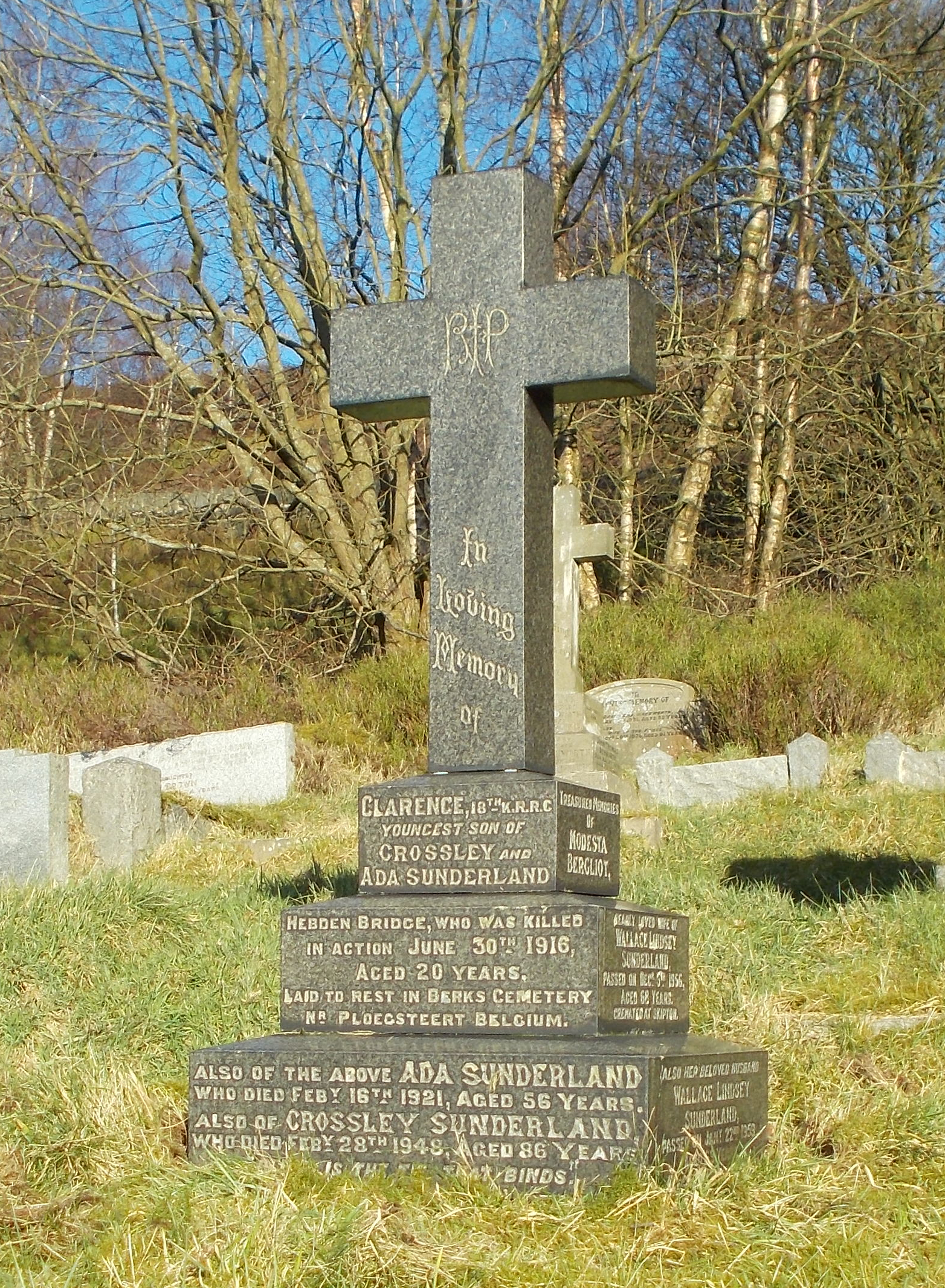
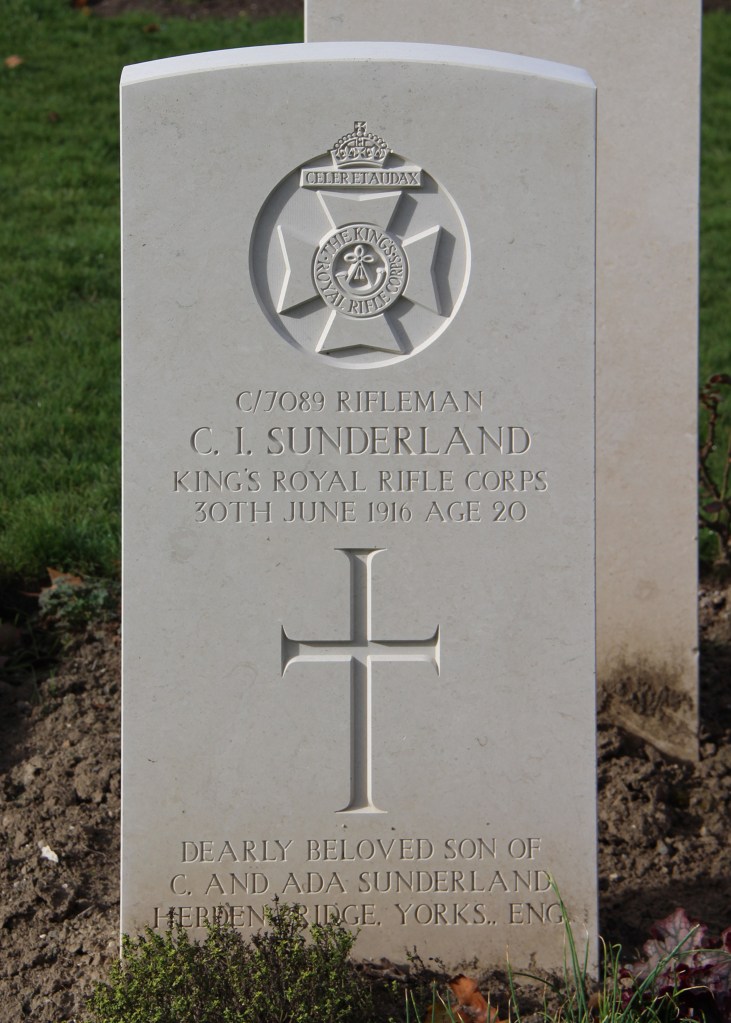
Clarence Ingham SUNDERLAND (1896-1916)
Rifleman, 18th Bn. King’s Royal Rifle Corps. Died 30th June 1916, age 20. Killed in action, commemorated at Berks Cemetery Extension, Belgium.
Commemorated on family memorial, plot F772/773, and on Wainsgate war memorial.
Killed instantly by an artillery shell near Armentieres, close to the France / Belgium border.
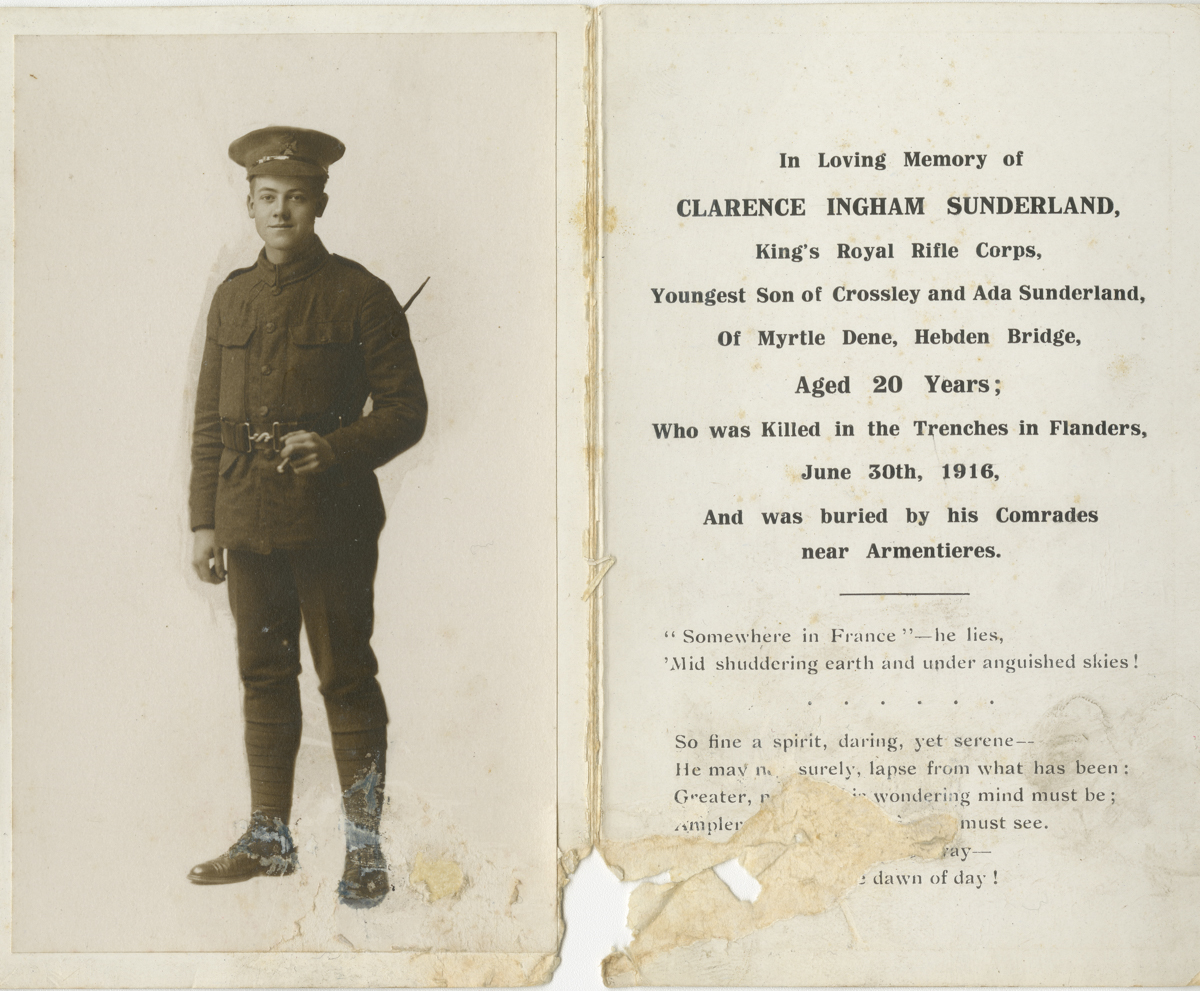
Memorial card from the Keith Stansfield Collection – Pennine Horizons Digital Archive.
“Somehere in France”—we know not where he lies,
‘Mid shuddering earth and under anguished skies!
So fine a spirit, daring, yet serene,—
He may not, surely, lapse from what has been:
Greater, not less, his wondering mind must be;
Ampler the splendid vision he must see.
‘Tis unbelievable he fades away,—
An exhalation at the dawn of day!
from Somewhere in France by John Hogben
Photograph courtesy of the War Graves Photographic Project
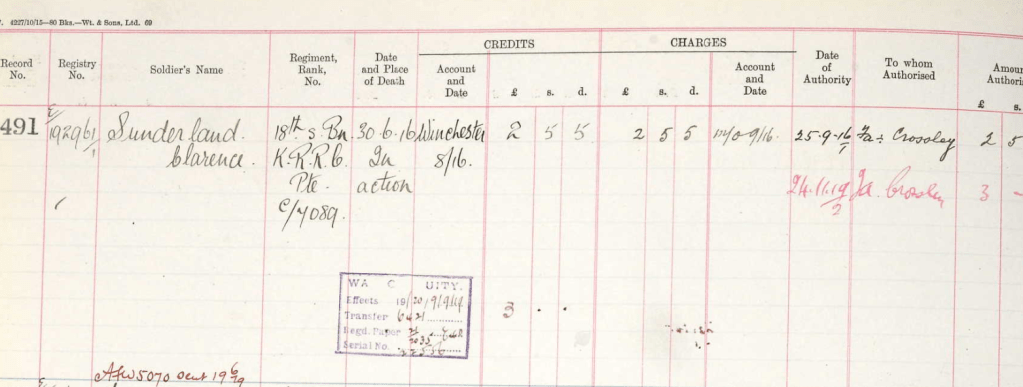
Clarence was the youngest of four children of Crossley Sunderland, a fustian weaver, and his wife Ada (born Ada Ingham) of Myrtle Dene (probably on old Lees Road), Hebden Bridge. The family had previously lived at Pecket Well, and Clarence attended Crimsworth Council School before winning a scholarship to Hebden Bridge Secondary School. Before the war he had worked as a printer for the Hebden Bridge Times: he was a member of Hebden Bridge Liberal Club and had a lifelong connection with Wainsgate chapel and Sunday school. His obituary described him as ‘a quiet and genial fellow…..well known in the district’
He enlisted in the King’s Royal Rifles in September 1915 with his ‘boon companion’ Vernon Ashworth, and they both went to the front in May 1916. They remained close friends during their brief time together in Flanders. When Clarence was killed, his family received two letters informing them of their son’s death – one from his commanding officer and one from Vernon.
His two older brothers, Wallace Lindsey Sunderland and Percy Oswald Sunderland both served in the army, but survived the war. His friend Vernon, still serving with the King’s Royal Rifles, was killed in action in September 1917, aged 19.
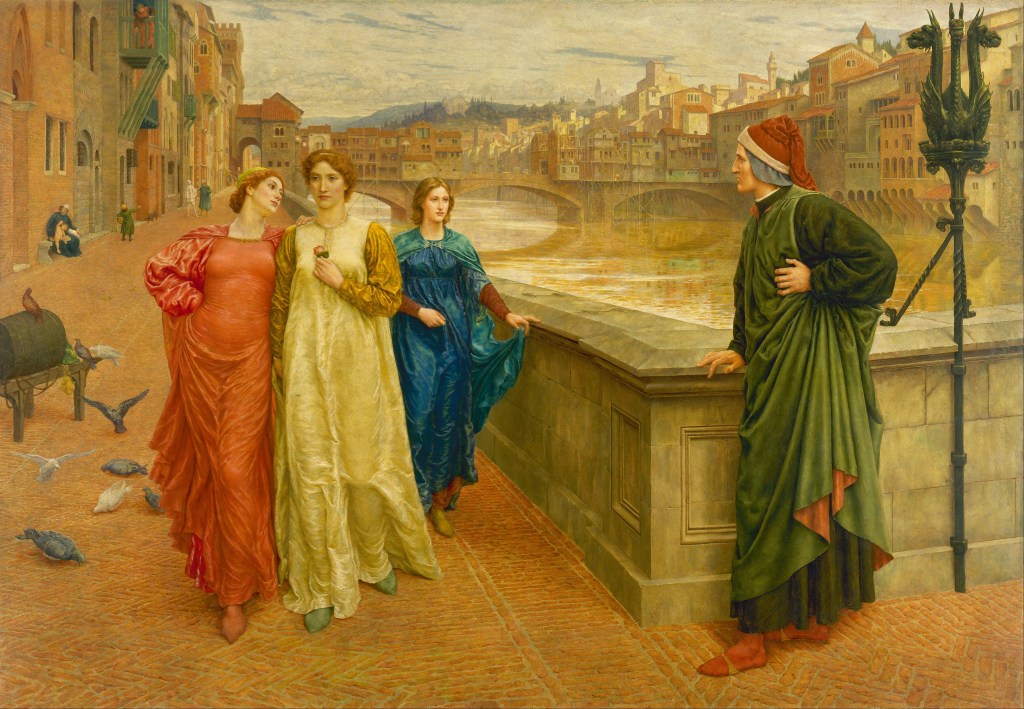
Clarence was a talented artist, attending art classes at Halifax Technical School and winning prizes for his work. One of his best pictures, a reproduction of the painting Dante and Beatrice by the Pre-Raphaelite painter Henry Holiday, was unfinished at the time of his death.
Dante and Beatrice (1883) by Henry Holiday (Walker Art Gallery, Liverpool)
Arnold SUTCLIFFE
Private, 2nd/4th Bn. King’s Own Yorkshire Light Infantry. Died 29.9.1918, age 22. Killed in action, interred at Masnieres British Cemetery, Marcoing, France. Commemorated on family headstone, plot B302a.
Ellis SUTCLIFFE
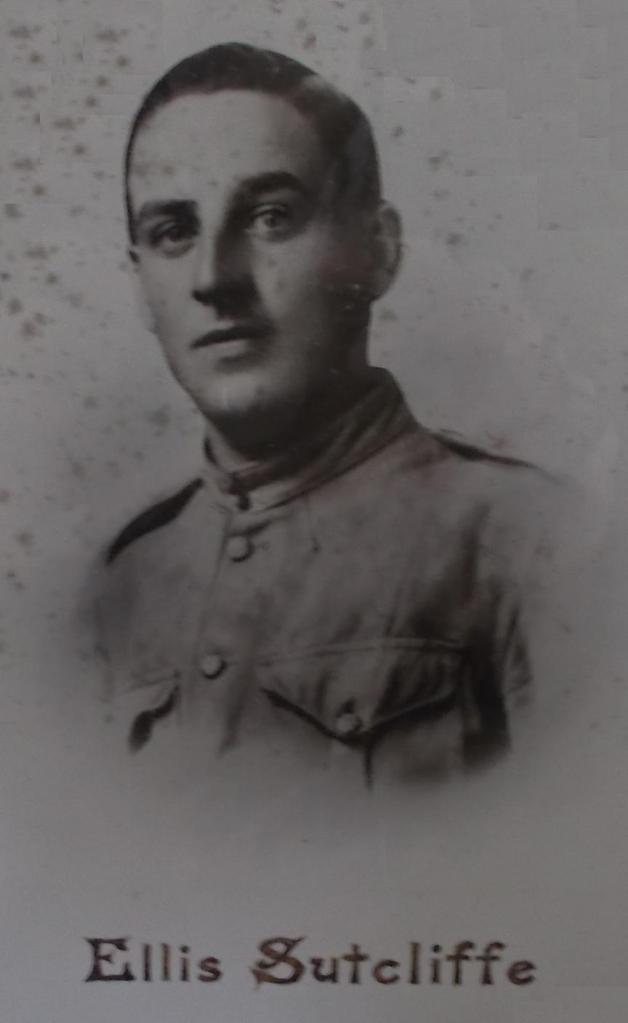
Private, 6th Bn. The Loyal North Lancashire Regiment. Died 15.3.1917, age 21. Died of wounds, commemorated at the Basra Memorial, Iraq, and on Wainsgate war memorial.
James Thomas SUTCLIFFE
Private, 20th (Tyneside Scottish) Bn.Northumberland Fusiliers. Died 9.4.1917, age 21. Killed in action, interred at Hervin Farm British Cemetery, St. Laurent-Blangy, France. Commemorated on family headstone, plot B34a.
OTHERS (NOT COMMEMORATED AT WAINSGATE)
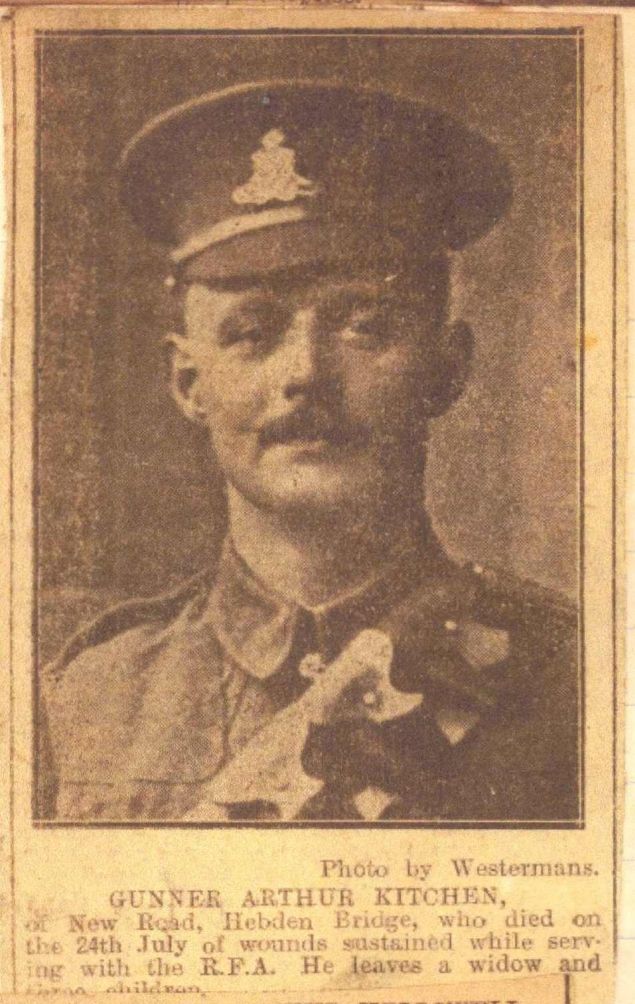
Arthur KITCHEN (1881-1916)
Gunner, ‘C’ Battery, 105th Brigade, Royal Field Artillery. Died 24.7.1916, age 34. Died of wounds, interred at Heilly Station Cemetery, Mericourt-I’Abbe, France.
Commemorated on the Hope Chapel war memorial. Does not appear on the Wainsgate war memorial or the Wadsworth War Memorial and is not included in the Wadsworth Roll of Honour.
He was seriously wounded in the abdomen on 22nd July, and admitted to hospital: despite an operation to try and save his life, he died on the 24th.
Arthur is not commemorated on a family memorial at Wainsgate, but his wife Rizpah, born Greenwood (1884-1957) and daughter Laura Ellen Greenwood (1903-1977) are buried in plot E995, together with Laura’s husband Edward Ruskin Greenwood (1900-1956). His mother Sarah Ellen Kitchen (1853-1934) and grandmother Sarah Kitchen are buried in plot B281a. As well as Laura Ellen, Arthur and Rizpah had two other daughters: Sarah (1905-1983) married Arthur Hill and died in Australia, and Mary, later Mary Keen, then Mary Brown (1914-2002).
Arthur Kitchen was born in Hebden Bridge, the only known child of Sarah Ellen Kitchen, who never married. It seems that Arthur lived his entire life in New Road, Hebden Bridge, living with his mother, his grandmother Sarah (born in Bingley, and also seemingly unmarried) and later his wife (who he married in 1902) and three daughters. At the time of his death the family were living at 20, New Road.
Arthur worked as a weaver for the Hebden Bridge Fustian Manufacturing Co-operative Society at Nutclough Mill. His wife Rizpah also worked as a weaver (possibly also at Nutclough), and his mother was a fustian ‘ender & mender’. He was apparently one of the first Nutclough employees to volunteer, enlisting in October 1914, and had also volunteered as an ambulance driver during the Second Boer War, spending six months in North Natal. He was connected with Hope Baptist Church and Sunday school and enjoyed cricket, football and swimming.
‘He liked the soldier’s life. Physically he was well able to stand it, and his disposition was one that inclined him to look on the bright side and make the best of circumstances. Frank and outspoken, he was tenacious in argument, but nevertheless a good-hearted fellow’.
Todmorden Advertiser 28.7.1916
* * *
CIVILIAN CASUALTIES
Although there are no known civilian war casualties interred or commemorated at Wainsgate, the widow of a civilian killed by enemy action in WW2 is buried there.
Jean Winifred Mann was born in Twickenham on 13th May 1910, the daughter of Alexander Richard Mann (born in Norwich) and Katie Mann. In 1937 she married Edward Joseph Humphrys, son of Valentine James Humphreys (who was born in India) and his wife Norah Louisa. The family name seems to have changed from Humphreys to Humphrys at some stage. In 1939 Edward and Jean were living in New Malden, and Edward was employed as an Accountant’s Clerk. They possibly had one child living with them, although the entry in the 1939 Register is redacted.
Edward Humphrys was killed on 10th February 1943 in Reading, when a German Dornier bomber dropped four 500kg bombs in the centre of the town. He was aged 33, and living with Jean in Bracknell. The attack killed 41 people and injured over a hundred: had it not been early closing day, the number of casualties would have been far greater. This attack by a lone bomber was probably a reprisal raid for the Allied bombing of German cities. Reading was not a significant military target: children were evacuated from London to Reading and government departments such as the Ministry of Aircraft Production were relocated to the town. The victims included three children – George Langford and Violet Brown, both aged 10, and 12 year old Betty Parsons.
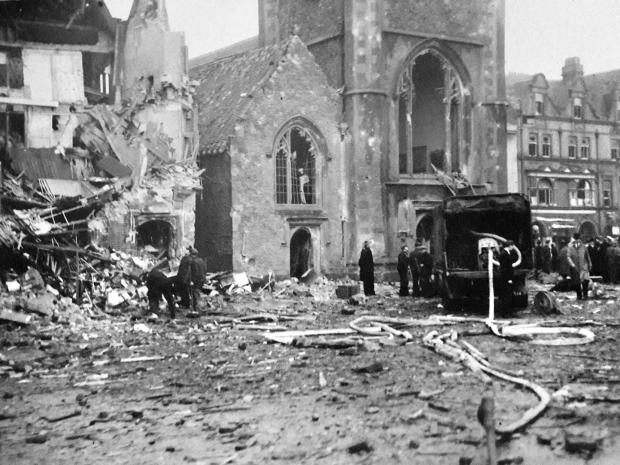
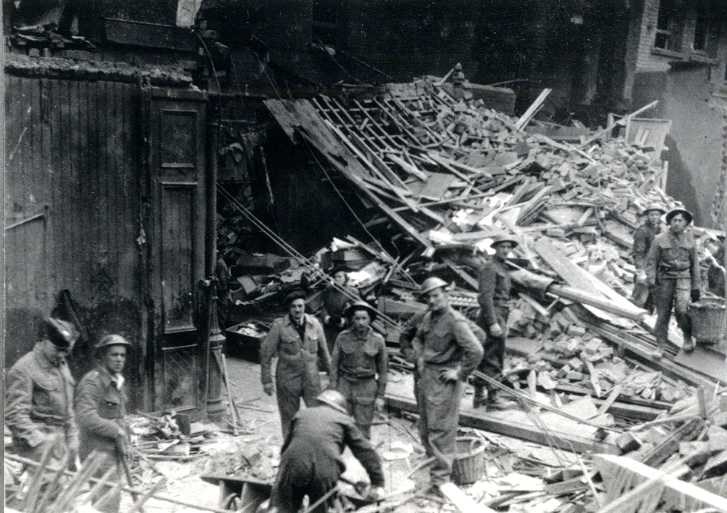
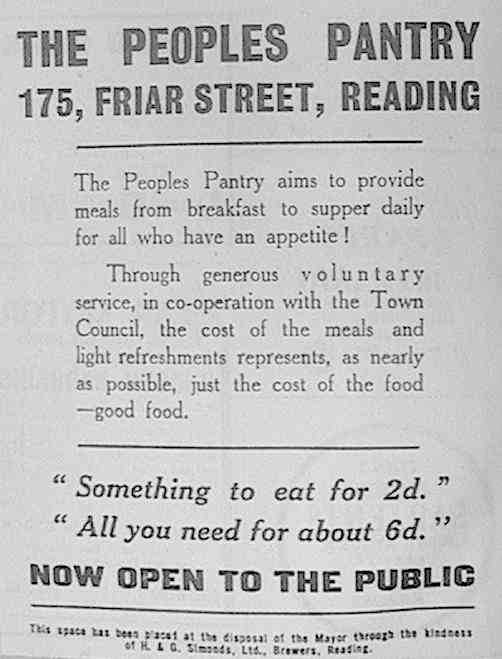
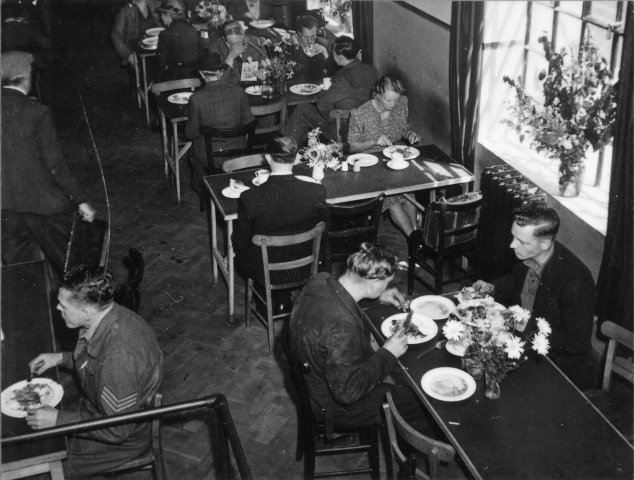
Edward was one of 29 people who were killed when one of the bombs destroyed the People’s Pantry, a popular restaurant at 175, Friar Street, opposite the Town Hall, staffed by the Women’s Voluntary Service which provided cheap and nutritious meals for an affordable price to supplement rations. The People’s Pantry was one of many British Restaurants set up during WW2, described by the Ministry of Information as ‘a wartime institution designed to provide quick, cheap, and satisfying meals for shoppers, business people, artisans and the forces’.
The photograph below shows the People’s Pantry in 1945 after it reopened. Although the food and furniture are basic, there are fresh flowers on the tables and window cills.
One survivor of the bombing was a seventeen year old assistant engineer for the BBC named Michael Bond, who was installing a radio transmitter on the roof of the Friar Street building. Bond went on to become an author, best known for his series of books featuring Paddington Bear.
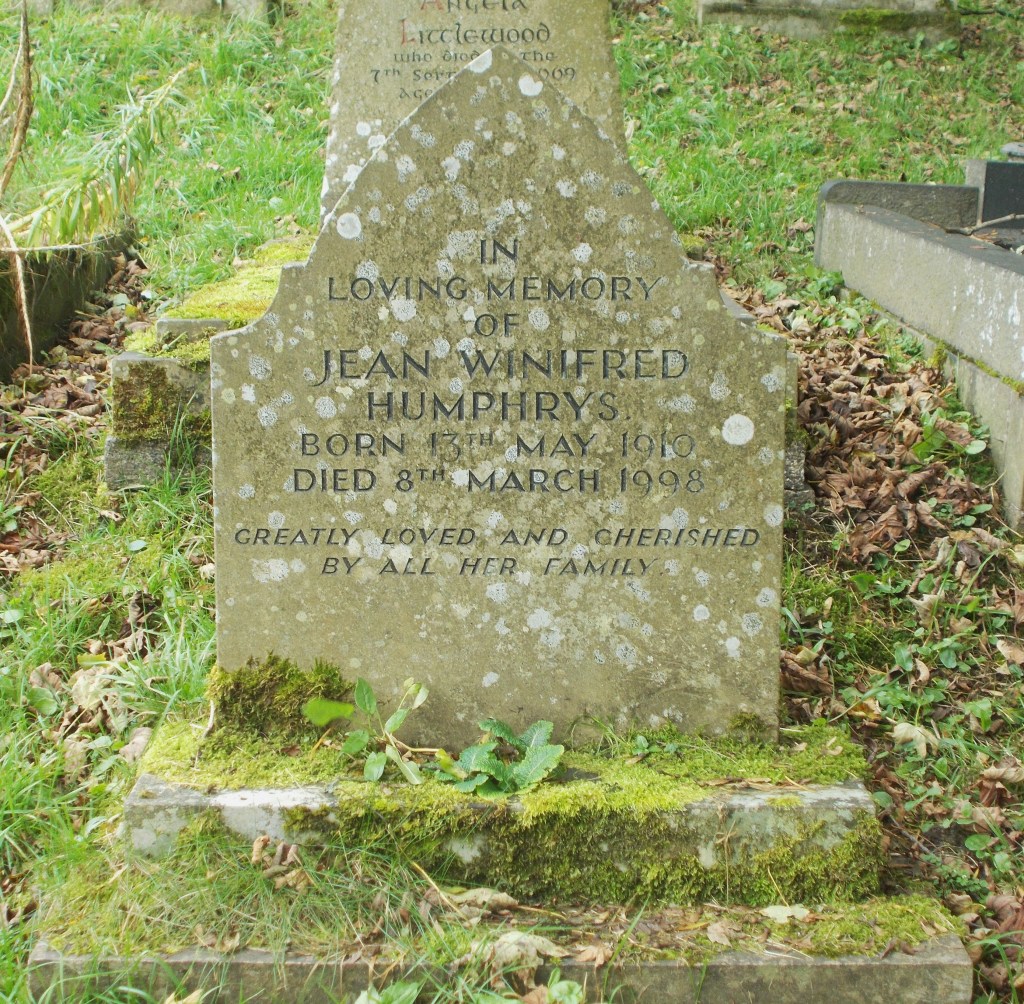
Edward Joseph Humphrys is believed to be interred in Reading, although the exact location of his grave is unknown.
Jean Winifred Humphrys died on 8th March 1998, aged 87, and is buried in plot I921 at Wainsgate. We don’t know when or why she moved to Wadsworth (presumably to be with family who had settled here), but at the time of her death she was living at Lee Clough Drive, Mytholmroyd.
Her funeral was conducted by the local Catholic priest, Father John Gott.
The 1936 WADSWORTH AIR CRASH
On 12th December 1936, seven Handley Page Heyford bombers of 102 Squadron took off from RAF Aldergrove, near Belfast, to return to their base at RAF Finningley (which later became Robin Hood / Doncaster Sheffield Airport). The weather conditions were appalling, with thick freezing fog and ice forming on the aircraft, and only one of the planes made it back to Finningley – two made crash landings in Cheshire, two made forced landings near York and Gainsborough, and one crashed near Oldham after the crew bailed out.
The seventh plane, K6900, crashed into Wadsworth Moor, killing three of the four crew – thankfully the only fatalities from the crews of the seven aircraft that left Aldergrove. An account of the incident was given by Mrs A. Johnson, postmistress at Old Town Post Office:
“We heard the machine come over the village, but we could not see it because of the fog. The noise from the engines indicated that it was flying low. A moment later there was a loud explosion. But we could see nothing. A party of villagers set out to investigate: they were rambling blind, however, because of the fog. Then, after several minutes, a young man named Stanley Williams found the pilot stumbling about in a dazed condition and bleeding from the face. He brought the pilot to our house, and ambulance men rendered first aid and afterwards took him to hospital. All the pilot could say was that he was trying to make the ‘plane rise, but the wings were too heavily coated with ice.”
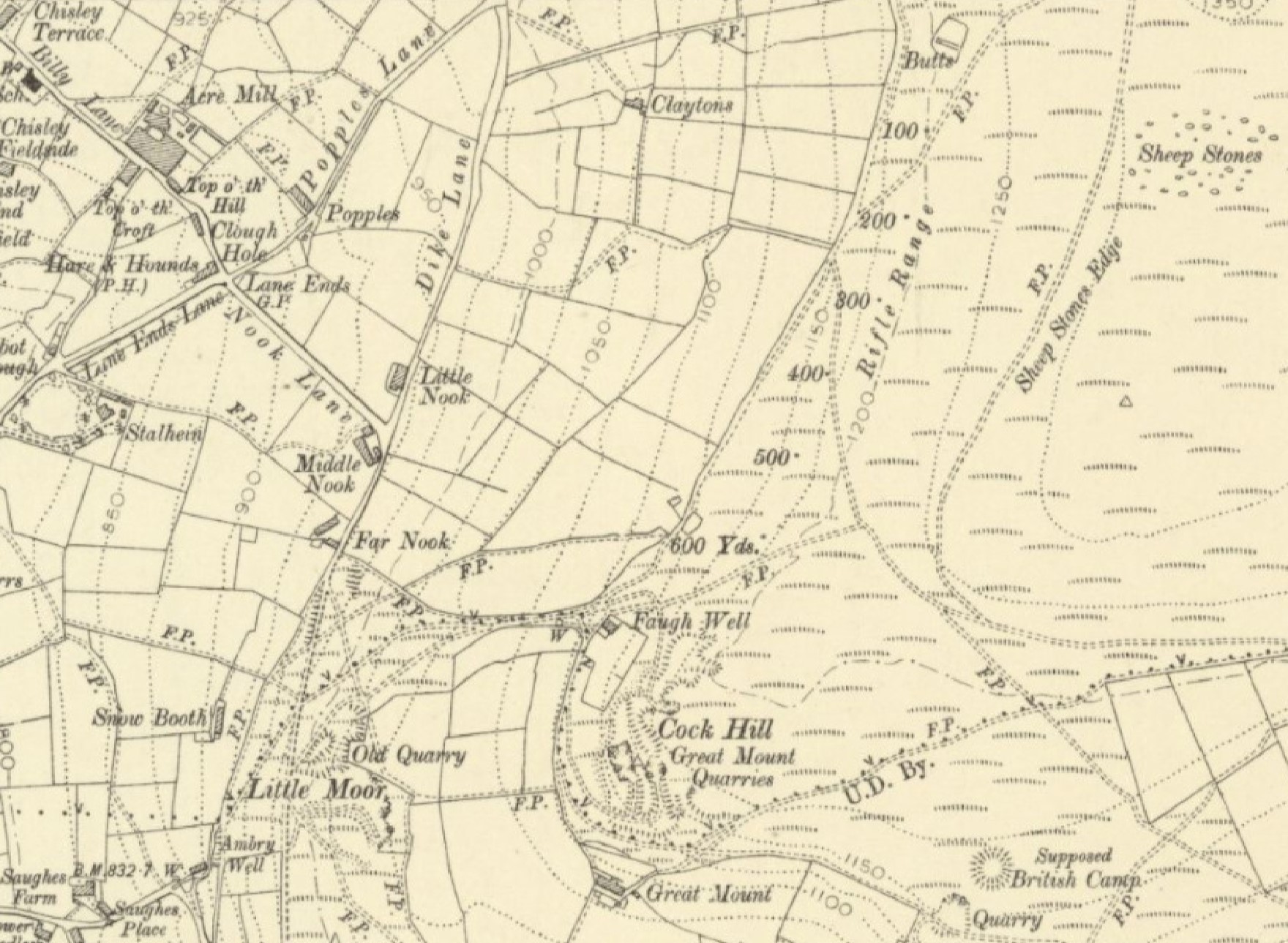
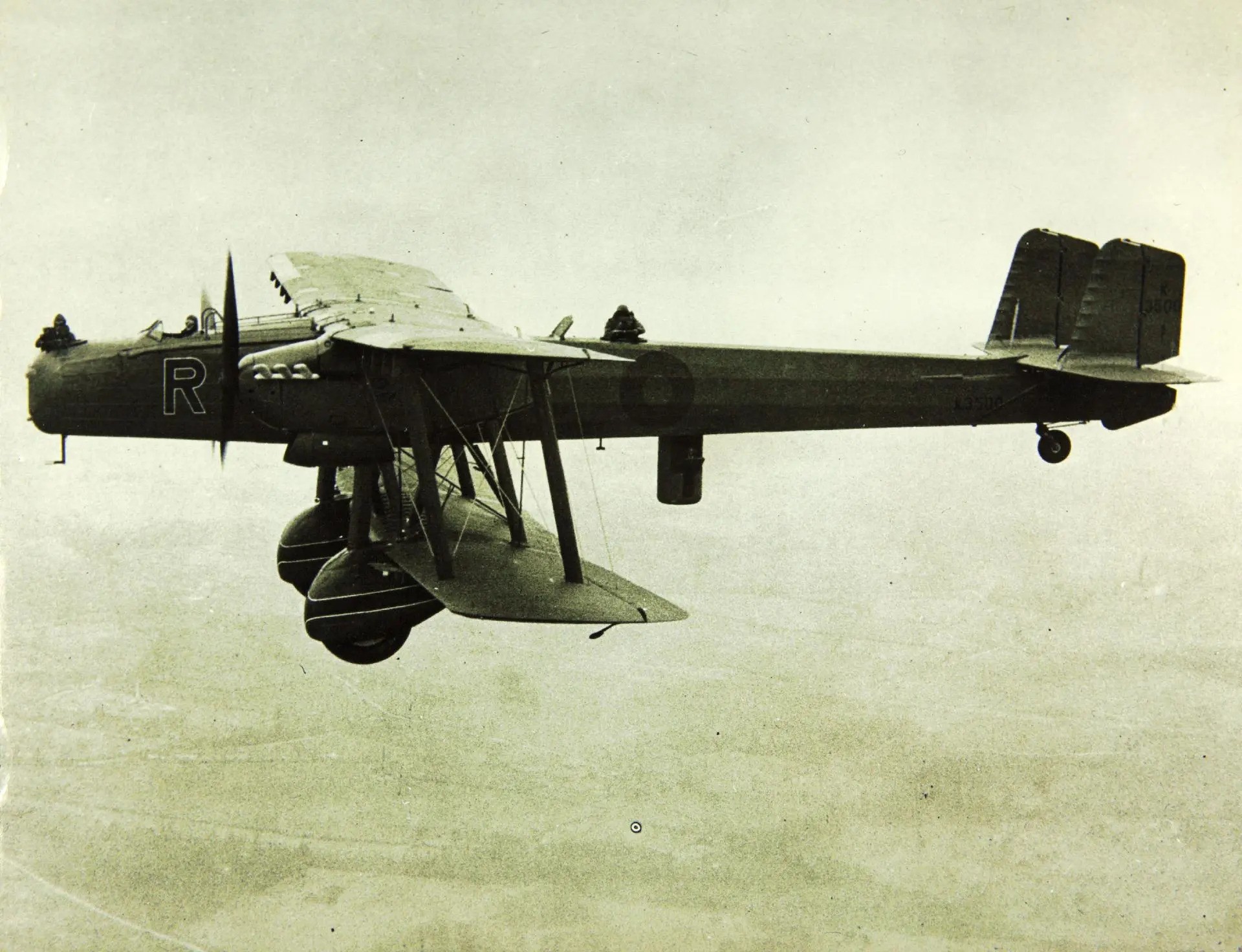
left – Ordnance Survey map (6″ to the mile), 1908. right – Handley Page Heyford heavy bomber.
The pilot was lost in the fog and desperately looking for a safe place to make a forced landing: after flying low over Old Town he encountered the steeply rising ground below Sheep Stones Edge and was unable to clear the hillside. The aircraft hit a wall, carried on for about 100 yards and burst into flames. Two of the crew died at the scene, the third died while being taken to hospital. It was reported that one of the men had jumped from the aircraft, but too late for his parachute to operate and save him. The pilot survived, but was badly burned.
The exact location of the crash is uncertain, but it was reported as being on the old rifle range on Wadsworth Moor (shown on the map above). The wrecked plane was removed by the RAF, but in 2010 a few fragments were found (photographed and left in place) by a researcher who seems to have found the crash site.
The three crew members who died were:
Sgt Douglas George Church (navigator), born in Ireland, aged 21. Buried in Finningley.
Leading Aircraftman Percival George Clements (fitter), from Bournemouth, aged 23. Buried in Finningley.
Aircraftman 2nd Class Claud Vincent Bodenham (wireless operator), aged 18. Born and buried in Ludlow.
The pilot, 22 year old Sgt Victor Charles Otter survived the crash, but was seriously burned, including burns to his face, and spent two years undergoing treatment. One of the doctors involved was the renowned reconstructive surgeon Archibald McIndoe, founder member of The Guinea Pig Club, a social club and support network formed in 1941 for allied airman who had suffered serious burns and been treated by McIndoe. Otter returned to 102 Squadron, but was deemed unfit to fly. He stayed with the RAF, working mainly in research and development, and retired with the rank of Air Vice-Marshall in 1969. He was made CBE in 1967 and died in 1996, aged 82.
The Handley Page Heyford, which entered service in 1933, was the last biplane heavy bomber flown by the RAF. Replacement started in 1937, and the last example was withdrawn from frontline service in 1939. Partly as a result of this disasterous episode, the RAF developed effective de-icing technology for its aircraft before the outbreak of WW2.
POSTSCRIPT
The First World War was also known at the time as ‘The Great War‘ and ‘the war to end all wars‘. Estimates of the numbers of military and civilian casualties vary greatly, but it is generally agreed that the total is around 40 million people dead or wounded, with estimates of the total number of deaths ranging from 15 to 22 million. The total number of deaths includes between 9 and 11 million military personnel, while the civilian death toll was between 6 and 13 million people. Far from being ‘the war to end all wars’, the aftermath of the Paris Peace Conference indirectly contributed to the outbreak of the even more devastating Second World War.
The Second World War was the deadliest military conflict in history. An estimated total of 70–85 million people died, or about 3% of the estimated 2.3 billion people on Earth in 1940. Deaths directly caused by the war (including military and civilian fatalities) are estimated at 50–56 million, with an additional estimated 19–28 million deaths from war-related disease and famine. Civilian deaths, including victims of the Holocaust, totaled 50–55 million. Military deaths from all causes totaled 21–25 million, including deaths in captivity of about 5 million prisoners of war. More than half of the total number of casualties are accounted for by the dead of the Republic of China and of the Soviet Union, many of which were deaths caused by war-related famine.
* * *
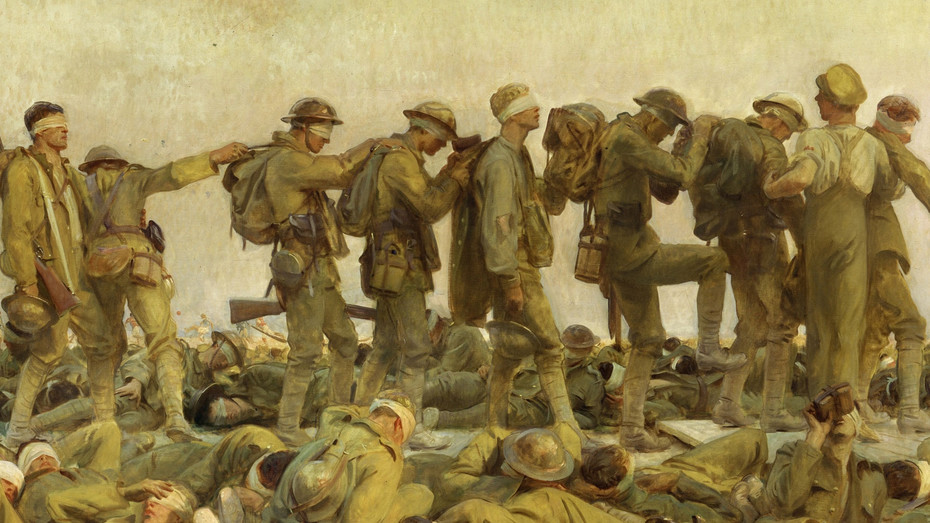
Bent double, like old beggars under sacks,
Knock-kneed, coughing like hags, we cursed through sludge,
Till on the haunting flares we turned our backs
And towards our distant rest began to trudge.
Men marched asleep. Many had lost their boots
But limped on, blood-shod. All went lame; all blind;
Drunk with fatigue; deaf even to the hoots
Of tired, outstripped Five-Nines that dropped behind.
Gas! GAS! Quick, boys!—An ecstasy of fumbling,
Fitting the clumsy helmets just in time;
But someone still was yelling out and stumbling
And flound’ring like a man in fire or lime…
Dim, through the misty panes and thick green light,
As under a green sea, I saw him drowning.
In all my dreams, before my helpless sight,
He plunges at me, guttering, choking, drowning.
If in some smothering dreams you too could pace
Behind the wagon that we flung him in,
And watch the white eyes writhing in his face,
His hanging face, like a devil’s sick of sin;
If you could hear, at every jolt, the blood
Come gargling from the froth-corrupted lungs,
Obscene as cancer, bitter as the cud
Of vile, incurable sores on innocent tongues,—
My friend, you would not tell with such high zest
To children ardent for some desperate glory,
The old Lie: Dulce et decorum est
Pro patria mori.
Dulce et Decorum Est by Wilfred Owen (1893-1918)
Lieutenant Wilfred Owen M.C. was killed in France on 4th November 1918, exactly a week before the signing of the Armistice, aged 25. His mother was informed of his death by telegram on 11th November, Armistice day.
 WAINSGATE GRAVEYARD PROJECT