‘Everyone must leave something behind when he dies, my grandfather said. A child or a book or a painting or a house or a wall built or a pair of shoes made. Or a garden planted. Something your hand touched some way so your soul has somewhere to go when you die, and when people look at that tree or that flower you planted, you’re there.
It doesn’t matter what you do, he said, so long as you change something from the way it was before you touched it into something that’s like you after you take your hands away.’
From Fahrenheit 451 by Ray Bradbury (1953)
‘I want no easy grave,’ he said to me,
‘where those who hated me can come and stare,
slip down upon a servile knee,
muttering their phoney public prayer.
In the wilds of Norfolk I’d like to lie,
no commemorative stone, no sheltering trees,
far from the hypocrite’s tongue and eye,
safe from the praise of my enemies.’
From A Man I Knew (in memory of Patrick Kavanagh) by Brendan Kennelly (1936-2021)
* * *
Click on the LINKS to find out more…..
HEADSTONES, TOMBS & OTHER GRAVEYARD MEMORIALS
MAJOR MEMORIALS
Mitchell – Horsfall – Ashworth – Redman – Hoyle – Riley – Eve Clements
IMMORTELLES
SYMBOLISM
MEMORIALS IN THE CHAPEL
Memorial tablets to John Fawcett & John Bamber – War Memorials & photographs – Roll of Honour
MEMORIAL MASONS
William Hargreaves – Simeon Bottomley Cordingley – Wright Ingham – Peter & Percy Whitaker
CARVING & LETTERCUTTING
* * *
HEADSTONES, TOMBS & OTHER GRAVEYARD MEMORIALS
‘Since long life is denied us, let us transmit to posterity some memorial that we have at least lived’.
Pliny the Younger (AD61 – cAD 113) – Letter No.9 to Caninius Rufus
‘Our consecrated burial-grounds are too generally disgraced by profane or ridiculous memorials. The sinner is encouraged in wickedness by that which ought to excite his terror and remorse.’
From The Churchyard Manual (1851) by W. Hastings Kelke
‘We would encourage the erection of handsome monuments, and the inscription on them of moral sentiments, the former to improve the taste, and the latter to cultivate the heart and affections. In both we would allow individual taste to be displayed; but at the same time we would encorage individuals to submit their designs to men of acknowledged skill, and to listen to their hints for imbprovement.’
John Claudius Loudon – On the Laying Out, Planting and Managing of Cemeteries; And on the Improvement of Churchyards (1843)
MAJOR MEMORIALS
The MITCHELL Memorial

A simple but imposing sandstone pillar, standing in the centre of a block of twelve grave plots (A419, A420, A421, B224a, B223a, B222a, B162a, B163a, B164a, B212a, B211a & B210a), surrounded by a low stone wall with decorative ironwork. The mason’s name inscribed on the monument is W. HARGREAVES, HAWORTH, thought to be William Hargreaves of Oakworth.
The memorial commemorates seven members of the Mitchell and Cousin families: Henry Mitchell of Ibbotroyd (who died 1859, aged 34), his wife Sarah Ann Mitchell, her sister Mary Elizabeth Cousin and four of Henry and Sarah Ann’s children – John, who died in 1854 aged 5, Clara Mitchell, John Cousin Mitchell and William Henry Mitchell – all of Boston Hill.
Sarah Ann Mitchell (born Sarah Ann Cousin) and her unmarried sister Mary Elizabeth Cousin (daughters of John Cousin Jnr) died one day apart in February 1900, aged 76 and 78. John Cousin Mitchell died in 1921, Clara Mitchell in 1923 and William Henry Mitchell in 1928. None of the three siblings ever married.
The memorial has brief epitaphs, all based on Bible verses, for Henry Mitchell, Sarah Ann Mitchell and Mary Elizabeth Cousin:
‘The righteous shall be in everlasting remembrance’ (Psalms 112:6)
‘She opened her mouth with wisdom and in her tongue was the law of kindness’ (Proverbs 31:26)
‘She was a succourer of many’ (Romans 16:2)
The HORSFALL Memorial
The largest and most imposing memorial in the graveyard, the monument occupies part of a block of six grave plots (B218a, B219a, B220a, B230a, B231a & B232a) which were purchased by John Foster Horsfall between 1872 and 1874. The mason’s name is inscribed on the base of the monument – W. HARGREAVES – presumably William Hargreaves of Oakworth.
The memorial commemorates three people: John Foster Horsfall, who died in 1894 aged 73, his wife Mary, who died in 1873 aged 54, and their son William, who died in 1872 aged 20. All three lived at West Croft House, Oxenhope.
Mary Horsfall was born Mary Cousin in Old Town, daughter of John Cousin Snr (or ‘Old John Cousin’ as he was referred to in the burial register) and his first wife Betty.
The ASHWORTH Memorial
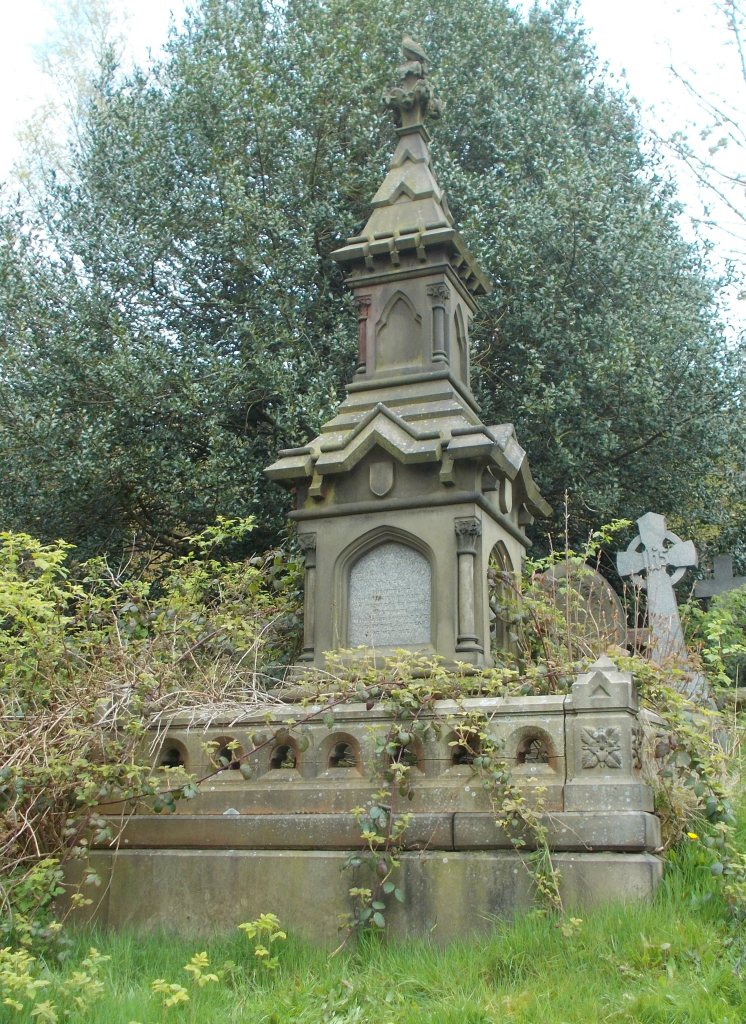
An imposing grey polished granite monument with a shrouded urn, occupying plots B201a & B202a, with burial space to the west in plots B213a & B214a. The four plots were purchased by Thomas Ashworth on 2nd January 1891, although the receipt book suggests that plot B213a may have been purchased earlier, possibly in 1870.
The REDMAN Memorial
An imposing grey polished granite monument with a shrouded urn, occupying plots B203a & B204a, with burial space to the west in plots B215a & B216a. The four plots were purchased by R. J(?) Redman on 2nd January 1891.

The HOYLE Memorial
A grey polished granite obelisk commemorating eleven members of the Hoyle family who died between 1850 and 1934. The monument sis in the centre of a block of eight grave plots (A388-A391, A431-434), all bought by James Hoyle.
The RILEY Memorial
A grey polished granite obelisk commemorating six members of the Riley family who died between 1856 and 1895. The monument sits in a block of four grave plots (A491-A494) and is enclosed with iron railings. The receipt book does not give the date when the plots were bought, nor the name of the purchaser, although the 1875 graveyard plan shows the plots belonging to ‘John Riley, Brierly’.
EVE CLEMENTS Memorial
The most recent major monument in Wainsgate graveyard is the memorial to Eve Clements, commissioned by her parents Geoff and Janet Hughes and designed and made by Charles Gurrey in 2019. It stands in a prominent position near the graveyard entrance in the centre of the family burial plot (D1039, D1040 & D1041).
Charles Gurrey is a well respected sculptor based in York, whose work can be seen at Guildford Cathedral, York Minster, Ripon Cathedral, Bradford Cathedral, Leicester Cathedral and Bletchley Park. Charles was chosen for this commission after Geoff and Janet consulted the Lettering Arts Trust, who have a register of artists selected from the best letter-carvers in the UK.
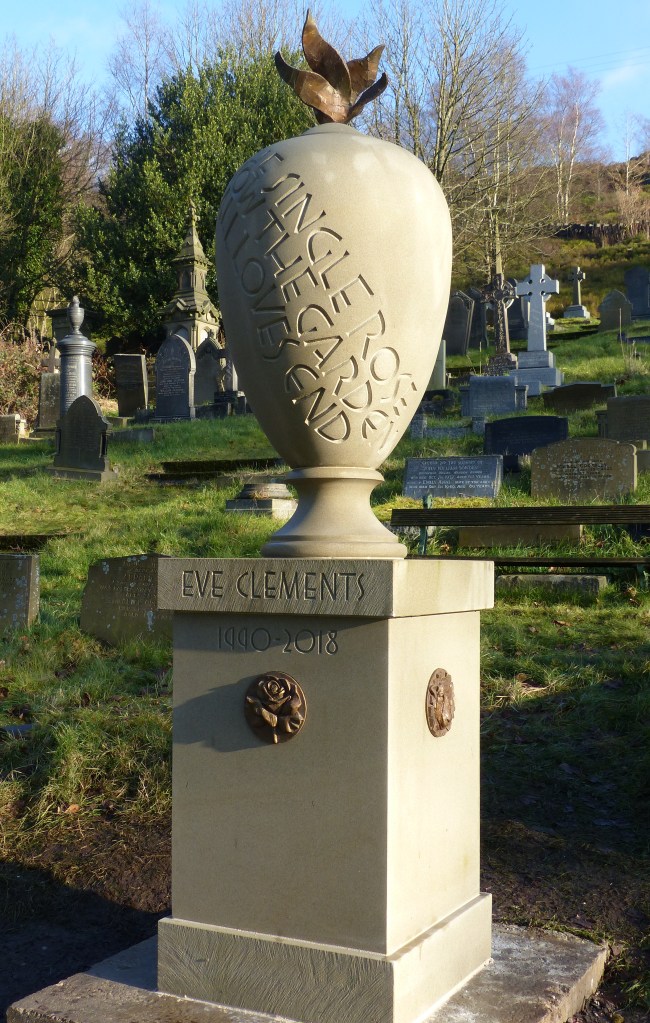
The memorial is made from locally quarried Branshaw sandstone, and consists of a large turned urn on a square pedestal, with bronze roundels and flambeau. The total height of the monument is 2.1 metres, and it weighs around 1.2 tonnes. The incised text is from Ash Wednesday by T.S. Eliot:
‘The single rose
Is now the garden
Where all loves end’
The memorial is contemporary in design but acknowledges and complements the Victorian and Edwardian urn memorials in the old graveyard at Wainsgate such as the Redman and Ashworth memorials.
The erection of the memorial was carried out by Charles Gurrey and master mason Matthias Garn, and the specialist turning of the urn was done by Mather & Ellis Ltd.
Photograph by Charles Gurrey
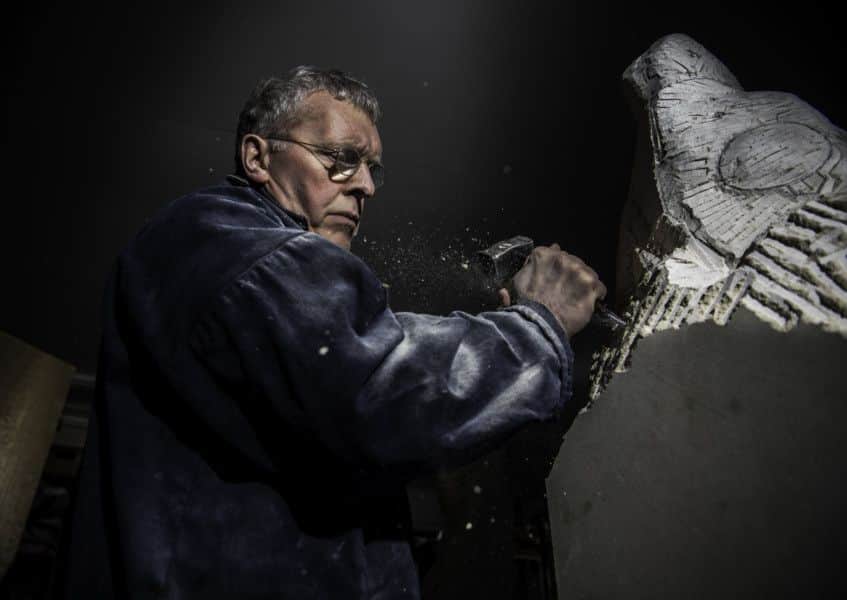
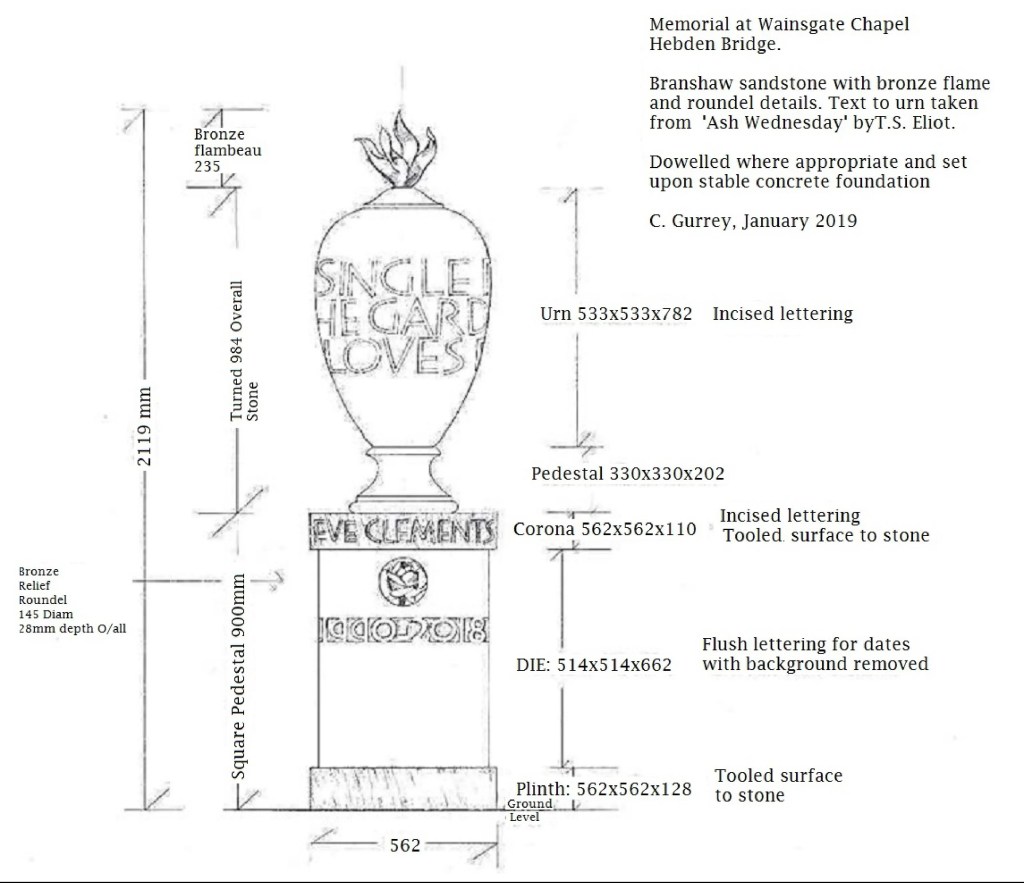
Photograph of Charles Gurrey by James Hardisty / Yorkshire Post. Initial design drawing by Charles Gurrey
The proposal for the memorial was submitted to the Historic Chapels Trust (owners of the graveyard) for their approval . The HCT trustees unanimously approved the design, but on condition that any necessary planning or Listed Building Consent approvals should be obtained from Calderdale Council (or written confirmation obtained from them stating that these approvals are not required).
Calderdale’s initial response was to suggest that both planning permission and Listed Building Consent would be required. Whilst a requirement for Listed Building Consent would have some justification (the memorial being within the curtilage of a Grade II* listed building), the idea that planning permission would be required seemed preposterous: although Wainsgate is no longer covered by Ecclesiastical Exemption and permitted development rights do not apply, it is hard to see how the proposed memorial could be classed as ‘development’ under the terms of Section 55 of the TCPA 1990: it is not a building or enclosure, and there is obviously no change of use involved. The planners were unable to find any precedent for planning permission being required for any kind of headstone or other memorial in an established graveyard, cemetery or burial ground.
Calderdale planners felt that ‘legislation is unclear in terms of determining how to proceed’ but eventually saw reason and accepted that neither planning permission nor Listed Building Consent were required.
The ‘Wainsgate Urn’ was an award winner (category: Carving, Lettering & Sculpture) in the 2022 Natural Stone Awards. The judges commented that:
‘this features as one of the finest monuments in its setting and noted that the letter cutting is excellent, beautifully designed and executed’.

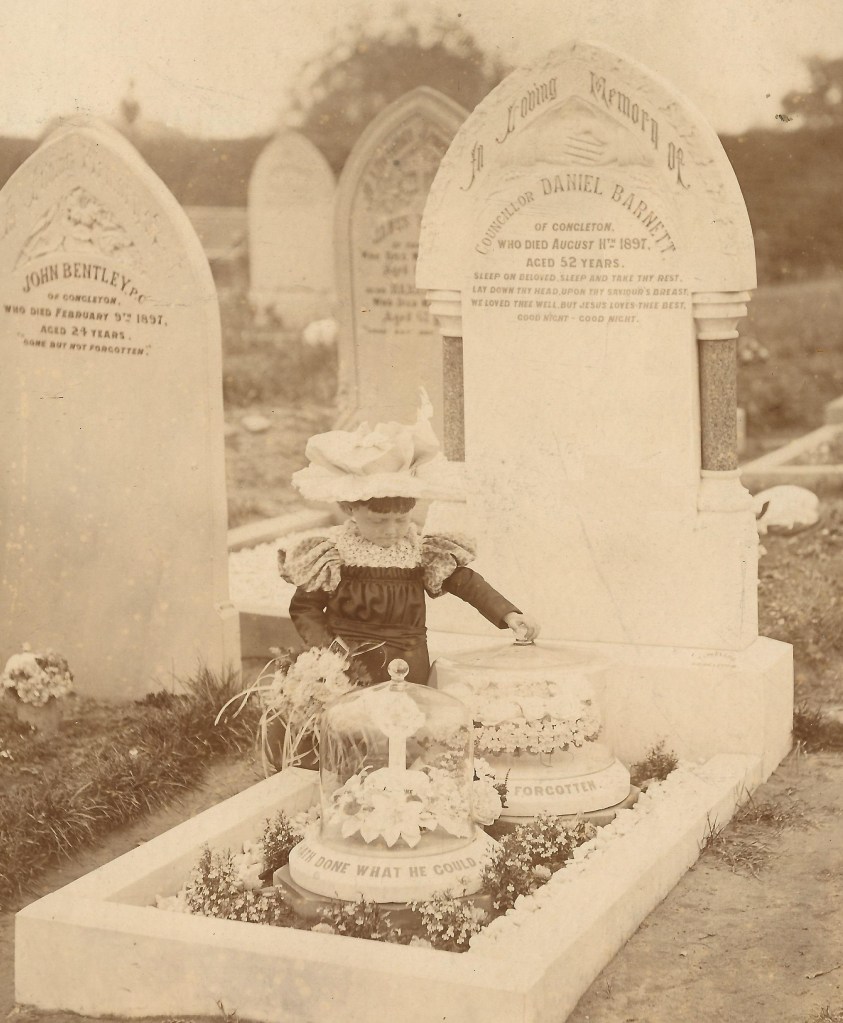
IMMORTELLES
Coming soon…..
SYMBOLISM
Coming soon…..
MEMORIALS IN THE CHAPEL
The memorial tablet to John Fawcett is in the upper gallery of the chapel, and was installed in 1904. It was described by Charles Thomson as ‘a dignified proto-modernist classicising design with gilt-inscribed lettering on a plaque of shelly pink marble’.
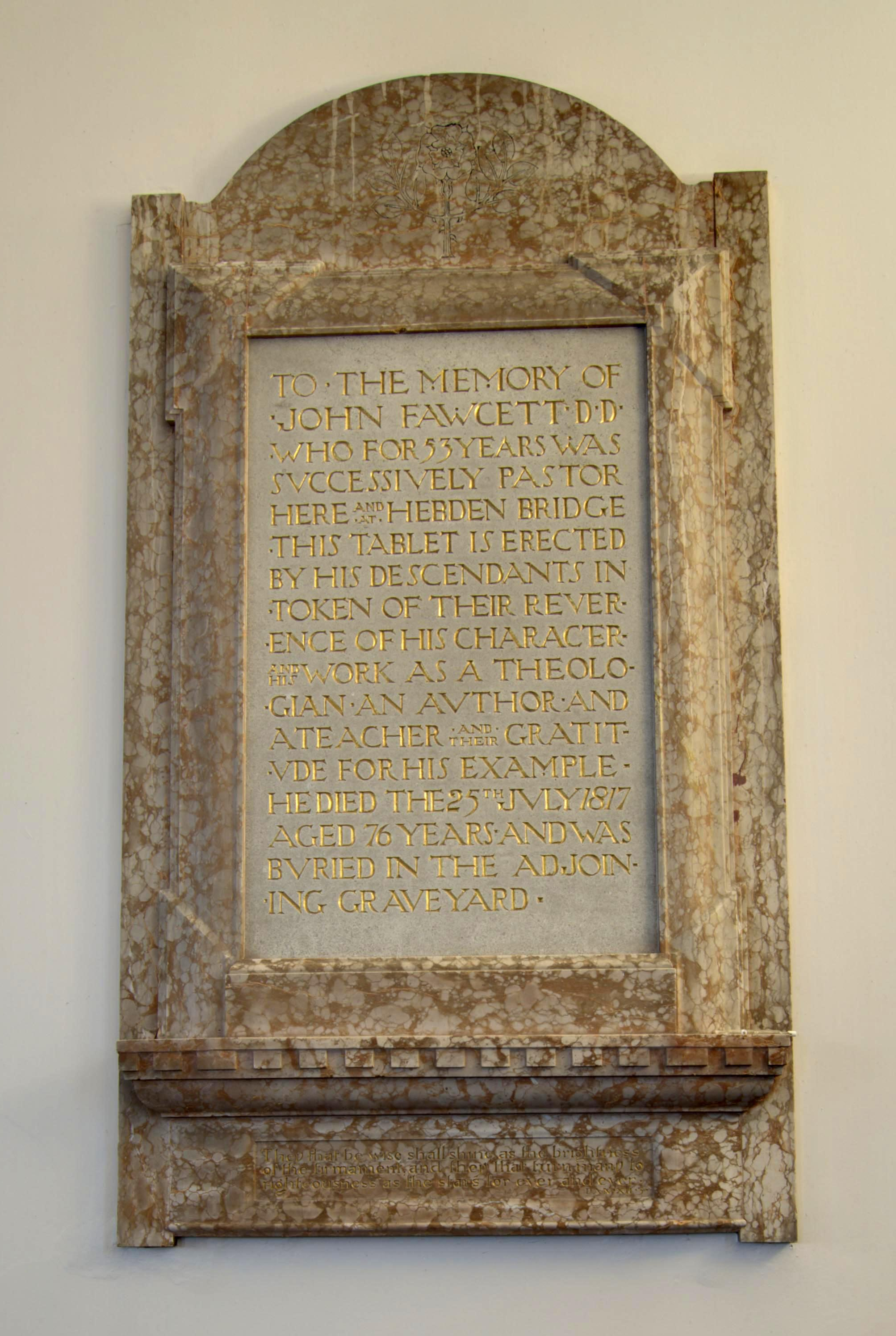
TO THE MEMORY OF JOHN FAWCETT D.D. WHO FOR 53 YEARS WAS SUCCESSIVELY PASTOR HERE AND AT HEBDEN BRIDGE THIS TABLET IS ERECTED BY HIS DESCENDANTS IN TOKEN OF HIS CHARACTER AND HIS WORK AS A THEOLOGIAN AN AUTHOR AND A TEACHER AND THEIR GRATITUDE FOR HIS EXAMPLE. HE DIED THE 25TH JULY 1817 AGED 76 YEARS AND WAS BURIED IN THE ADJOINING GRAVEYARD.
They that be wise shall shine as the brightness of the firmament, and they that turn many to righteousness as the stars for ever and ever. DAN XII:3.
Photo by Geoff Matthews
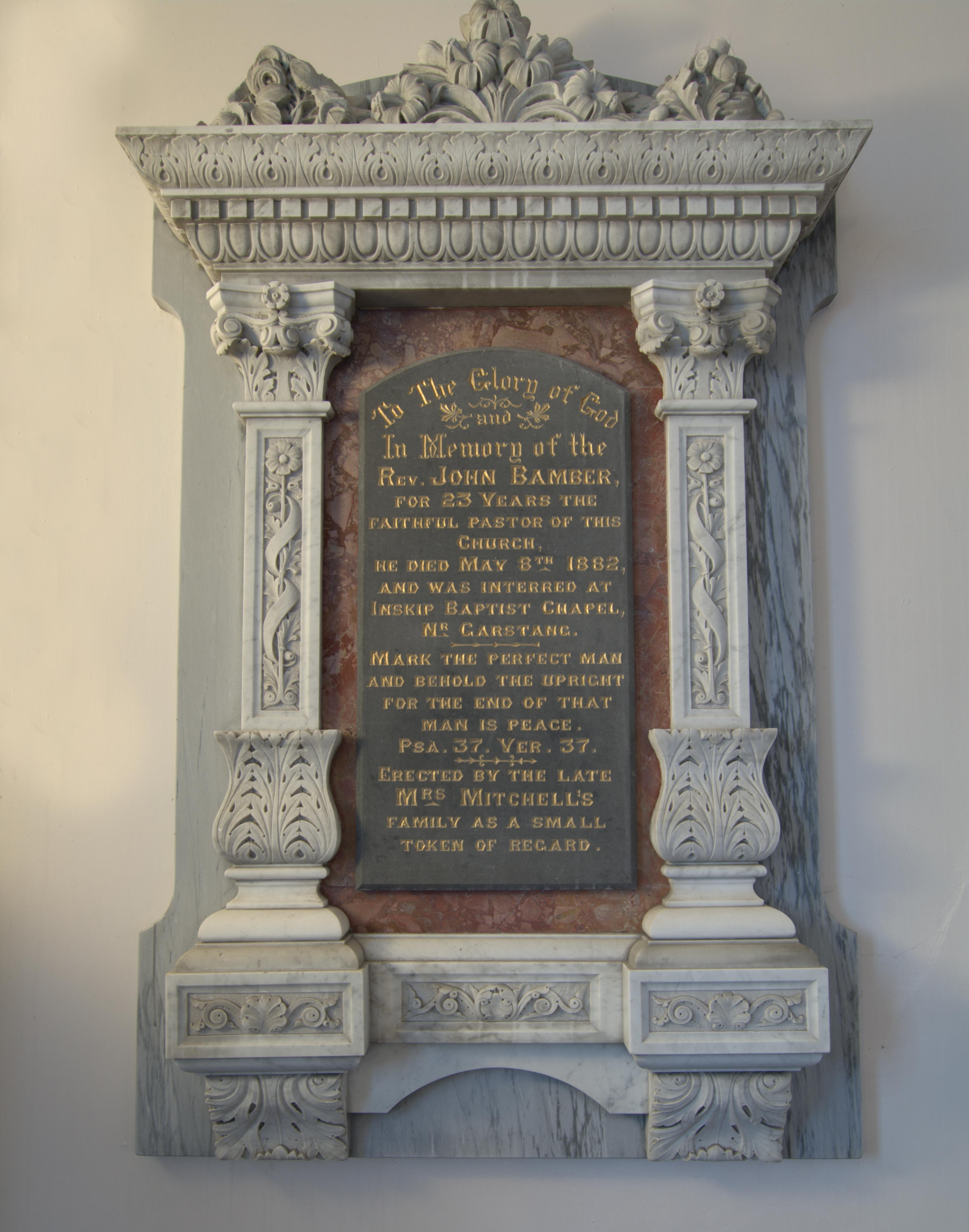
The memorial tablet to John Bamber, a gift from the family of the late Sarah Ann Mitchell, is in the upper gallery of the chapel, and was installed in 1904. It was described by historian Clyde Binfield as ‘pleasingly, ambitiously baroque, at once elegant and florid as baroque allows one to be’.
To The Glory of God and In Memory of the Rev. JOHN BAMBER, FOR 23 YEARS THE FAITHFUL PASTOR OF THIS CHURCH. HE DIED MAY 8th 1882, AND WAS INTERRED AT INSKIP BAPTIST CHAPEL, Nr GARSTANG. – MARK THE PERFECT MAN AND BEHOLD THE UPRIGHT FOR THE END OF THAT MAN IS PEACE. PSA. 37. VER. 37. – ERECTED BY THE LATE Mrs MITCHELL’S FAMILY AS A SMALL TOKEN OF REGARD.
Photo by Geoff Matthews
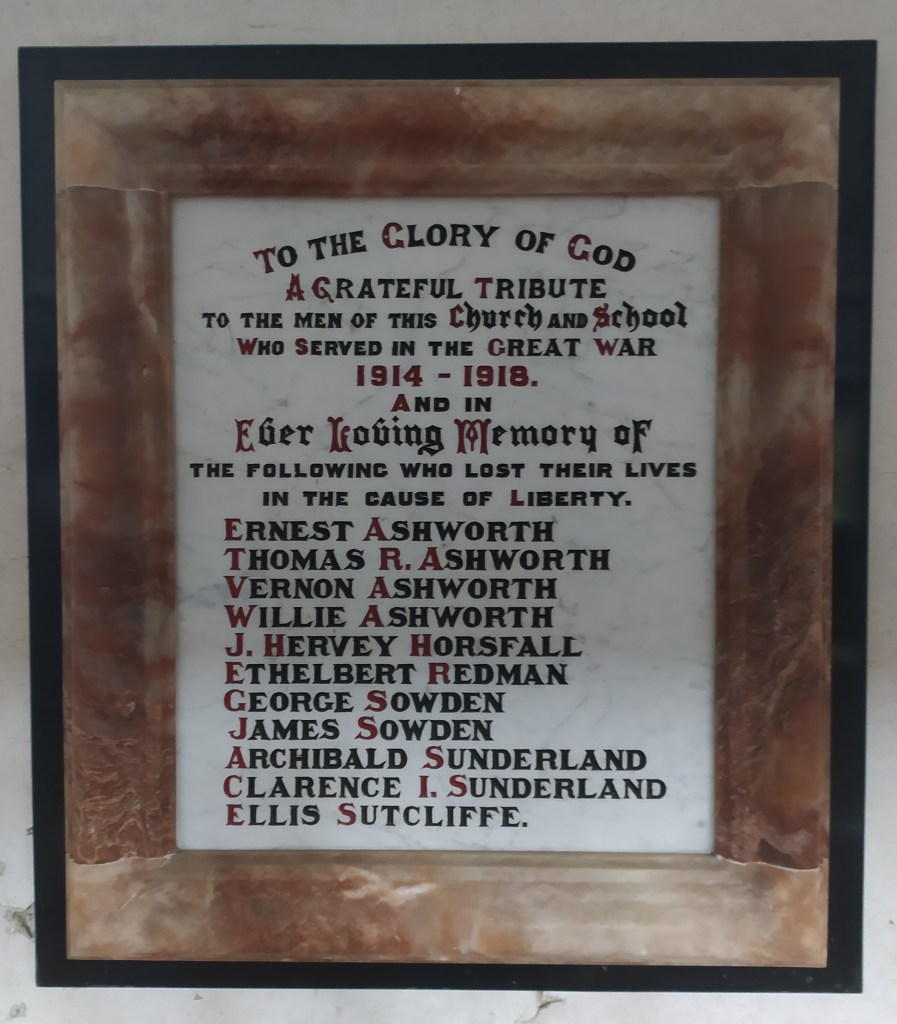
WAINSGATE WAR MEMORIAL
A white Sicilian marble tablet with raised alabaster frame on a black slate backboard, with incised and painted lettering. Located on the ground floor of Wainsgate chapel. Overall size 810 x 900mm. Believed to have been made by local monumental mason Wright Ingham.
Unveiled and dedicated by Rev. James Hodgson, minister of Hope Baptist Church, on 11th September 1920. A collection at the unveiling raised £66 to cover the cost of the memorial.
Information about the lives and deaths of the eleven men commemorated on the memorial can be found at WAINSGATE’S WAR DEAD.
OLD TOWN (WESLEYAN) METHODIST CHAPEL WAR MEMORIAL
A black painted stone tablet on a white marble backboard, overall size 1080 x 880mm with incised and painted lettering.
The memorial was unveiled on 16th May 1920 by William Horsfall, Sunday School superintendent, and was located in the Walker Lane chapel until it closed in 2013. The memorial was moved to Wainsgate in 2014, and is on the ground floor of the chapel.
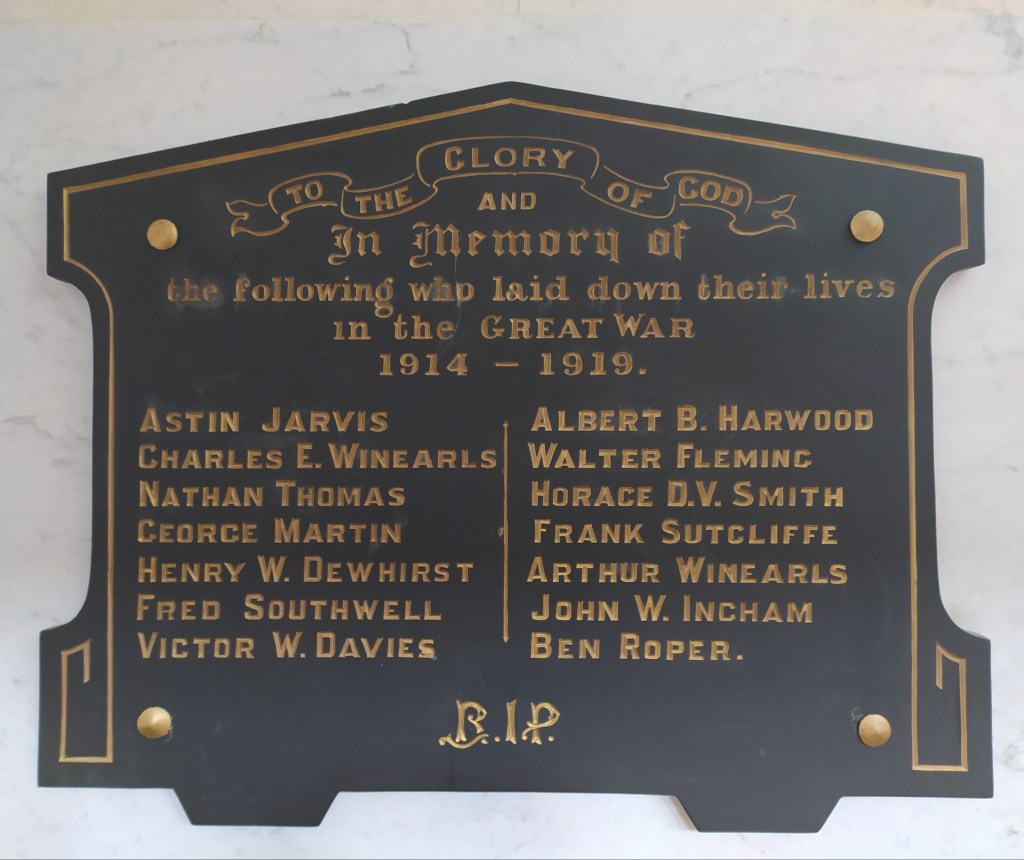
Information about the lives and deaths of four of the fourteen men commemorated on the memorial can be found at WAINSGATE’S WAR DEAD.
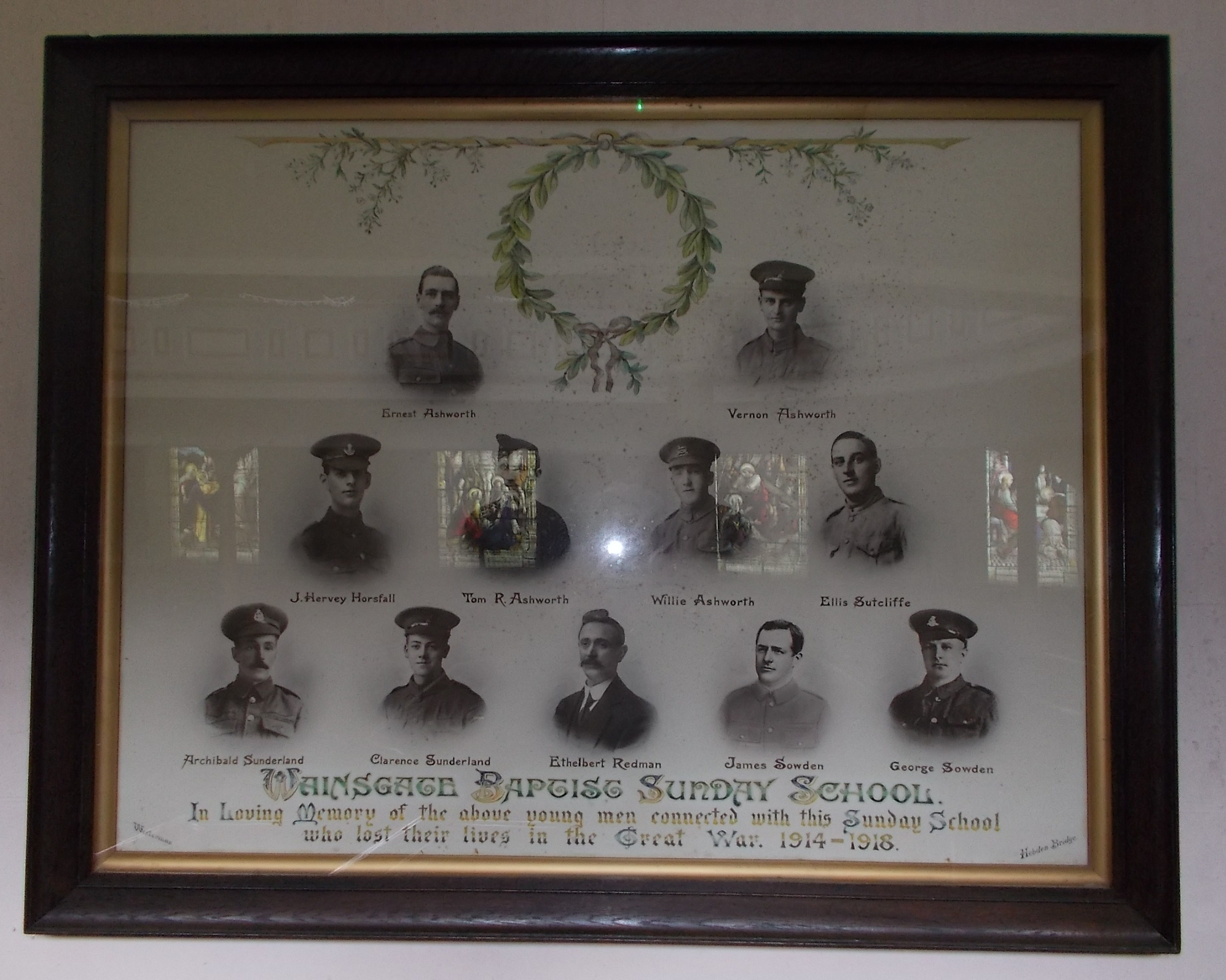
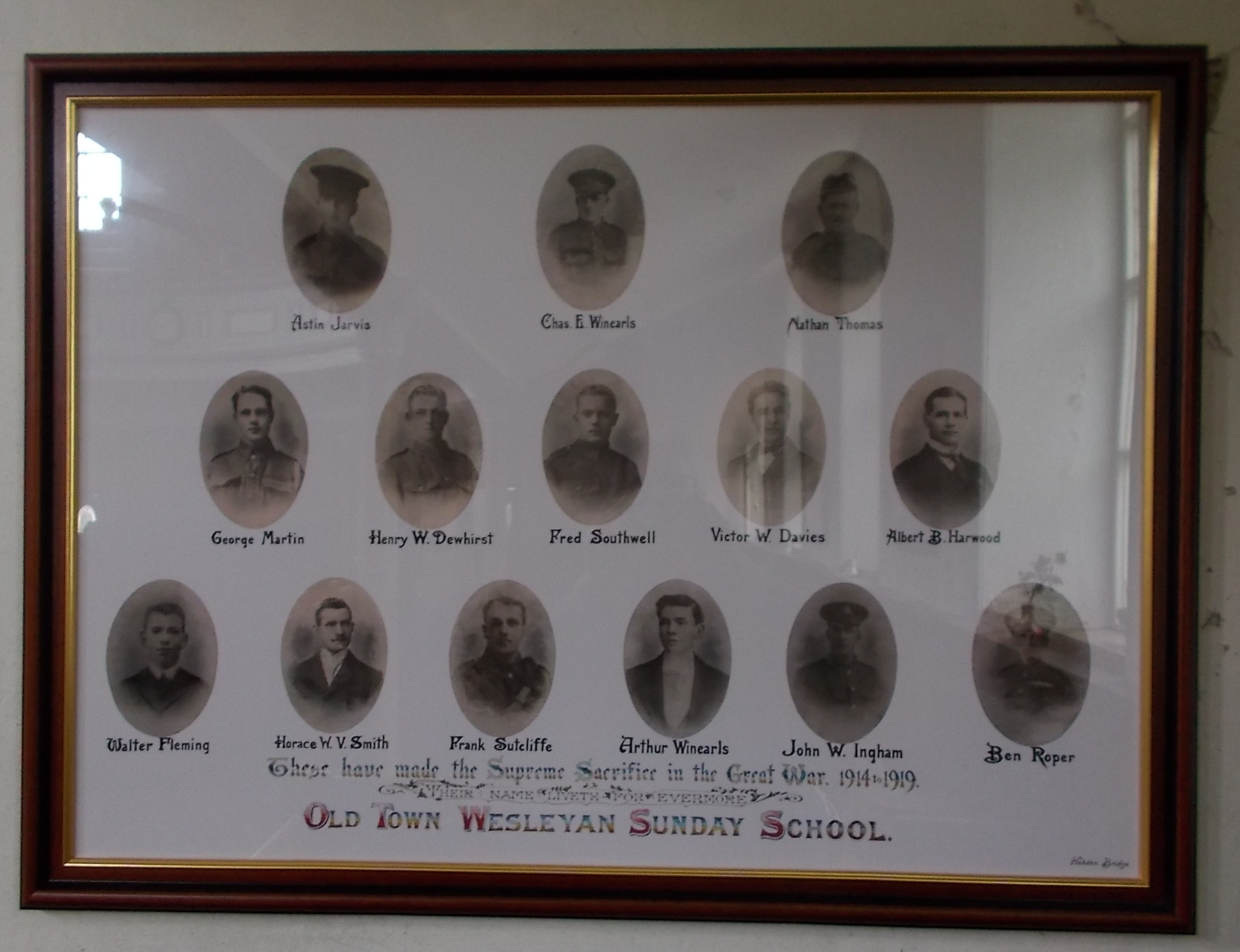
There are also two framed group photographs in the chapel depicting the men commemorated on the two war memorials. More information can be found at WAINSGATE’S WAR DEAD.
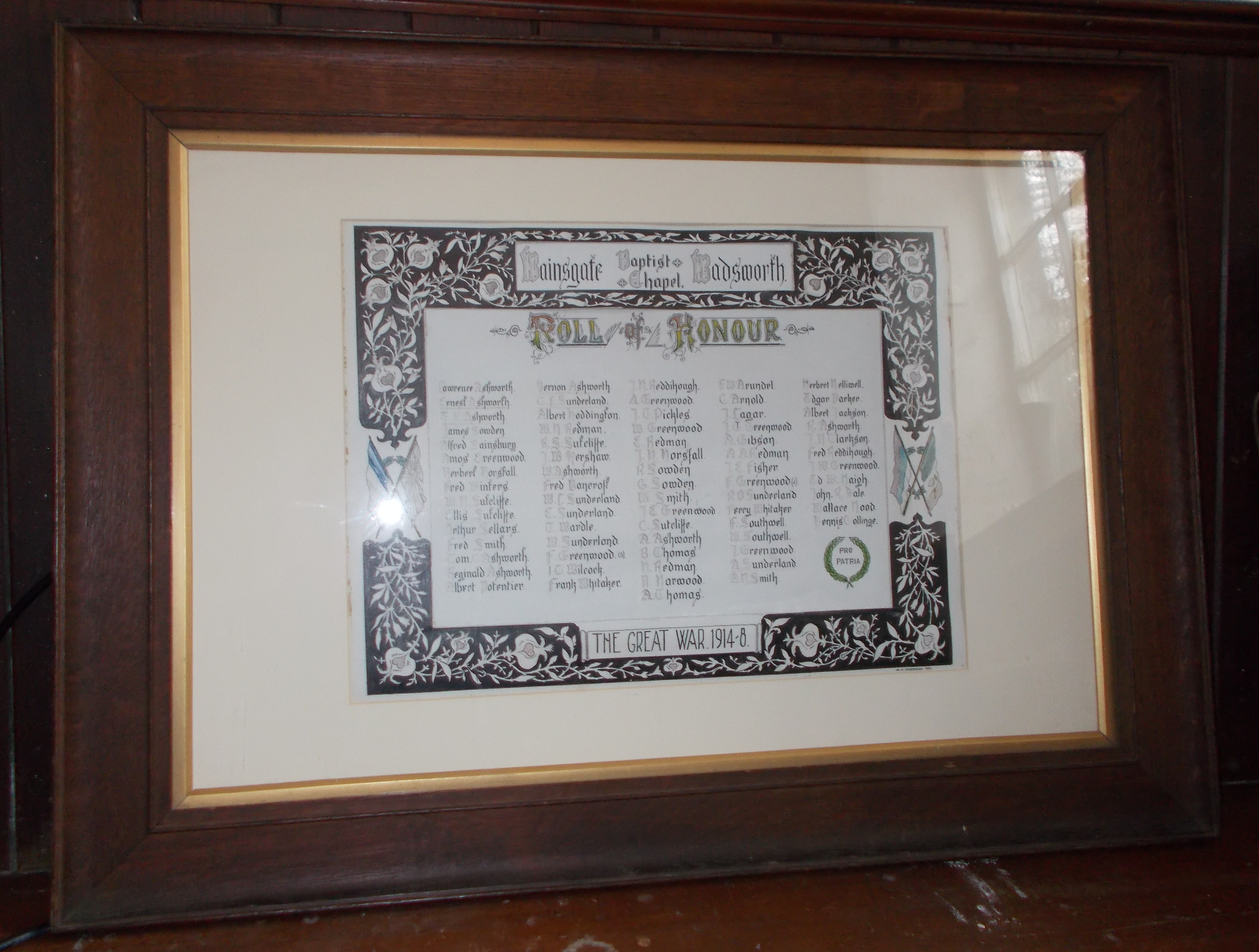
Also found in the chapel is a framed Roll of Honour, listing the names of 72 men from Wainsgate who served in the First World War. More information can be found at THEY ALSO SERVED.
MEMORIAL MASONS
‘In English villages and country towns the texture and colour of the stones used in their buildings and monuments create a visual harmony as individual as local landscape, dialect or custom. They are chastened to hues as subtle as the weather which is both their scourge and comfort, gravestones especially being exposed to its frosts, winds and flurries of sun and rain, so that to choose stone that will bear such testing demands a sense that only long association with its winning and cutting can develop, and which cannot be got by book-learning. Perhaps more markedly than any other, the mason’s craft has always tended to run in families, and there are many of its workers alive today whose heritage can span the centuries.
In such districts where stone has been immemorially quarried, these men laboured with little expectation of fame other than some local repute, and content for the most part with modest gains. Stubborn in upholding tradition, independent in outlook, their common bond was that integrity and pride in skill which distinguishes the craftsman in any place or time.’
From English Churchyard Memorials by Frederick Burgess (1963)
WILLIAM HARGREAVES
William Hargreaves was based at Providence Works, Oakworth, and advertised his business as far away as Burnley. In 1871 he employed 30 men, and an advertisement from 1871 in the Burnley Advertiser described him as a:
‘Stone Carver and Monumental Mason…..Headstones, Tombs, Monuments, Cenotaphs, Tablets, Mausoleums etc, etc, Executed in Classic or Medieval Styles. Designs given. Estimates furnished for public and private Memorials of every description in Granite, Marble or Stone’
Hargreaves is presumed to be responsible for the Horsfall memorial at Wainsgate – the mason’s name inscribed on the base of the monument is W. HARGREAVES, and is also thought to be responsible for the Mitchell memorial, although the mason’s name inscribed on the monument is W. HARGREAVES, HAWORTH.
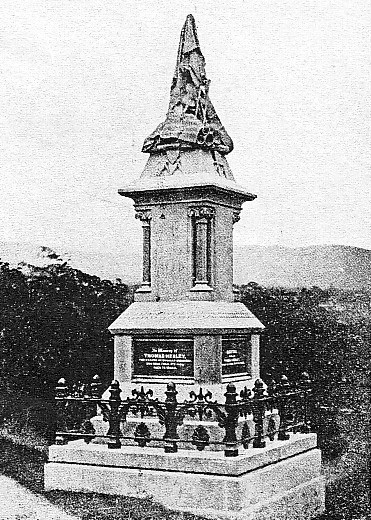
William Hargreaves is best known for designing and executing the Healey Memorial in Burnley cemetery, commemorating Thomas Healey (1783-1858) a Burnley musician known as ‘The Father of Burnley Music’. The memorial was erected in 1872, and is topped with a sculpture of musical instruments. It was funded by the choirs and musical societies of the district.
William Hargreaves died in 1875 aged 47, and is buried in Dockroyd graveyard, Oakworth, where his work is well represented, particularly the Sugden family vault in the centre of the graveyard.
Hargreaves had a nephew, William Henry Hargreaves, who was also a monumental mason, and who may have worked at Providence Works for his uncle or his successors who continued the business after his death.
S. B. CORDINGLEY, LISTER LANE CEMETERY, HX.
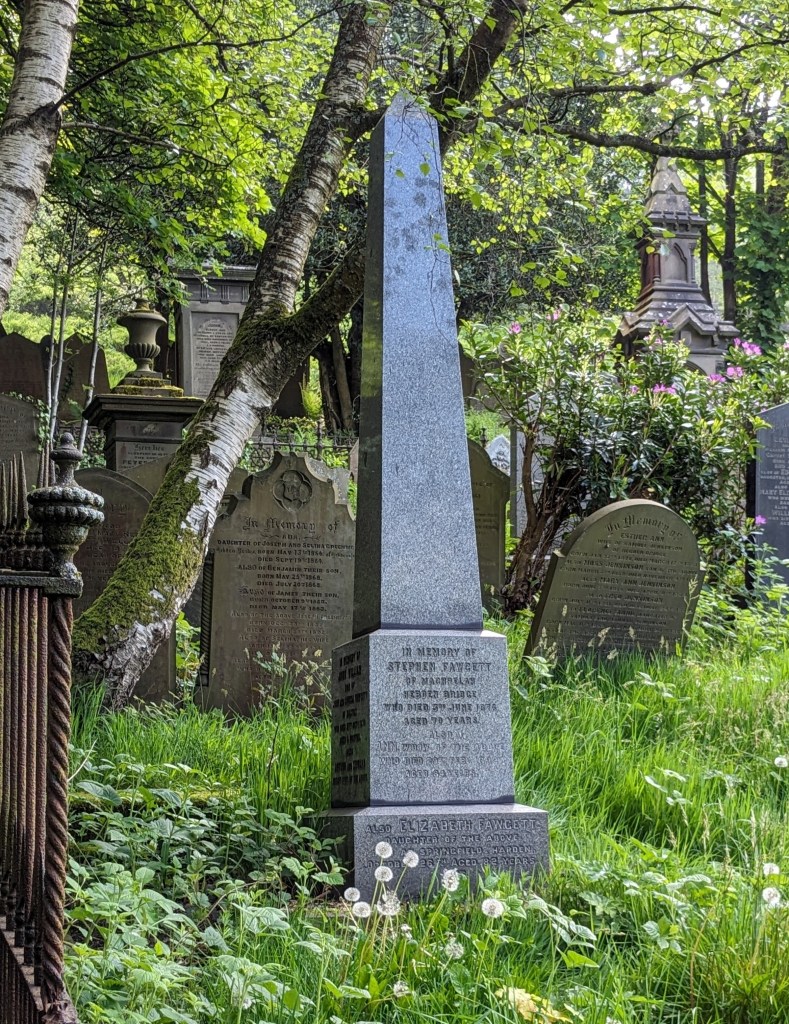
This is the inscription found on the base of the memorial to Stephen Fawcett (grandson of Rev. John Fawcett) and members of his family. The memorial, which stands in plots A527-536, is a plain obelisk in polished grey granite with unadorned inscriptions around the plinth.
Simeon Bottomley Cordingley (1827-1880) was born in Rastrick, the son of William Cordingley, a stone delver and flag facer from Brighouse, and his wife Mary (born Bottomley). Four of Simeon’s brothers (John, Gad, Jonas and William) also worked in the stone trade, as delvers, masons or flag facers.
In 1851 he established a business as a monumental mason in Halifax. The monumental masons’ yard at Halifax General Cemetery, Lister Lane (of which he was manager) was known as the Monumental Works, and Simeon worked there until his death at the age of 53 in 1880.
Simeon Bottomley Cordingley was buried at Lister Lane Cemetery with his parents, his two wives (Ellen and Grace) and his five children, three of whom (Philip, Ann and Zilpah) died in infancy, Leah, who died before her fourth birthday, and Sarah, who died in 1880 aged 28.
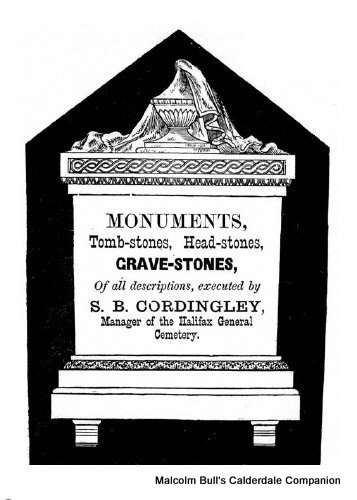
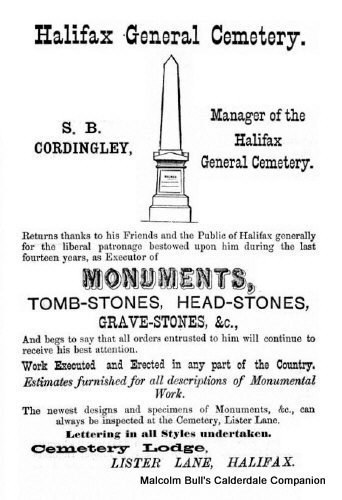
Advertisements from Halifax Almanack & Parish Year Book (1865) / Malcolm Bull’s Calderdale Companion.
W. INGHAM, H.B.
Presumably Wright Ingham of Heptonstall – monumental mason responsible for many of the gravestones at Wainsgate, and also thought to have made the Wainsgate War Memorial in the chapel.
Wright Ingham was born on 29th June 1862 in Heptonstall: his father, William Ingham was a monumental mason and sexton at St. Thomas church, as was his grandfather John Ingham. Wright followed in his father’s footsteps – in April 1881, aged 18, he was living with his parents and siblings at Churchyard Bottom, working (presumably with his father) as a monumental mason. In October, aged 19, he married Margaret Foster, and lived at West Laithe. Two of their sons, James and Arthur, were living at West Laithe in 1901, working (presumably with their father) as monumental masons. A third son, John, was living in Mytholmroyd in 1939, working as a ‘mason / grave digger’.
Wright Ingham died on 23rd October 1924, aged 62, and is buried at St. Thomas Heptonstall (row T2, grave no.1)
WHITAKER BROTHERS / WHITAKER STONE
The firm of Whitaker Brothers was founded in 1970 by Percy Whitaker and his brother Peter. Originally both a building firm and masonry company, over the years they concentrated on the stone masonry side of the business, becoming well known as suppliers of traditionally worked stone products in Calderdale. Percy’s son Richard Whitaker, who trained as a mason himself, joined the firm in 1996 and took over running the business in 2020, when he changed the name to Whitaker Stone Ltd. The business is still based, as it always has been, at Mayroyd Barn, Hebden Bridge. A number of the headstones at Wainsgate, including several of the most recent ones (Baz Gray, Duncan Smethurst, Vera Skelton, Derek Loney, Berhane Woldegabriel, Jules Beresford-Dent and John Ludlam) have been made by Whitakers, some of them featuring traditional hand-cut lettering and carving.
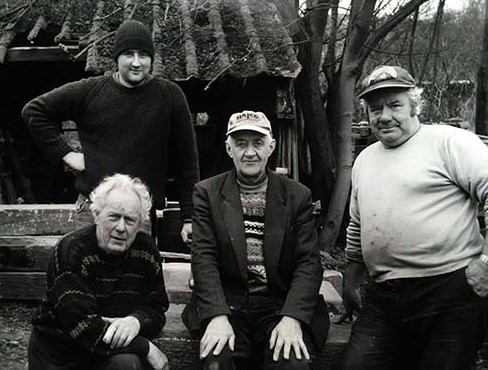
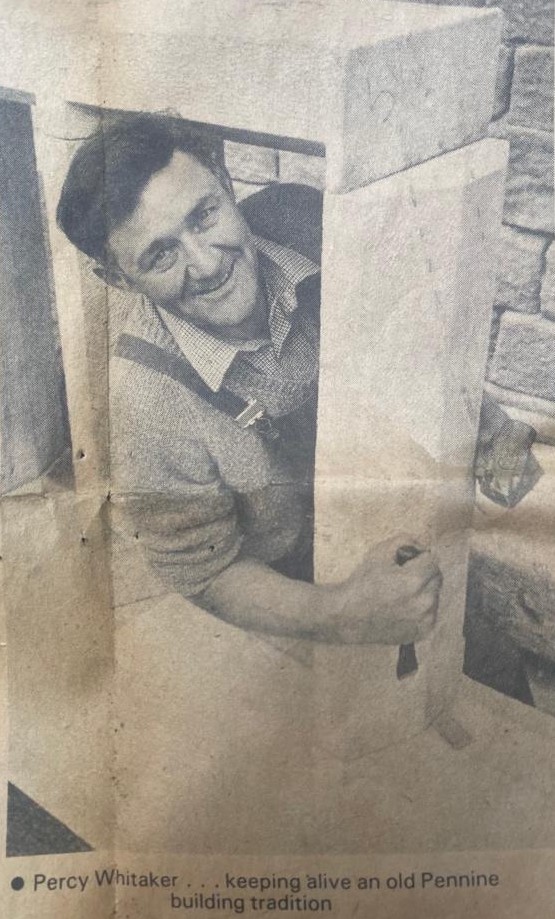

left: Richard Whitaker, Peter Crossley, Peter Whitaker, David Nutall. centre: Percy Whitaker.
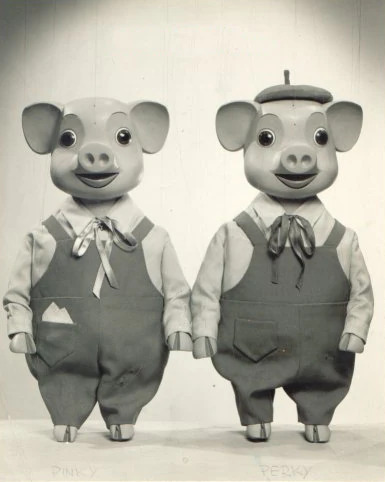
The company has always been known as Pinky and Perky’s. Pinky and Perky was a children’s television series first shown by BBC television in 1957 and revived in 2008 as a computer-animated adaptation, and featured a pair of anthropomorphic puppet pigs who spoke and sang in strange high-pitched voices. The pigs were the creation of Czech-born British puppeteers Jan and Vlasta Dalibor, who settled in Yorkshire after arriving in Britain as refugees from Czechoslovakia in 1948. Jan Dalibor worked as a quarryman at a stone quarry in Tadcaster, and in his spare time began making wooden marionettes. Vlasta suggested that he make some in the shape of pigs, a symbol of good luck in Czechoslovakia.
Other Masons whose work can be found at Wainsgate:
KILPATRICK, ROCHDALE.
COOKSON, BURNLEY.
MILTHORP & SON, TODMORDEN.
STEPHENSONS, TODMORDEN.
J. MOSES, H.B. – (John Moses)
H.T. MOSES – (Herbert Thompson Moses)
I. MALLINSON, LOCKWOOD
CARVING & LETTERCUTTING
The mason stirs:
Words!
Pens are too light.
Take a chisel to write.
From Briggflatts: an Autobiography by Basil Bunting (1966)
‘The use of ornament, invariably requiring a chastened and refined judgment, especially needs it when the tomb is the object to be adorned. A bad taste – the love of finery and display – can never appear more contemptible and disgusting than over the grave of perishing mortality. A sepulchral memorial, however simple and unadorned, will offend no one; but if decorated with bad taste, or overloaded with ornament, it will be a repulsive object to every person of correct judgment’.
From The Churchyard Manual – intended chiefly for Rural Districts by W. Hastings Kelke (1851)
Most of the older gravestones and other memorials at Wainsgate have inscriptions carved by hand, using tempered steel chisels and a hammer or mallet. The tools and techniques used for hand cut lettering today are virtually identical to those employed by the Romans who carved the inscription on Trajan’s column and by the Victorian masons who carved many of the headstones at Wainsgate.
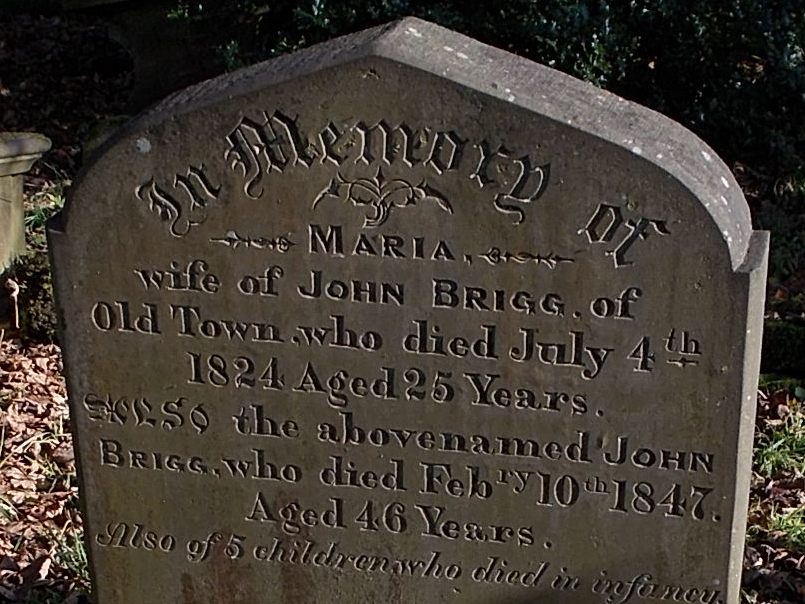

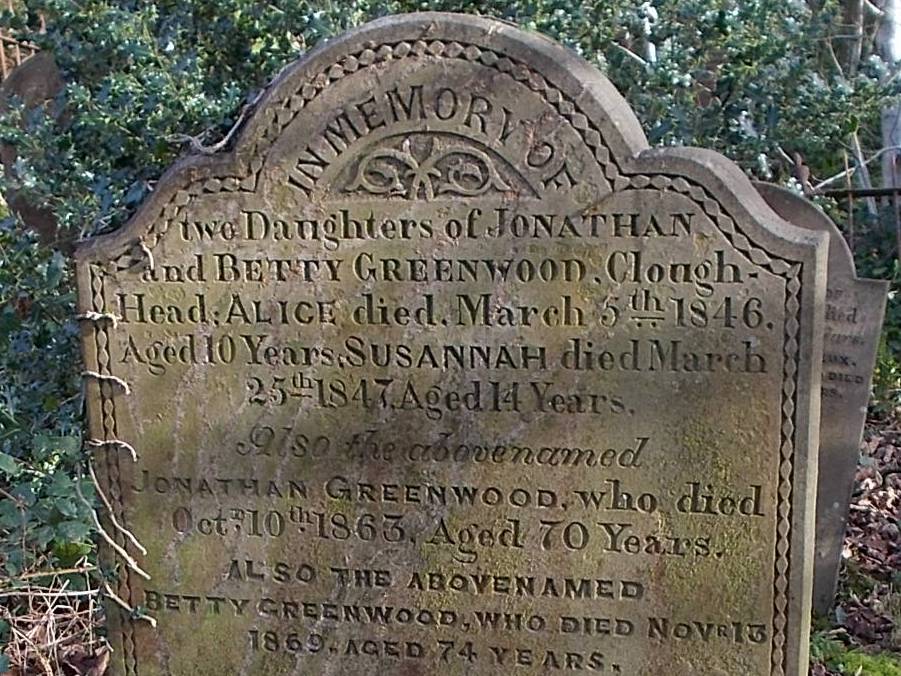
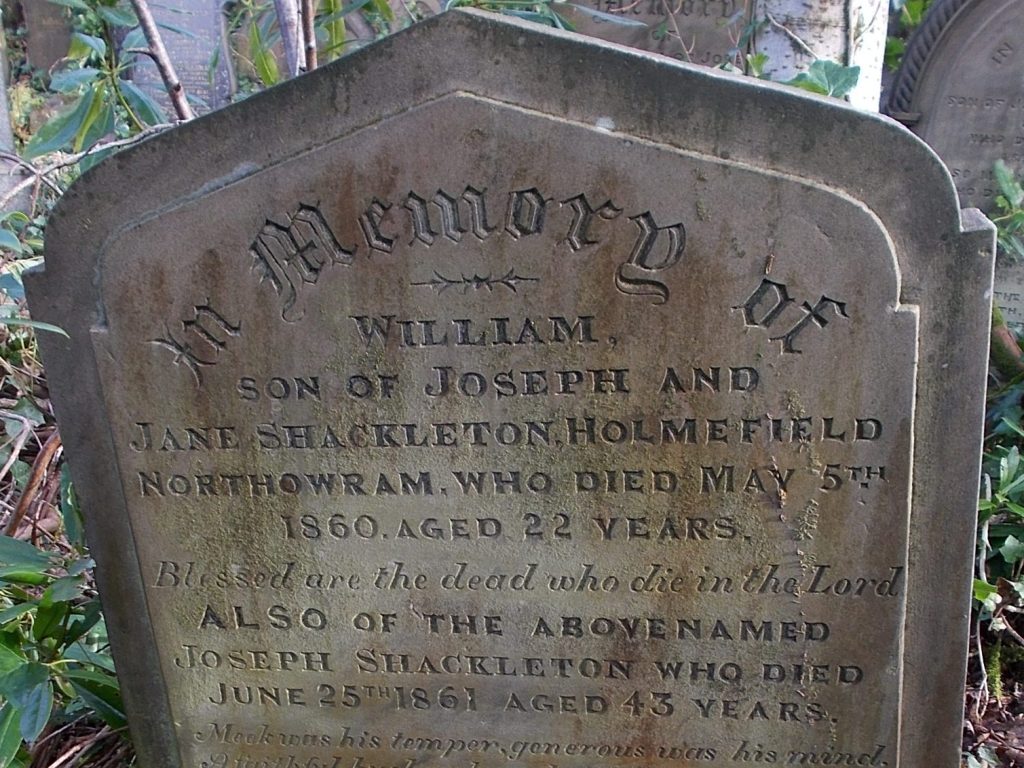
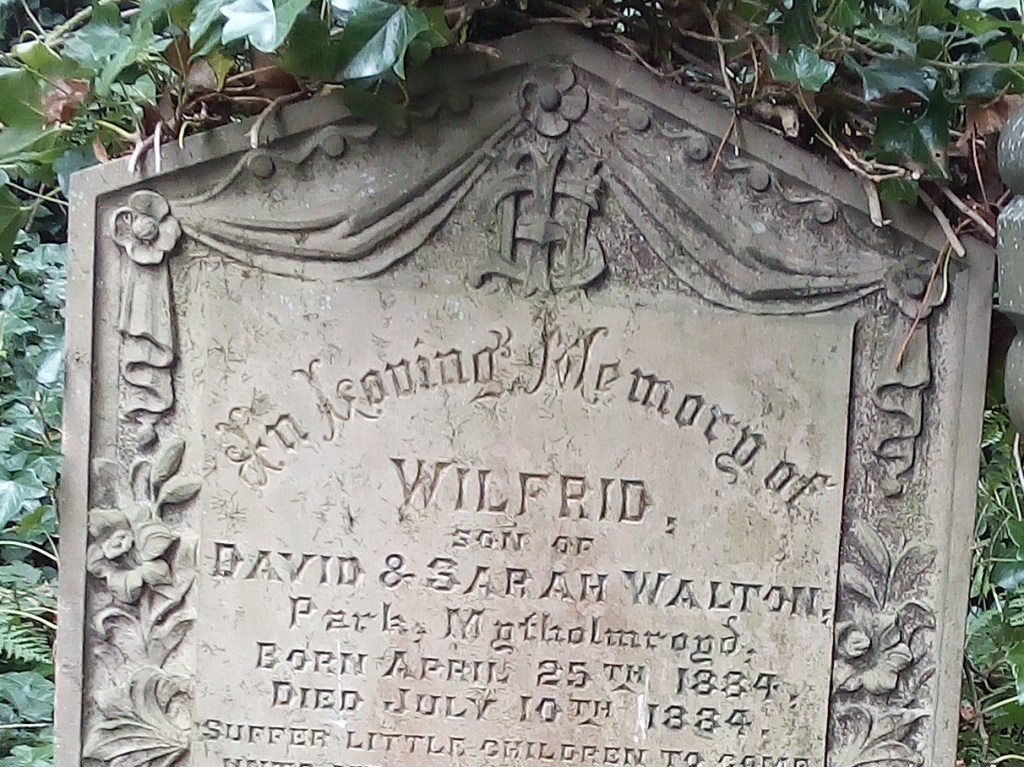
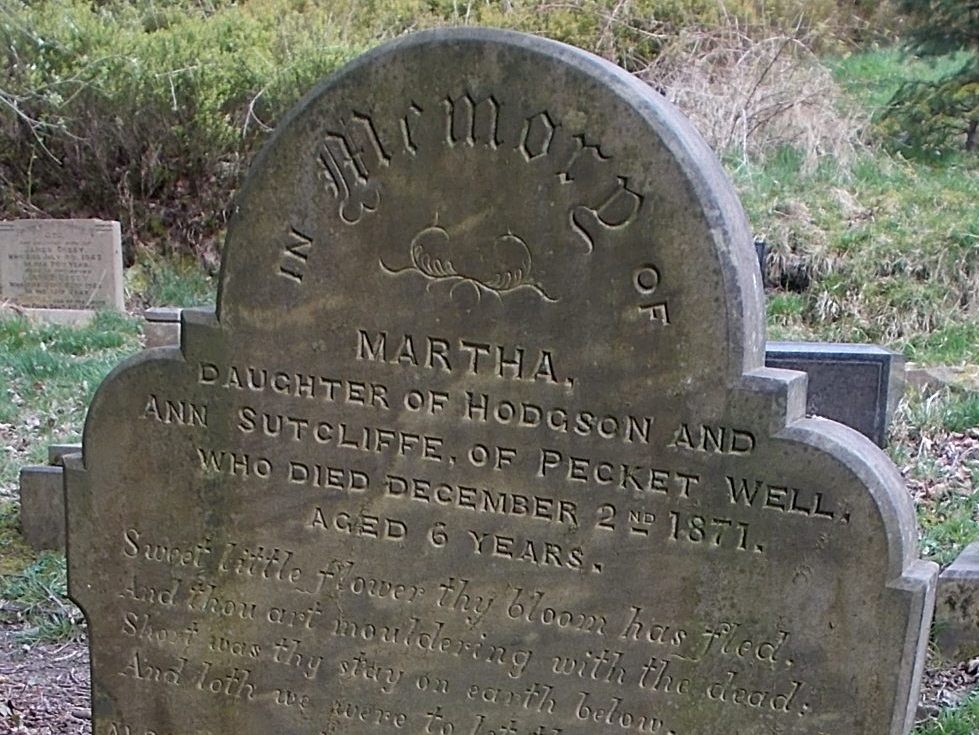
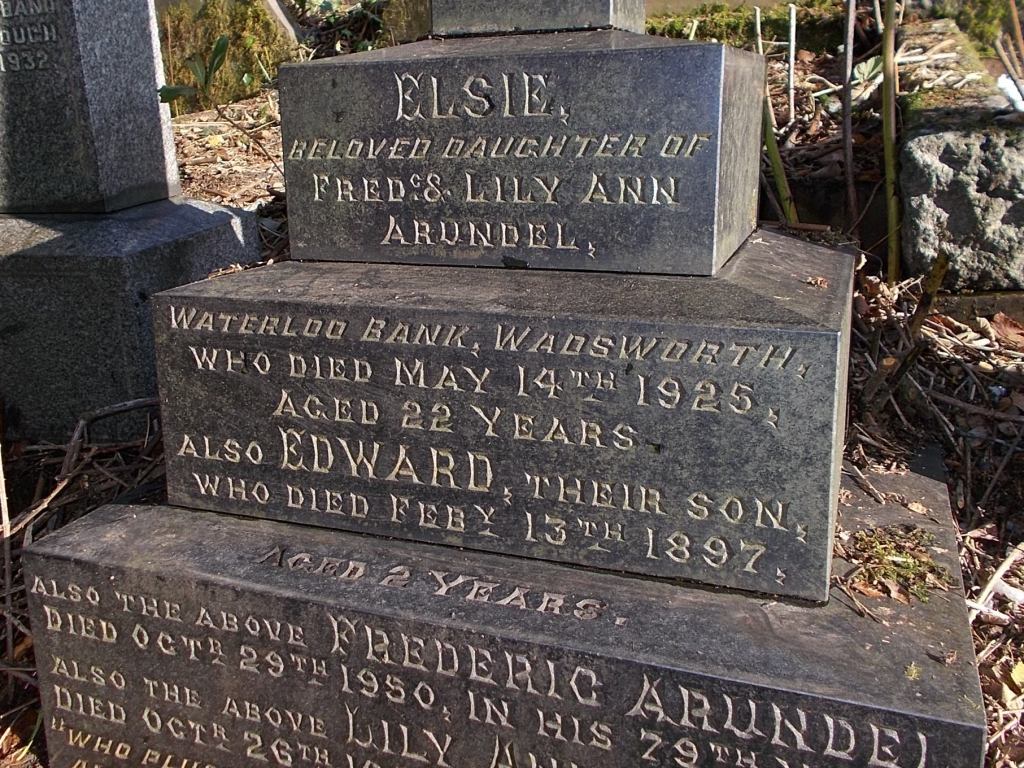
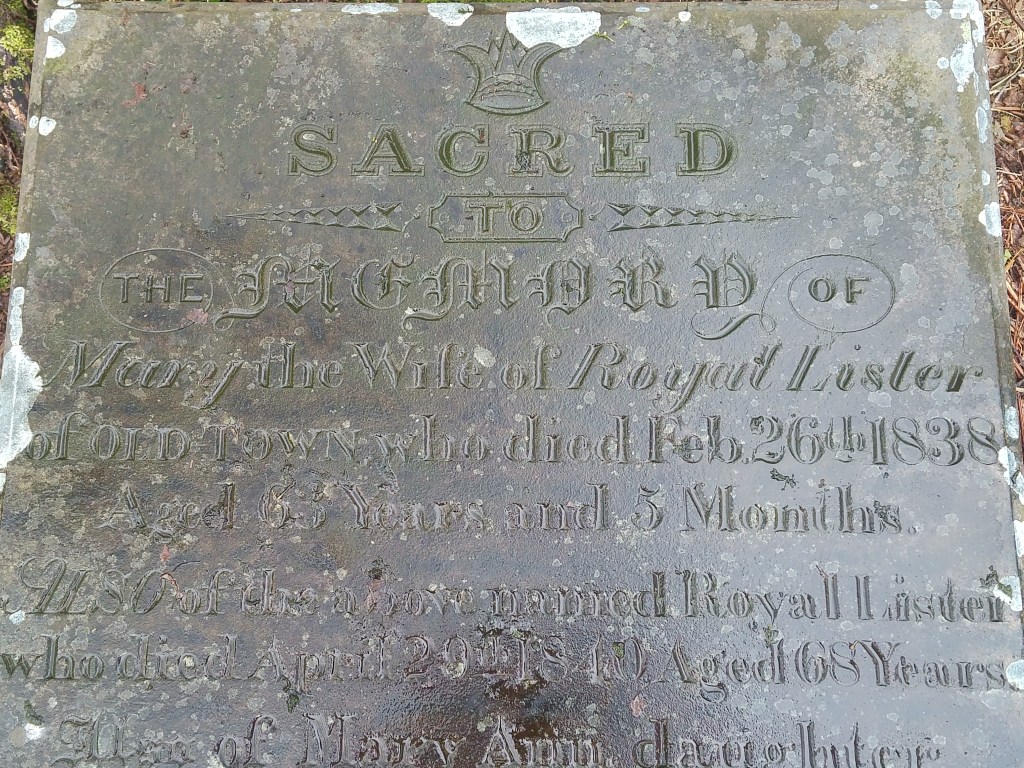
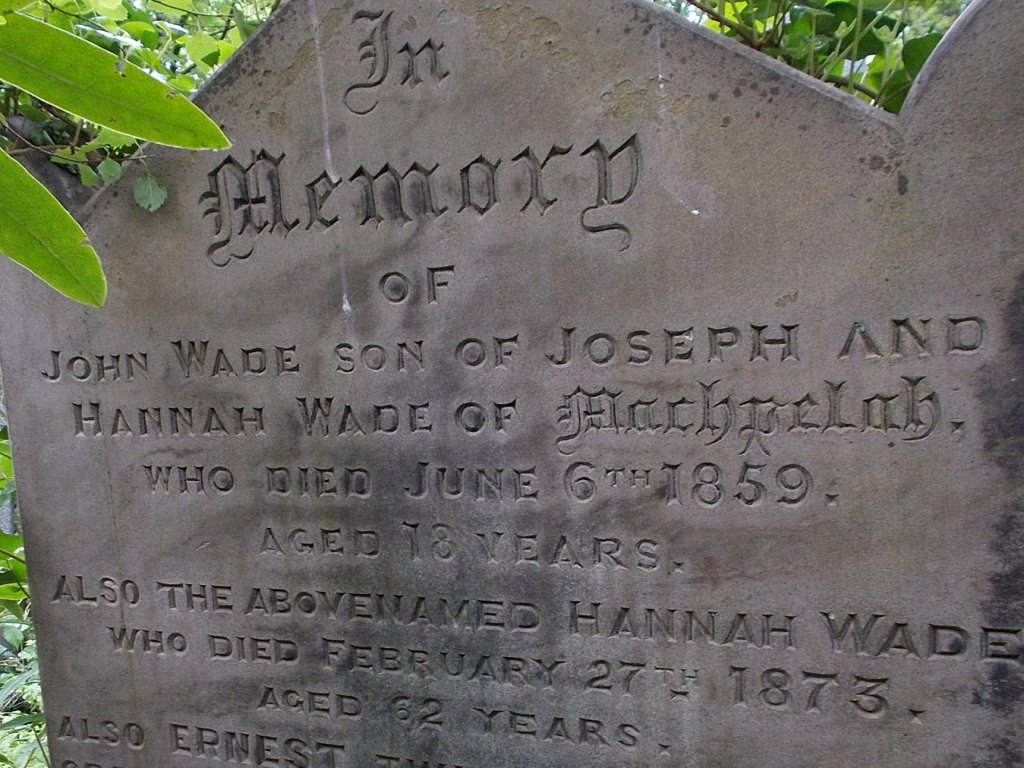
Some examples of hand-cut gravestone lettering from Wainsgate
One person who is known to have engraved gravestones at Wainsgate is Mark Holroyd (1816-1902), son of Mark Holroyd, the minister from 1810 until 1835. The family emigrated to America in 1835, where they came to be known as Mark Holroyd II and Elder Mark Holroyd respectively.
Mark jnr started to study perspective and sketching a couple of years before emigrating, and also began to learn the craft of engraving stone. He is known to have carved gravestones at Wainsgate around 1834: there are no records of which stones he engraved, but they were described in his memoir as ‘smooth flagstones, six feet by three feet and three inches thick’. He was later asked by a firm in Norwich, New York to work for them engraving tombstones, but chose to buy land with his brothers and clear it for farming.
* * *
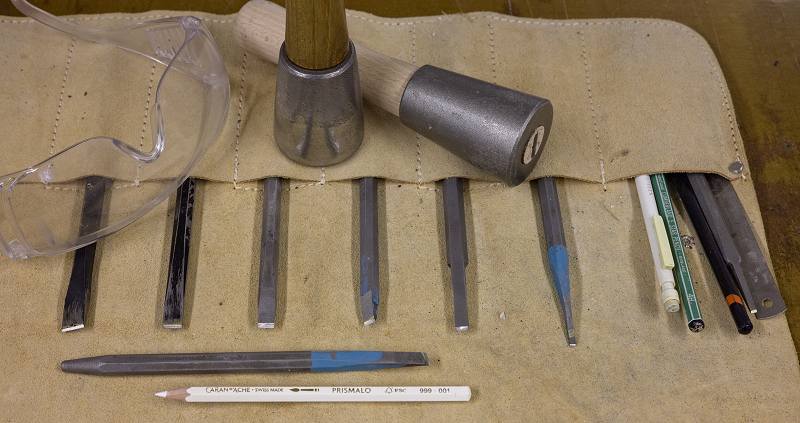
All you need to cut letters in stone: tungsten carbide tipped chisels, dummy, ruler, a hard pencil for sandstone and limestone, a white pencil for slate and (optional, but a sensible idea) safety goggles – plus a diamond sharpening stone.
Photograph by Barry Thomas (aka Poor Frank Raw). An excellent website for anyone interested in lettercutting, graveyards, memorials and the like – YouTube videos and lots of other useful and entertaining stuff. He is also the only lettercutter I have come across who advertises hand carved inscriptions of expletives – a beautifully carved ARSE in High Moor limestone for £95 (including UK shipping). Other profanities are available to order.
This YouTube video shows letter carver Andrew Whittle drawing and carving a letter R in the traditional way, using a chisel and dummy.
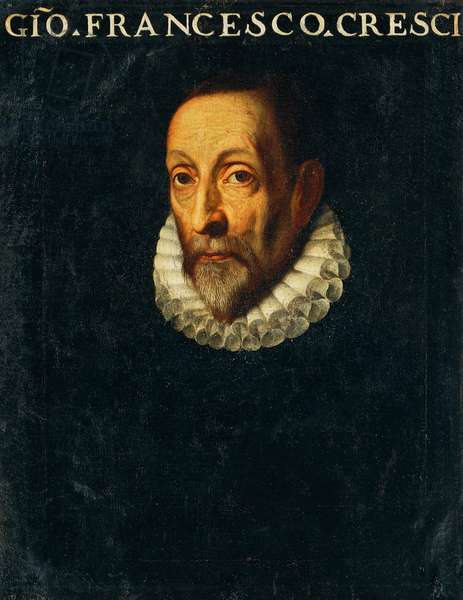
‘But above all, take pains to choose intelligent workmen who are well-grounded in these Letters, because nowadays there are few lettercutters who understand them and can cut them correctly, clearly and with patience; consequently there are even fewer who realise the difficulty, effort and time involved in good cutting and drawing; and so it comes about that because the pay is so bad in these miserable times, there are few who take up the occupation of drawing and cutting letters properly’
Giovan Francesco Cresci – calligrapher and theorist of writing at the Vatican Library and Sistine Chapel (1578)
Most gravestones and memorials now have lettering and other decoration cut by various mechanical devices – sandblasting is the most popular method, followed by CNC (computer numerical control) engraving and laser etching.
Hand cutting of inscriptions is becoming rarer – sandblasting is considerably cheaper, and there are also very few skilled and experienced hand lettercutters working in the memorial masonry industry. This is how ‘traditional’ sandblasting of stone is done:
I don’t want to sound judgemental, but I think I would prefer my own memorial to have a hand cut inscription, ideally on a piece of local stone, rather than a piece of stone from halfway across the world with a sandblasted inscription (‘traditional’ or otherwise). Have a look at the Andrew Whittle video above, and decide what you would prefer…..
‘Tradition is not the worship of ashes, but the preservation of fire’.
Gustav Mahler (1860-1911)
* * *
There are several places around the country that run stone carving and lettercutting courses for beginners. The West Riding Stonecarving Association in Halifax offer a Foundation Course consisting of eight three hour sessions of guided learning, covering the basics of relief carving and lettercutting. Membership of the WRSA includes unlimited use of their well equipped workshop and access to further in-house courses, talks, visits and events, as well as the company of enthusiastic amateur stone carvers.
The Bibliography of this website includes a selection of publications and websites related to lettercutting.
* * *
The vast majority of the gravestones and memorials at Wainsgate, whether they are simple marker stones or elaborate memorials, are well designed and competently made: apart from the occasional spelling mistake and sometimes unconventional punctuation they are obviously the work of literate craftsmen. One headstone stands out as being drastically different in the quality of its design and execution. Plot FY198 is in Fawcett’s Yard, and commemorates John Pickles (died 1845), his wife Susan (died 1863), their great granddaughter Annie Crabtree (born Sutcliffe, died 1958) and her husband Alvan Crabtree, who died in 1955.
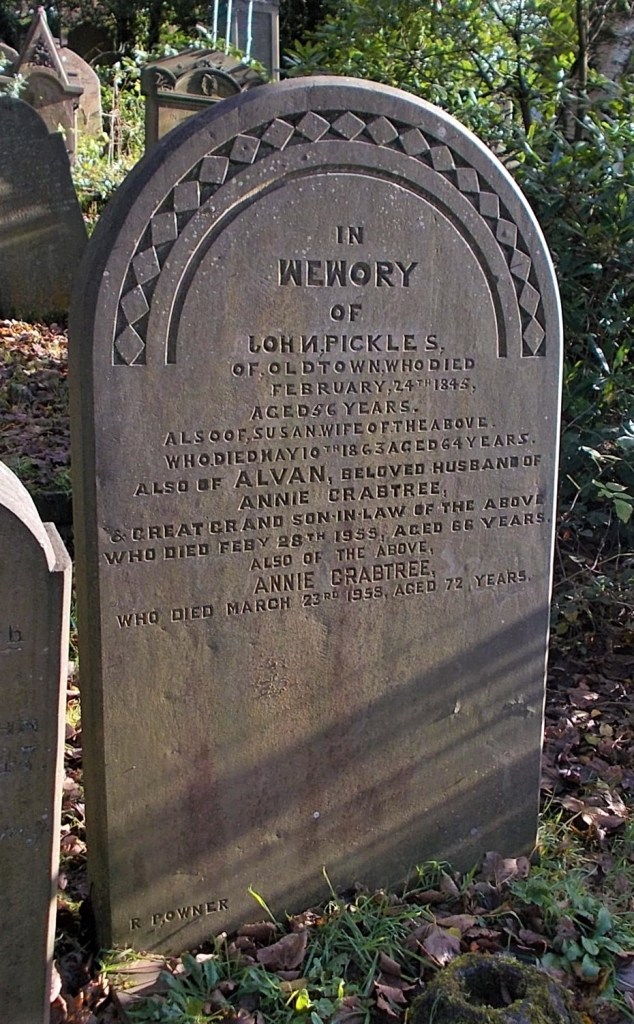
The inscription for John Pickles is dreadful – two letters are upside down, two are back to front, the letter spacing, word spacing and layout are dire, and the punctuation is bizarre. The quality of the design and carving of the letters is pretty poor, and the lozenge decoration around the top of the headstone is crude and not particularly well done. The inscription for Susan is not much better, but at least the letters are all correctly oriented. The inscriptions for Alvan and Annie Crabtree, who died around 100 years later, are in a similar style but competently designed and carved.
We don’t know much for certain about John and Susan Pickles – they lived at Old Town, he may have been a weaver, and Susan lived at Black Hill at the time of her death. They possibly had a son called Richard, born around 1829. Alvan Crabtree, a tailor’s cutter, was born in Halifax, the son of Orlando Crabtree, a master tailor and his wife Adeline. He and Annie lived in Blackpool at the time of his death and Annie died in Mytholmroyd.
We don’t know when this stone was inscribed and erected, and we don’t know who was responsible for commissioning and making it. The only clue is a small inscription at the base of the stone – R P,OWNER (perhaps Richard Pickles?). It looks as if the same person carved the inscriptions for John and Susan (possibly at the same time), but the inscriptions for Alvan and Annie are almost certainly not done by that person (only possible if the earlier inscriptions were done many years after their deaths). And why is nobody from the two intervening generations buried in this plot?
One possible explanation for the poor quality of the work is that it was done by an apprentice, but this makes little sense – surely a master mason would supervise an apprentice closely, particularly if they were known to be illiterate, and would be unlikely to allow such a shoddy piece of work to be completed and leave his workshop. The more likely explanation is that it was a DIY job – somebody who was not a skilled stone carver, perhaps a family friend or relative thought they would have a go. Perhaps the family and friends of the deceased were also illiterate and didn’t spot the mistakes, or perhaps they didn’t want to offend the person who had done it (he did his best, and anyway it’s the thought that counts…..).
But why would someone decide to make their own headstone, especially if they had no evident stone carving skills, let alone a basic level of literacy? The family were probably not very well off, but there are a lot of professionally made headstones at Wainsgate commissioned by families who had little money – besides, the family had spent money on a private plot and a large lump of stone – if they really wanted to save on costs, but still wanted a private burial plot, they could have opted for a simple marker stone, as is the case in several other graves at Wainsgate. All very puzzling.
* * *
Another headstone (F787) contains a mistake which the mason has tried to correct:
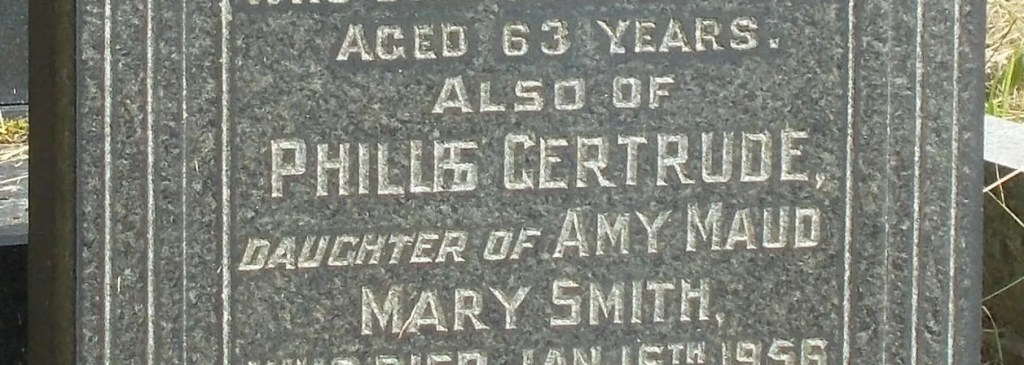
The inscription, on a large polished granite headstone, is for Phillis Gertrude Smith, who died in 1956 aged 56. Phillis is the correct spelling of her name. It looks as if the mason made an error in setting out the inscription, carved PHILLS, then realised he had missed out the I and tried to change the S into IS.
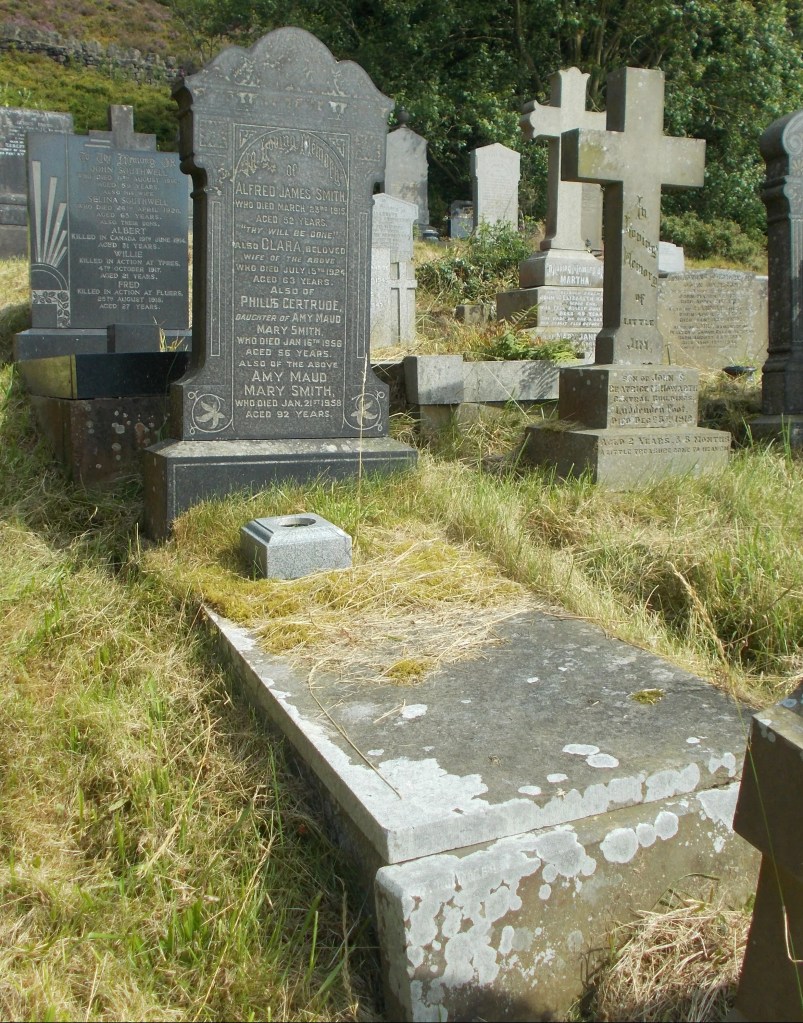
The result is just about legible as PHILLIS, but looks a bit of a mess. The family must have noticed, but they seemed to have decided to let it go – perhaps the mason knocked a few pounds off the bill.
There is a mason’s name inscribed on the front of the kerb surrounding the grave – H.T. MOSES – presumably the same mason responsible for the inscription on the headstone, and obviously not ashamed to have his name attached to this particular headstone.
* * *
The mason who made this mistake must have wished he had taken more notice of the old saying – ‘Measure twice, cut once.’
The origin of this adage is uncertain, but there are also Russian and Gaelic proverbs that advise carpenters, needleworkers and others to ‘Measure seven times, cut once’, and the same advice appears in the autobiography of the Italian sculptor and goldsmith Benvenuto Cellini (1500-1571).
There is even an old Turkish proverb ‘Measure a thousand times and cut once’, but that’s perhaps taking things a bit far.
 WAINSGATE GRAVEYARD PROJECT